
Four payment companies shared a stage on agentic commerce. All four agreed the transaction is trivial. They spent the hour on everything around it.
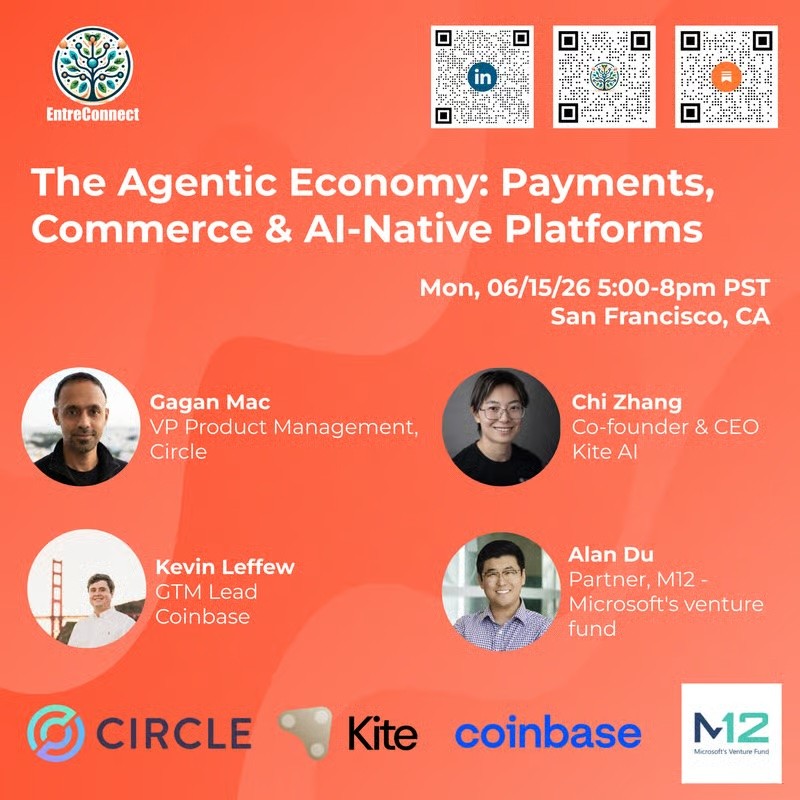
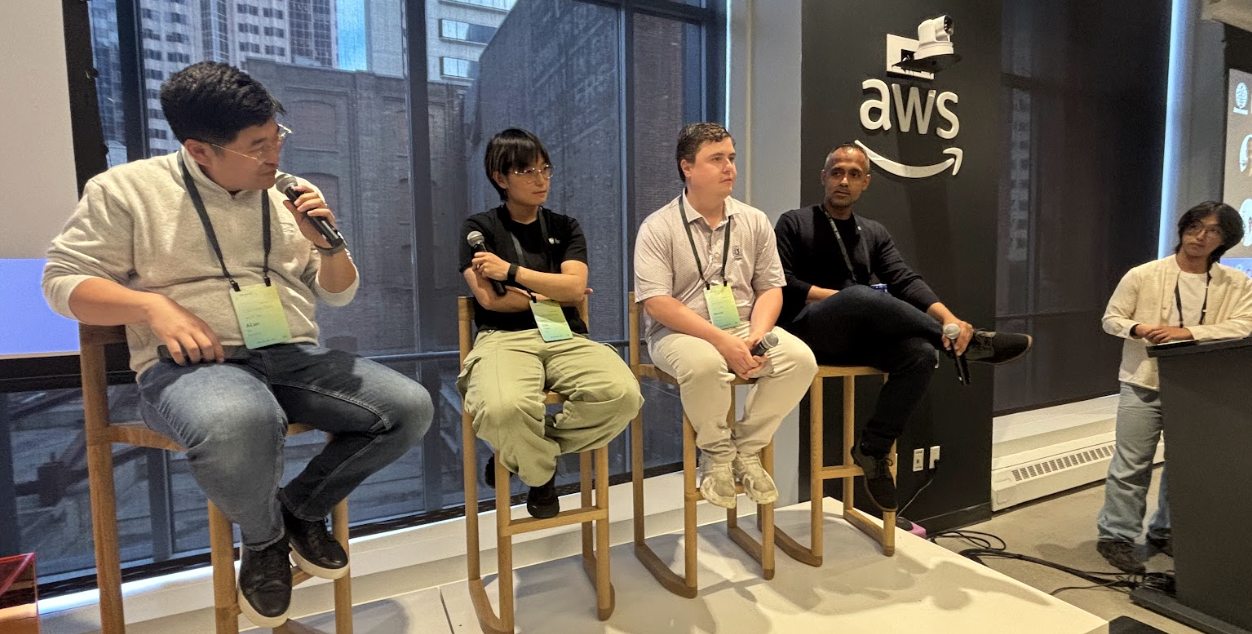
Panel billed itself as agentic payments. Coinbase Circle Kite M12, Microsoft’s Venture Fund on one stage last night at the Amazon Web Services (AWS) Builder Loft in San Francisco. Framing collapsed almost immediately. M12’s Alan Du, moderating, put the real shape of it plainly:
“transaction is the last mile of agentic interaction.”
Everything that matters happens before money moves. Intent. Discovery. Trust. Credit. The payment is the easy part, which is precisely why a room full of payment companies could talk for an hour without resolving any of it.
Ruthless Efficiency Maximizers
Coinbase’s Kevin Leffew, co-author of x402.org, kept returning to one premise:
“agents are ruthless efficiency maximizers.”
Strip out human bias and an agent routes to the cheapest settlement path available, every time. That premise has teeth. It dissolves the economics it runs on. Credit-card rewards, vendor loyalty, the soft preferences that fund incumbents, all arbitraged away the moment a machine optimizes without sentiment.
Stablecoins fit that logic. No interchange fees, no chargeback risk, instant finality. Kevin’s image for it: “deterministic finality, almost like a vending machine.” Quarter in, Coke out, no pending state.
Circle’s product VP Gagan Mac, who leads its stablecoin and Arc work, complicated the picture rather than seconding it. Settlement, the headline stablecoin feature, cuts both ways.
“Settlement is a feature, but also a hindrance where subscriptions are of value.”
Enterprise revenue is built on recurring ARR, on the steady pending state stablecoins erase. The real edge, in this telling, is not speed. It is “composability and programmability,” the ability to stitch services into one outcome. Money, the VP noted in passing, does roughly ten things (A), each carrying its own reasoning load. Settlement is one verb. The panel spent its energy on the other money actions.

Kevin pushed the frame to its edge:
“money should be the utility function for agents.”
Not a feature of agent behavior. The objective function itself. In a city where foundation labs treat money as a dirty word, that is a deliberate provocation, and it reframes every downstream question as an alignment question.
Consumer Waits, Developer Ships
On where this lands first, the panel split clean. Consumer shopping, the demo everyone runs (buy me sunglasses on Amazon), is the hardest case, not the easiest. It needs agent-readable catalogs, accurate product discovery and intent interpretation a human used to supply silently. Kite’s CEO named it the overrated story for exactly this reason.
Developer tooling is where product-market fit already exists. Agents paying for APIs, model inference, real-time data, no human in the loop configuring keys. Kite’s own pivot tracked that reality: from settlement rails toward a control and orchestration layer for the inbound spend developers actually lose sleep over. The recurring builder pain, in the CEO’s account, is cheaper tokens without quality loss, and a kill switch, because a human still pays the bill.
Control versus autonomy ran underneath all of it. Kevin’s resolution was almost mundane: do not hand an agent your credit score, hand it ten dollars.
“I’d prefer not to give my agent access to my credit score, at least today.”
Bounded experiments beat unbounded trust.
From the Floor
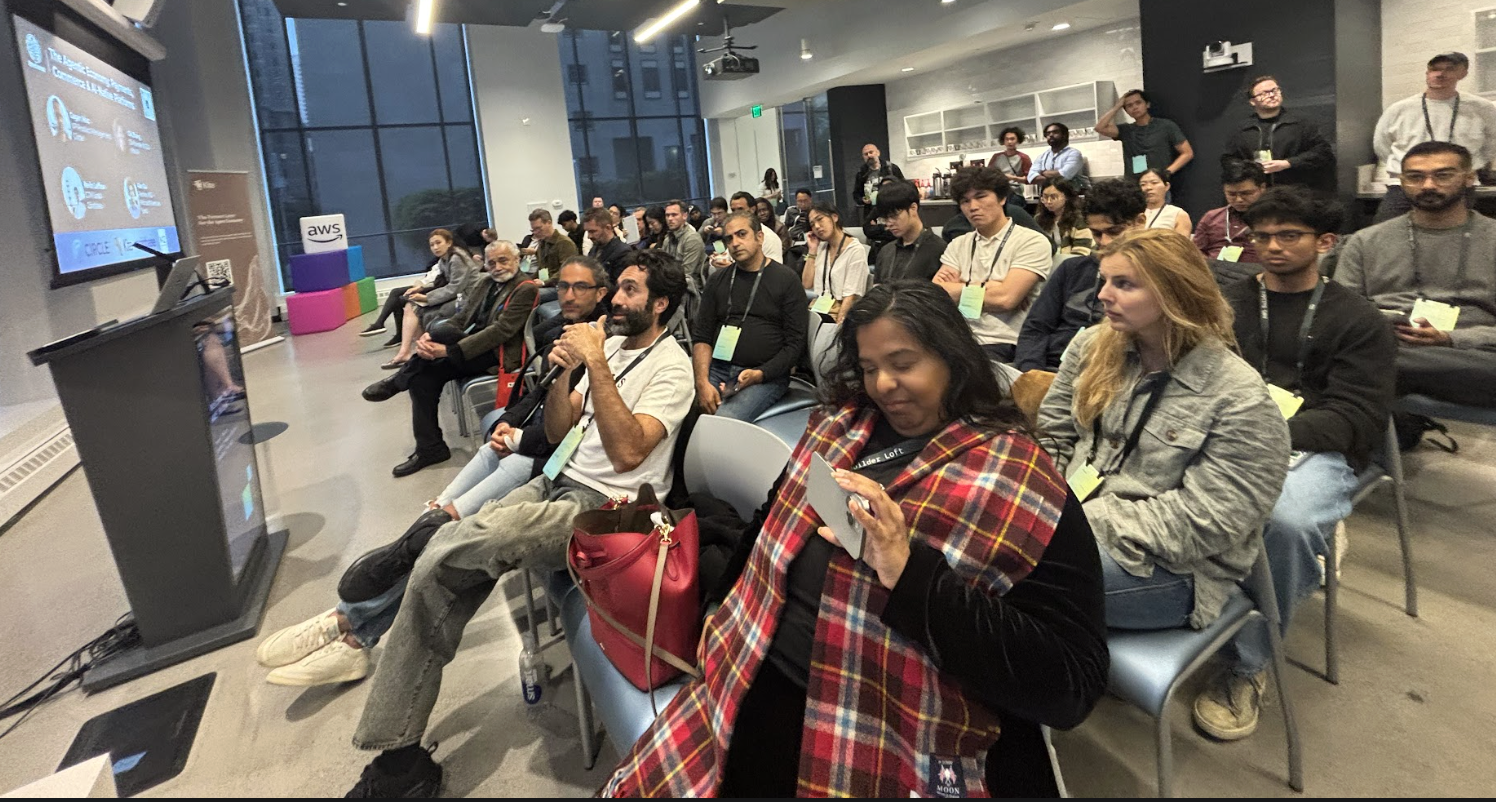
Four questions from the room sharpened what the panel left open.
A builder opened by describing a working prototype: an agent wallet sitting atop Apple Pay and Google Pay, choosing the payment method per transaction, asking which company would actually use it. Circle’s answer was structural. Hook it into an agent stack, let developers wire agents to the wallet across money’s ten functions, and the wallet becomes infrastructure rather than feature.
Full disclosure: the second question was mine. I pressed the panel on MPP versus x402, the two protocols circling agentic payments. Kevin drew the line by philosophy, not feature. MPP is Stripe’s, defaulted into Stripe’s stack, an end-to-end bet on owning the experience. x402, brought to the Linux Foundation, mimics the open web: open governance over a single corporate owner. His read was that Stripe is hedging both sides, and that open and proprietary rails will likely both survive, the way they always have.
Kate Yanchenko of Lamoom asked the autonomy question through the L1 to L5 frame. Kite’s CEO leaned into it, crediting Stripe’s Patrick Collison with the analogy: agentic commerce as autonomous driving, L0 to L5, each level a distinct problem to solve. Her conclusion was that no single protocol wins. Kite supports MPP, x402, AP2 and UCP, because each solves a different slice (payment acceptance versus catalog exposure), and orchestration across them is the actual product.
Jacob Rafati and Reza Jalali, Ph.D., building Kredit.sh, asked the question that pulled the whole evening into focus: will agents register in a central repository, each with an ID, or does identity fragment per platform?
Who Issues Credit
That question had been waiting all night. Earlier, asked who could form a FICO score for agents, Circle’s VP gave the uncomfortable answer: Cloudflare, sitting on half of internet traffic, sees enough to score behavior whether anyone wants a single company holding that power or not. Kevin’s instinct ran the other direction, toward the wallet:
“credit is trust, and trust comes from memory.”
The wallet, in his framing, becomes the source of identity, because it carries the only durable record of how an agent has behaved. Circle floated a DNS-style portable identity, an open consortium rather than one gatekeeper. Kite noted a third path Microsoft is testing: a sandbox runtime where the environment ID is the agent ID, behavior captured even as models and context swap underneath.
None of it resolved, because the object will not hold still. Swap the model, same agent. Swap the context, same agent. Credit assumes a stable subject, and an agent is not one.
A hallway conversation made the stakes concrete. Two founders from Kredit.sh described dynamic agent scores updating every millisecond across simulated transaction histories, scores that move at machine tempo, not monthly statements. Their thesis was blunt: guardrails are one percent of the story, the card is the other ninety-nine, and credit is what makes L5 autonomy trustworthy rather than reckless. Alan, on stage, had asked the version of this no one answered:
“who issues agent credit scores?”
A year into x402, with wallets, registries, sandboxes and Cloudflare all reaching for the same authority, the issuing seat is still empty. The payment was always going to be easy. The credit is the part still being built.