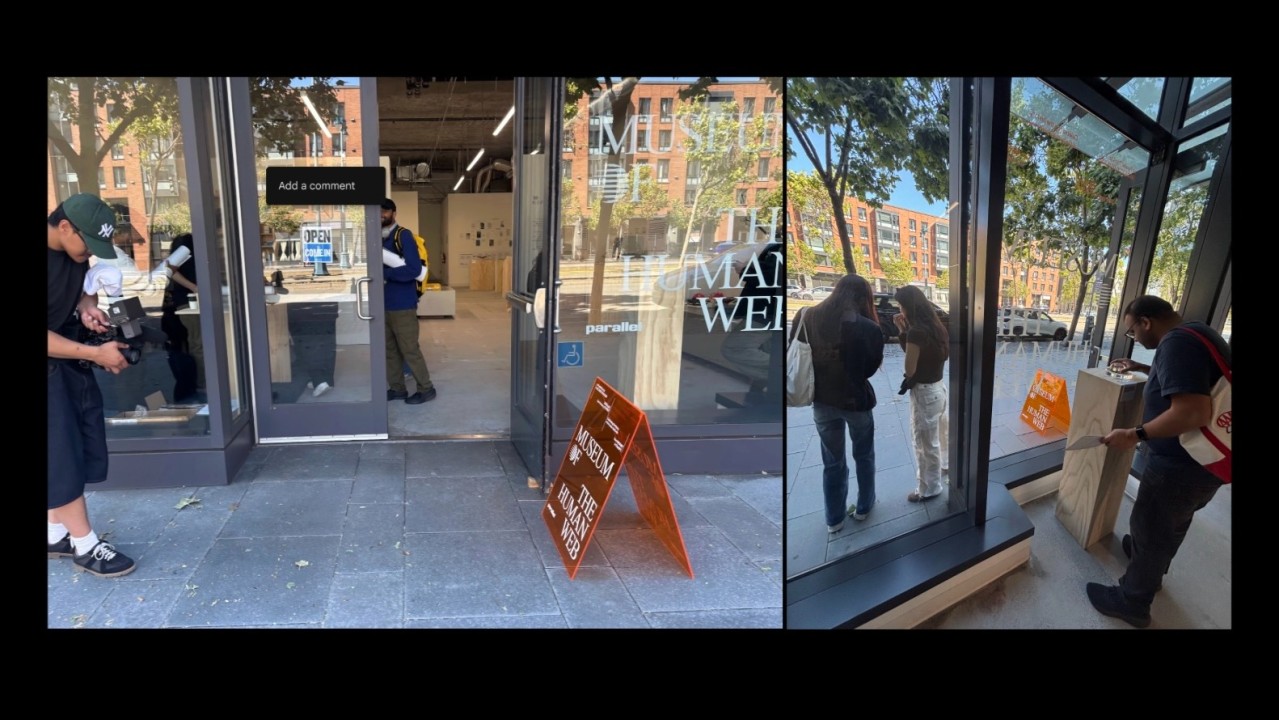
Field report from inside an AI company’s museum to the web before AI
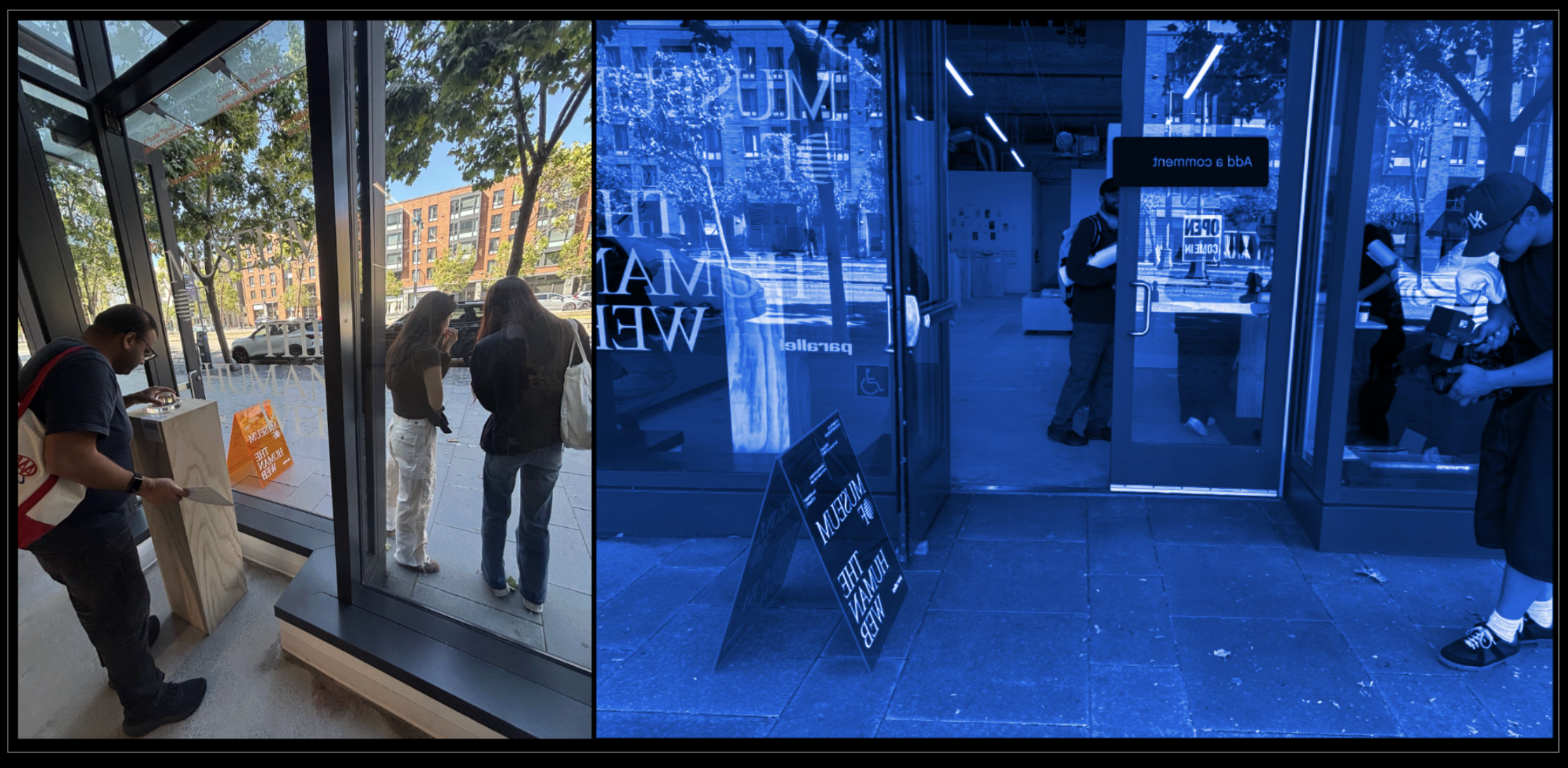
238 King Street, San Francisco, late afternoon on the final day. An artificial intelligence company has built a museum to the web that AI had no hand in making, and it asks visitors to feel the weight of that before they understand it. Parallel Web Systems builds infrastructure so AI agents can read & use the open web. It spent months gathering the artifacts of a web those agents never touched. Stand in that room and the contradiction is hard to walk past. A company whose whole purpose points forward built a careful, loving shrine to backward.
Sit with that for a second, because the people who built it clearly did.
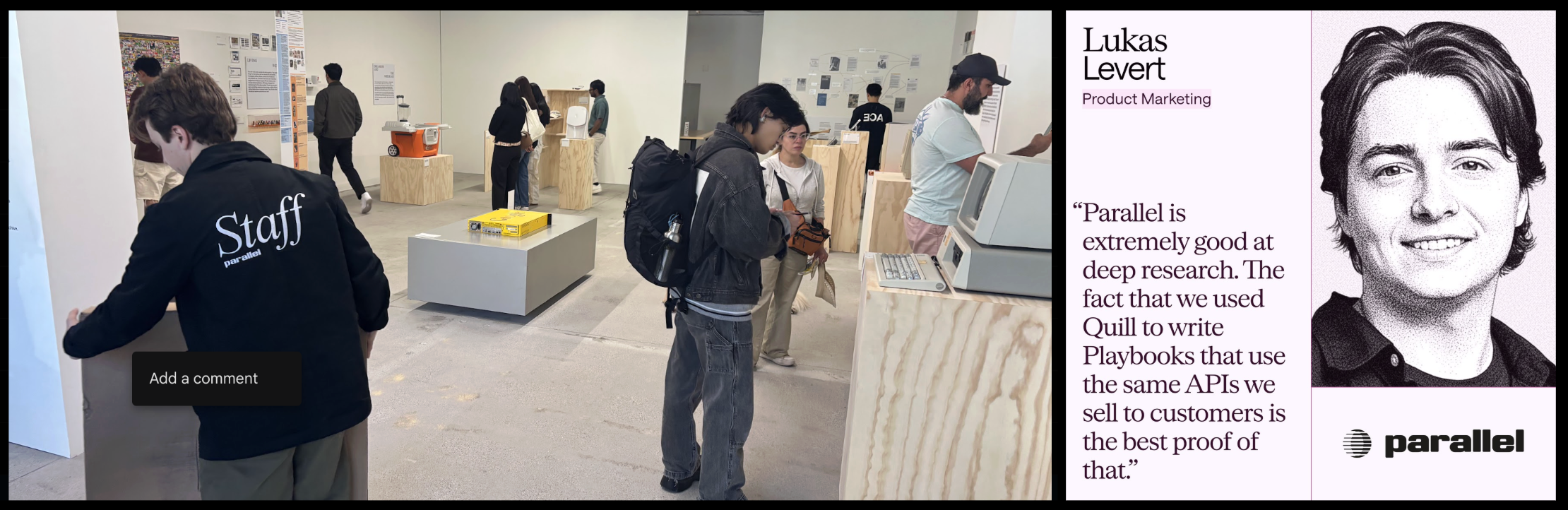
Click here for parallel view: museum.parallel.ai
Where it comes from
Lukas Levert moves through the space like someone who has thought about preservation longer than the popup has been open. Almost five years at Brave Software before Parallel. A background in copywriting and advertising, which he volunteers rather than hides, and which shows in how cleanly he frames a problem. Ask him what the museum is actually about and he does not reach for a company line. He reaches for a window. There is a narrow stretch of history, he says, where the internet was shaped by human ingenuity and creativity and culture. The whole point of the museum is to focus on that, even though Parallel is an AI company.
He grew up inside that window without knowing its edges. RuneScape, MSN, Club Penguin, Wikipedia, Reddit. He assumed his slice was most of the story. It was not. The web he knew sat on decades of other people’s stubbornness, and this room is partly his correction of that assumption, built at scale for strangers.
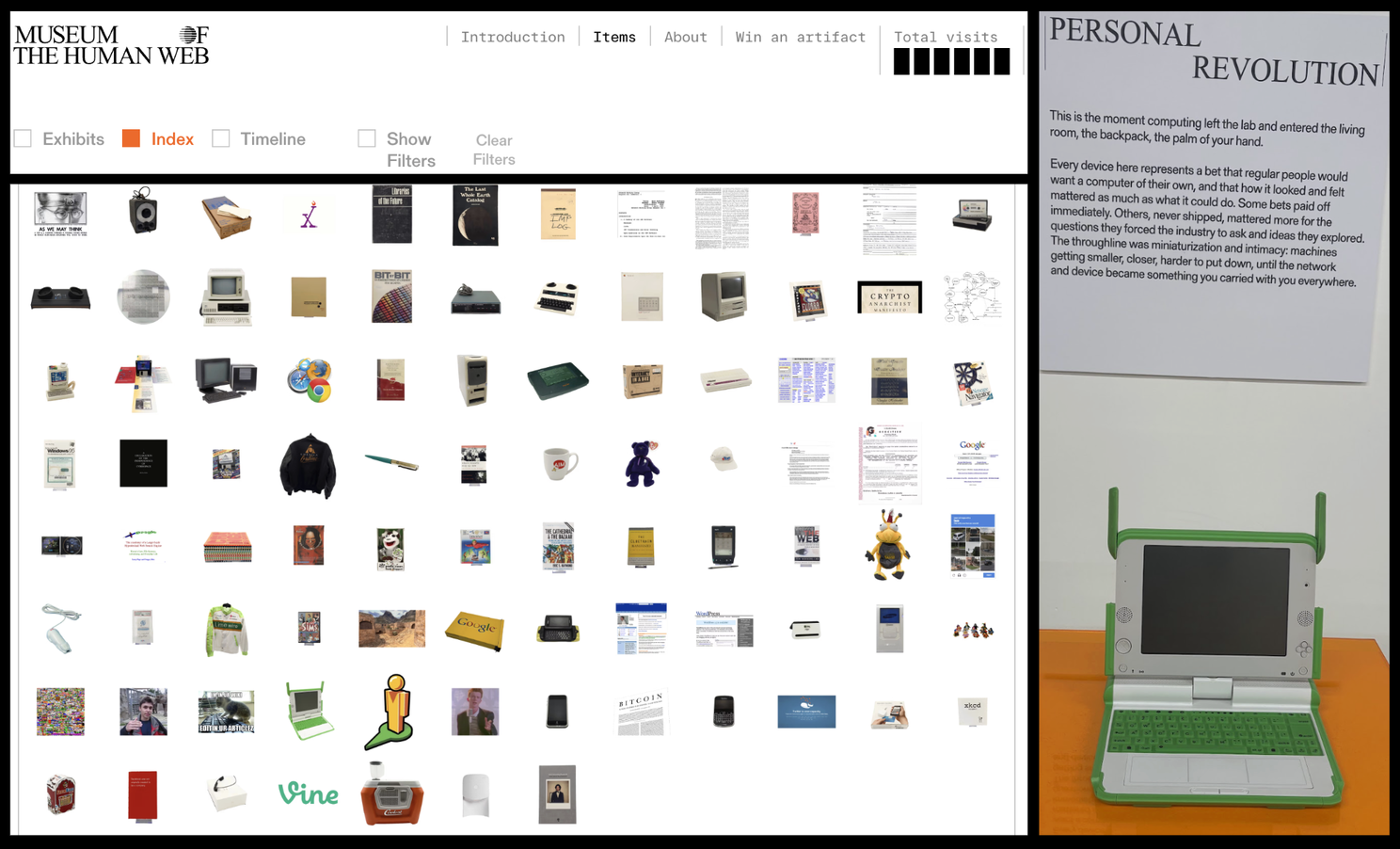
Here is the part that stuck. Lukas describes curation as pruning, not collecting. Every item carries a lineage. Nothing arrived at random. The Bitcoin white paper made it in. The thousand cryptocurrencies that chased it did not. The internet runs too vast to keep whole, so the real work becomes deciding what was a precursor to something larger and cutting everything that was merely near it. That is not nostalgia. That is an argument about memory, made object by object, and it turns out to be the museum’s actual method.
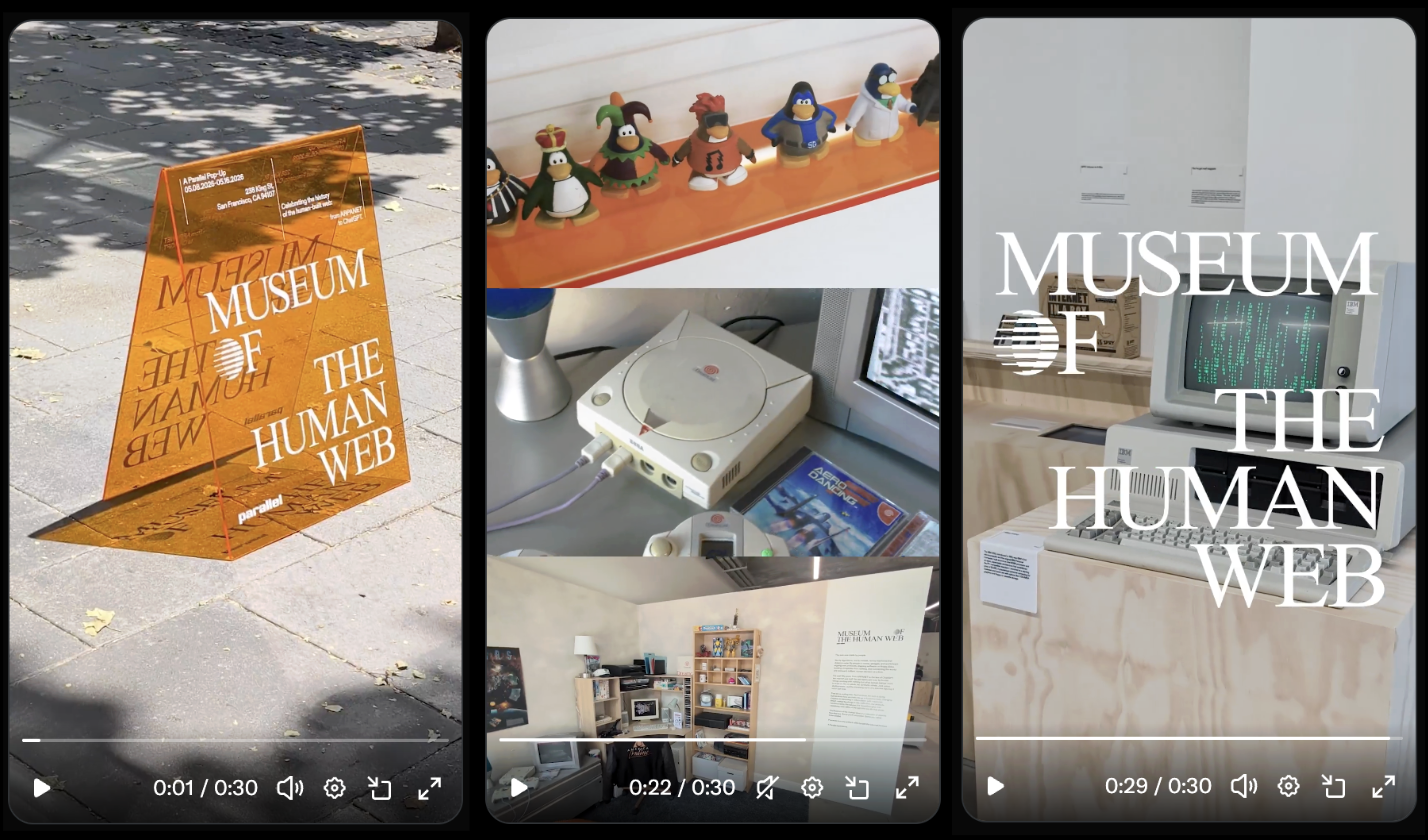
The artifacts reward the method. A NeXT Cube, the same model of machine Tim Berners-Lee used to write the first web server and the first browser and the language the whole web is built from. Cool before it is significant, which is the right order. An IBM PC 5150, brought in specifically to carry the memory of the BBS era that came before the web had a name. The Pets.com sock puppet. A BlackBerry Bold. Each one insists that a person decided something, shipped something on a floppy, argued over a protocol in a room.
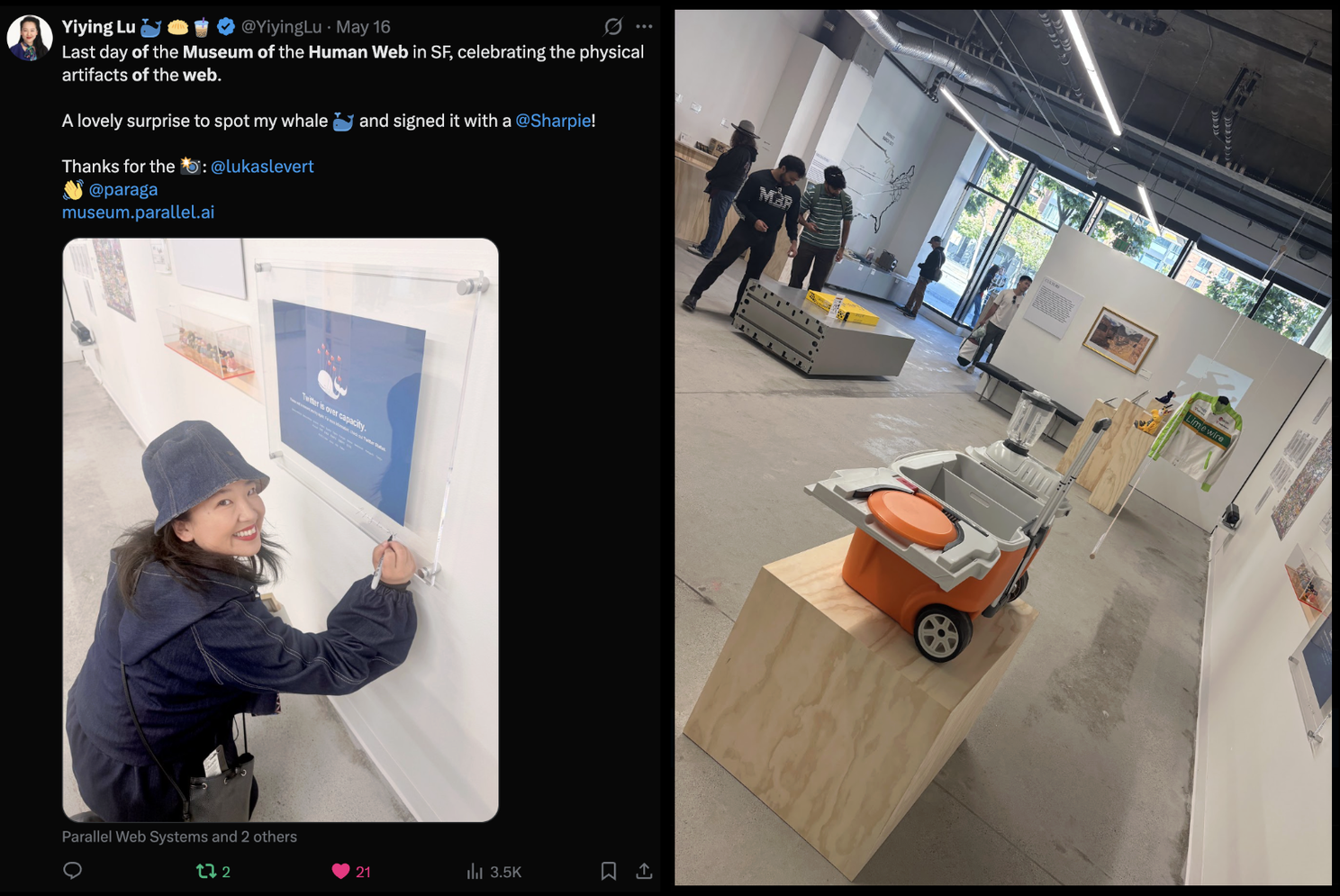
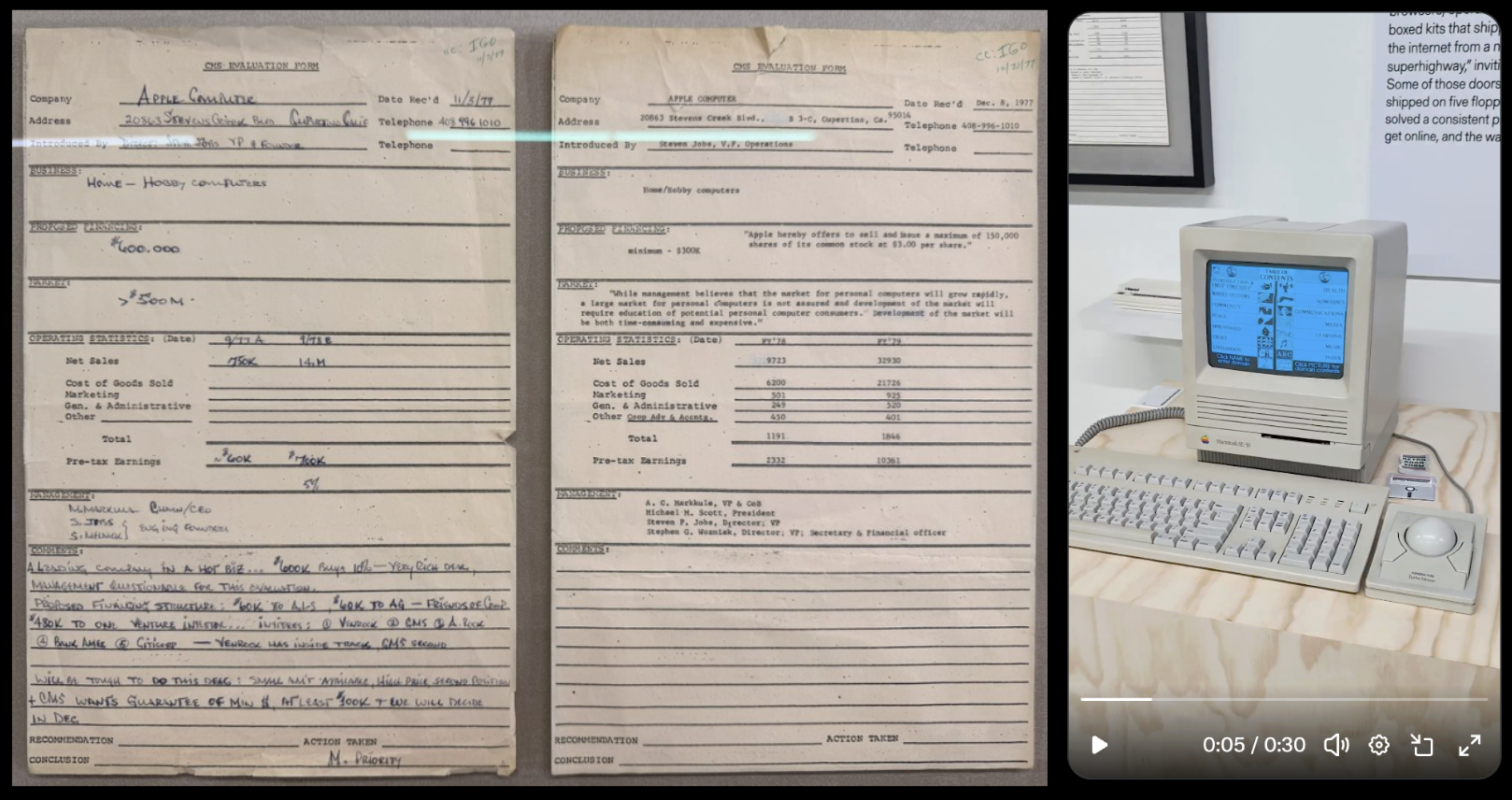
And the people who put a hand on the glass. Yiying Lu, who created the dumpling and boba emoji now lodged in the Unicode standard, found her own whale on display and signed it with a Sharpie. An artist countersigning her own contribution to the human web at the exact moment that web is being framed as something to remember. Huxley Dunsany of the Retro Roadshow exhibited a Macintosh SE/30 he had spent decades restoring, set beside Sequoia’s handwritten 1977 memo proposing six hundred thousand dollars into Apple Computer. In his Facebook post Huxley shows the math: The ten percent of Apple that memo described would run near four hundred billion dollars now. The artifact’s value was never the paper. It is the distance between what the writers knew then and what hindsight knows today. Yang You, Parallel’s head of design, claimed Club Penguin as a certified relic of a particular childhood, still a little amazed that a 2000s flash game packed in that much world. A town to wander, an igloo to decorate, mancala against a stranger somewhere on the planet.
Where it is
The harder thread runs underneath the warmth, and it is where the museum gets honest about its own motives.
This is calculated. The team worked with a set designer and an agency to build the identity system, codified so it carries across products and tools. The whole project took months of expanding and contracting the idea. On Monday the artifacts go back to headquarters in a row of safe boxes arriving as I entered. Parag Agrawal, the former Twitter chief executive, sits behind the company. None of that is a secret, and none of it cheapens the room. It just means the museum is brand infrastructure as much as it is memory, which Lukas more or less says. The team believes in building a brand rather than competing in an advertising rat race. Physical experiences matter precisely because AI has made online engagement cheap, where anyone can generate clickbait and the cost of noise has fallen to nearly zero. When marketing trends toward zero marginal cost, what differentiates a company is product, speed, trust, the thing itself.
So the museum does two things at once. It honors the human web and it advertises the company ending one chapter of it, and the surprise is that both can be sincere. Lukas was a copywriter before he built agent infrastructure. He shapes human attention for a living, inside a company betting attention is about to belong to systems instead of people. He sees no contradiction worth resolving, and maybe there is not one.
That economic shift is real and Lukas frames it plainly. The modern web ran on advertising. Ads subsidized creation. AI agents do not see ads, do not subscribe, do not buy the way humans do. So the incentive structure has to change, and high-quality information should carry a value the systems consuming it can pay. A fair market for information, in his words. The visitor, who once organized Facebook developer events around content payments that failed a decade ago and who keeps half an eye on machine-payment rails like x402, hears in this the strange return of an old idea on new infrastructure. That connection is the visitor’s, not Parallel doctrine. But standing in the room it is hard not to draw it.
Where it is going
One screen tracks browser evolution, and it doubles as a quiet lesson in how anything earns a place on the wall.
Chrome is there because it became infrastructure for billions, the substrate through which most of a species met the web. Mozilla is there. Brave, the company Lukas gave nearly five years, is not, on his own honest read that it has not yet become a defining historical force. The bar is not quality. It is not even popularity. The bar is whether a thing changed how people use the web at a scale that makes the change impossible to route around. Anything short of that becomes, in his word, a footnote.
Which raises the obvious question for everything still alive right now. Opera reaching toward becoming an AI browser company. The wave of AI-native browsers pressing the same frontier. Who lands on the wall and who lands in the footnotes? Lukas will not guess, and his refusal is the most useful thing he says. The present is unreadable from inside it. In hindsight the signal separates from the noise, and standing in the moment makes that separation impossible. He is describing the lag between a system accelerating and the people inside it who cannot yet see the shape of what they are accelerating through.
So picture the room ten years out, when the curators turn to 2026. By Lukas’s own logic any guess is a wager, but the method holds. The 2026 wing will not keep the loud announcements. It will keep whatever turns out to have been a precursor, pruned hard by a hindsight not yet available. Maybe a diagram of the first protocol that let information carry a price an agent could pay. Maybe the first browser that dissolved into an agent and stopped being a window a person looked through. Maybe a relic of this very popup, a museum about the human web, kept as the moment the field paused to ask what it was holding while it still held it.
There is a stranger possibility the building keeps circling without quite saying. A future Museum of the Human Web might hang, somewhere in its 2026 wing, the first artifact of the systems that started building the web alongside people instead of leaving it to them. The shrine to human making would then contain the seed of what comes next, and the question the popup asks would still be open, which is the point. What deserves to be remembered, once making something stops being a thing only people do?
Asked what the whole elaborate effort was finally for, Lukas did not reach for strategy. He said the team cares deeply about the internet, and that this is really what it is about. The most technical possible answer to a question about memory turned out to be a human one. The next web will have more voices in the room. Agents with identity, with the means to pay their own way, building alongside the people who started it. A wider we, walking into the next wing together.
bsky.app/profile/schwentker.sandboxlabs.ai/post/3mmskwaon3k2a