What kind of structure survives its own success?
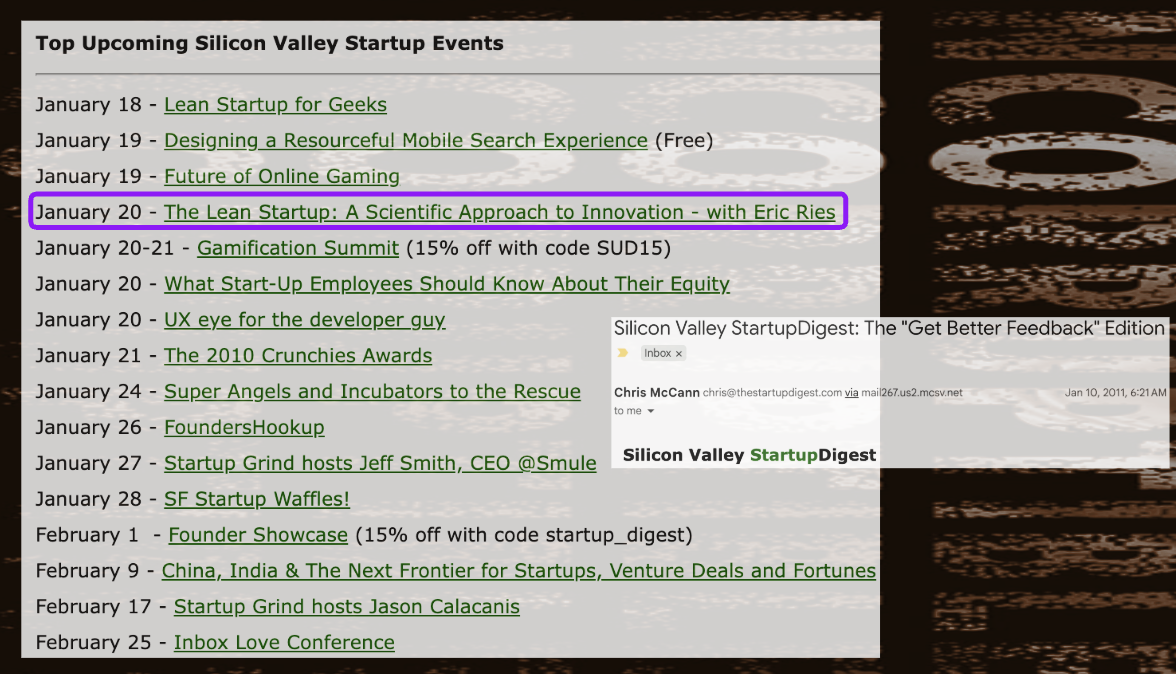
January 2011. Second floor of a SOMA corner building. Dozens of founders, corporate types and a few quiet observers edged around tables for a Lean Startup workshop. Eric Ries had not published his book yet. Innovation accounting, MVP logic, build-measure-learn. All new to me. Operating grammar of a generation forming in real time. A turning point no one had yet named.
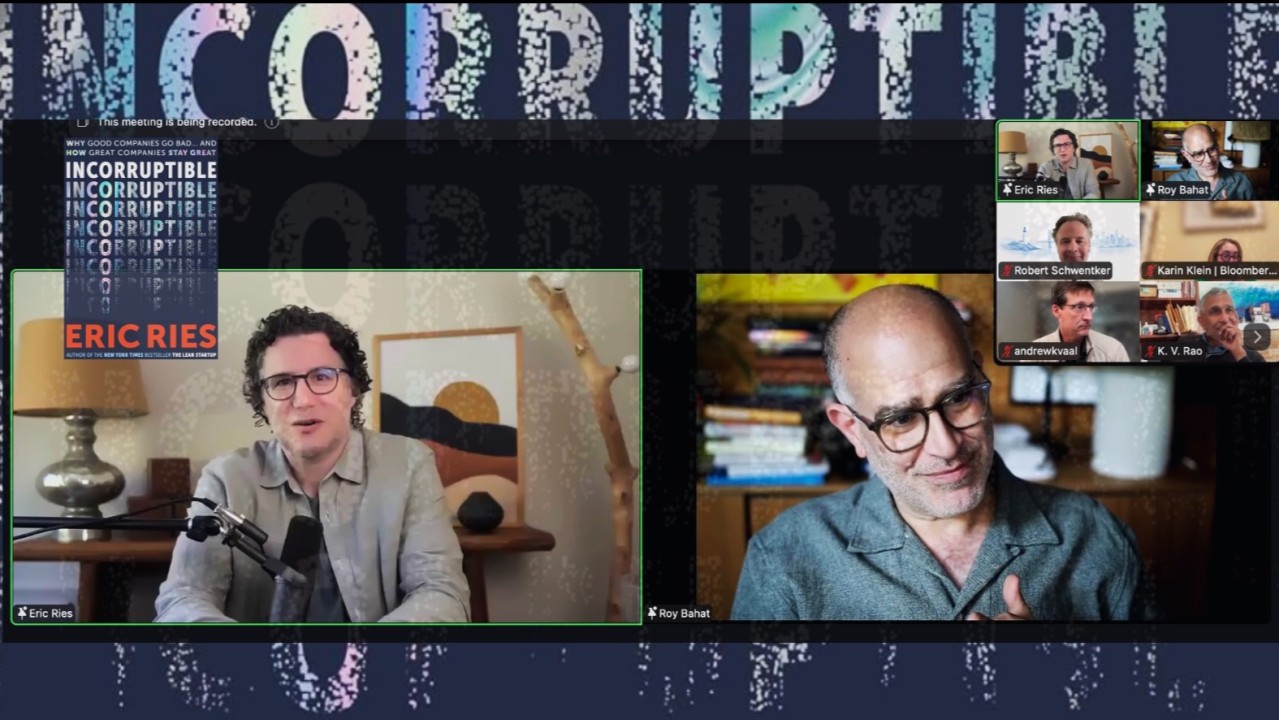
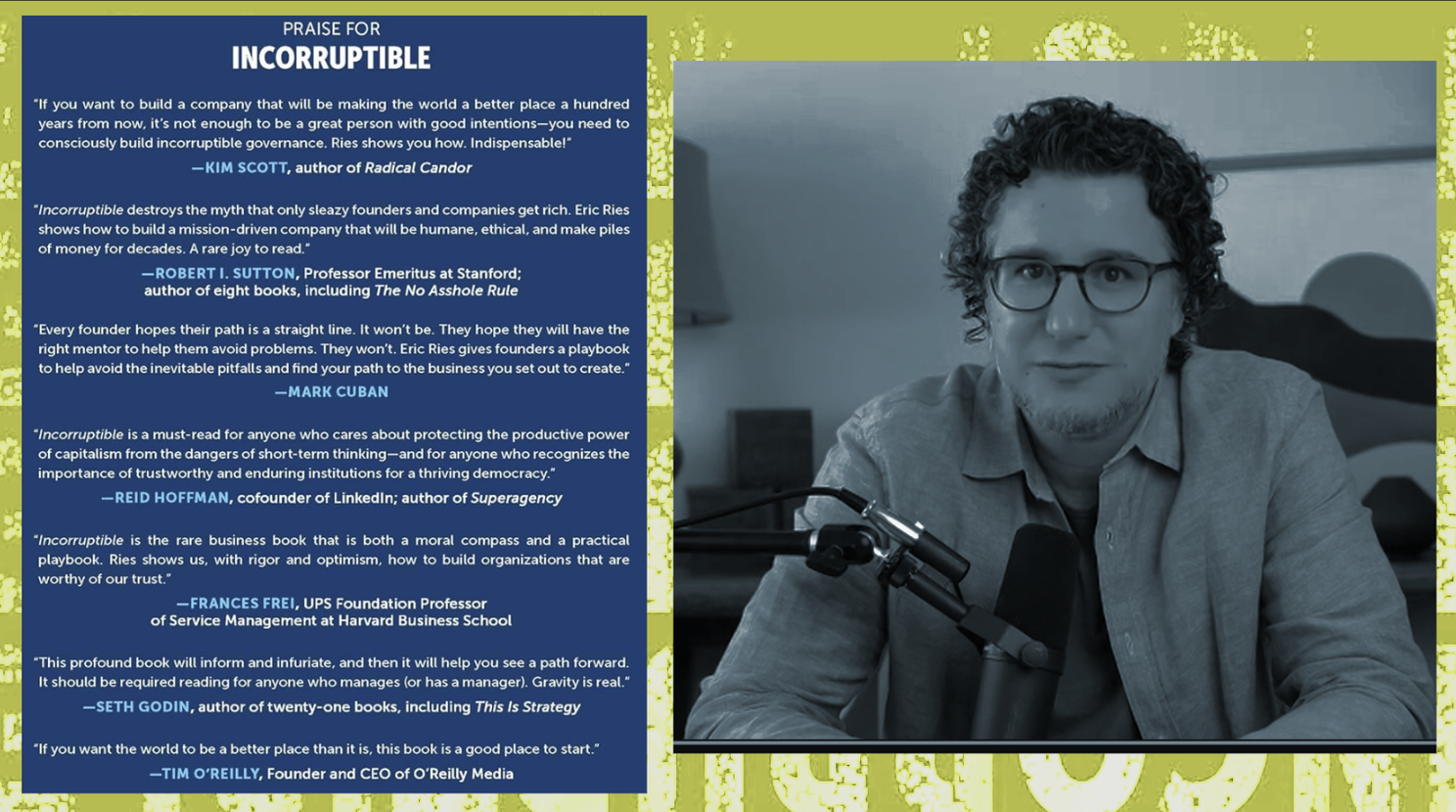
Fifteen years later, Roy E. Bahat of Bloomberg Beta hosted Eric on Zoom for the launch of his new book. Incorruptible: Why Good Companies Go Bad… and How Great Companies Stay Great.
Roy opened with a small confession. He’d read Eric’s writings as a young exec trying to figure out how to decide what to build. He recalled an old Twitter exchange, the kind that stopped happening once feeds became algorithmic. Eric tweeted from a Giants game asking if anyone had a printer nearby. Roy was sitting on Second Street & replied. That was the texture of the early web. Roy described Eric, with characteristic understatement, as
“one of the genuine intellectuals trying to figure out how all this should work.”
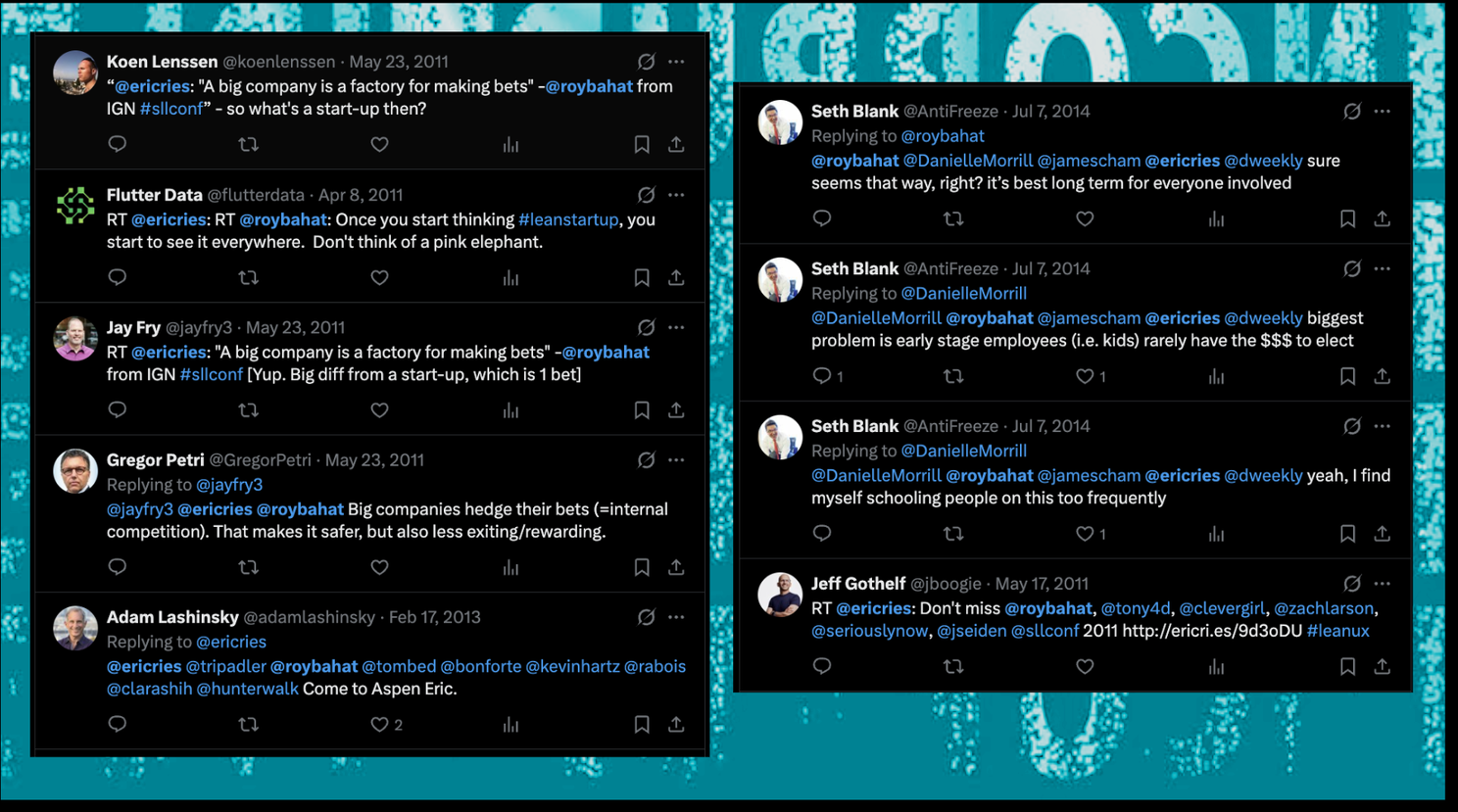
Eric returned the lens.
“In those days social media was actually social,” he said. “Now the algorithm decides who sees what and whether a post surfaces today or two weeks from now.”
Serendipity pretty much has gotten optimized out.
Then Eric described the night the Long-Term Stock Exchange nearly died. Years of work, millions raised, listing standards built around long-term thinking. Established financial actors first organized to block the SEC application. When that failed they pressured every vendor and partner in the stack. The late-night call arrived while Eric was thousands of miles from home. Drop the long-term listing standards or watch the company collapse. He convened his team on Zoom.
“I told them if we say no, I think we go back to zero,” he recalled. “Just so there’s no plan B here.”
One by one each person said no. He admits in the book he was on the bathroom floor, barely functional. The company survived because it had been built around something more durable than its product.
The Eric Ries of 2011 has become a different kind of figure. Less methodology evangelist, more researcher of institutional failure modes. I imagine the book will get into designing company DNA that holds against the gravity of capital, growth and time. And how to redesign DNAs out of sync with mission statements, values, brand images.
Roy moves through the convo as a bridge figure. A careful listener who’ll jump right in mid paragraph – “expressing affection through interruption.” He turned over a poker line that lit the moment. “If you don’t know who the pigeon at the table is, it’s you.” Markets corrode in particular uncertain ways. Knowing the game is the first move.
The most quietly explosive observation came unexpected. Profits attract predators. A successful company accumulates trustworthiness as its most underrated asset. Eric framed it as a pile of value lying in plain sight inside the office. No doors. No locks. No vault.
“Of course people will try to steal it. What do you expect?”
Most founders apparently have never read their own corporate charter. The Delaware boilerplate phrase “any lawful act or activity” sounds open-ended and is not. Under current law ⚖️ that single line locks the company to shareholder primacy - means “fiduciary duty to maximize shareholder returns.” Most founders sign a mission they did not choose or even bother to read it seems.
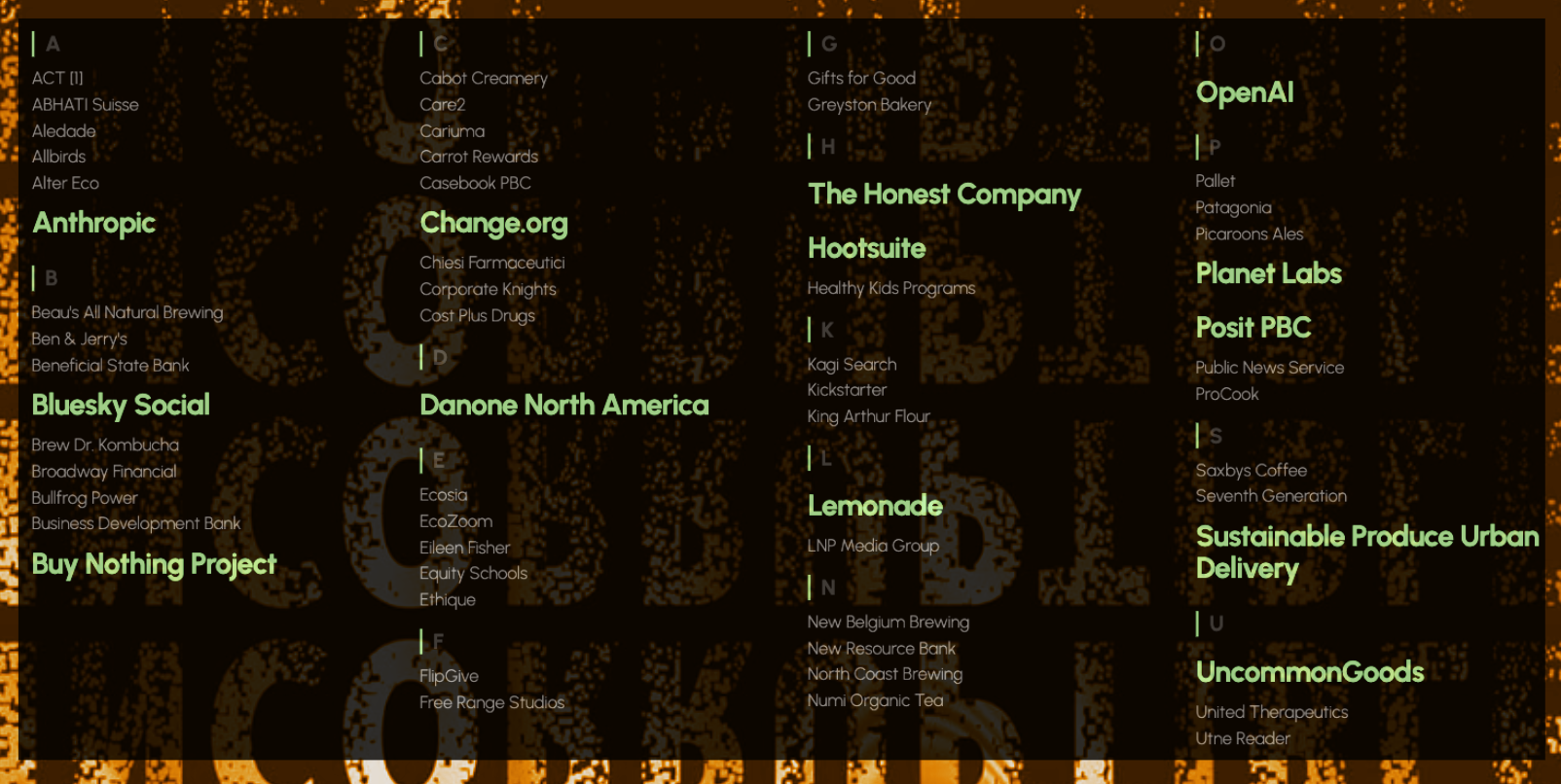
A public benefit corporation filing rewrites that sentence. Two pages in Delaware. The legal form is recent. The instinct behind it is older than the joint stock corporation itself, which for most of its history was incorporated to do a specific thing rather than maximize anything in the abstract. On top of that B Corp certification, a separate construct, layers external audit of practice on top of the legal frame - “a company verified as meeting standards for social and environmental performance, transparency, and accountability.”
Eric cited several Google alumni who had written almost identical farewell essays. The arc each described moved from decisions made for the customer, to decisions made for the company, to decisions made for whoever happened to be in the room. The trustworthiness pile gets spent. Few notice while it happens.
Anthropic surfaces in the conversation as a governance experiment built deliberately. Its founders had watched a peer organization cycle through internal civil wars without structural means of resolution. They wanted checks and balances rather than founder control. The Long Term Benefit Trust became their answer. Outside trustees phased in alongside commercial milestones, with the ability to appoint directors next to investors. The talent advantage, the focus advantage and the trust advantage all trace back to that early structural choice.
Incorruptibility in this telling is not a virtue. It is an engineering problem.
“The way the world is,” Eric said something like, “is not some natural phenomenon. It is being engineered by those who benefit from it being this way.”
Later Roy added:
“When you defend the principle in small ways, it gives people confidence that you will defend it in big ways.”
The value a founder builds often comes from insisting on something while every force of gravity points the other way. He describes Steve Jobs arguing with his hardware engineers that cables in a computer that nobody is able to open must be designed beautifully - that good design is a principle whether the customer sees it or not.
A question: What gets lost when platforms, companies or AI systems optimize prediction over human flourishing?
That question might be the working question of the coming decade. For founders, for investors, for institutions still drafting their first charter and for ones quietly rewriting their hundredth. The book might not resolve the question. I imagine the book equips a reader to hold it.
Eric’s Incorruptible ships in two weeks. Founders who may be drafting institutional DNA the next decade will inherit. The book may be an invitation to draft it for public benefit. Worth picking up and sitting with - i predict.
Amazon: Incorruptible: Why Good Companies Go Bad… and How Great Companies Stay Great
amazon.com/Lean-Startup-Entrepreneurs-Continuous-Innovation
wikipedia.org/wiki/List_of_benefit_corporations
bsky.app/profile/schwentker.sandboxlabs.ai/post/3mlhiogzia22n
twitter.com/schwentker/status/2053270985571529041