Part 1: The Moment & the Split
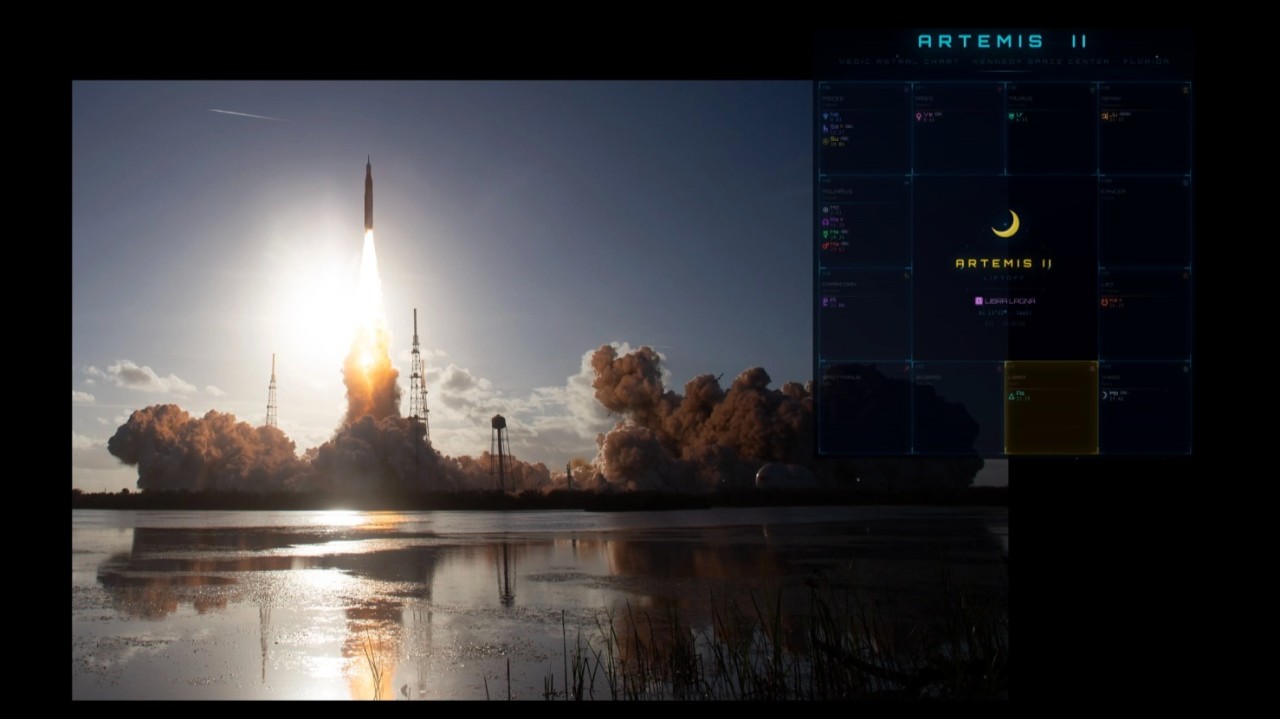
I was watching the Artemis II feed when it happened. The Apollo distance record counter hit zero & kept going. Then I did something I don’t usually mention in professional settings. I cast a Vedic astrology chart for that exact moment. There was a time when reading the stars and calculating their orbits were the same discipline. Somewhere around 1700, they were split apart. Astronomy kept the universities, the funding, the respectability. Astrology got the margins. I’ve spent most of my career in tech. A quieter part of my time goes to something much older. What I found in that chart was not dramatic. But it echoed something I keep encountering in the AI ecosystem. Both systems are fundamentally attempts to extract meaning from complex patterns. The same instinct to find structure in vast, interconnected systems. The same belief that hidden relationships shape what comes next. Two prediction frameworks, separated by 5,000 years, reaching for the same question from opposite ends of history. I think that convergence is worth talking about.
The Moment
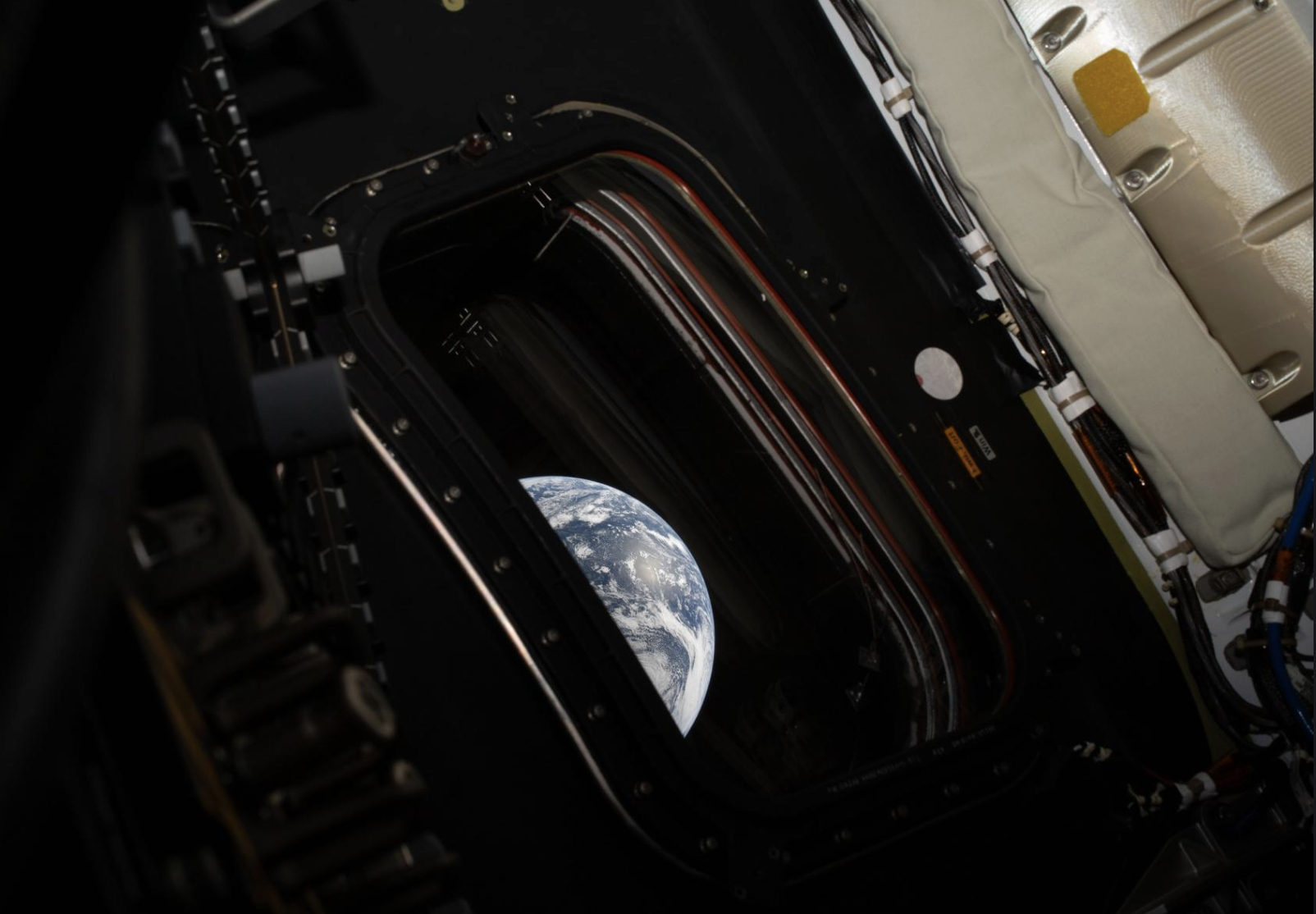
At 1:57 p.m. Eastern on April 6, 2026, the Orion spacecraft carrying NASA astronauts Reid Wiseman, Victor Glover, and Christina Koch, along with Canadian Space Agency astronaut Jeremy Hansen, surpassed the distance record held by the Apollo 13 crew since 1970. Capcom Jenny Gibbons marked the moment from Mission Control: on April 15th, 1970, three explorers set the record for the farthest distance humans have ever traveled from our home planet. Today, for all humanity, you’re pushing beyond that frontier.
They kept going. By 7:07 p.m., Orion had reached approximately 252,756 miles from Earth. The farthest any human beings have ever been from home.
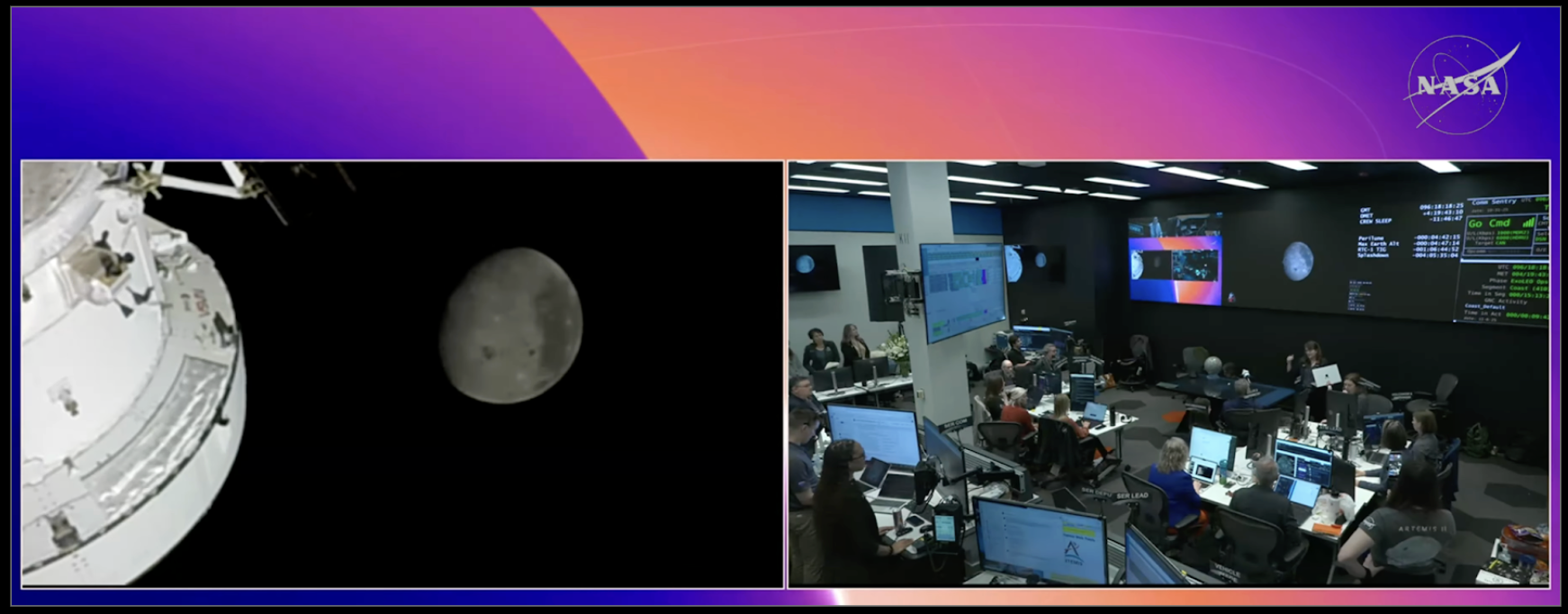
I was watching the live NASA broadcast. The Science Evaluation Room at Johnson Space Center. The Moon growing larger on Orion’s cameras. Christina Koch floating in microgravity, working the instruments. And then Jeremy Hansen, speaking for the crew, said something that stayed with me. They would continue their journey even further into space before Mother Earth succeeds in pulling them back to everything they hold dear. But they most importantly chose this moment to challenge this generation and the next, to make sure this record is not long lived.
Then the crew did something unexpected. Commander Reid Wiseman called down to say they had identified unnamed craters on the lunar surface. One they proposed to name Integrity, after their spacecraft. The second was personal. They had lost a loved one during their years of training. Reid’s wife, Carol. Mother of Katie and Ellie. There was a bright spot on the Moon, just northwest of Glushko, on the boundary between the near side and the far side, visible from Earth at certain times of the lunar cycle. They wanted to name it Carroll. Mission Control went quiet.
A crew member, 250,000 miles from home, looking down at a landscape no human had ever seen, and the first thing he reached for was meaning. Not data. Not coordinates. Meaning. A name for a bright spot, connecting loss to light.
That impulse, the impulse to look at patterns and make them mean something, is the thread that runs through everything that follows.
Before the Split
To understand why a tech professional would cast a Vedic chart for a lunar flyby, and why I think it matters to anyone working in AI, you have to understand what happened around 1700.
For most of recorded human history, astronomy and astrology were not separate disciplines. They were the same practice. The person who calculated the orbit of Mars was the same person who interpreted what that orbit meant for the king’s military campaign. The math and the meaning lived in the same mind.
Johannes Kepler, whose laws of planetary motion still govern how we navigate spacecraft today, cast over 800 horoscopes in his lifetime. This was not a side hustle. Kepler believed that planetary configurations physically affected life on Earth. He cast charts for Emperor Rudolf II. He issued a prognostication for 1595 that forecast a peasant uprising, a Turkish invasion, and bitter cold. All three happened. As historian John North observed, had Kepler not been an astrologer, he very probably would not have produced his planetary astronomy in the form we have it.
Isaac Newton spent years studying alchemy in private. The hermetic tradition. The search for hidden correspondences in nature. Not an embarrassing footnote. Part of the same intellectual engine.
Then came the Enlightenment. The observable, measurable, repeatable parts of celestial study went one way. The interpretive, symbolic, meaning-making parts went another. Astronomy entered the university. Astrology was escorted to the margins.
This was productive. It gave us modern astrophysics. It gave us the precision that put four astronauts 252,756 miles from Earth and brought them safely around the far side. But it also created a blind spot. And I think AI is starting to reveal what lives in that blind spot.
So I cast the chart. And what it showed, alongside what the Artemis II crew themselves observed from 4,067 miles above the lunar surface, made me think the line we drew 300 years ago may not hold much longer.
That’s Part 2.