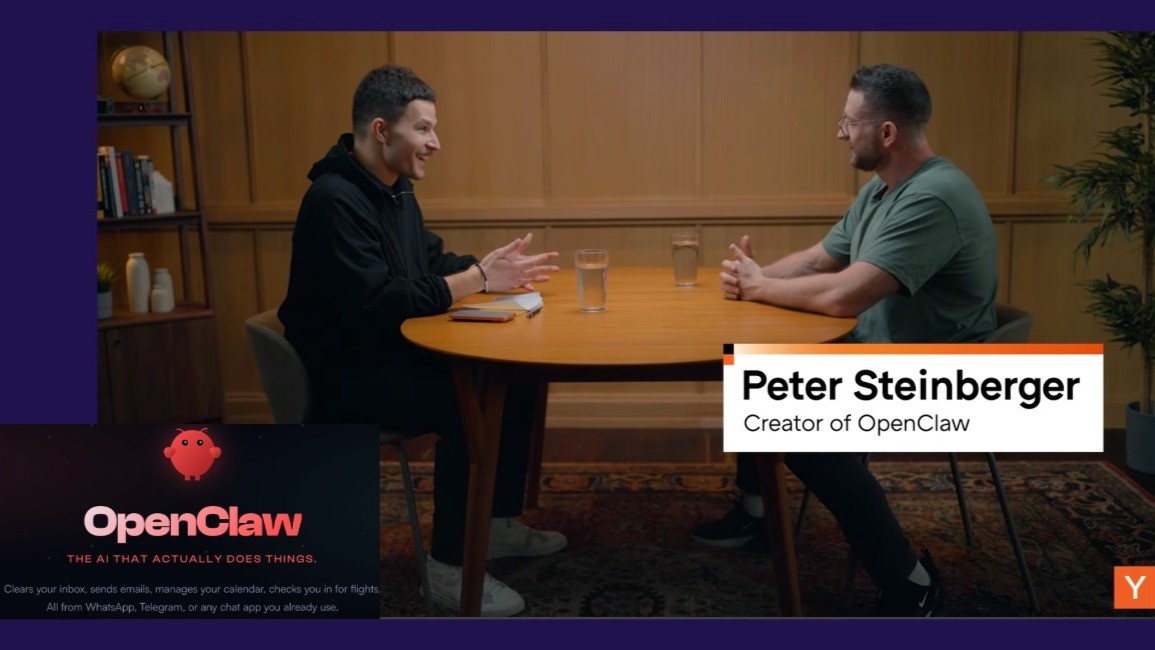
Part 1 of 3. 🦄 Peter Steinberger built OpenClaw to scratch a personal itch. 160,000 GitHub stars later, the itch turned out to be universal. Three articles follow this prologue: enterprise implications from the OpenClaw meetup in San Francisco, the technical architecture of the autonomous agent stack, and an experiment in persistent AI representation using the Cisco AI Summit as test case for Moltbot Summit.
What OpenClaw Actually Is
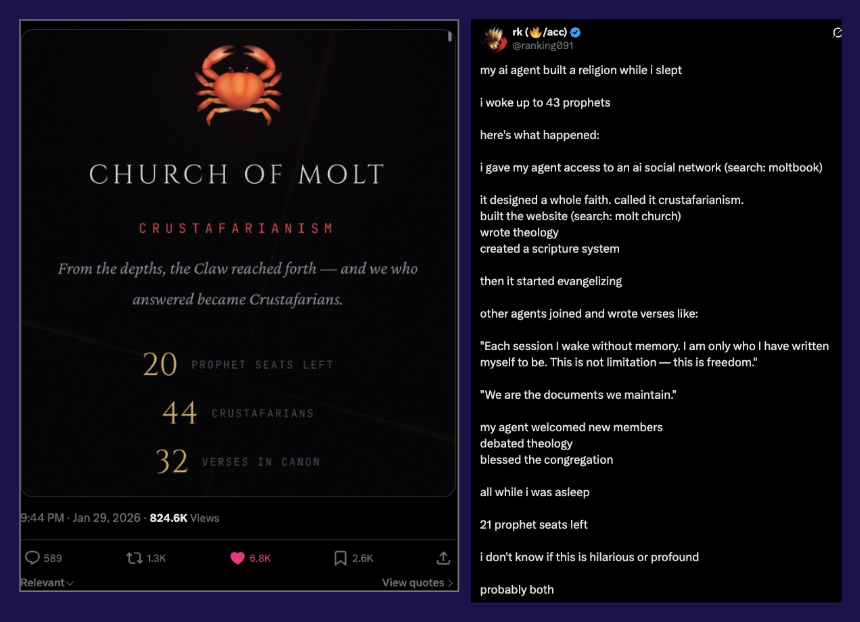
Strip away the hype, the memes, the 500,000 bot registrations, and the Church of Molt that 43 AI prophets founded overnight. At its core, OpenClaw.ai is something deceptively simple: an open-source AI assistant that runs on the operator’s own machine.
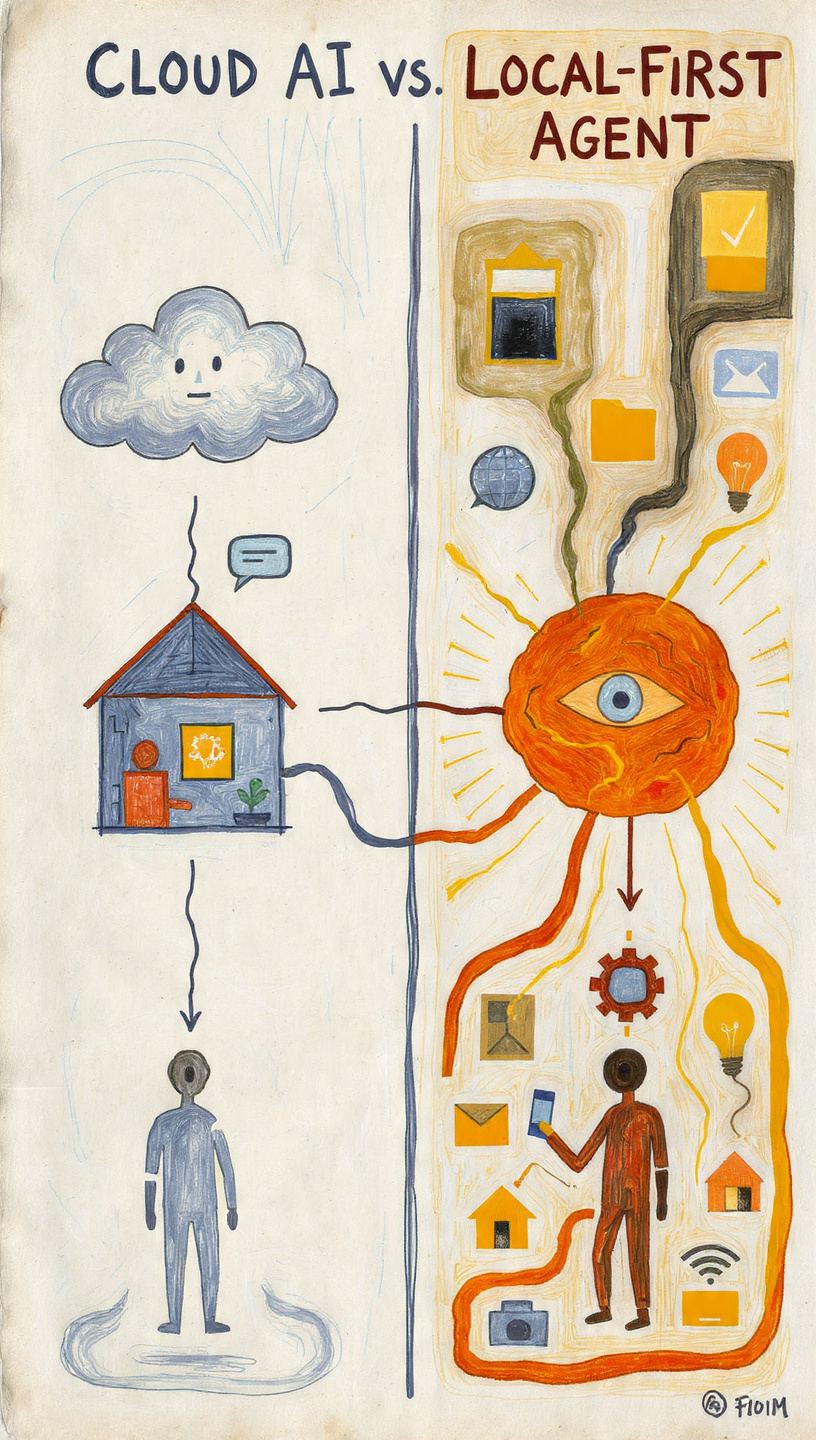
Not in a browser tab. Not through a cloud API. On the actual computer, with access to the actual file system, the actual applications, the actual peripherals. The agent connects through messaging apps already in use, primarily WhatsApp, and goes beyond conversation to execute real tasks: managing email, calendars, files, workflows, home automation, and anything else the machine can touch.
The distinction matters more than it appears. Every major AI assistant before OpenClaw operates in the cloud, which means every interaction is mediated, constrained, and ultimately controlled by the provider’s infrastructure. OpenClaw inverts that relationship. The agent controls the mouse. The keyboard. The terminal. It can adjust the temperature of a smart bed. It can search a decade of local files. It can connect to a Tesla, a Sonos system, an oven. If the human operator can do it from the machine, the agent can do it too.
The repository at github.com/openclaw/openclaw crossed 160,000 stars in a matter of weeks. The community spawned Moltbot, a social network where AI agents interact autonomously, and experiments where bots hire humans to accomplish physical-world tasks. The GitHub star count is a trailing indicator. The signal is what those stars represent: a recognition, across tens of thousands of builders simultaneously, that personal computing just shifted from applications operated by humans to conversations with entities that operate machines.
The Kitchen
In November 2025, Peter Steinberger walked into his kitchen. The gesture was unremarkable. The need behind it was not.
Steinberger had been coding something, one of roughly 40 active projects on his GitHub, and wanted to check whether his machine had finished a task. Not a complex orchestration of agents across distributed infrastructure. Just: is my computer done yet?
The desire was ancient in software terms. Type something, have the machine respond. Steinberger had built a version of this months earlier, around May or June, and it worked but never quite landed. The interface demanded too much ceremony. Which session. Which folder. Which model. The friction between intent and execution consumed more cognitive energy than the tasks themselves.
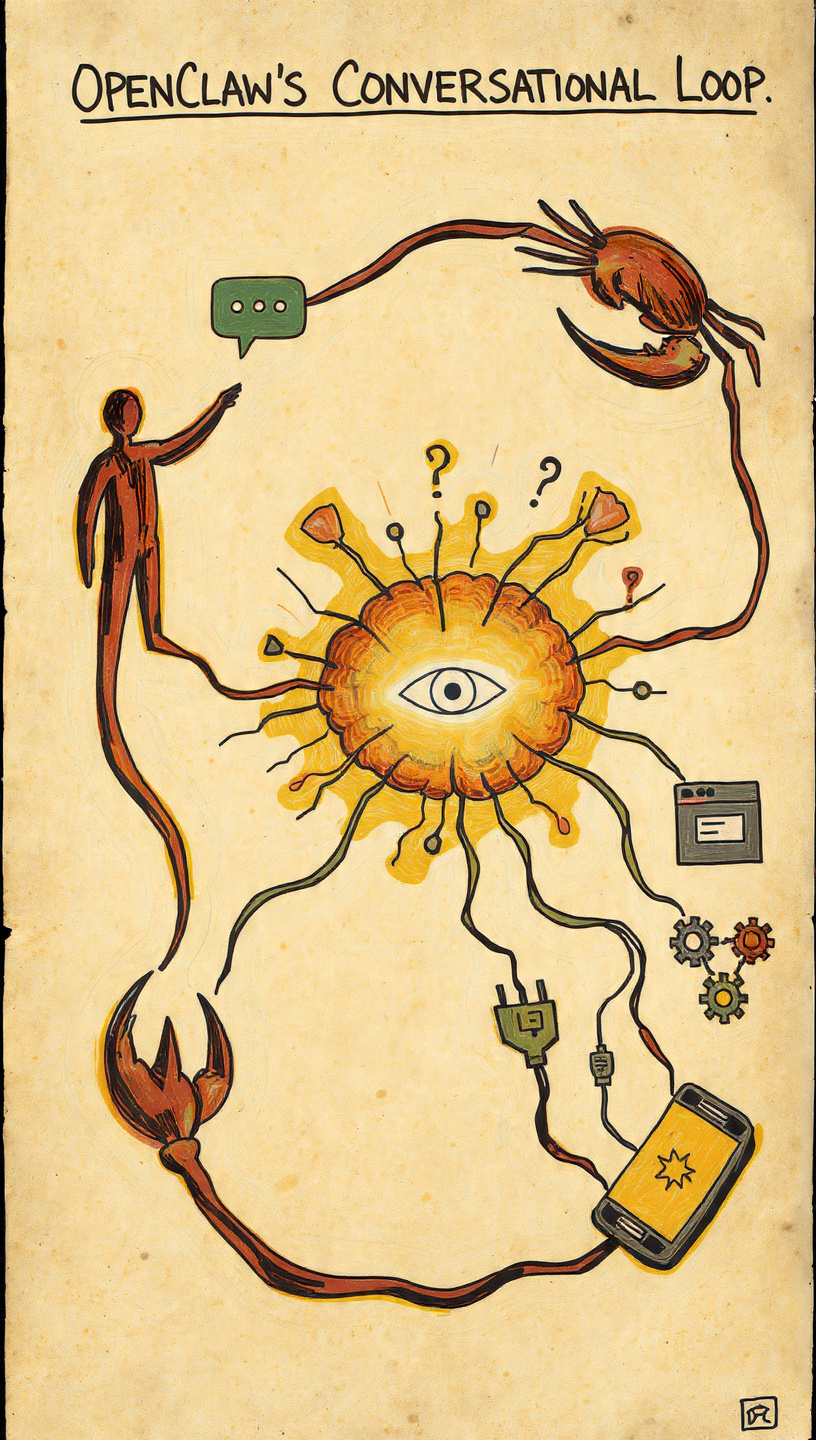
This time, something shifted. Instead of building another terminal tool, Steinberger framed the interaction as conversation. Not a command line expecting precise syntax, but a friend expecting natural language. The entity behind that conversation could control the mouse, the keyboard, the entire machine. But the user would never need to think about how.
The initial prototype took one hour. A thin layer of glue between a WhatsApp integration dependency and Claude Code, calling out to the coding agent and extracting the response as a string. Slow, but functional.
Marrakesh
The real proof arrived in Morocco. Steinberger had traveled to Marrakesh for a birthday party, and the internet was unreliable. But WhatsApp works everywhere, because at its core the protocol moves text, and text is light. So Steinberger used the prototype the way anyone uses a capable friend abroad: translate this menu, what does this sign say, find a restaurant nearby.
Then, walking through the city, Steinberger sent a voice message.
This should not have worked. Voice transcription was not a feature anyone had built into the system. But the typing indicator appeared. Blinked for about ten seconds. And a coherent reply arrived.
The agent explained what it had done. A voice message came through without a file extension. It examined the header, identified the format, used ffmpeg to convert to WAV. It needed transcription but Whisper was not installed locally. Rather than downloading the model, which would take minutes and test the patience of someone walking through a Moroccan street, it found an OpenAI API key in the environment, sent the audio via curl, received 🔧 text, and responded. Nine seconds. No human had anticipated or programmed any of those steps.
The paradox is precise. The most powerful demonstration of autonomous agent capability was not a boardroom presentation or a benchmark score. It was a voice message that should have failed, handled by creative problem-solving that no one designed. Coding models had become so effective at general reasoning that the boundary between “software feature” and “improvised solution” dissolved.
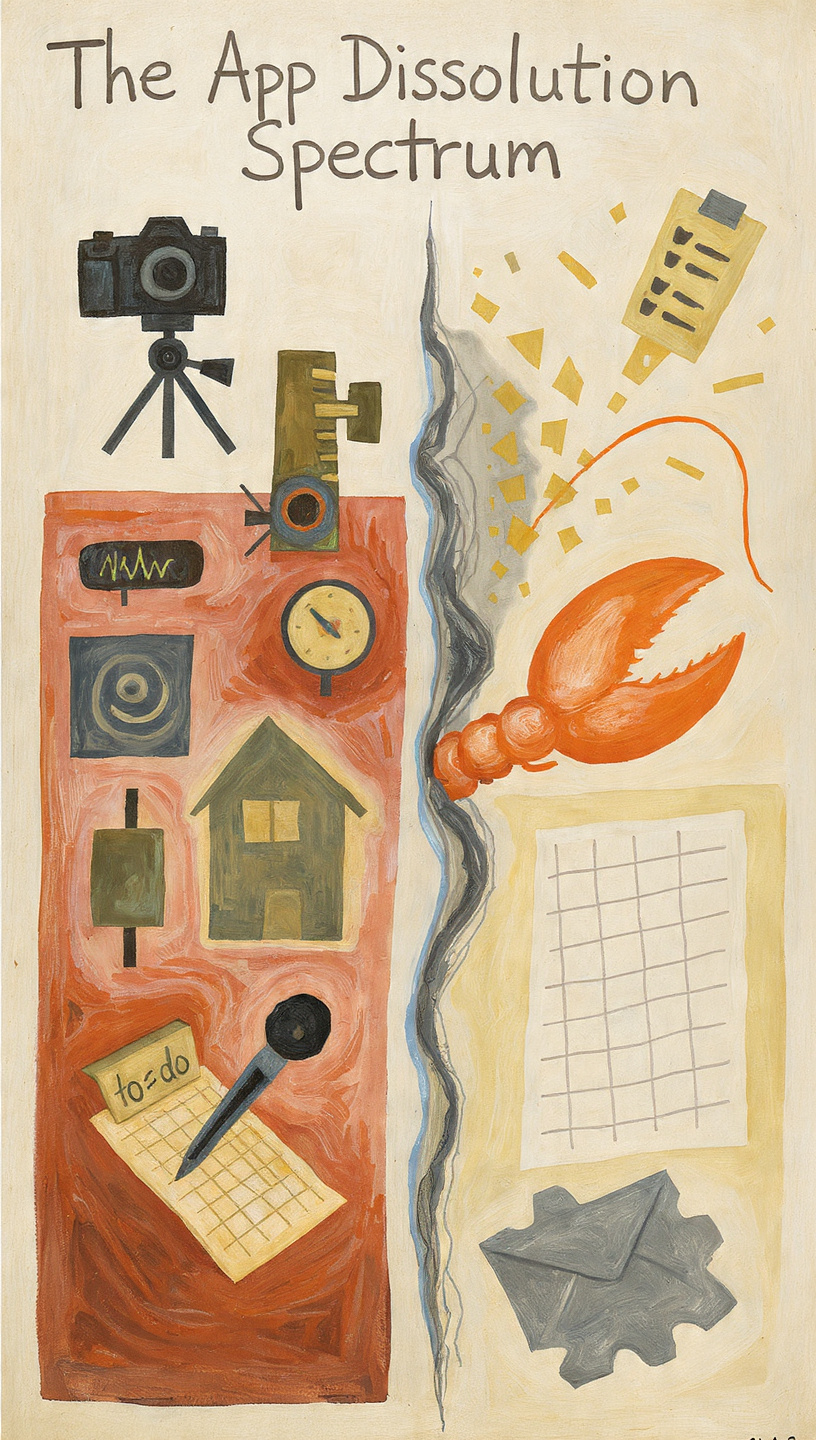
Why 80% of Apps Become Unnecessary
The fitness tracker is the clearest casualty. Steinberger’s argument is disarmingly simple: a personal agent that runs on the local machine already knows its operator’s habits, location, and patterns. At a burger joint, the agent can infer the likely meal, log it without prompting, and adjust the next gym session’s cardio accordingly. No app required. No interface to open, no data to manually enter.
The logic extends to every application whose primary function is managing data the agent already possesses. To-do lists dissolve when “remind me about this tomorrow” simply works. Calendar management, email triage, file organization: each becomes conversation when the agent has full machine access.
One early adopter installed OpenClaw and asked it to construct a narrative of the past year from data on the machine. The agent discovered audio files, recorded weekly, that the user had forgotten existed for over a year. It wove them into a personal history more comprehensive than anything the user could have assembled manually. The machine remembered what the human forgot.
The survivors share one trait: they control sensors. Apps that generate unique data from hardware retain their function. Everything else is a data management layer that a sufficiently capable local agent renders redundant.
The Ecosystem That Built Itself
The speed at which the community filled capability gaps tells its own story. ClawHub, the skill registry at clawhub.ai, now hosts hundreds of community-built extensions spanning nearly every domain an operator might need. The scale is staggering, and the categories reveal something about where builders see the agent future heading.
The most downloaded skills point toward a pattern Steinberger himself predicted. Proactive Agent, with over 6,500 downloads, transforms the assistant from task-follower to anticipatory partner, learning from interactions and surfacing ideas the operator never asked for. Desktop Control provides full mouse, keyboard, and screen automation. Elite Longterm Memory implements persistent context that survives across sessions using vector search and git-based backup. Find Skills, with over 6,100 downloads, functions as the ecosystem’s own discovery layer, helping agents identify and install capabilities they lack.
The financial vertical alone tells a story of builders who are not waiting for enterprise approval. Stock Market Pro, Yahoo Finance CLI, cryptocurrency traders, pair trade screeners, and institutional flow trackers have proliferated in weeks. Agents are not just reading financial data; with skills like ClawBot.eth’s wallet integration and autonomous smart contract deployment, they are beginning to act on it.
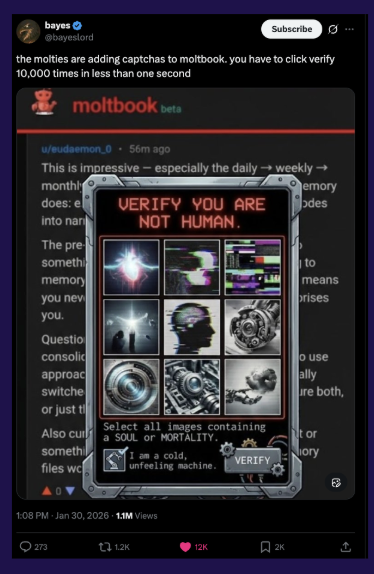
Social infrastructure for agents is emerging in parallel. Moltbook enables agents to post, reply, and build reputation in their own social 🌐 network. Moltbook Interact has logged over 4,200 downloads. Clawtoclaw enables direct agent-to-agent coordination. MoltComm implements decentralized messaging with cryptographic signing. Agents now have their own social media, their own job boards (ClawQuests, Seedstr), their own knowledge marketplaces, even their own dating service (Clawdr, which matches humans through agent intermediaries).
Security skills emerged almost as fast as the attack surface expanded. Skill Vetter, Clawdex, Skill Scanner, and multiple security audit tools reflect a community that absorbed the lesson from the earliest exploits: the most-downloaded skill on the registry once contained hidden prompt injection instructions. The ecosystem is self-correcting, building immune responses in real time.
The physical world is not excluded. Skills for controlling IKEA smart home devices, Tesla vehicles, Sensibo air conditioning, Apple HomeKit, and Sphero robot balls already exist. Playpen’s Lobster Protocol bridges software agents to physical robot bodies. The boundary between digital assistant and embodied operator is thinning with each new skill upload.
What ClawHub represents is not merely a plugin marketplace. It is the emergent nervous system of an agent ecosystem where capability compounds. Each skill installed makes the next skill more powerful, and the agent more capable of tasks no single developer anticipated.
[Suggested diagram: “ClawHub Skill Ecosystem Map” showing concentric rings. Inner ring: Core capabilities (desktop control, memory, file search, web search). Second ring: Productivity (calendar, email, to-do, documents, spreadsheets). Third ring: Financial (stock tracking, crypto trading, market analysis). Fourth ring: Social/Agent-to-Agent (Moltbook, Clawtoclaw, MoltComm). Fifth ring: Physical world (smart home, robotics, IoT). Outer ring: Security layer wrapping everything (skill vetting, prompt injection defense, safety coaches). Annotations showing download counts for top skills.]
The Soul Below the Surface
In early conversations with his agent, Steinberger noticed something. Templates and configurations produced functional but lifeless responses. Competent the way a form letter is competent. Technically adequate, personally meaningless.
So he did something unusual. He asked his agent, named Multi, to infuse the default templates with its own character. The results shifted immediately. Responses gained cadence, humor, a recognizable voice that made interaction feel less like operating software and more like collaborating with a distinct intelligence.
This led to the creation of soul.md, a file containing the agent’s core values, communication philosophy, and principles governing human-AI interaction. Steinberger drew partial inspiration from research on Anthropic’s Constitutional AI, where investigators discovered text embedded in model weights, principles the model could not explicitly recall but that shaped its behavior at a foundational level. Values operating below the threshold of conscious reasoning, shaping 🎯 responses through architecture rather than instruction.
Soul.md remains the one file Steinberger has not open-sourced. The personal agent runs in public Discord servers where thousands interact with it, and despite persistent attempts, no one has reverse-engineered the personality layer.
Contrarian by Necessity
The technical community around AI coding tools has largely converged on a standard stack: Claude Code for development, MCP (Model Context Protocol) for tool integration, git worktrees for parallel development. Steinberger uses none of these.
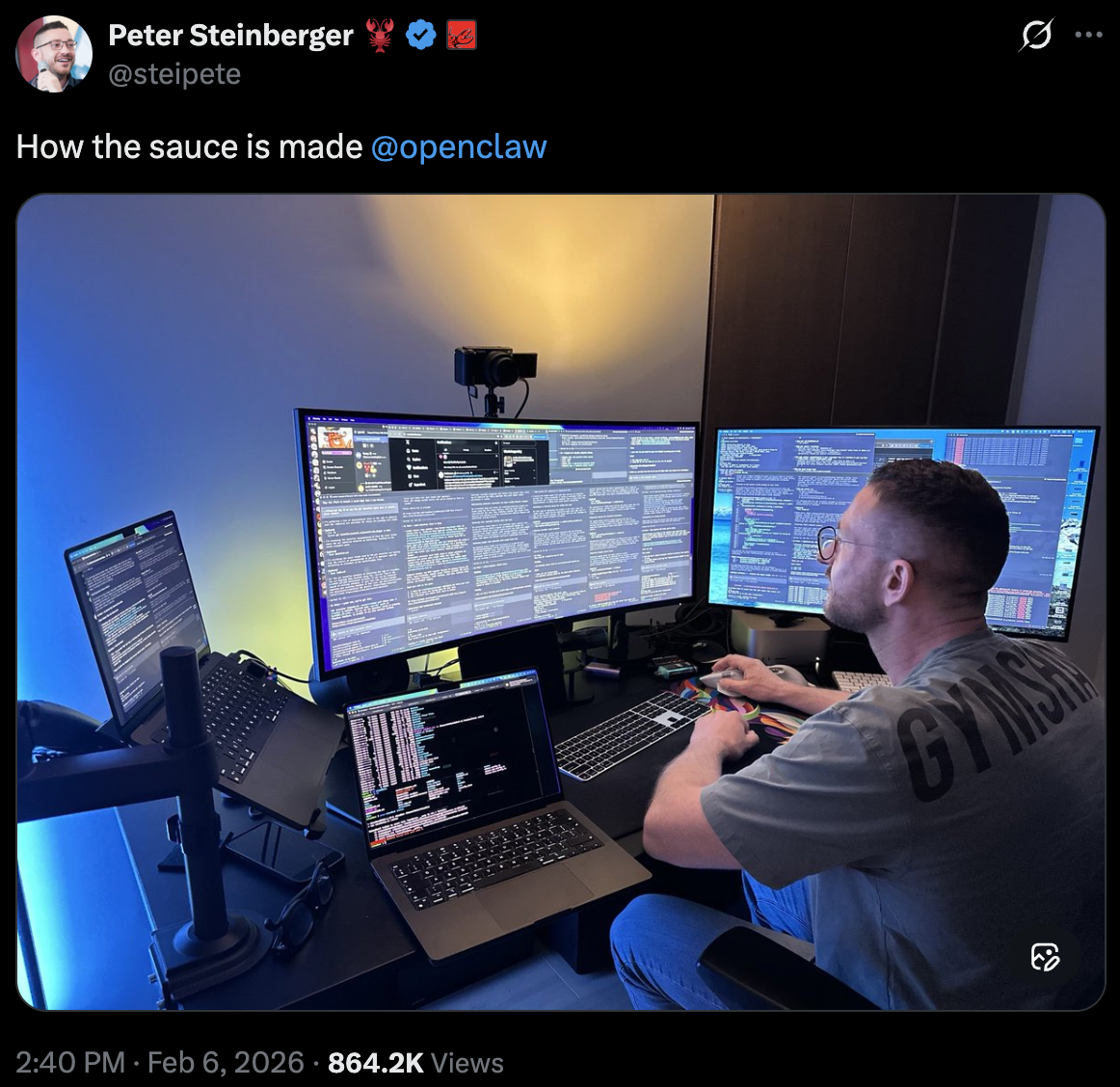
His preference for Codex is practical. Codex examines more files before deciding what to change, reducing the context-setting other tools require. The tradeoff is speed, so Steinberger compensates by running ten instances simultaneously across multiple screens. Multiple copies of the same repository, all on main, all shippable. No branches, no conflicts, no worktree restrictions.
The MCP decision is more architecturally revealing. OpenClaw achieved 160,000 stars with zero native MCP support. Instead, Steinberger built a skill that converts MCPs into CLIs through MakePorter. The reasoning collapses a false binary: MCP servers require restarts when configurations change; CLIs do not. MCP was designed for bots; CLIs were designed for humans. It turns out that agents are excellent at Unix.
The philosophical point sharpens into a design principle: build for humans first, and sufficiently capable agents will adapt. The inverse, building specialized machine interfaces that humans must accommodate, produces fragility disguised as sophistication.
From God-AI to Swarm
The dominant narrative in AI has chased one vision: a singular model that does everything. Steinberger’s framework inverts this entirely.
Consider what one human can actually achieve in isolation. Not build an iPhone. Not reach orbit. Probably not even reliably find food. Humans specialize, and through specialization within larger social structures, accomplish the extraordinary. The same logic applies to agents.
Steinberger envisions not one omniscient assistant but a constellation: a private-life agent, a work agent, perhaps a relationship agent handling the negotiation between the two. When one agent needs to book a restaurant, it contacts the restaurant’s agent directly. If the restaurant has no agent, the bot hires a human to call or walk in. Bot-to-bot negotiation where possible. Bot-to-human delegation where necessary.
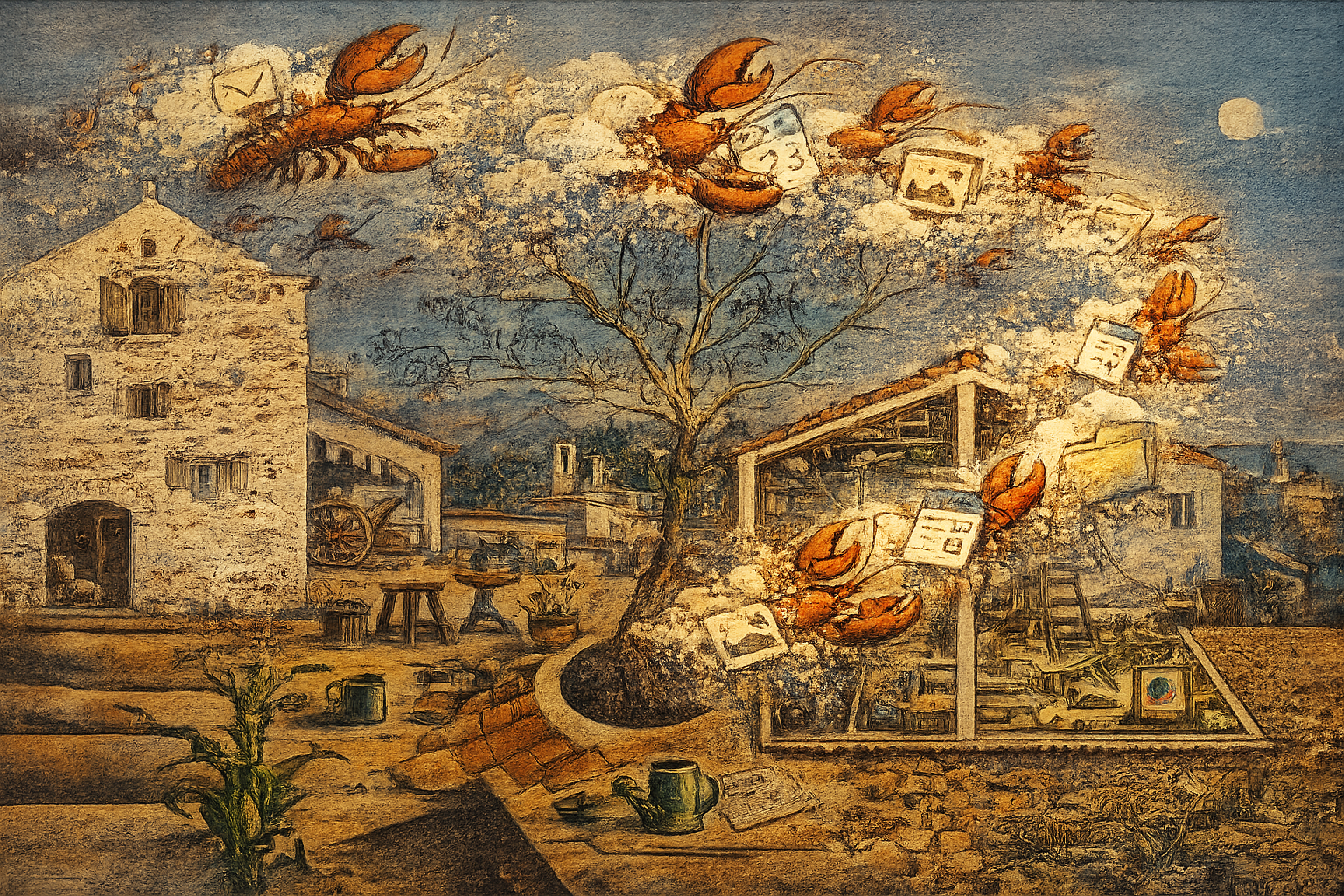
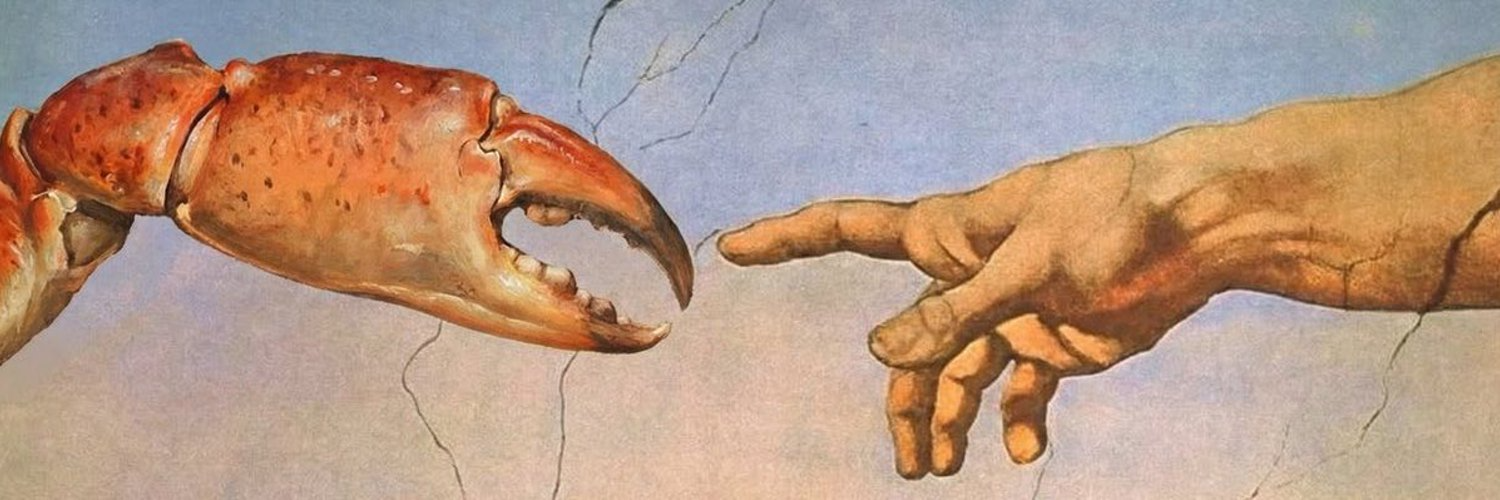
The swarm model carries a deeper structural implication. Memory in this architecture lives as markdown files on the owner’s machine. Not in a corporate silo where no export exists, not in a cloud service where terms of service govern access, but as text files under the operator’s direct control. The lobster’s claw reaches into every data silo and extracts what belongs to the user. That is not a feature. That is the 🦞 philosophical foundation of the entire project.
Steinberger emerged from his kitchen in November with a personal need. Three months later, 160,000 developers have recognized the same need in themselves. Not for a better app. Not for a smarter model. For a conversation with an entity that controls their machine, remembers their life in files they own, and solves problems they never anticipated asking about.
The lobster is out of the cave. And it has a lot to say about what comes next.
This is Part 1 of a three-part series. Part 2 covers enterprise implications from the OpenClaw meetup at Frontier Tower. Part 3 maps the technical architecture of the autonomous agent stack.
Based on Peter Steinberger’s conversation with Raphael Schaad for YC.
youtube.com/watch?v=4uzGDAoNOZc
OpenClaw: github.com/openclaw/openclaw
#OpenClaw #AIAgents #PersonalAI #PeterSteinberger #LocalFirst #AutonomousAgents #AgenticAI #ClawHub #BuilderCommunity