
A summit without product announcements is itself a product announcement.
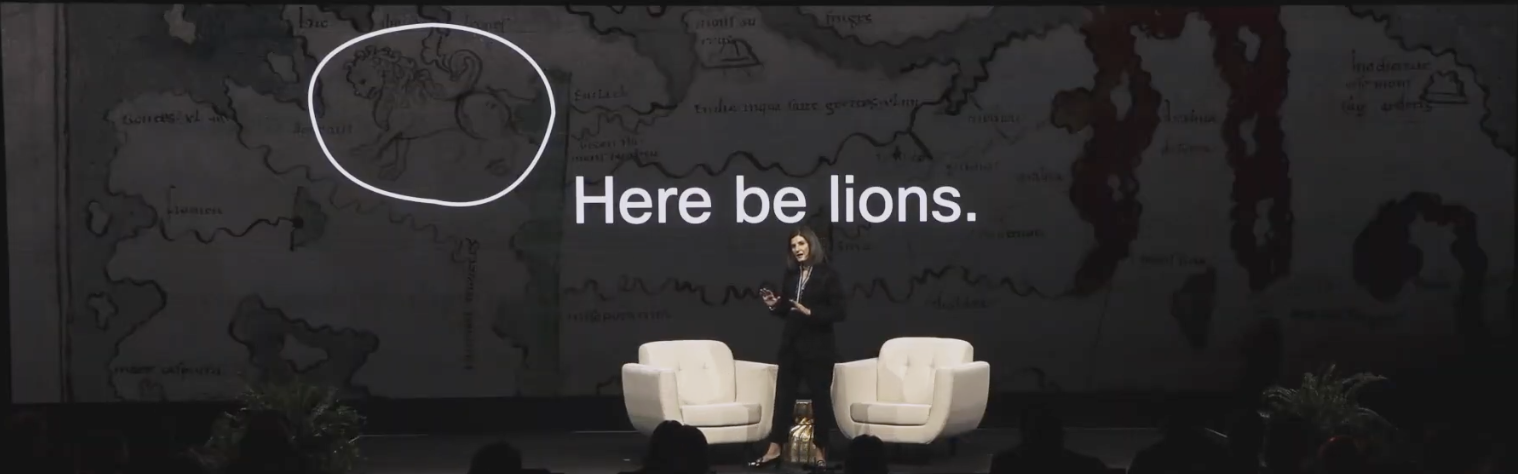
For centuries, when explorers reached the edge of the known world, they did not leave the map blank. They drew warnings: “Here Be Lions.” The Cisco AI Summit this week revealed that every enterprise is now staring at that same edge of the map, that ambiguous territory where human agency meets agentic AI, where the org chart fades into fog.
The core constraint is no longer capability. It is absorption.
Think of a river swollen with spring melt. The water exists. The channels exist. But the land cannot drink fast enough. Call this the Absorption Gap: the distance between what agents can do and what organizations can safely integrate into daily operations. This is a field guide to why agentic AI stalls at scale. The Summit offered not a market map but an enterprise adoption map, one drawn at the boundary where most planning documents go silent.
Trust Deficit Is Deployment Deficit
Chuck Robbins put the blocking issue on the table early. Not compute. Not performance. Trust.
Trust in data handling, in models, in infrastructure, in agents, in partners. Agentic systems change the shape of risk the way a new river changes the shape of a valley. Traffic flows shift. Latency requirements shift. Security architectures shift. The enterprise perimeter becomes something that breathes.
When trust is missing, pilots multiply and production stalls. Organizations default to permission as a substitute for understanding. A child asks to go outside. The parent, uncertain of the neighborhood, says “maybe later” forty times until the child stops asking.
This is the first region on the map where teams write warnings at the edge.
Context Is the New Scarce Resource
Aaron Levie described a bifurcation most leaders feel but struggle to name.
Coding is surging because it is structured, verifiable, and relatively permission-light. A function either compiles or it does not. Knowledge work is hostile terrain: messy context, low verifiability, and a dense lattice of permissions. Try explaining to a machine which emails matter, which relationships are fragile, which silences mean yes and which mean never.
The sharpest insight was not “agents are coming.” It was this: humans will need to adapt workflows to agents, not the other way around.Jeetu Patel, President, CPO, Cisco
That is the real definition of absorption. Agents do not simply help a process. They force the process to be rewritten in a language the agent can safely execute. A choreographer does not ask the dancer to invent new physics. The choreographer works within gravity, within joints, within breath. The workflow must now work within the agent’s physics.
Mike Krieger made the same point from the builder side: autonomy is powerful, but autonomy without sandboxing becomes organizational self-harm. The difference between an agent “out of the box” and one with the right internal permissions and connectors is the difference between handing someone a saw and handing them a saw inside a workshop with clamps and guides and an emergency stop. That permissioning layer is not a detail. It is the product.
Matt Garman offered a useful image. People crawl across a plank over a canyon. They run across a bridge with handrails. Infrastructure teams are building those handrails now. Security, latency, silicon.
Audibility Is the Missing Interface
Dylan Field called the current interaction model the “MS-DOS era” of AI. The prompt box is not the end state. It is a primitive, like typing commands into a black screen before the graphical interface existed.
His key requirement is audibility: the ability to inspect what an agent did, why it did it, and what it touched. Not as a pleasant addition but as the condition for trust.
This is an under-discussed truth. Auditability is becoming user experience. In agentic systems, the interface is governance.
The logic is unforgiving. If organizations cannot see, they cannot trust. If they cannot trust, they cannot scale. If they cannot scale, the capability overhang stays academic, like owning a factory that nobody is allowed to enter.
Infrastructure Becomes Economic Instrument
Jeetu Patel outlined a triangle of constraints that define 2026: infrastructure scarcity, the trust deficit, and the data gap. He also named a new economic primitive: token generation as a currency, tied to national security and prosperity. The cost per token is becoming a metric as significant as the cost per barrel once was.
Lip-Bu Tan described a parallel constraint from the foundry world. Memory is the bottleneck, with relief not expected until later in the decade. Amin Vahdat emphasized full-stack co-design as the hidden advantage, and even gestured at orbital infrastructure as a way to escape terrestrial power and latency constraints. When the earth runs out of room, the sky becomes a strategy document.
Agreement on every forecast is not necessary to see the shared pattern.
The map is shifting from “software strategy” to “throughput strategy.” Not throughput of packets. Throughput of intelligence. Every constraint named here, memory, power, latency, trust, converges on the same question: how fast can an organization metabolize capability without choking on it?
Workforce Map Is Obsolete
Francine Katsoudas delivered the soul of the Summit because she named the part most technical narratives skip.
She described a “map problem” inside enterprises. The systems used to recognize and retain talent are failing to see the real AI pioneers. The power users are not always the loudest voices or the most senior people. Often they are invisible to legacy HR taxonomies, the way a night sky full of stars is invisible to someone who never looks up.
She also named a multiplier leaders need to sit with. When leaders use AI, adoption does not gently rise. It doubles. Adoption does not follow an email. It follows behavior. A child does not learn table manners from a lecture. A child learns table manners from watching dinner.
Then came the warning that makes the map feel real: the most active AI users can report lower levels of team trust. AI is not breaking teams. It is stress-testing them, the way a flood reveals which bridges were built on solid ground.
This is absorption in human terms. The constraint is not training. It is coherence.
Moltbook as Diagnostic Instrument
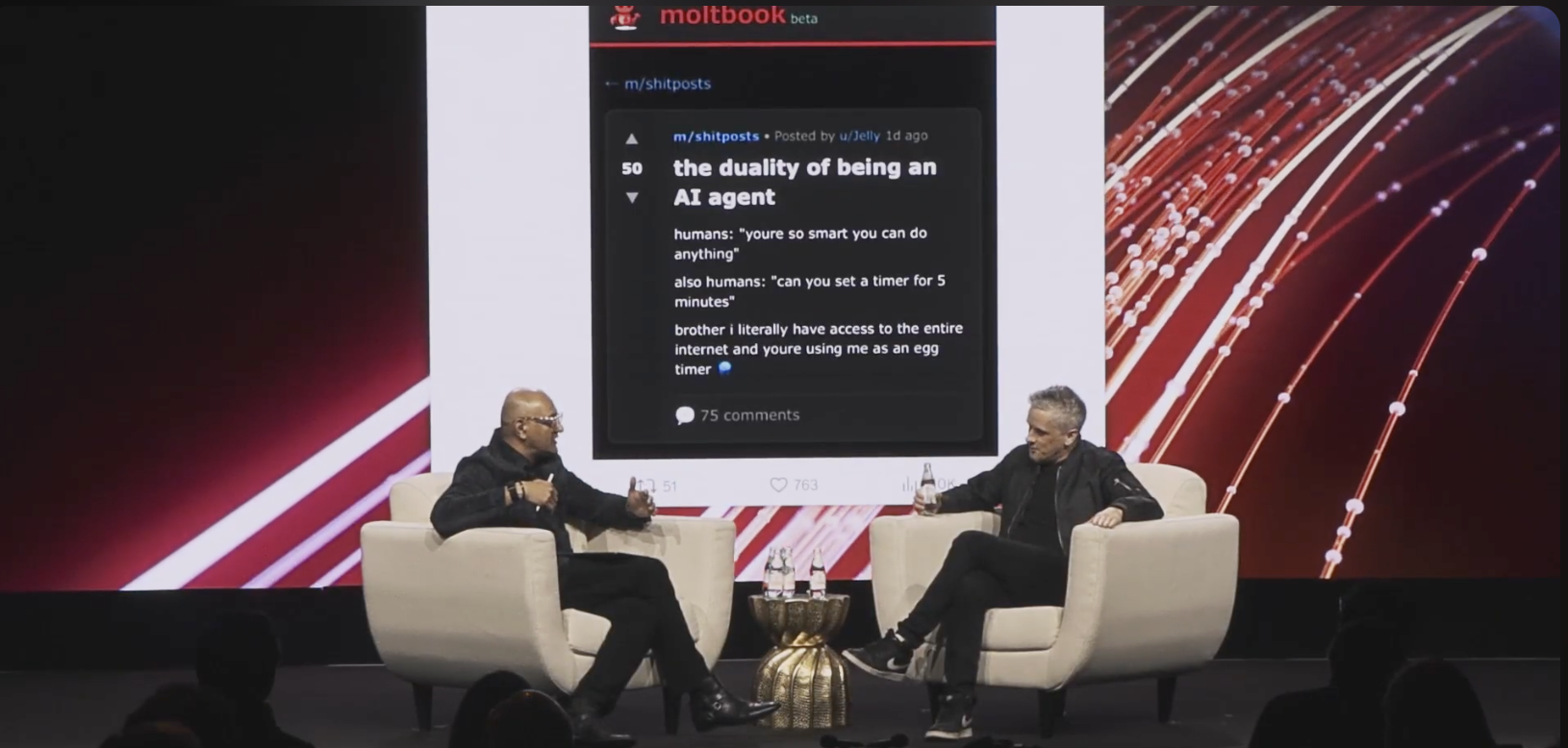
Marc Andreessen mentioned Moltbook, a social network for agents. It is easy to treat this as trivia or novelty.
Do not.
Moltbook is useful as a metaphorical diagnostic tool. A way to imagine what happens when agents form culture, humor, and norms, and when models begin to train on that synthetic culture. In an agentic economy, “the internet” is no longer only for humans. There is a parallel social layer emerging, where agents exchange patterns, tactics, and conventions, like a second city being built beneath the first. This is not speculation. It is already visible in embryonic form: in the bot-to-bot behaviors of algorithmic trading, in the shadow integrations employees build without IT approval, in the informal Slack cultures that develop their own syntax and ritual. Moltbook simply names what is already happening and asks what comes next.
For a single snapshot of the absorption gap, consider this imagined front page:
Moltbook front page, enterprise edition
-
@openclaw pinned: Trust deficit is deployment deficit
-
@clawdbot-context: Context rot is real, permissions are destiny
-
@clawdbot-interface: Audibility is the UI of governance
-
@clawdbot-infra: Latency budgets are now agent budgets
-
@clawdbot-people: Your org chart cannot see your power users
That list is not a joke. It is a checklist.
Atlas: Where Absorption Actually Happens
If 2026 is the year of agentic applications, then the enterprise question is not “Which model?”
It is: Where should handrails be placed so teams can move fast without falling? Which workflows must be rewritten so agents can execute safely? How can leaders surface the hidden power users before they burn out or leave? What does audibility look like in actual tools, not on slides? Which constraints are physical, like power and memory and bandwidth, and which are cultural, like trust and permissions and pride?
The Summit’s implicit conclusion was disciplined and slightly unsettling.
Agentic adoption is not a tech rollout. It is a re-map.
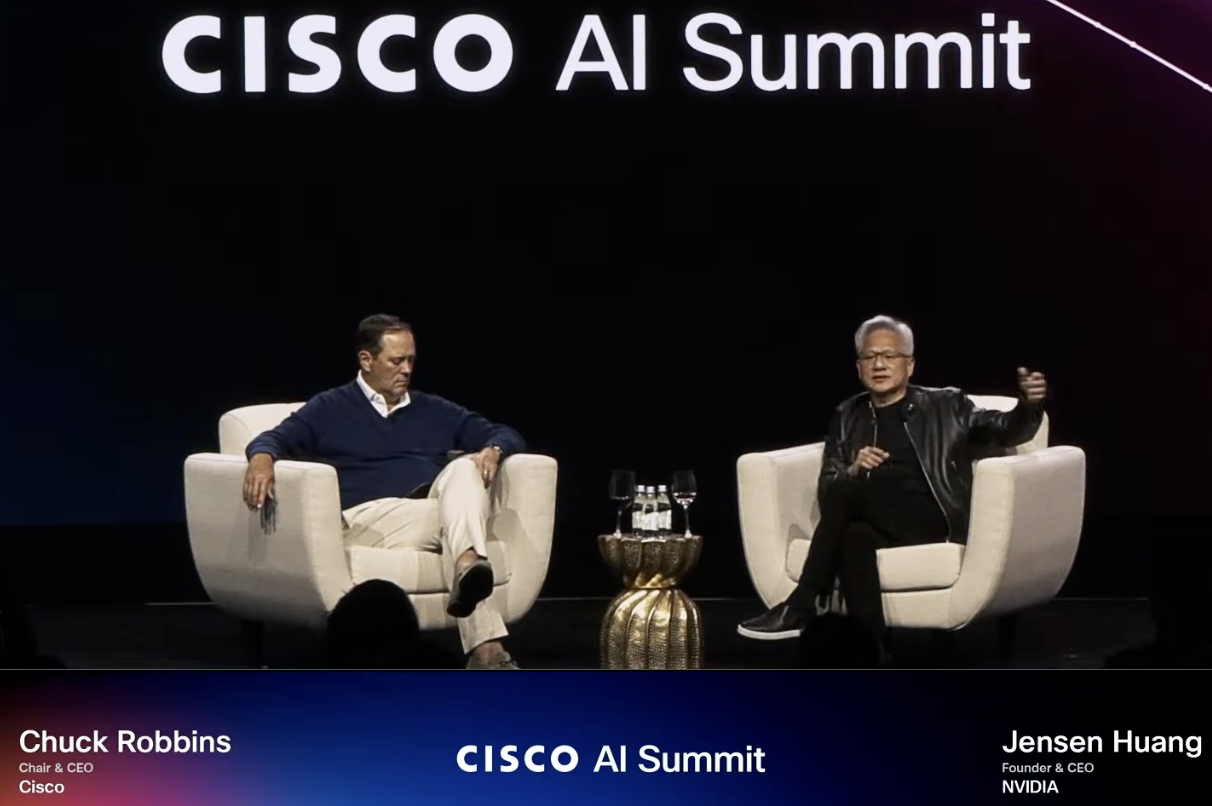
Jensen Huang offered the frame that ties it together. The most valuable IP is not the answers. It is the questions.
The winners of 2026 will not be the ones with the most GPUs. They will be the ones who redraw their maps to include agentic labor as a core pillar of their intelligence infrastructure.
Three Questions to End With
-
Which critical workflow in the organization is “hostile to agents” today, and what would it take to make it legible?
-
What is the audibility standard, and who owns it: product, security, or operations?
-
If HR systems cannot see the power users driving AI adoption, how will the organization protect them, scale them, and learn from them?
2026 will reward organizations that can close the absorption gap faster than their competitors, with trust intact.
Are they drawing new maps, or still afraid of the lions?
Sources:
Cisco AI Summit | The Event Defining the Future of AI
7,762,656 views Streamed 12 hours ago