Executive Summary
For five years (2020–2025), the AI industry operated under a gravity-defying economic law: Scaling. The recipe was public and predictable – pour more data and compute into a transformer, and intelligence reliably emerged.
That era is over.
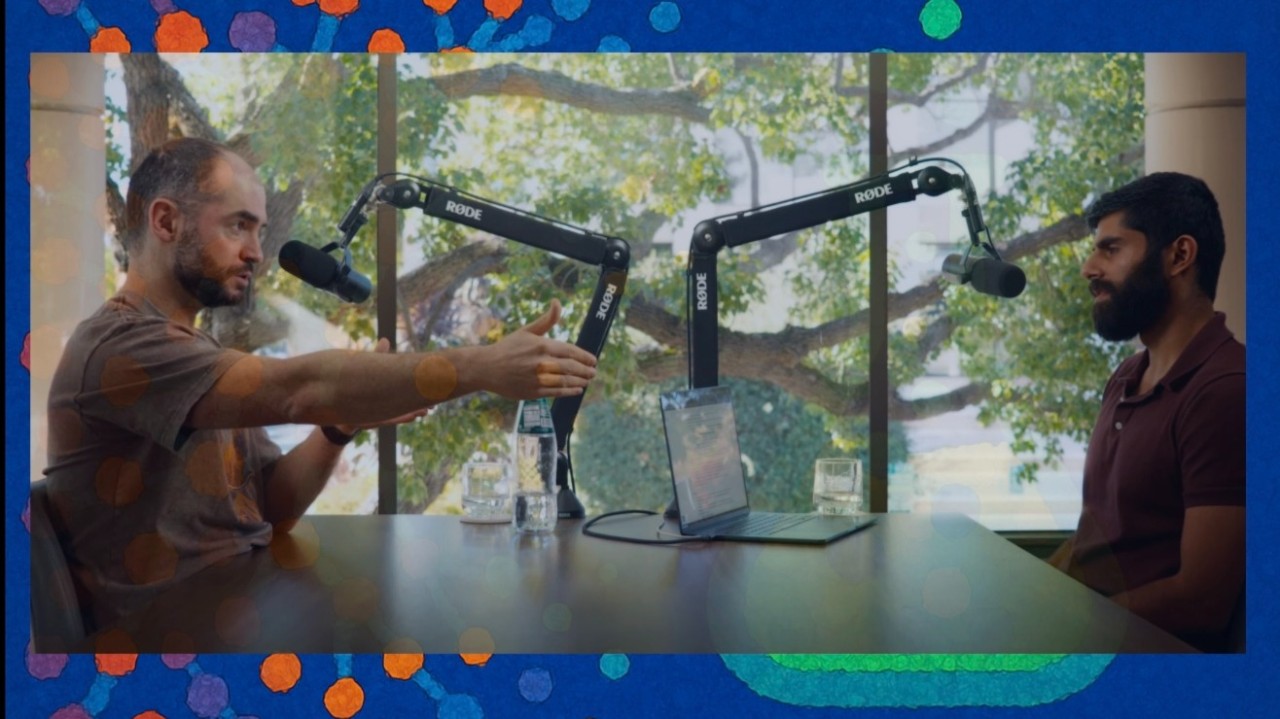
In a rare, signal-heavy disclosure just released yesterday on the Dwarkesh Podcast, Ilya Sutskever (co-founder, SSI) confirmed what infrastructure insiders have quietly suspected: the “Age of Scaling” has ceded ground to the “Age of Research.”
The implication for Global 1000 boards and technology leaders is stark. The playbook of simply buying the largest H100 cluster is no longer a guaranteed strategy. The next frontier isn’t about memorizing the internet; it’s about teaching models to judge it.
Scaling Illusion & The “Jagged” Frontier
We are currently witnessing a paradox. On one hand, models are crushing PhD-level benchmarks. On the other, they fail to fix simple software bugs without introducing new ones. Ilya calls this “Jaggedness.”
The culprit? We have exhausted the low-hanging fruit of pre-training.
-
Pre-training (Student A): Imagine a student who studies for 10,000 hours, memorizing every textbook and edge case. They can answer any known question but collapse when facing a novel problem.
-
The “It” Factor (Student B): Imagine a student who studies 100 hours but intuitively grasps the underlying principles. They have “taste.”
Current LLMs are Student A. They have “memorized” the probability distribution of the internet. To get to Student B—a system that can reason through novelty—we cannot just add more data. We need a fundamental architectural shift in how they learn.
The New Moat: The Value Function
If pre-training was about prediction (what word comes next?), the Age of Research is about valuation (is this thought effective?).
Ilya posits that biological evolution gave humans a hard-coded Value Function—emotions.
-
Pain/Hunger: Immediate feedback on survival.
-
Social Anxiety/Pride: Complex feedback on tribal standing.
These “emotions” are essentially a navigational compass that lets humans learn from sparse data. A teenager learns to drive in 10 hours not because they crash 1,000 times, but because their internal value function (fear of death, desire to impress) allows them to simulate and reject bad trajectories without taking them.
The Strategic Pivot: The companies that win the next decade will not be those with the biggest datasets, but those that successfully engineer a synthetic “inner compass” for their models. This allows the AI to “think” (search through possibilities) and “feel” (evaluate the quality of those thoughts) before acting.
“Continent-Sized” Implications
Sutskever’s new venture, SSI (Safe Superintelligence), is betting on a “straight shot” to this capability, bypassing the commercial rat race. He envisions “continent-sized clusters”—single systems distributed across vast geographies - running not just inference, but continuous, self-improving research cycles.
For the enterprise, the message is clear: Do not mistake current model limitations for permanent ceilings. But also, do not expect linear progress. We are back in the lab, where timelines are uncertain, but the breakthroughs, when they occur, will be step-functions, not curves.
Technical Appendix: The Mechanics of the “Age of Research”
1. The Sigmoid vs. The Power Law
Why does the “Age of Research” feel different? It follows a different mathematical curve.
-
Pre-Training (Power Law): Progress is smooth and predictable. Double the compute, decrease the loss by a fixed exponent. It is an industrial process.
-
Reinforcement Learning (Sigmoid): This is the curve of “Grokking.”
The Risk: In the Age of Research, you might spend $1B on Phase 1 and see nothing. This requires a risk appetite that public markets generally punish, favoring private labs (like SSI) or cash-rich sovereigns.
2. The Value Function: Process vs. Outcome
To fix “Jaggedness,” labs are moving from Outcome Reward Models (ORMs) to Process Reward Models (PRMs).
-
Outcome Supervision (The Old Way): You give the model a math problem. It generates an answer. You grade the answer (Correct/Incorrect). This is “sparse” feedback.
-
Process Supervision (The “Value” Way): You grade every step of the reasoning chain.
The Moat: Building a PRM requires massive amounts of high-quality human (or super-model) data to grade the reasoning, not just the answer. This is why “Reasoning” models (like o1) are distinct from “Knowledge” models (like GPT-4).
Appendix II: Professor Ilya’s Mental Models
Key pedagogical frameworks from the Sutskever dialogues.
-
The “100-Hour” Generalist: True intelligence is sample efficiency. If you need 10 trillion tokens to learn what a human learns in 10 million, you are not intelligent; you are a statistical parrot. The goal is to compress the “experience” required to learn.
-
The “Shadow” of Unsupervised Learning: Ilya hints that the “Value Function” might eventually be learned unsupervised, similar to how LLMs learned syntax. If a model can self-supervise its own reasoning “taste,” we enter a recursive self-improvement loop (the Singularity).
-
Sentient Alignment: A contrarian take on safety. Instead of hard-coding “Do not harm humans” (which is brittle), Ilya suggests aligning superintelligence to “Care for Sentient Life.”