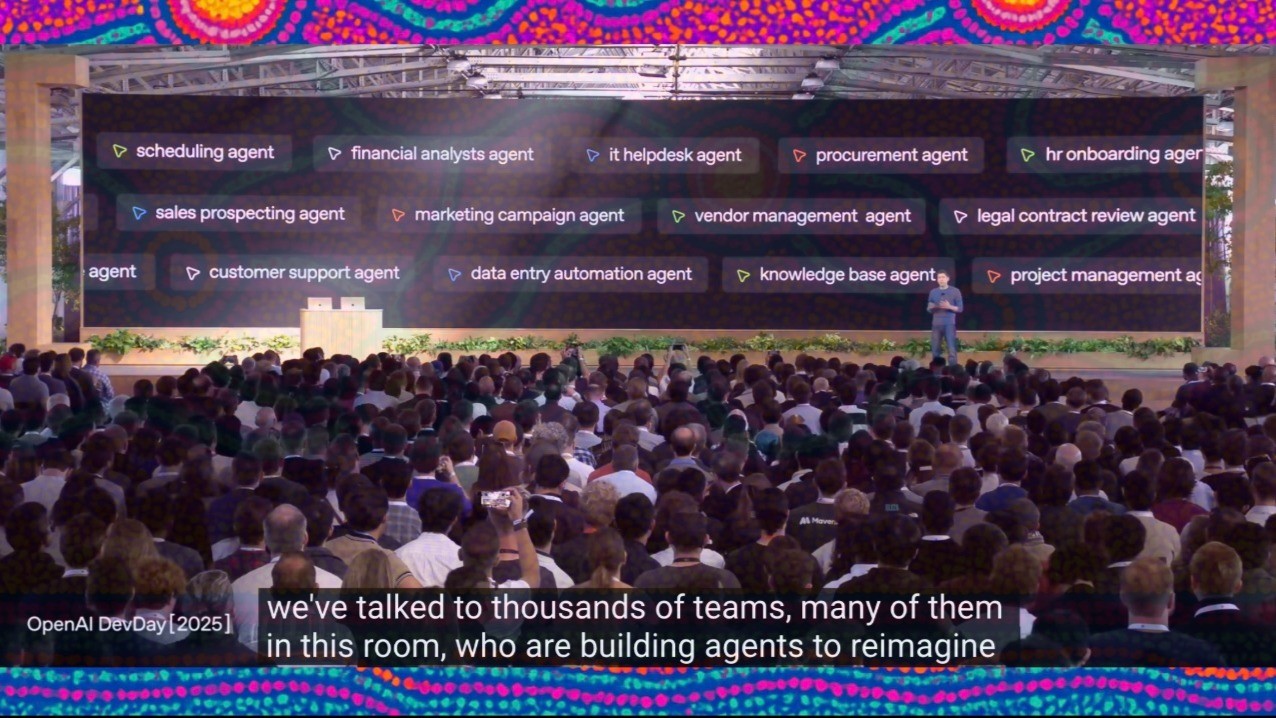
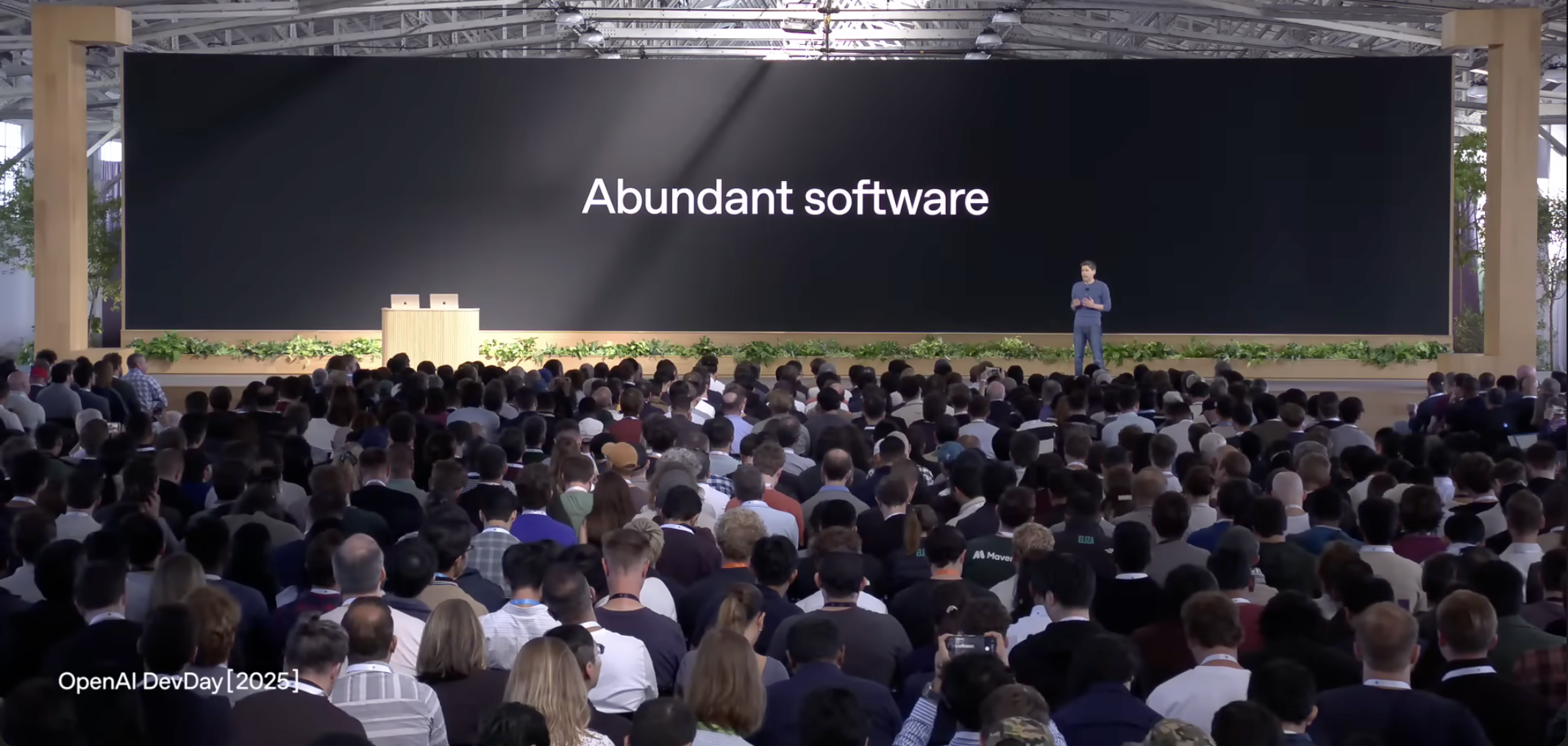
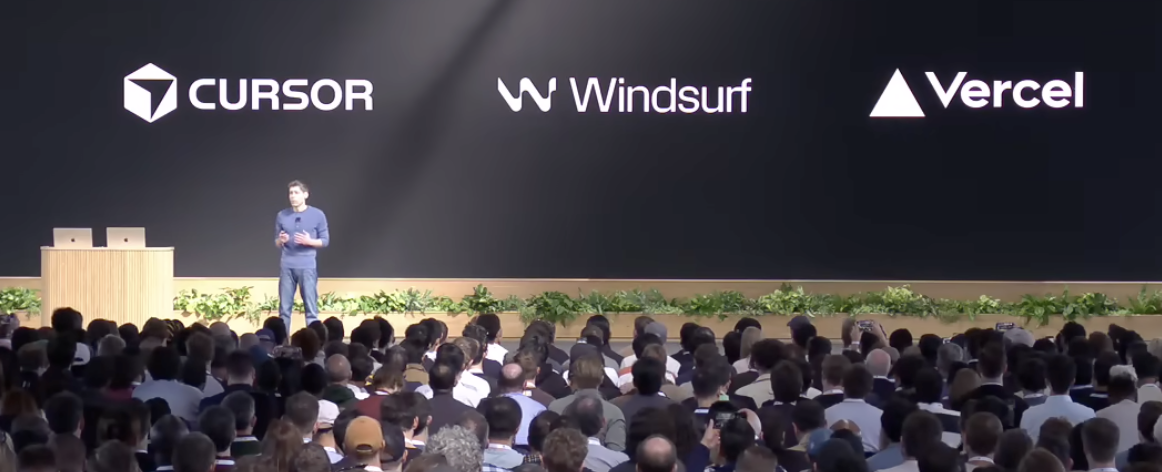
At OpenAI DevDay 2025, the agent development conversation shifted terrain - from whether agents work to who controls the infrastructure layer that makes them work at scale. The question isn’t new. The answer proposed is: platform consolidation as solution to orchestration complexity.
The race to simplify agent development may be creating more complex dependencies.
Despite years of promise, few agents have shipped for major use cases. The underlying friction isn’t conceptual - it’s operational. Building production-ready agents means wrestling with orchestration, evaluation loops, tool connections, UI design, each adding pain points before discovering if the solution works. This complexity has become the constraint.
AgentKit is OpenAI’s deliberate integration move to collapse that friction into managed infrastructure.
What AgentKit Actually Is
AgentKit bundles the entire agent development lifecycle into one platform, absorbing complexity that developers previously assembled from fragmented tools:
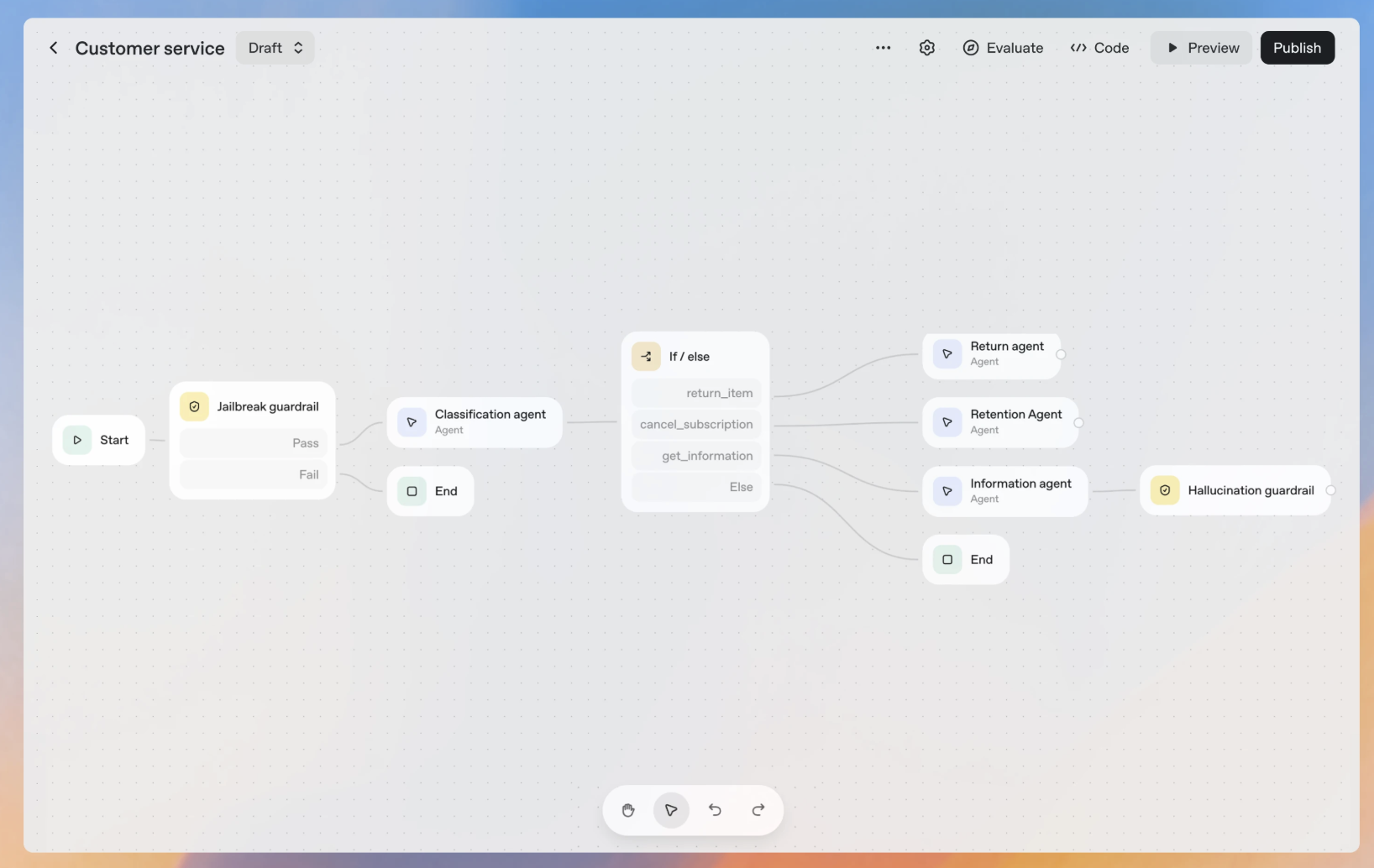
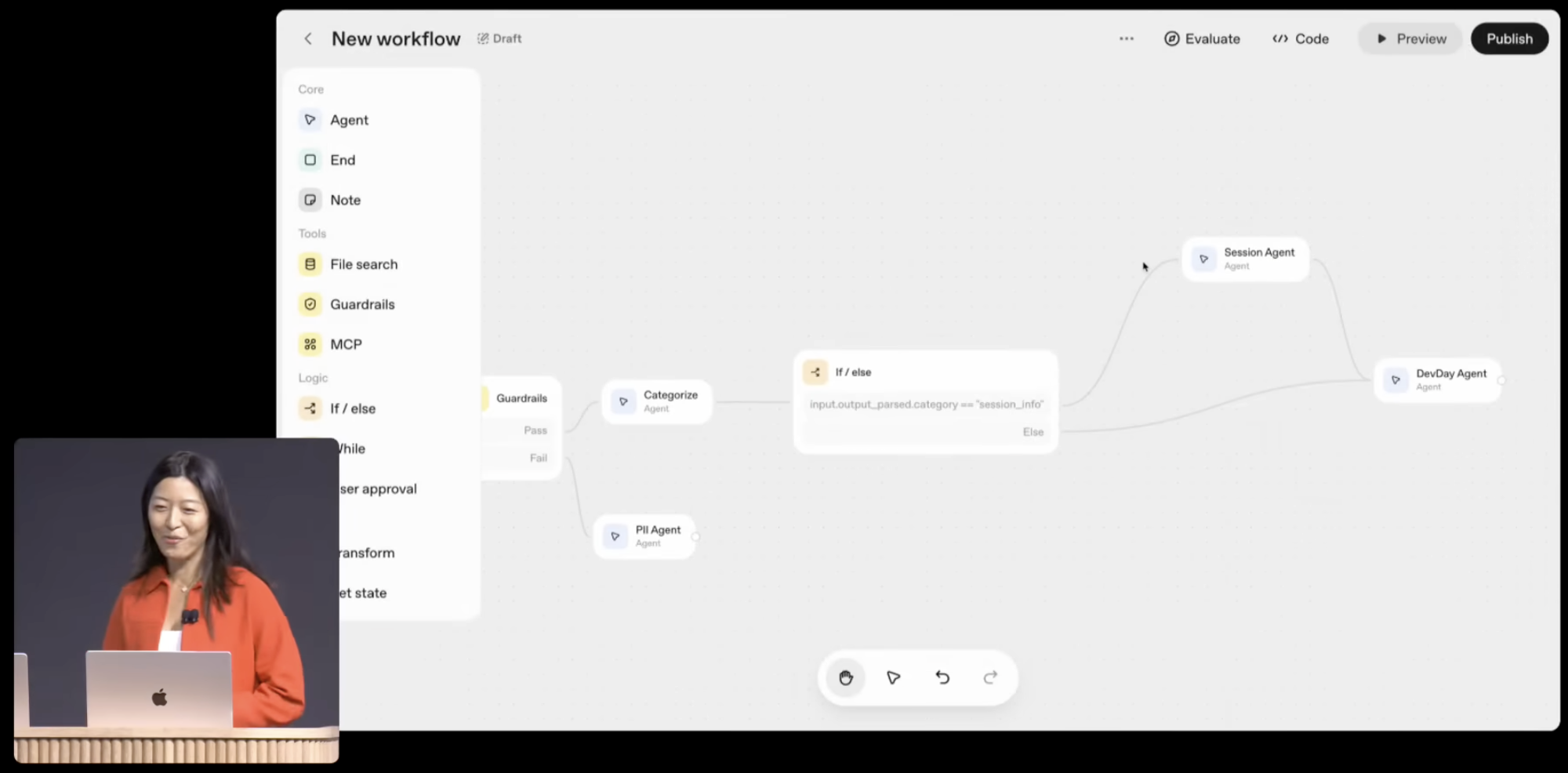
Agent Builder: Visual canvas for designing multi-agent workflows with drag-and-drop nodes, built on the Responses API. Flow-based programming for AI agents with preview runs, inline eval configuration, full versioning. What took weeks of orchestration code now happens in hours of visual composition.
ChatKit: Pre-built React components for embedding customizable chat experiences. This compresses interface development the way cloud services compressed infrastructure - trading customization surface area for deployment tempo. Streaming UIs, thread management, “thinking” indicators become configuration rather than implementation.
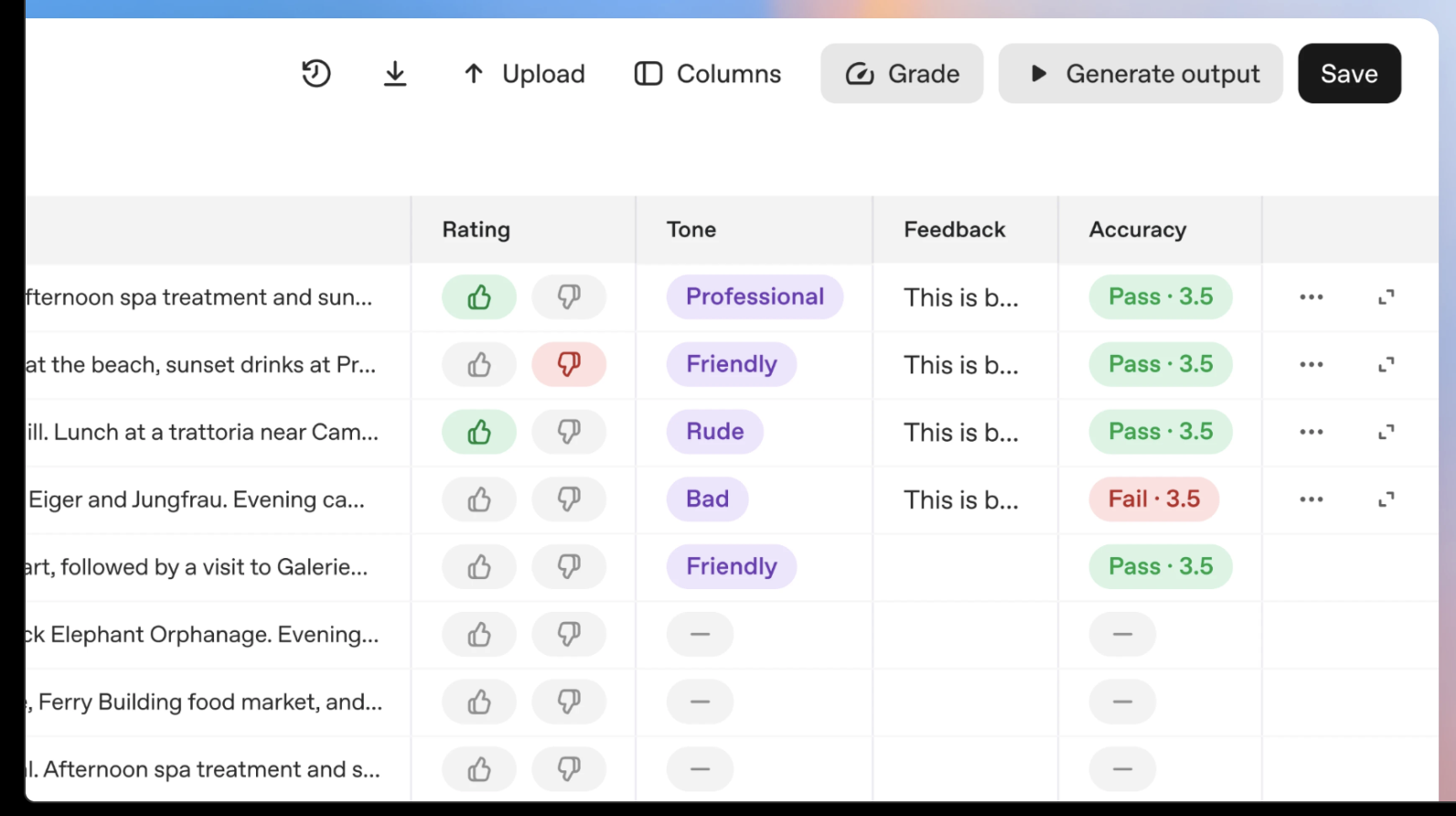
Evals for Agents: Datasets for rapid eval building, trace grading for end-to-end workflow assessment, automated prompt optimization, third-party model support. The evaluation loop that teams build custom now arrives as platform service.
Connector Registry: Enterprise-grade governance for managing data sources across workspaces - Dropbox, Google Drive, SharePoint, Teams, third-party MCPs, all from one admin panel. Data access becomes centrally controlled infrastructure rather than per-agent configuration.
Guardrails: Open-source modular safety layer for PII masking, jailbreak detection, other safeguards, deployable standalone or via Python/JavaScript libraries. Security patterns as reusable components.
What may quietly set it apart: Reinforcement fine-tuning (RFT) with custom tool calls on o4-mini (GA) and GPT-5 (private beta). Training the model’s muscle memory for tool selection - not just which tools exist, but when to invoke them. This shifts the capability curve in ways that become visible only under production load.
Velocity as Evidence
The DevDay demo built a complete agent in under 30 minutes - blank canvas to deployed chat widget. But demos compress reality. The real signals come from production adoption:
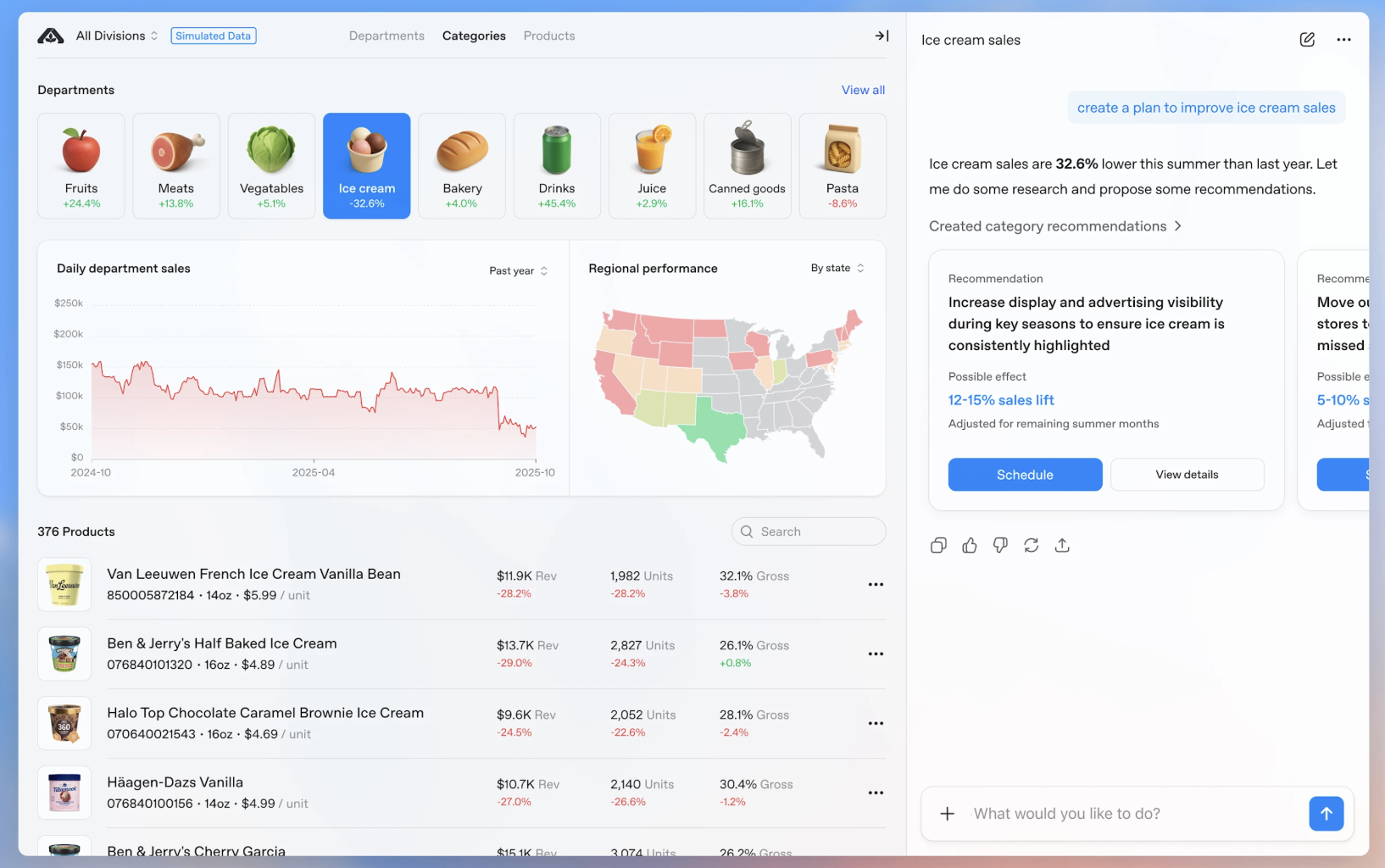
Albertsons built an agent analyzing sales drops and recommending actions (display adjustments, local ads) without lengthy reporting processes. HubSpot enhanced Breeze to search knowledge bases, retrieve local treatments, pull policy details in one conversational flow. Early systems already handling live workloads.
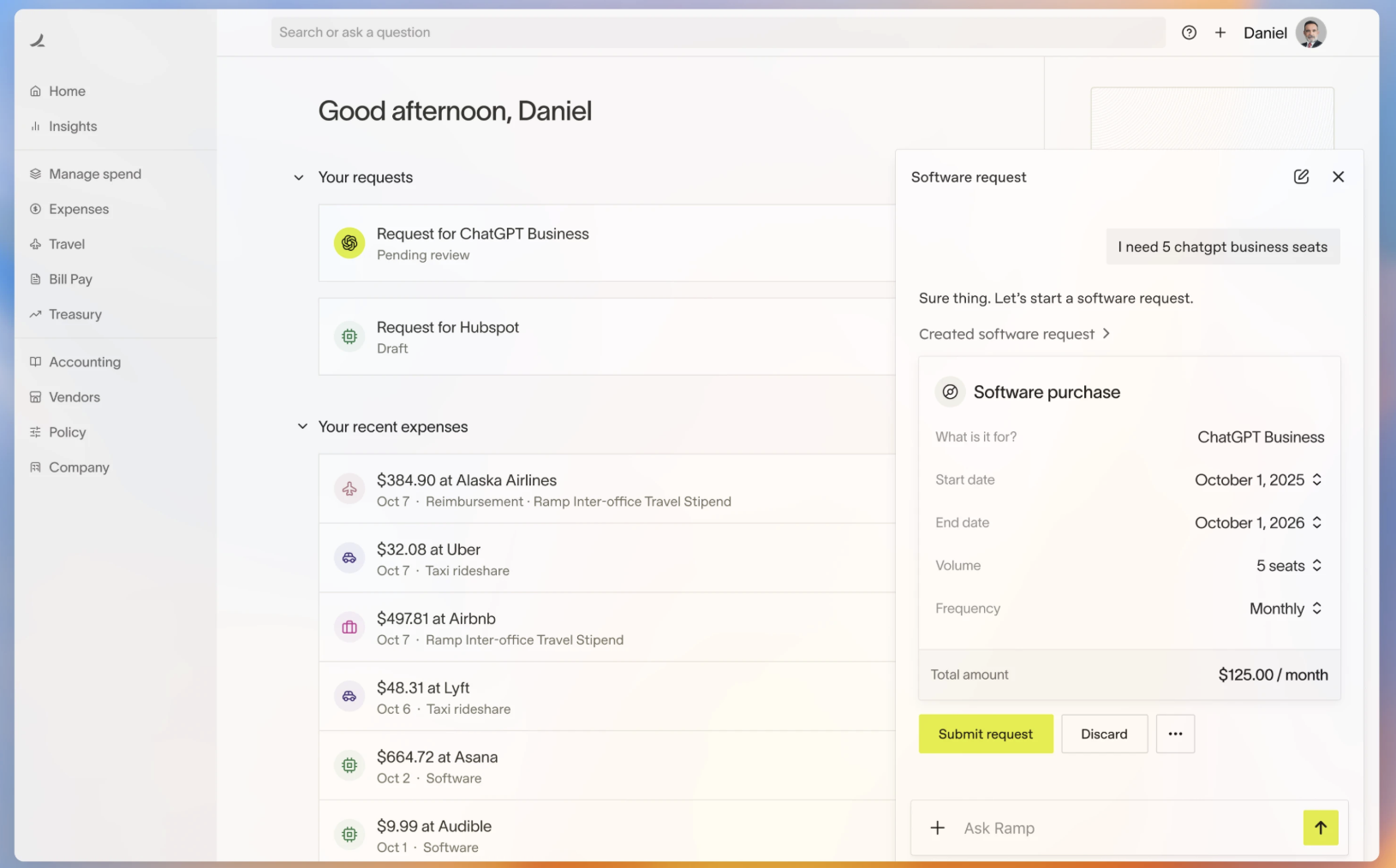
Ramp reported 70% faster iteration cycles, shipping agents in two sprints instead of two quarters. Canva saved two weeks building a developer support agent, integrated it in under an hour.
These numbers reveal a pattern: velocity as competitive advantage contains its own momentum. What you ship fastest creates the deepest integration, which raises the cost of later migration.
Each simplification hides a new layer of complexity - just at a different altitude.
The Framework Landscape as Pattern Recognition
As OpenAI launches its new agentic capabilities with AgentKit, the question surfaces: what happens to the leading startup agentic frameworks? Will they be put out of business? Likely no. Will they need to adjust strategy? Most certainly yes.
The framework landscape reveals different bets about where complexity should live - and those bets now exist in relation to a well-capitalized platform play. Framework choice isn’t just tooling selection - it’s organizational philosophy about control, risk, and time horizon. Understanding how LangGraph, CrewAI, LlamaIndex, and n8n position themselves against AgentKit reveals not just feature comparison, but competing theories about what layer of the stack should remain open, where developers want control, and which constraints matter most under production load.
Each framework’s response to AgentKit will clarify its core value proposition - whether that’s flexibility, specialization, workflow breadth, or something AgentKit deliberately chose not to provide.
LangChain/LangGraph: Complexity in Developer Control
LangGraph keeps complexity visible and manipulable. Its stateful, graph-based orchestration with cycles and human-in-the-loop patterns gives full control over agent logic. This is the code-first approach - build your own abstractions.
Where this philosophy wins: Model flexibility (any LLM), deep state management for complex workflows, self-hosting, open-source control. LangGraph Studio provides visualization, LangGraph Cloud handles deployment. Maximum degrees of freedom.
Where AgentKit’s philosophy wins: Significantly faster to production with visual builder, ChatKit eliminates weeks of UI work, integrated evals with automated optimization, enterprise governance layer, no infrastructure management. Minimum time to production.
Pattern it represents: Framework as library - composable primitives for building custom solutions. Best for teams that view agent architecture as core competency, want multi-provider optionality, or require custom deployment. If supporting Claude, Gemini, and OpenAI in one workflow matters, this is the terrain.
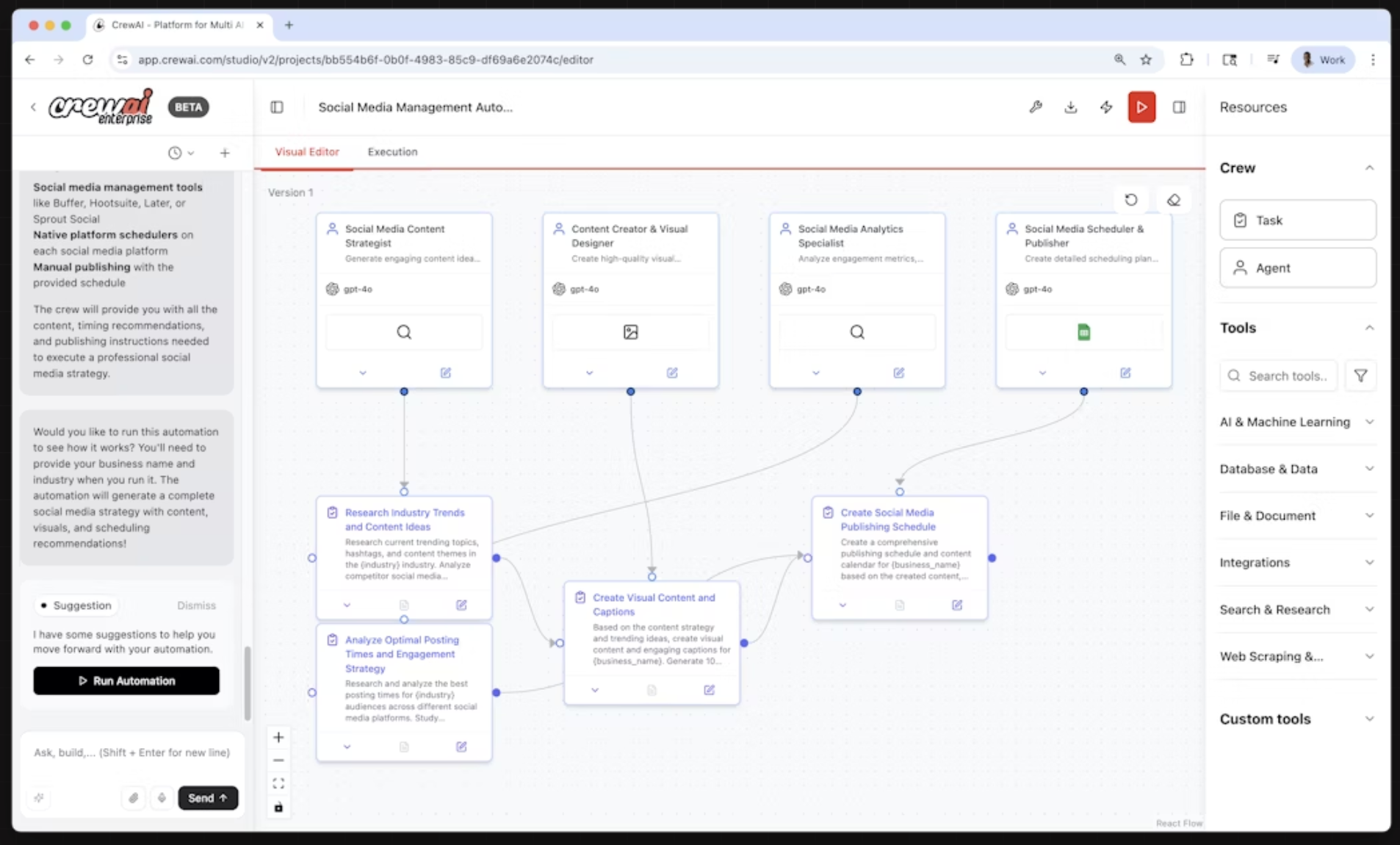
CrewAI: Complexity in Role-Based Coordination
CrewAI excels at multi-agent orchestration where different agents have specific roles and collaborate on tasks. The mental model is team dynamics translated to code.
Where this philosophy wins: Strong multi-agent collaboration patterns, code-first approach preferred by many developers, framework flexibility, lighter weight for simpler use cases. Roles and delegation as organizing principle.
Where AgentKit’s philosophy wins: Visual workflow design (CrewAI is code-only), built-in versioning and deployment, production-ready UI components, comprehensive eval infrastructure, enterprise features like Connector Registry.
Pattern it represents: Agent orchestration as organizational design. Best for developers who prefer code-first frameworks and need sophisticated multi-agent team patterns without heavy platform dependencies. The constraint is the feature.
LlamaIndex: Complexity Isolated in Retrieval Architecture
LlamaIndex is purpose-built for RAG-powered agents with exceptional data retrieval capabilities. It makes one thing - getting information from documents - extremely good.
Where this philosophy wins: Deep RAG capabilities with advanced query engines, flexible data ingestion, strong document processing, open-source control, excellent for search-heavy applications. When retrieval quality is the constraint, specialize.
Where AgentKit’s philosophy wins: Complete deployment story with ChatKit, visual design for non-RAG workflows, native OpenAI model integration, enterprise governance, integrated evals platform.
Pattern it represents: Specialized depth over general capability. Best when retrieval-augmented generation is the core use case - document Q&A, knowledge bases, search systems. If your agent’s primary job is finding and synthesizing information from large document sets, this focused architecture likely has the edge.
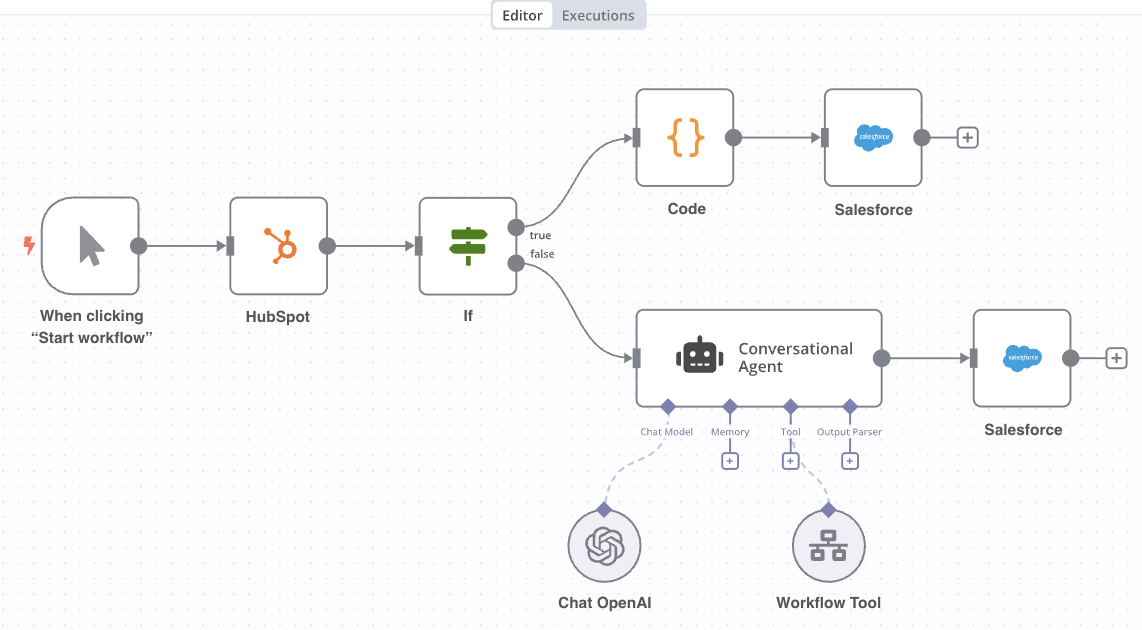
n8n: Complexity Distributed Across Visual Workflow Logic
n8n is a mature workflow automation platform that expanded into AI agent territory. It treats agents as one node type among many in broader automation workflows.
Where this philosophy wins: Broader non-AI automation capabilities, extensive connector ecosystem (400+ integrations), self-hosting options, mature community, better for mixed AI/traditional workflows. Agents as workflow components, not standalone systems.
Where AgentKit’s philosophy wins: Purpose-built for LLM agents with reasoning model support, integrated prompt optimization, guardrails, ChatKit for instant UI deployment, trace grading for agent-specific debugging.
Pattern it represents: Workflow automation with AI capabilities vs AI platform with workflow features. Best for teams needing both traditional workflow automation and AI agents, organizations requiring self-hosted solutions, or workflows blending AI with conventional API integrations.
Framework Choice as Terrain Selection
AgentKit optimizes for speed over ground. LangGraph for navigable complexity. LlamaIndex for retrieval depth. n8n for workflow breadth. CrewAI for coordination patterns.
The real question isn’t which tool, but what layer of abstraction your organization can afford to control.
Choose AgentKit if:
-
Committed to OpenAI models
-
Speed to production is critical constraint
-
Enterprise governance matters
-
Visual development preferred
-
Integrated evals and optimization valued
-
UI deployment time is bottleneck
Choose alternatives if:
-
Multi-provider flexibility required
-
Self-hosting needed
-
Code-first development preferred
-
Open-source control valued
-
Budget constraints favor open-source
-
Use case has specialized needs (pure RAG, complex multi-agent teams, mixed automation)
Integration Creates Velocity, But Narrows the Corridor of Choice
AgentKit represents OpenAI’s bet that the agent market will follow cloud platform patterns - developers trading flexibility for significant reductions in complexity and time-to-market. It’s the AWS playbook applied to agents.
The platform approach has clear advantages: no more juggling fragmented tools, battling orchestration complexity, building custom eval pipelines. But it comes with OpenAI ecosystem lock-in.
For many production use cases, especially enterprises already standardized on OpenAI, AgentKit will likely become default choice. The velocity gains are too significant to ignore - shipping in sprints instead of quarters changes what’s possible. This is the momentum cycle: fast adoption creates ecosystem effects, which accelerate further adoption, which makes migration increasingly costly.
For teams requiring maximum flexibility, wanting to hedge across multiple model providers, or building highly specialized agentic systems, open-source frameworks (LangGraph, LlamaIndex, CrewAI) retain clear advantages. The question is time horizon - how long before that flexibility becomes necessary vs how much velocity is lost by maintaining it from day one?
Worth questioning whether speed-to-production becomes the new moat. If orchestration complexity is the barrier, and AgentKit commoditizes it, where does differentiation migrate next? To eval quality? To specialized reasoning? To domain-specific tool libraries? The answer may determine which layer of the stack captures value over the next 24 months.
As agents gain autonomy, builders inherit greater responsibility for the substrate they run on.
Strategic Synthesis
From a boardroom vantage, this signals a platform consolidation moment: the friction of agent orchestration is becoming the differentiator itself. The question isn’t whether agents work, but who controls the infrastructure layer that makes them work reliably at scale.
This mirrors earlier infrastructure transitions - cloud computing, mobile platforms, CI/CD pipelines. In each case, complexity migrated from explicit developer concern to implicit platform service. The winners weren’t necessarily the best technical solutions, but the ones that reached adoption threshold fast enough to create ecosystem lock-in.
AgentKit is OpenAI’s bid to become that platform layer for agents. The strategic question for organizations isn’t just “does this solve our immediate agent deployment needs?” but “where do we want infrastructure complexity to live three years from now?”
The tradeoff is clear: velocity now vs optionality later. The right answer depends on organizational context, risk tolerance, and belief about how fast the agent landscape will evolve.
Appendix: Executive Summary for Leaders and Board Directors
Strategic Context: AI agents represent evolution from question-answering AI to AI that takes action. Production deployment has been challenging due to technical complexity around orchestration, evaluation, and deployment infrastructure.
OpenAI’s Move: AgentKit is a complete platform for building, deploying, and optimizing agents - reducing development time by 50-70% according to early customers (Ramp, Carlyle, Canva). This is a platform consolidation play, bundling previously fragmented capabilities into managed infrastructure.
Key Business Implications:
-
Time-to-Value Compression: Agents that took months now ship in weeks. Canva integrated a support agent in under an hour. This velocity creates competitive advantage but also platform dependency.
-
Enterprise Governance Layer: Connector Registry provides centralized control over data access across AI applications - critical for compliance and security. Data governance becomes platform service rather than per-application concern.
-
Production Reliability Infrastructure: Integrated evaluation tools with automated optimization help ensure agent quality before customer exposure. The eval loop that teams build custom now arrives as platform capability.
-
Strategic Trade-off - Lock-in vs Velocity: AgentKit creates OpenAI platform dependency. Alternative frameworks (LangChain, LlamaIndex, CrewAI, n8n) offer multi-provider flexibility and self-hosting but require more development resources and longer time-to-production.
Decision Framework:
-
AgentKit: Best for speed, teams standardized on OpenAI, enterprise governance needs, visual development preference
-
Alternatives: Best for multi-provider strategies, self-hosting requirements, specialized use cases (pure RAG, complex multi-agent coordination, mixed automation workflows), organizations viewing agent architecture as core competency
Risk Considerations:
-
Vendor concentration risk with AgentKit - mitigation requires maintaining capability with alternatives or accepting platform dependency as strategic choice
-
Open-source alternatives require more technical resources but reduce platform risk and provide migration optionality
-
Agent reliability and safety remain critical regardless of framework choice - the platform doesn’t eliminate judgment requirements
-
Switching costs compound over time - early framework choices have long-term implications
Analogous Transitions: This mirrors cloud computing adoption (AWS vs self-hosted), mobile platforms (native vs cross-platform), CI/CD pipelines (managed vs self-built). In each case, winners reached adoption threshold fast enough to create ecosystem lock-in, regardless of pure technical merit.
Strategic Question: Where should infrastructure complexity live in your organization? AgentKit moves it to managed platform services. Alternatives keep it in developer control. The right answer depends on:
-
Existing AI strategy and model commitments
-
Risk tolerance for vendor lock-in
-
Organizational technical capabilities
-
Belief about agent landscape evolution speed
-
Time horizon for ROI requirements
Recommendation: Evaluate based on existing AI strategy, risk tolerance for vendor lock-in, and organizational technical capabilities. For rapid production deployment with OpenAI models and tolerance for platform dependency, AgentKit offers significant advantages. For strategic flexibility and viewing agent architecture as core competency, maintain capability with open-source alternatives. Consider hybrid approach: rapid prototyping with AgentKit, maintaining strategic projects on open frameworks to preserve optionality.
Signals to Watch
-
Adoption velocity of AgentKit within enterprise environments - Will large organizations accept platform dependency for speed gains? Early enterprise adoption patterns will reveal risk tolerance.
-
Cross-model agent interoperability efforts - MCP, CrewAI integrations, and multi-provider orchestration standards may determine whether multi-provider strategies remain viable or AgentKit’s single-provider approach becomes default.
-
Early evidence of RFT improving reliability - Custom tool call training could fundamentally change agent capability curves. If RFT delivers measurable improvements in production reliability, it becomes significant moat.
-
Governance standards around Connector Registry APIs - Enterprise data controls may become table stakes across all platforms. If Connector Registry patterns get adopted broadly, OpenAI shapes governance standards regardless of platform choice.
-
Migration cost patterns - As early AgentKit adopters reach scale, actual switching costs will become visible. This data will inform build vs buy decisions for later movers.
-
Specialized framework evolution - How LlamaIndex, CrewAI, and others respond to AgentKit will reveal whether specialized depth can compete with integrated breadth.
The agent economy may split along fault lines we’re only beginning to see - not just open vs closed, but tempo vs terrain, integration depth vs migration optionality. Which constraints bind first will determine which platforms survive contact with production scale.
#SFTechWeek
bsky.app/profile/schwentker.bsky.social/post/3m2nb6hum2s2h
https://x.com/schwentker/status/1975702292377833553
Source: OpenAI DevDay 2025 Livestream