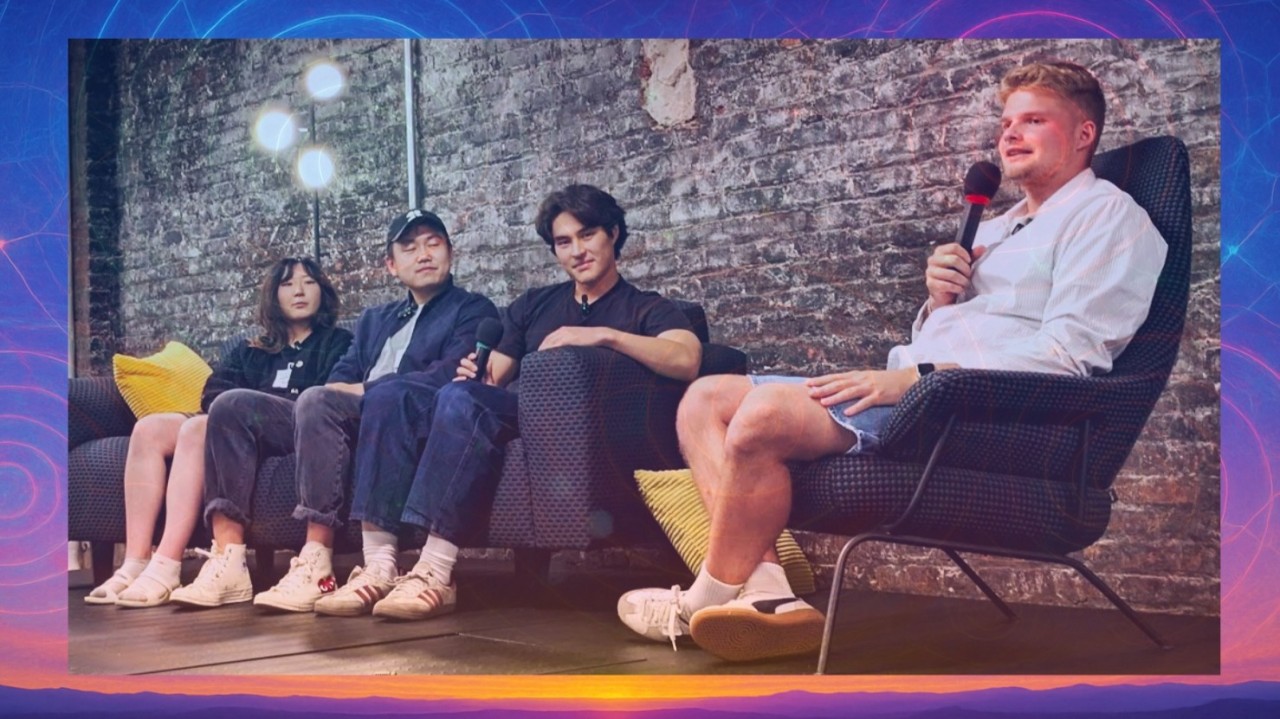
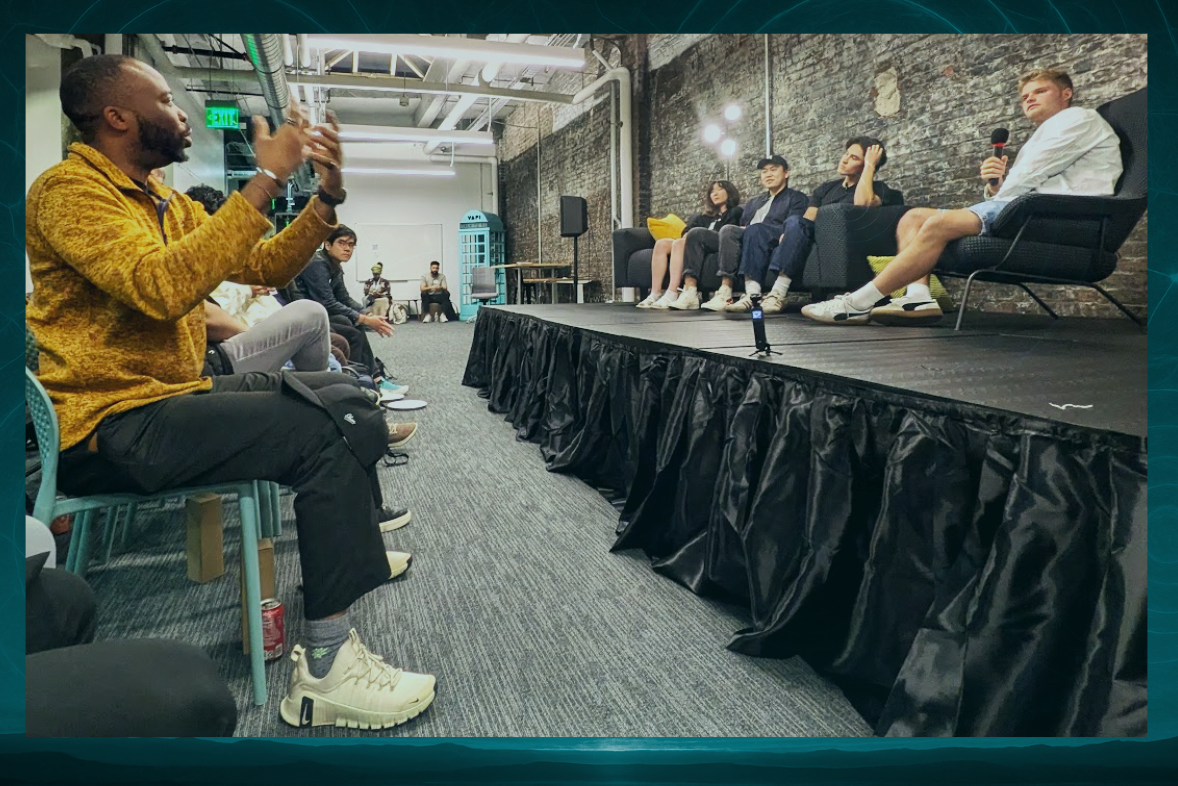
Last night the powder room door at Vapi’s headquarters unlocks via QR code: a micro-symptom of the evening’s theme. Systems that predict your needs while forgetting you might need to leave the room. Four designers gathered to ask what happens when interfaces stop waiting for input.
Paradox of Agentic
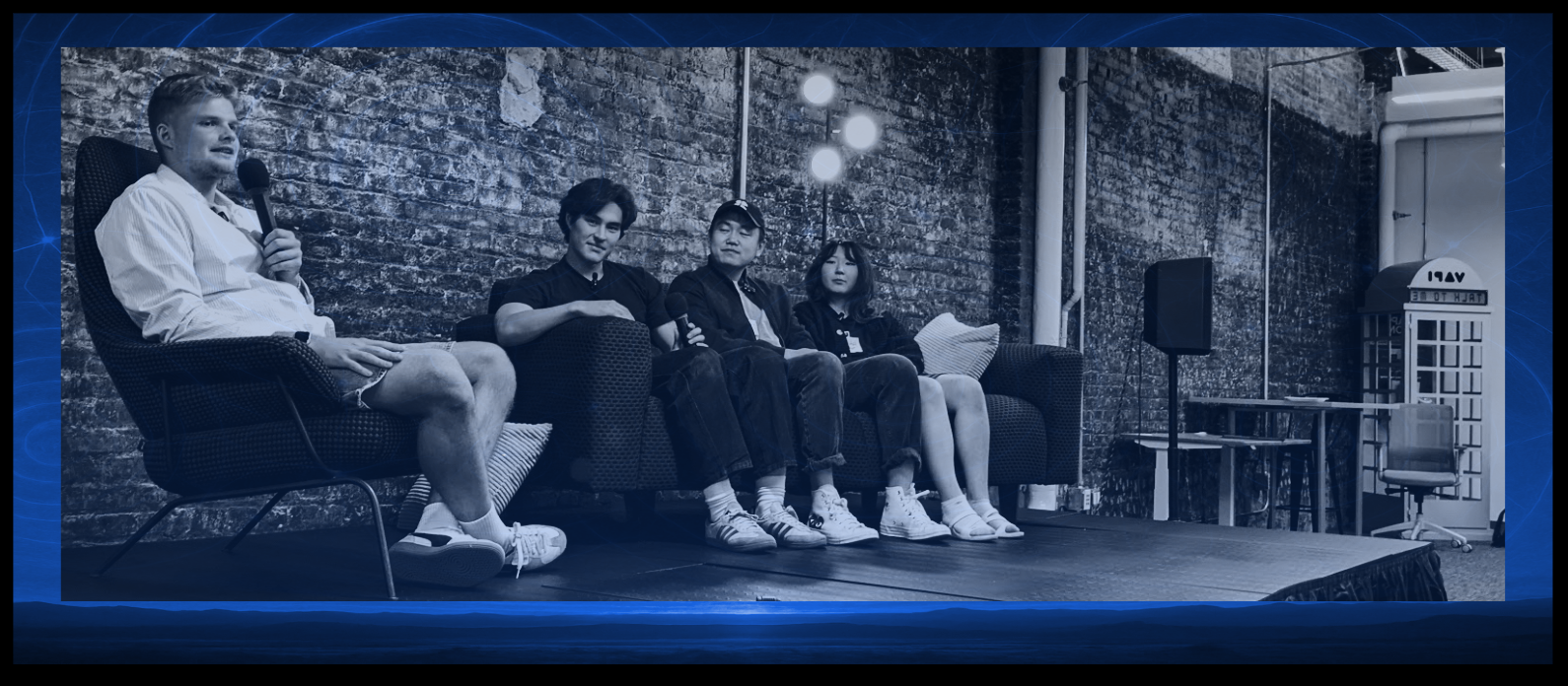
Four designers gathered to discuss “agentic interfaces,” a term already collapsing under its own weight. Agentic, it turns out, is less a concept than a mirror. Each designer saw a different reflection.
Patricia Tani of Julius AI pivoted to cognition over input: agentic means interfaces “like Cursor where the goal isn’t to necessarily help people input things, but rather, how to communicate best if the agent is on the right track. Something with a lot of visual indicators.”
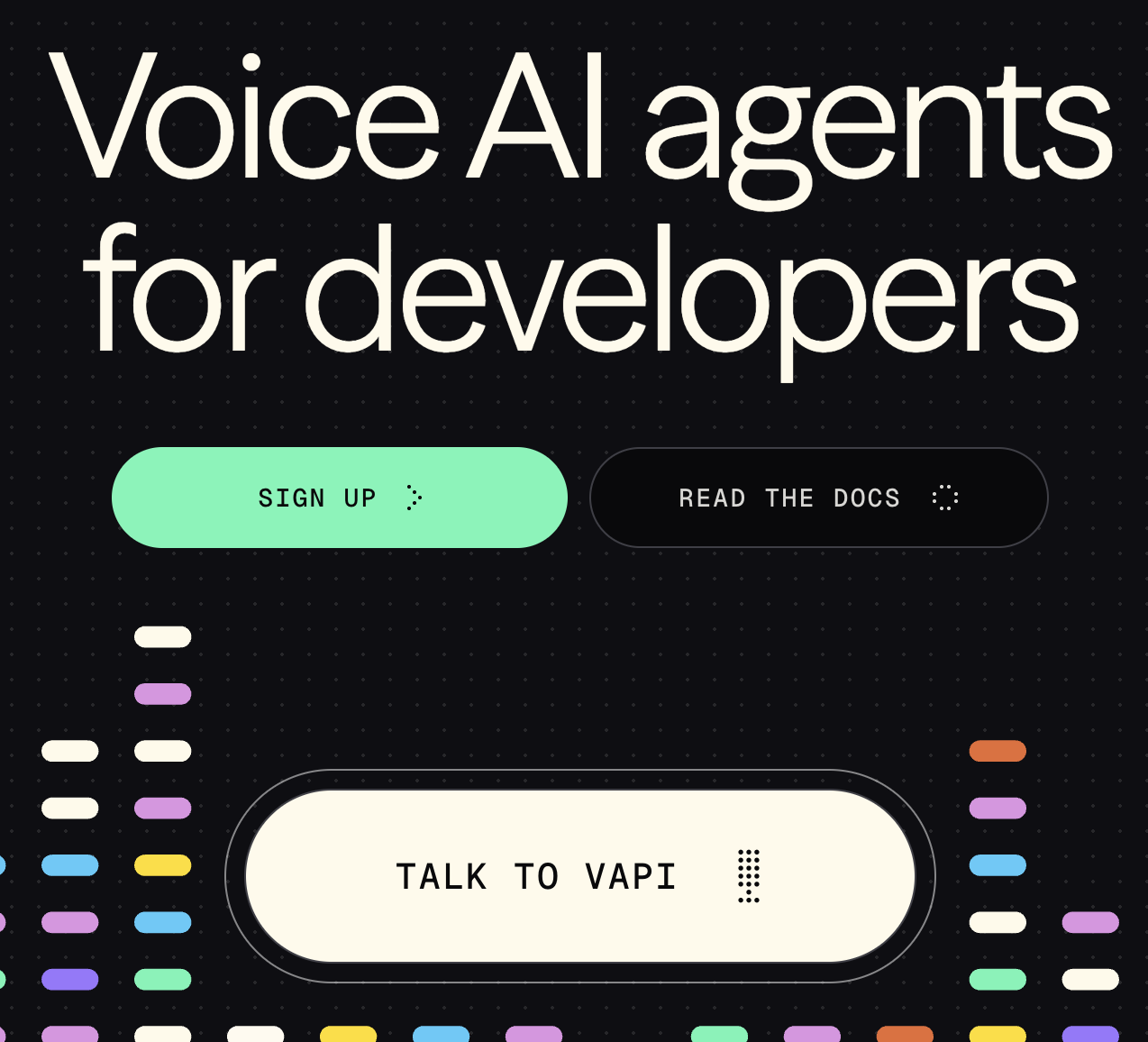
Teddy Ni of Magic Patterns offered the practitioner’s cop-out turned insight: agentic interfaces today are “really anything,” chat boxes, canvases, workflow builders, but we’re only seeing “the tip of the iceberg.”
Matin A. of Delphi named the paradox first: agentic is “actually less interface because the system just gets smarter about you,” giving users “more time to do other things” by making interaction itself optional.
Andrii Mazur 🇺🇦 of Vapi stripped it to first principles: an interface that “can respond back to you, because before it was like, we just click a button. And then something happens, but now it can talk back to us.”
The room, half designers, scattered PMs and founders, nodded at different answers. Signal detected: the builders no longer agree on what’s being built.
Taste Problem
Teddy described Magic Patterns’ early crisis: users saw a loading animation of a mouse drawing UI mockups and tried to click the animation itself, mistaking the illusion for the interface. “We were, like, oh my God, like, how do we solve this?” The solution? Wait. Not design better, just wait a year for collective literacy to catch up.
This revealed the evening’s central tension. The new tension: systems that can generate faster than humans can interpret.
Patricia warned that AI still forgets conventions, back button on the right. Teddy confessed he prompts worse by voice than by keyboard. Andrii abandoned screens altogether, sketching on paper, photographing ideas into ChatGPT, and feeding prototypes into Magic Patterns. Three designers, three workflows, zero consensus.
The tools are pluralizing practice faster than pedagogy can adapt.
What Designers Do Now (If They’re Good)
If interface collapse defined the problem, pedagogy was the defense mechanism.
The panel’s most charged exchange came when Andrii asked: what’s the role of design in this acceleration?
Matin: “You’re probably going to ask less questions to the user in, like, in the form of inputs or text areas… you’ll just have most of the information already, and it’s just like asking the right amount of questions to the user to figure out where do you want to go inside of your app.”
Teddy pushed back on blank-slate prompts: “Is it really fair to put all of this work on the user… I think it works really well for those Vibe coding tools… but I do reflect a lot upon like, you know, is it really fair?” Magic Patterns quietly added ‘prompt pills,’ pre-filled suggestions like “gold meal landing page.” Conversion rose. Guidance, not genius, closed the gap.
Matin invoked the cold start terror: “What if super intelligence or AGI is already here. Like, does anybody actually know what kind of questions they want to ask such a thing? I’ve asked this to my friends. I’m like, okay, let’s say we have this… very intelligent thing, like, do you actually know what you want to ask, and most people are like, uh, I don’t know?”
The hidden curriculum: designers now teach the question, not just the answer.
Voice Without Visuals
When sight disappears, intuition becomes interface.
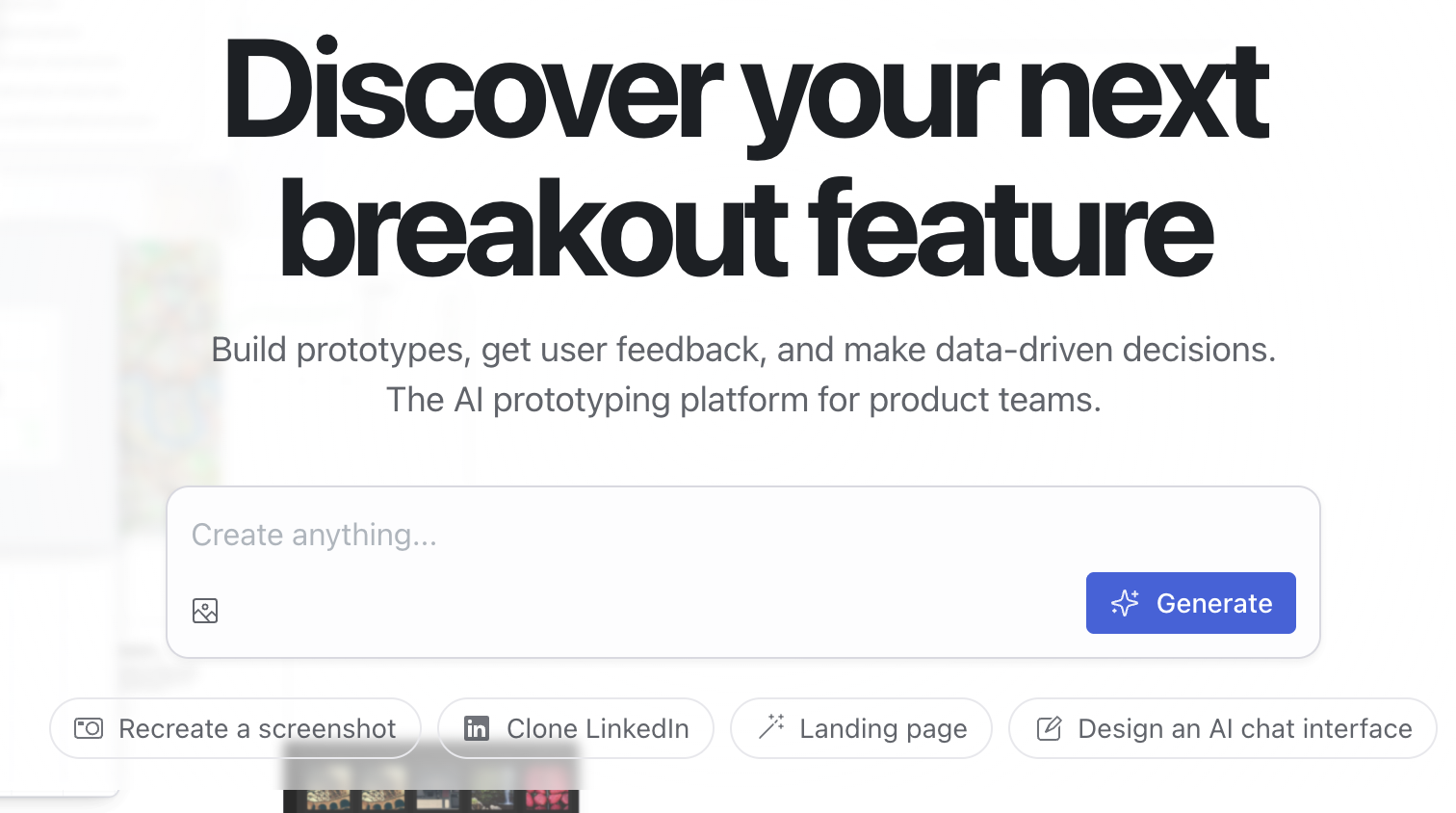
Andrii surfaced the harder problem: “I’m starting to think about how do I design a product that doesn’t even have visuals? It’s just voice. Like how the heck do you figure that problem out?”
Multimodality isn’t addition, it’s substrate shift. Each new sense brings new silence to design.
Teddy recalled calling a dentist, taking 10 minutes to realize he was talking to an agent: “it was not a human and unravel me.” Presumably Vapi powers that dentist’s system, though irony went unspoken.
Matin advocated for voice-first prompting: going into ChatGPT’s voice mode to verbally workshop ideas before crafting the actual text prompt. “Voice is a better interface than just using the regular chat.”
But context still dictates medium. Andrii’s constraint: “I’m not gonna use my voice if I’m on public transport. I’m not gonna be safe. Oh, how do I find this, you know, I would look weird, right?”
The future isn’t voice-first. It’s context-adaptive.
What Changes in Practice
Every designer had re-written their process. Teddy now prototypes directly in Magic Patterns and Cursor, touching Figma only for polish. Matin distinguishes between improving and inventing: speed for the latter, diagnosis for the former. Patricia begins with revenue logic before wireframes. Andrii co-designs live with users, collapsing validation cycles from weeks to days.
But he also admitted his product manager now ships prototypes faster than he does: “Jimmy, because he is using all this AI tools to come up with profiles faster than me. And I’m like, what the hell? Why am I? Why do I work here? What’s my job?”
Productivity inverted: the tools designed to extend him now outpace him.
Problem Definition Over Execution Speed
If tools accelerated execution, they also exposed a gap: designers moving too fast to understand what they were solving.
An audience member asked how much emphasis designers now place on research at the beginning of the process, given that AI tools tempt immediate prototyping. The question carried implicit anxiety: are we skipping the thinking phase?
Matin answered with process discipline: “It always starts with stating the problem… keep it very broad… starting very broad and trying to narrow it down into having one good understanding of the problem, and then I think you can be able to get to a good solution.”
Andrii pushed harder on the hierarchy: “It’s much more important than the execution because people need to understand what to do versus how to do it now. It’s much more important to understand the need versus want of the user.”
Then he named the trap: “Even though we have this super fast UX research with strategy, people don’t read that, they don’t feel it. You have to go through it yourself, try to use your own tool, try to observe how the user uses it, try to give it to them, go through it live with them. You have to know what they do, when they sleep, you know. You have to feel. That’s much more important than ever, I think now.”
The paradox clarified: AI tools make not doing the work easier. Reading a research report feels sufficient when you can generate a prototype in minutes. But reading isn’t feeling. Reports aren’t observation. Speed without immersion produces solutions to the wrong problems.
Matin’s “state the problem broadly” and Andrii’s “you have to feel it” converge on the same truth: problem definition can’t be automated because it requires embodied understanding, the kind that comes from watching users struggle, from using broken interfaces yourself, from caring enough to notice what’s missing.
The tools didn’t eliminate research. They made it more essential and harder to justify. Every minute spent observing is a minute not generating. The discipline now is resisting the seduction of execution.
Failure as Pedagogy
Sometimes the feature isn’t broken, the expectation is impossible.
Teddy’s hard lesson: Magic Patterns added Figma import, users expected pixel-perfect translation, complaints mounted. “We actually removed that feature for like a whole year… we had to take a step back and be like we can’t promise people his expectation that they will get a one-to-one Recreation.”
Delphi’s users wanted digital selves that spoke differently to family and colleagues, contextual identity as product feature. Categorizing relationships proved harder than coding them. Matin: “How do you even organize people based on what kind of buckets and if you have the buckets, how are you gonna organize the knowledge that these people should have access to?”
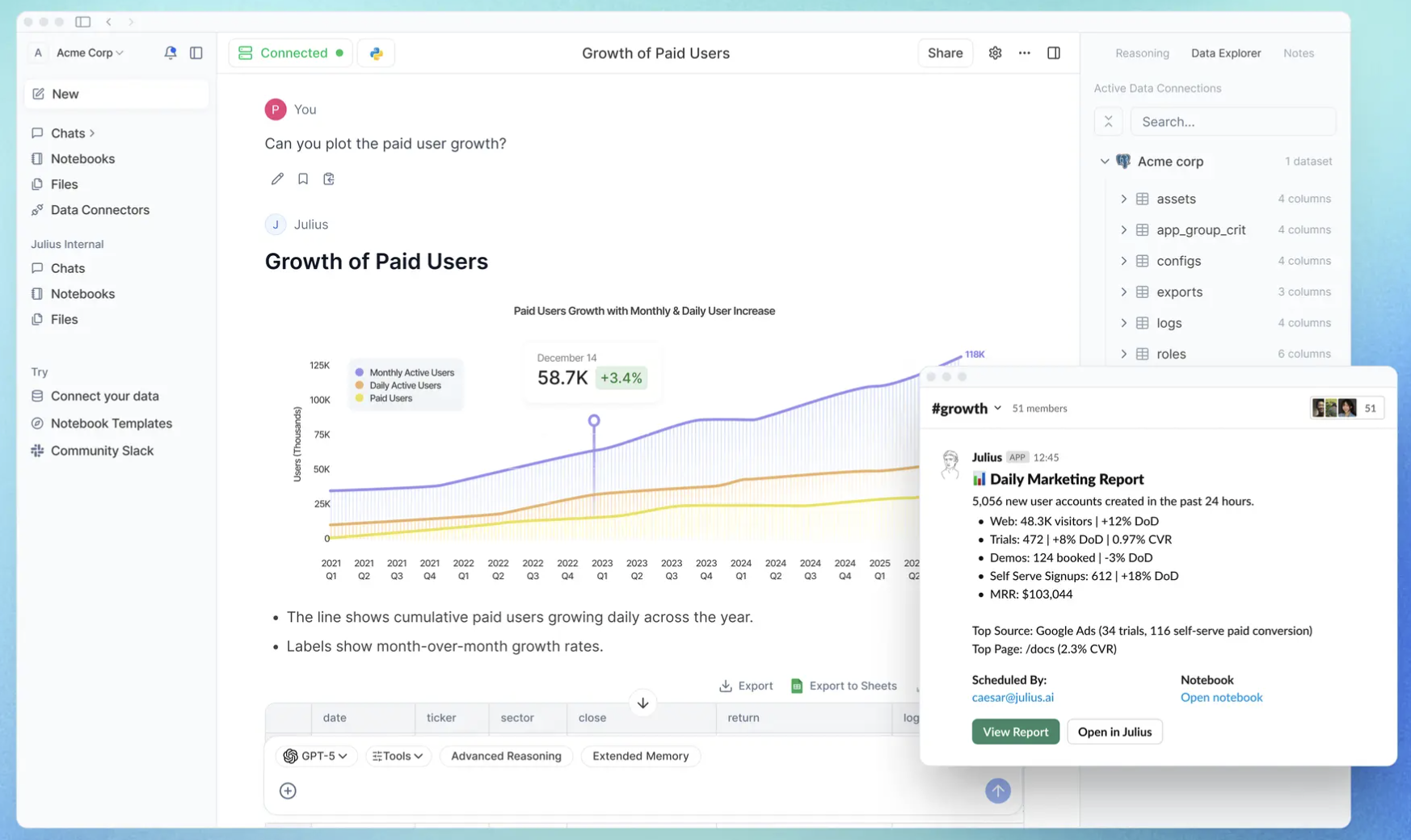
Patricia at Julius AI: non-technical users trying to build dashboards from scratch. “How do I know which database table has those things, so it was just going through the flow from beginning to end as a non-technical user.”
Andrii’s current challenge: teaching users to build voice agents when the building blocks themselves are unfamiliar. “There’s a lot of new ones, so the biggest challenge that we had is how do you teach users and there are so many ways that you can do it.”
Design school never covered user education as a deliverable.
Replacement Question
If voice challenged visibility, failure challenged authority.
Andrii forced it: will AI replace designers?
Teddy predicted role convergence: “The roles of like a PM designer will honestly kind of start merging together… we’re kind of tasked with solving and thinking through a lot of customer problems, while also maintaining business needs in mind.”
Patricia pointed to pattern knowledge: “The main issue with AI design right now is the fact that it doesn’t really know what the user is thinking or what the user would want to prioritize.”
Then Andrii delivered the sharp take: “AI will replace a lot of designers… bad designers because there are a lot of them.”
Taste, emotional intelligence, strategic judgment, those remain scarce resources. “The best skill is going to be your taste, your ability to understand when to use what, and learning… if you can translate that feeling to somebody and get them to feel an emotion when they use something that’s gonna change your career.”
Matin added: “We are probably the only people inside of an organization that care so much about users and trying to nail that into action… there’s also so many layers to design. It’s not only just having a mockup, it’s trying to gather people around an idea like a vision and trying to sell that vision.”
Consensus beneath the provocation: execution is automating, sensibility is not.
Critical Design Literacy
Andrii on restraint: “Technology is neutral, right? It’s not bad or good. We make it better good… the best thing we can do is just catch yourself at the moment where we should use it or no.”
Matin warned of agreement loops: LLMs “are so agreeable… oh, you’re doing great, wonderful… we should understand that these LLMs are built on the good and bad of the internet… it’s so much more important for us to be more critical thinkers.”
Teddy shared the classroom horror story: some students spent hundreds on Claude code, only to deliver projects worse than before, lost in AI loops they couldn’t debug. “You kind of had to put AI on a leash. It’s really important not to lose our ability to critically think.”
Patricia’s wielder dependency: “AI is very dependent on the wielder of the AI, so if you have a really experienced developer using AI, it will be a lot better because they can notice, oh, they’re adding random paralyzation that’s not necessary here.”
Matin invoked the learning paradox: “We are in the golden age of learning… you don’t have any excuse anymore… if you want to learn to code, you have all the tools right now to go for it and we should not be scared… we’re running out of excuses.”
Acceleration demands discernment: aesthetic, ethical, and temporal.
Audience Provocations
Avatars Too Real
Derek asked about video avatars: Matin revealed Delphi tested FaceTime with Arnold Schwarzenegger’s clone. “People were like, oh, this is so good, like what is going on,” but pulled it for being “too good” and uncanny. “The lip syncing isn’t there yet, there are so many things that make it feel very uncanny.”

Component Libraries, Context Layers
Someone raised the storybook/component library problem: how do advanced teams with existing design systems integrate AI tools without manual one-at-a-time imports? Teddy noted Magic Patterns is working with Figma and mentioned Storybook building an MCP server: “You want to bring your own brand your own content, context your own components into these five coding tools and people to generate stuff on brand instantly.”
Dynamic UI vs Familiarity
A question on dynamic UI: whether interfaces should morph based on user queries. Teddy delivered a hard take: “This was a really popular thing six months ago… I don’t think it will be actually, because a lot of design is around familiarity… if you’re telling me one day when I visit your site the sidebar is going to be on the left, and then the next day it’s going to be on the right… I think the familiarity of knowing a platform is probably 80% of design, honestly.”
Waiting as Experience
One person asked about asynchronous experiences: how to design for tasks that take hours or days. On asynchronous tasks, Magic Patterns now plays a completion chime. Vapi’s voice agents detect silence and announce “wait a minute.” Design’s oldest rule returns: inform, don’t abandon.
Matin emphasized expectation-setting: “Sometimes something takes five minutes, and so I’m like, okay, I’ll go to another tab, and sometimes things take 24 hours. I’m like, oh, I’ll go to the beach and I’ll come back… we got to be very honest with our users.”
Sound as Unfinished Territory
The final question came from an audience member probing the sensory gap:
“How do you think about audio interface? I mean, we talk about voice, but you know, there’s audio, there’s music… from Brian Eno’s Windows 95 sound to today. And you know, in a film, you see so many layers of sound. How are you all thinking about that? Is there sort of any open source interfaces? If I have my own collection of sounds that I like, or when I leave the app I hear a door shutting sound… all these sorts of things how you all might begin…there’s music…there are nature sounds… beyond the audio, how are you thinking about voice interfaces combining with other non-vocal sounds?”
The question hung, not from evasion but from frontier recognition. Voice dominates because it simulates conversation, but sound as architecture remains unexplored. Brian Eno’s six-second Windows 95 tone defined an era’s emotional logic. No one on stage had designed an equivalent for agentic systems.
The missing layer isn’t capability, it’s imagination.
Matin acknowledged the limitation: “I think it’s very hard to understand how this gets sound. It’s not as human… we as a company are not really focused on that… companies like Suno or 11 Labs. There are companies that are really pushing the farms here, the layers of audio and sound.”
Andrii noted: “For the voice calls we have background sounds if users can just to talk with voice agents, so that’s definitely something that you probably should talk with our developers.”
Film uses sound to cue emotion before image resolves meaning. Interfaces still treat audio as decoration. The designers who learn to compose with silence and resonance will define the next grammar of interaction.
Nobody on stage had begun that composition yet. The opportunity remains open: not for voice cloning startups, but for designers willing to think in acoustic metaphor, duration, and silence as functional elements.
The panel ended with Andrii encouraging attendees to follow him and network over restocked pizza. The room dispersed into smaller clusters, designers comparing Cursor workflows and debating whether Figma would survive.
What persisted: a collective sense that the profession’s center of gravity had shifted without anyone announcing coordinates.
Not replacement, transmutation. Not tools, but taste. Not automation, but awareness.
Andrii closed on pragmatism disguised as philosophy: “You’re good when your competitors are copying you. So, if you can find a way to do something that people can copy from you, it means that you’re actually good at what you’re doing.”
The question now: what’s worth copying in a world where everything can be generated?
For context & discussion across platforms:
Announcement: https://luma.com/productdesignx?tk=6wzZWp
💬 Convos on Bluesky:
https://bsky.app/profile/schwentker.bsky.social/post/3m3c4moqbp226