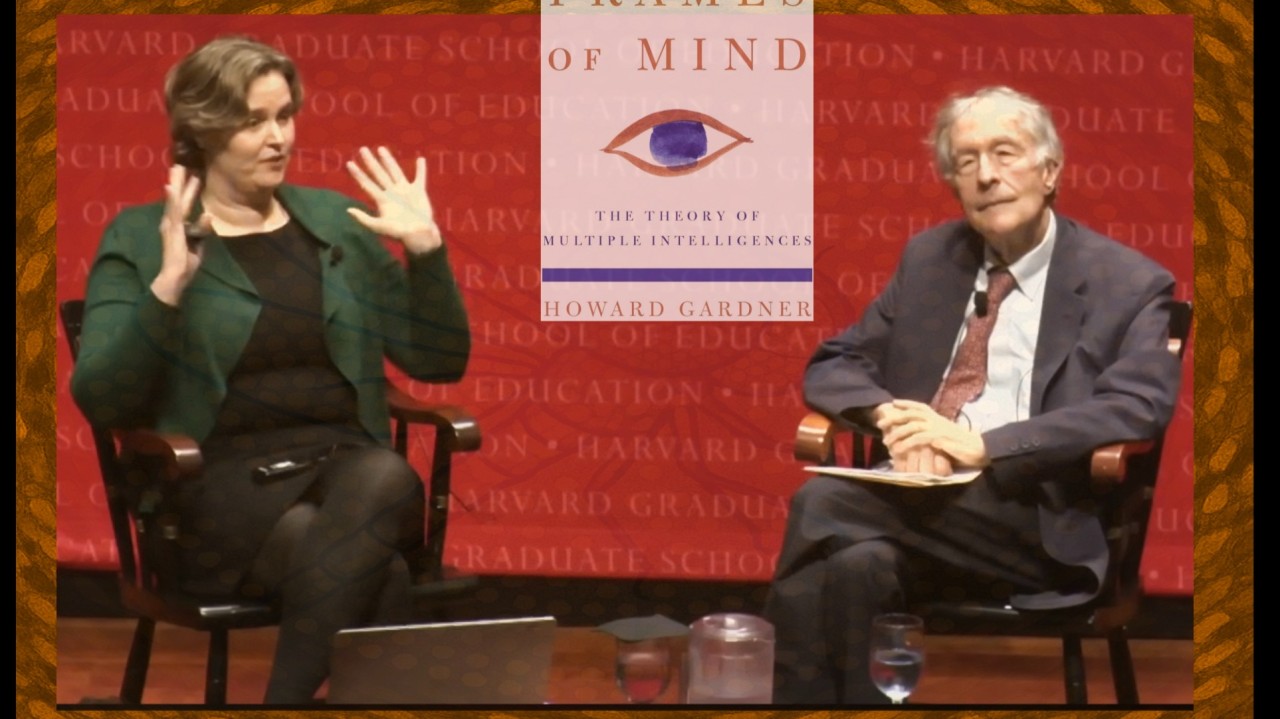
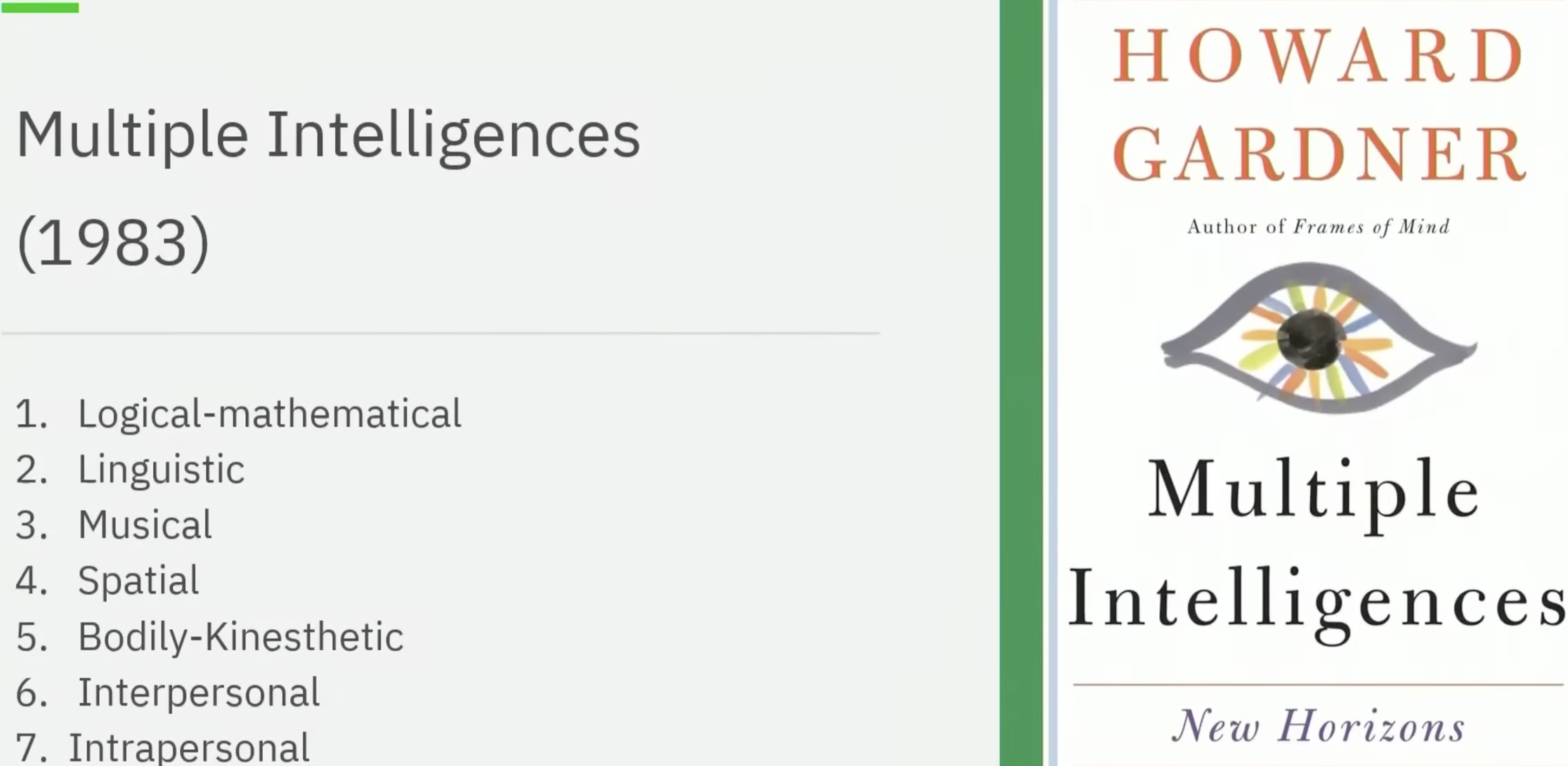
Howard Gardner, the Harvard cognitive scientist who revolutionized how the world thinks about intelligence, has arrived at a startling conclusion: most of what schools teach may soon become optional.
Speaking at a recent Harvard Graduate School of Education forum, Gardner argued that AI systems will handle cognitive tasks so effectively that traditional academic subjects could become elective rather than mandatory.
“I think that most of the cognitive aspects of mind, the disciplined mind and synthesizing mind, and the creating mind, will be done so well by large language instruments and machines that whether we do them as human beings will be optional.”
This isn’t incremental reform. Gardner, originator of multiple intelligences theory, is proposing a fundamental reimagining of human development that challenges every assumption about knowledge work, expertise, and competitive advantage.
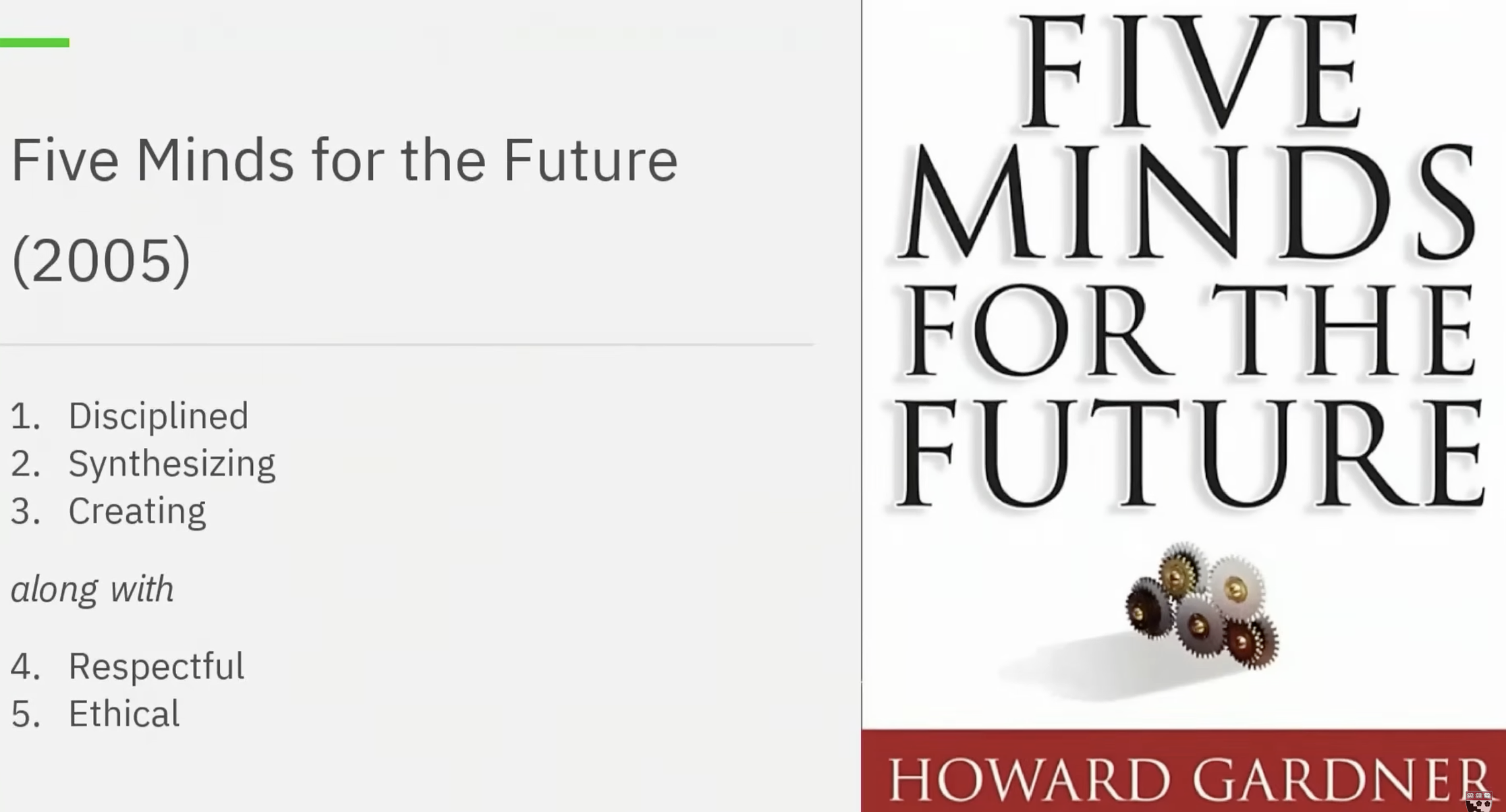
Five Minds Framework Meets AI Reality
Twenty years ago, Gardner identified five essential minds for the future: disciplined, synthesizing, creative, respectful, and ethical. The first three represent cognitive capabilities. The last two focus on human relationships and moral reasoning.
Today, Gardner draws a sharp distinction:
“I don’t believe for a minute that aspects of respect, which is how do we deal with the people we see every day, and aspects of how do we deal with difficult issues as citizens and as workers, professionals or otherwise, I don’t think those are the things which we can and should assign or consign completely to even the most articulate and multifaceted and dragon-flown machine.”
This division reveals a paradox for knowledge workers. If AI can synthesize information across disciplines, generate creative solutions, and master complex domains faster than humans can learn them, what becomes the source of professional differentiation?
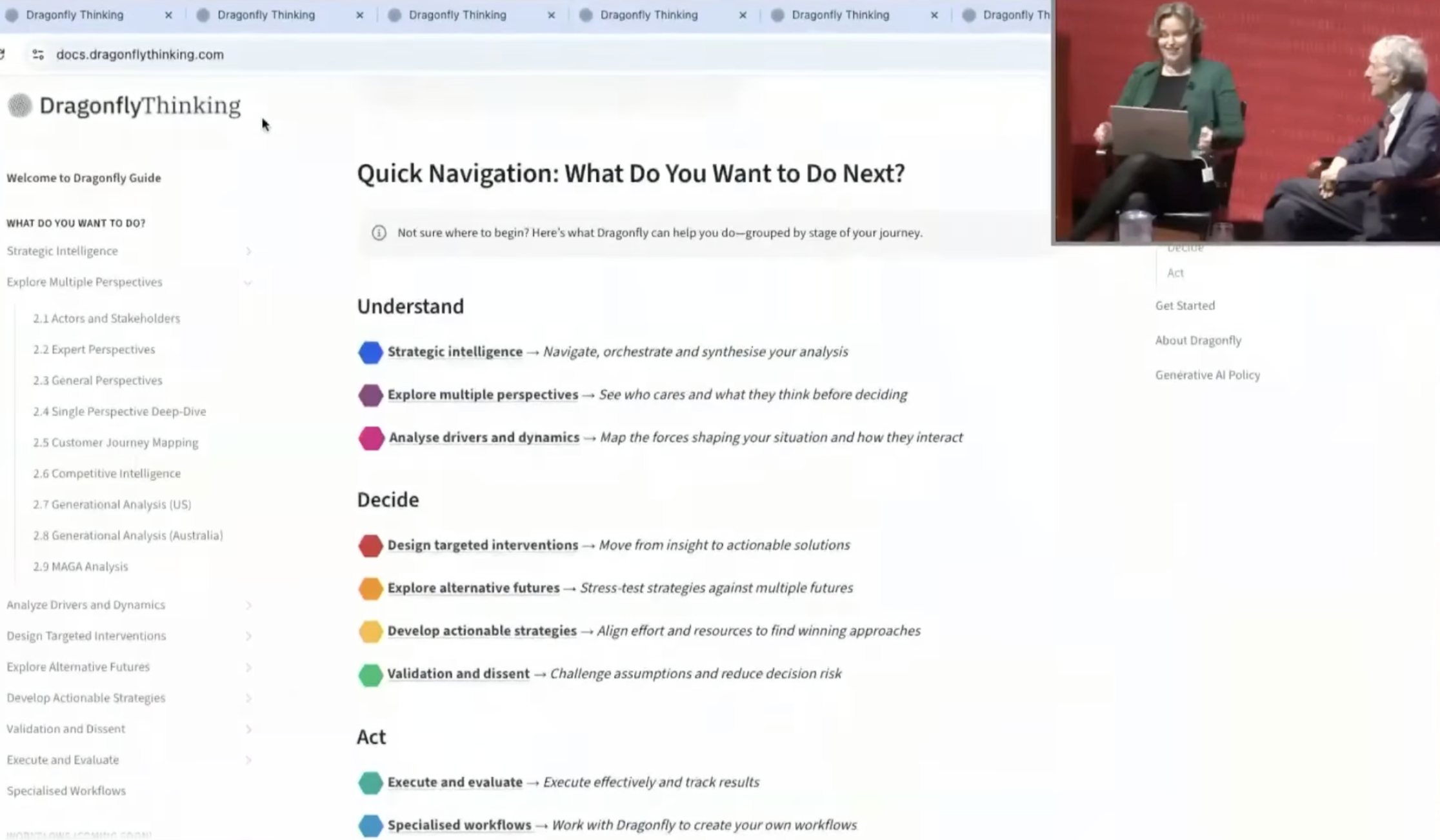
Dragonfly Thinking
Anthea Roberts, an international law professor who has built AI systems that analyze complex problems through 60 different analytical lenses, demonstrates what this future might look like. Her “Dragonfly Thinking” approach, inspired by dragonflies’ compound eyes with 30,000 lenses each, shows how AI can simultaneously examine issues from multiple expert perspectives.
Roberts describes her daily routine: “I spend almost all of my time in constant dialogue with multiple large language models. I have Gemini, I have GPT, and I have Claude open and in dialogue. And I don’t just dialogue with each of them individually. I feed their answers to each other.”
This represents a fundamental shift from traditional knowledge work. Instead of being the primary analyst, Roberts has become what she calls “the manager, the orchestrator, and the synthesizer” of AI capabilities. The skills required mirror executive leadership more than traditional scholarship.
The Meta-Knowledge Imperative
Both Gardner and Roberts emphasize a crucial concept: meta-knowledge. Rather than learning historical facts, students need to understand how historians think, work with evidence, and construct arguments. Rather than memorizing mathematical formulas, they need to grasp mathematical reasoning patterns.
“Meta perspective means understanding what it is that historians do, how they work with documents, how they argue about things, how they discuss things, how they change their mind, how they contextualize things,” Gardner explains. “We simply don’t know how much meta knowledge you need rather than starting from Plato to NATO, which was the way I learned western history at Harvard 60 years ago.”
This suggests a profound shift for knowledge workers. The premium moves from possessing information to understanding the cognitive architectures of different domains and orchestrating AI systems within those frameworks.
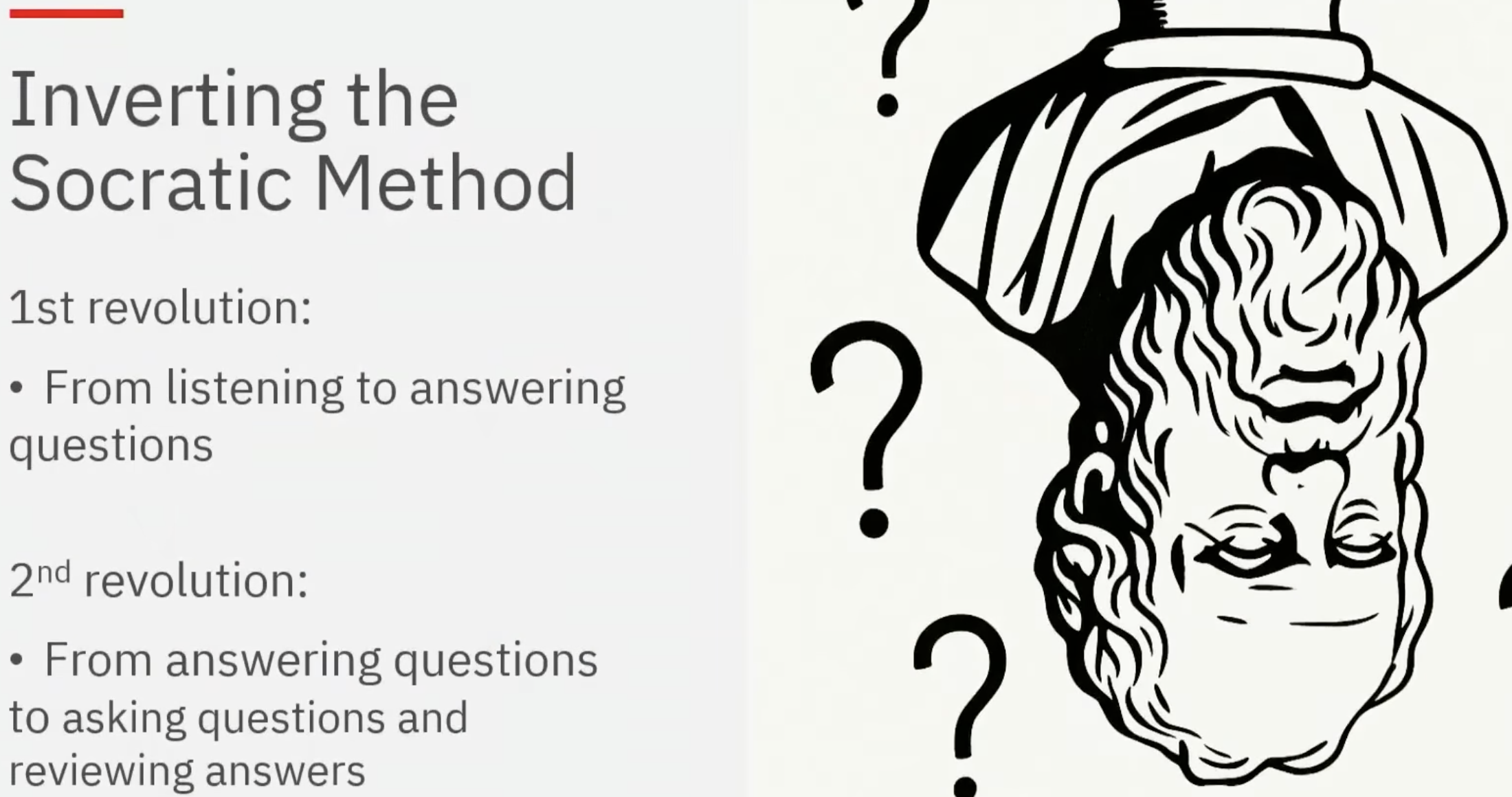
Second Socratic Inversion
Roberts identifies a historical parallel that illuminates the current transformation. Harvard Law School pioneered the Socratic method in the 1870s, moving students from passive lecture recipients to active question answerers. Now, a second inversion may be necessary.
“Instead of answering questions, our students need to learn to ask better questions. They need to learn to ask better questions and review answers to see whether they are better,” Roberts argues.
This shift from answer-provider to question-architect represents more than pedagogical change. It signals a fundamental reorganization of how value gets created in professional settings. The ability to formulate precise queries that unlock AI capabilities becomes more valuable than the ability to produce those answers directly.
Expertise Paradox Deepens
Roberts has observed a striking pattern: “The people that are doing the best… are going from 10X engineers to 100X engineers. And what they are learning to do is co-create and use their expertise to develop systems and processes.”
But this creates a paradox. If expertise enables dramatic AI amplification, how does one acquire expertise in the first place? Roberts acknowledges the uncertainty: “If already an expert, and learn how to use these models, I can see how to really expand with them. I’m not sure how to get to be an expert with these models.”
This question strikes at the heart of professional development. Can proficiency be built through AI collaboration, or does it require the traditional “grind” of disciplinary training? Organizations face a fundamental choice: invest in traditional expertise development that may become obsolete, or bet on AI-native approaches that remain unproven.
Cognitive Diversity Advantage
Roberts notes that people with ADHD and other forms of cognitive diversity seem particularly adept at leveraging AI tools: “A very striking number of people who are cognitively diverse, particularly on the ADHD spectrum, are really leaning into these models… people who are like explorers and seekers seem to be really leaning in.”
This observation suggests that traditional educational and professional hierarchies may be fundamentally disrupted. Traits previously seen as deficits in industrial-age classrooms may become advantages in AI-augmented environments.
Three Critical Questions for Leaders
This analysis reveals three paradoxes that organizations must navigate:
Development Paradox: If AI dramatically amplifies expertise but expertise seems necessary to use AI effectively, how do organizations develop talent? Traditional pathways may be too slow, but AI-native approaches remain unvalidated.
Differentiation Paradox: AI systems tend toward statistical averages and generic solutions. How do organizations maintain competitive advantage when everyone has access to similar AI capabilities? Roberts suggests sophisticated prompting techniques and cultural diversity, but these may not provide sustainable moats.
Human Skills Paradox: Gardner argues that respect and ethics will become most valuable, yet these capabilities resist standardization and measurement. How do organizations systematically develop what cannot be easily quantified while racing to implement quantifiable AI tools?
Implications for Knowledge Work
Gardner and Roberts suggest that this transformation may be as fundamental as the invention of writing or printing. The implications cascade across every aspect of professional life:
Traditional career paths based on accumulating domain knowledge may give way to roles focused on orchestrating AI capabilities across domains. The most valuable professionals may become those who can rapidly identify which AI tools to apply to which problems and synthesize results across multiple systems.
Educational institutions face pressure to move beyond content delivery toward developing meta-cognitive skills, question formulation abilities, and the interpersonal capabilities that remain distinctly human.
Organizations must decide whether to train existing experts in AI collaboration or hire AI-native talent who may lack traditional domain expertise but excel at human-machine collaboration.
Stakes of Getting This Wrong
Gardner frames the urgency starkly: “If the planet gets destroyed, it’s not going to be because there are some people who are wealthier than others. It’s because we have so much strife here.” His proposed focus on respect and ethics isn’t academic speculation but recognition that technological amplification of human capabilities makes wisdom more critical than intelligence.
The question isn’t whether AI will transform knowledge work but whether leaders are preparing their organizations to thrive in a world where the most valuable humans become conductors of increasingly sophisticated cognitive orchestras.
The time for incremental adaptation is over. As Gardner warns against “generals always fighting the last war,” organizations must decide: Will they optimize current systems or architect entirely new approaches to human-AI collaboration?
What meta-knowledge is being developed in leadership teams? How are organizations learning to move from answer-providers to question-architects?
Sources:
Thinking in an AI-Augmented World - Harvard Graduate School of Education
Sep 18, 2025 HGSE professor Howard Gardner, originator of the theory of multiple intelligences, and award-winning international law professor Anthea Roberts, creator of Dragonfly Thinking AI tools and techniques, examine the evolving partnership between human and AI thinking. Join us to rethink intelligence, learning, and critical thinking in the age of AI.