
Insights from Aaron Levie’s vision for organizational transformation in the age of agents
TL;DR: The vast majority of enterprise work involves unstructured data that AI can finally unlock. Success requires redesigning how organizations work, with new educational infrastructure for agent-first thinking, context engineering & platform literacy.
Early adopters are already seeing 37% productivity improvements, according to Box’s 2025 survey of 1,300 IT leaders. Yet while 87% of organizations pilot agents, only 24% have governance frameworks. The educational implications are profound. Traditional corporate learning, designed for stable processes & predictable outcomes, cannot serve a world where organizations must redesign themselves for AI effectiveness.
Agent-First Design
Levie’s most provocative insight challenges conventional change management:
“I think it’s more likely that we change how we work to make agents effective than agents learning how we work & automating that.”
This inverts traditional technology adoption. Instead of forcing AI to fit existing processes, organizations must redesign workflows to leverage AI capabilities.
Startups demonstrate the pattern. “If you launched a company today with AI-native assumptions, you would run your company completely differently as a result of AI agents than you would have two years ago,” Levie observed. “You’re running your company to make the agents more effective.”
The specific example: “People will have Claude code with sub-agents divided by every single task they want to hand to an agent. Maybe it’s every microservice in their codebase. Maybe it’s front-end versus backend architecture.”
This creates fundamental organizational training gaps. Traditional change management assumes stable processes with incremental improvements. Agent-first design requires rethinking work from first principles.
The competitive implication: “This is going to be an incredible moment for startups because you could outrun lots of incumbents merely by designing your company in an agent-first way.”
Enterprises face a different challenge: “Most enterprises are going to take years to redesign their processes to be agent first.” The learning shift must support this multi-year transformation journey.
Box Automate exemplifies the transition. Instead of asking “How do we add AI to our workflow?” the platform asks “How do we design workflows where agents can operate effectively?”
Takeaway: Educational content must teach organizational redesign principles, not just feature adoption. The learning journey requires frameworks for agent-first thinking, not adaptation strategies for existing processes.
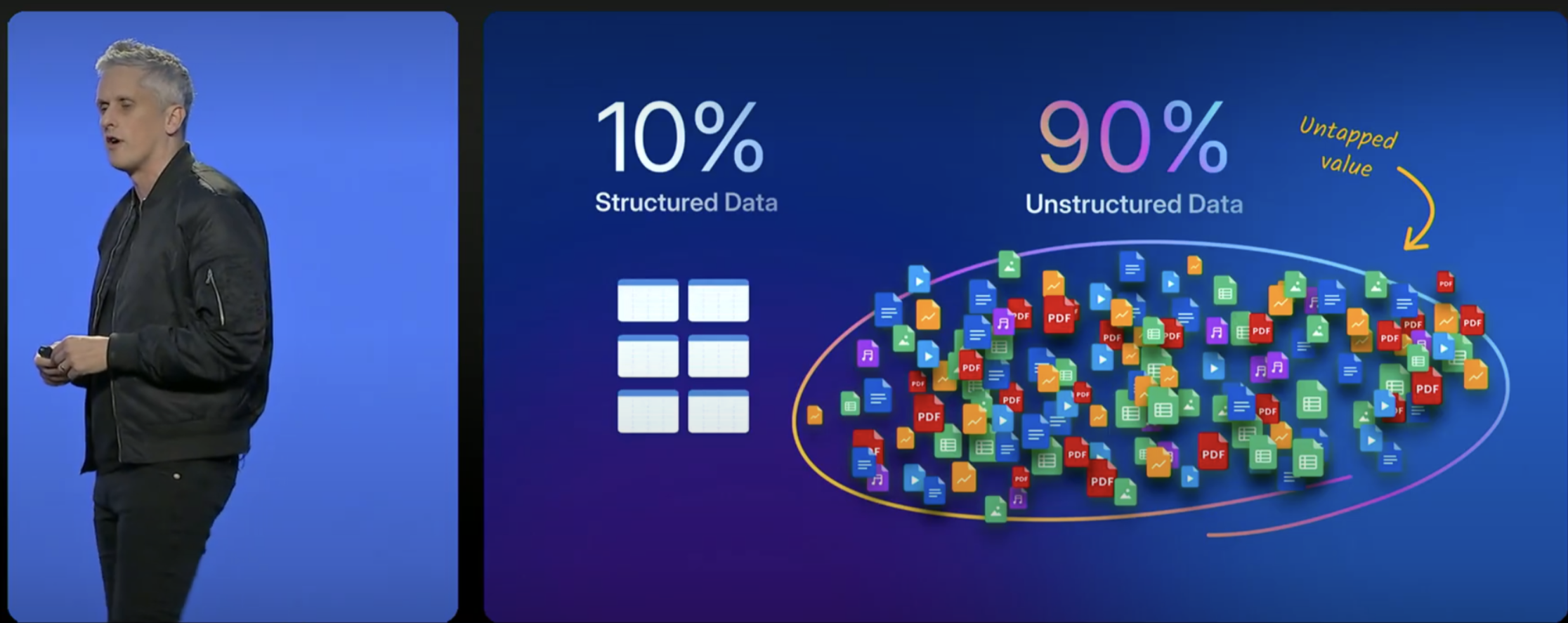
Unlocking the 90%
The scale of missed opportunity shapes everything. “Think about the actual work happening inside all your organizations,” Levie explained. “Marketing campaigns: all the ideation, creative content, production materials. Clinical research: all the research data, studies, forms, medical information. Insurance claims: all the multimedia you take in & work with customers on. That’s all unstructured.”
This isn’t just about document management. It’s about organizational intelligence trapped in formats that resist analysis, collaboration that doesn’t compound, & expertise that doesn’t transfer.
AI changes the fundamental equation. “AI finally lets us tap into all of this data for new insights & the ability to automate almost any workflow in our organization that deals with unstructured information,” Levie noted.
The examples he outlined reveal the transformation scope:
-
Product development accelerated by agents combing research data for customer feature requests
-
Clinical studies processed by AI with “unlimited hours” for regulatory insights
-
Client onboarding compressed from weeks to minutes through intelligent document processing
But realization requires addressing the infrastructure reality that fragments organizational knowledge across systems, creates security gaps, & prevents agents from accessing authoritative information.
Takeaway: Educational content must help organizations see the vast majority they’ve been missing. The biggest learning gap isn’t technical—it’s conceptual recognition of automation possibilities in unstructured work.
Second Opinions at Scale
Levie’s insight about falling AI costs creates new operational possibilities:
“The cost of getting a second opinion from AI is dropping.”
This enables validation patterns impossible with human expertise. “You could have different agents review the work of another agent & you might even want agents from a different model to do that work,” Levie explained. “You might want a GPT-5 agent to review a document & then a Claude 4 agent to review the work of that GPT-5 agent.”
This transforms quality assurance from constraint to capability. Traditional workflows limit reviews due to cost & time. Multi-agent validation makes comprehensive checking economically feasible.
Box Extract demonstrates the approach. “We have an agentic process that will determine based on the document’s complexity & what the person’s asking how much compute to throw at the problem.”
The quality vs speed paradigm shifts. Levie’s perspective evolution illustrates the change: “I used to be a speed maxi. Now I’m weirdly not that concerned about speed anymore because of the background agent phenomenon.”
When agents work in parallel rather than sequentially, thoroughness becomes more valuable than immediacy. “If I can deploy 20 agents to work in the background, then I don’t really care if that task took a minute or 5 seconds.”
Takeaway: Educational content must prepare teams for multi-agent validation patterns. Quality assurance transforms from bottleneck to competitive advantage when AI enables comprehensive checking at scale.
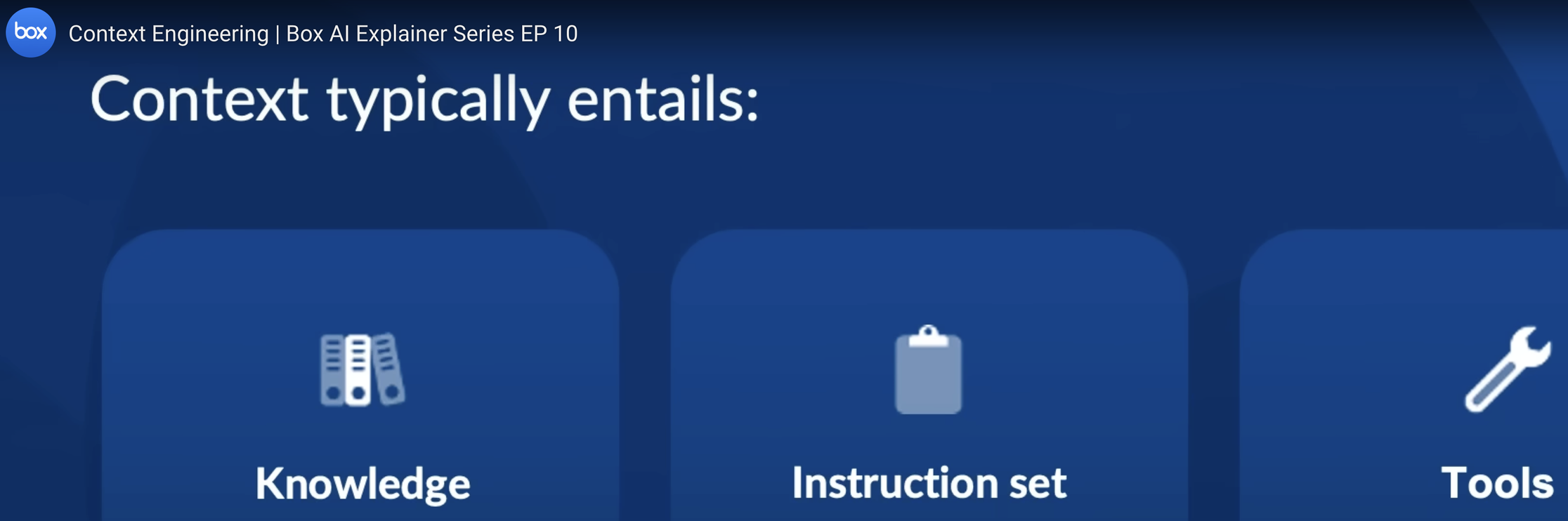
Context Engineering
Levie identified context engineering as the critical skill for AI-first organizations:
“You’re always effectively trying to figure out how to give agents the right context to let them effectively get deployed against whatever workflow they’re being involved in.”
Context engineering elevates documentation from compliance requirement to strategic capability.
“We spent a lot of time now increasing the documentation of work that we’re doing. If we can better describe how we want that work to get done, then an agent is way better off.”
The context engineering framework includes:
-
Right data access: Agents need information relevant to their assigned tasks
-
Clear instructions: Step-by-step guidance for workflow execution
-
Defined objectives: Measurable outcomes for agent performance
-
Proper timing: Integration points where agents add value
-
Appropriate scope: Problems suitable for automated solutions
This transforms how organizations think about knowledge management. Instead of storing information for human retrieval, systems must prepare content for agent consumption.
Documentation becomes product design. Writing instructions for agents requires understanding how AI processes information, interprets ambiguity, & handles edge cases.
Takeaway: Educational content must treat context engineering as a core business competency, not technical add-on. Teams need skills for agent instruction design as fundamental as project management or financial literacy.
Platform Thinking
If context engineering is the micro skill, platform thinking is the macro lens—how layers of content, AI, and workflow interlock.
Levie’s platform vision shapes learning requirements. “We don’t think about AI as some afterthought extended capability. It’s right in the core of the Box platform.”
The three-layer architecture—content platform, AI platform, workflow platform—requires different mental models than traditional software adoption. Each layer enables the next while maintaining security, governance, & interoperability.
The federation approach solves enterprise complexity. Rather than forcing data consolidation, Box enables agents to coordinate across system boundaries.
“Box will provide a search agent that is the best agent at figuring out what’s in your unstructured content,” Levie explained.
This respects organizational reality: “You trust what you put in Box, same thing for your Outlook, same thing for your ERP system.” Federation leverages existing trust relationships rather than requiring new ones.
The intelligent content vision extends beyond current capabilities. When documents become queryable, images become searchable, & conversations become analyzable, the platform serves as organizational intelligence layer.
Takeaway: Educational content must build platform literacy without overwhelming business users with technical complexity. Teams need frameworks for understanding how capabilities compose, how security inheritance works, & how specialized agents coordinate.
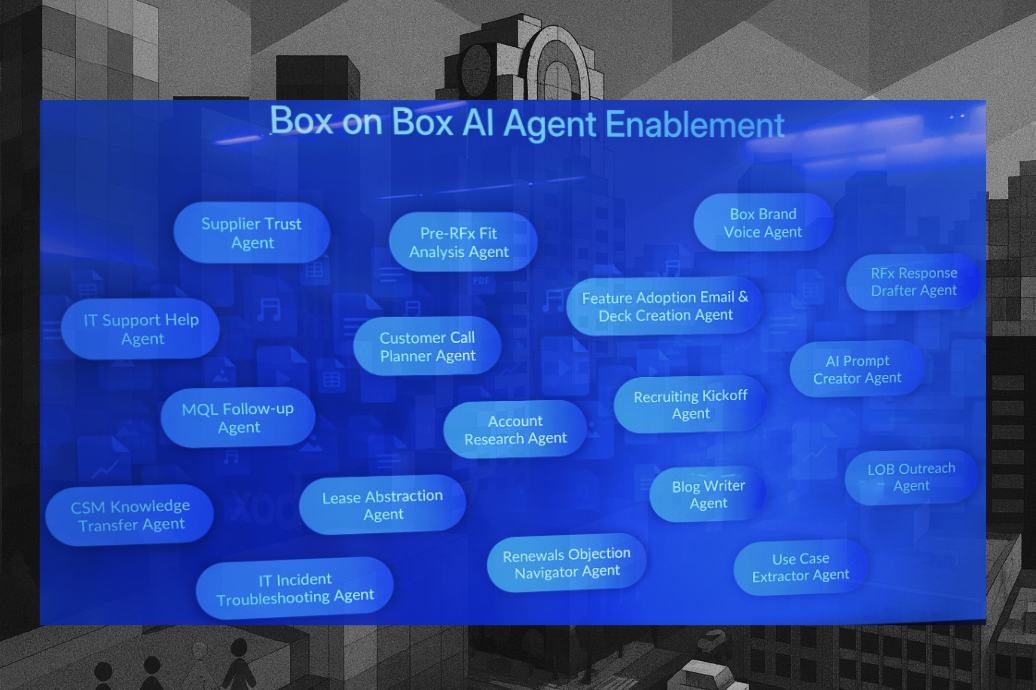
Educational Infrastructure for Transformation
The velocity paradox demands new learning approaches. Product development accelerates while organizational change operates on longer timescales.
Traditional training - comprehensive courses, best practice documentation, change management programs - cannot match innovation pace.
Levie’s insight about startup advantages reveals the pattern: companies designing agent-first workflows from inception move faster than those adapting existing processes.
The capability-building challenge: helping established organizations develop startup-like learning velocity.
Context engineering as competency creates specific requirements:
-
Discovery frameworks: Help teams identify context engineering opportunities
-
Documentation standards: Templates for agent instruction design
-
Validation methodologies: Ways to check whether agents are right
-
Workflow redesign principles: Guidelines for agent-first process design
Multi-agent validation patterns need educational support:
-
Quality threshold setting: How to determine appropriate confidence levels
-
Cost planning for multi-agent approaches: Budget modeling for multiple agent runs
-
Result evaluation frameworks: Methods for comparing agent outputs
-
Escalation workflows: When to involve human review
Box’s positioning as “platform for content, not AI company” shapes educational strategy. Teams need content intelligence frameworks that survive AI evolution, not training tied to specific models or features.
Implementation Framework: Learning at AI Velocity
Levie’s vision requires educational infrastructure that operates at innovation speed while building organizational capability systematically.
Structured discovery over comprehensive training. Instead of exhaustive feature catalogs, provide frameworks for identifying unstructured data opportunities. Help teams recognize the automation potential within existing workflows.
Agent-first design methodology. Educational content that teaches workflow redesign principles, not adaptation strategies. How to think like AI-first startups while managing enterprise constraints.
Context engineering curriculum. Systematic approaches for agent instruction design, workflow documentation, & validation methodology. Treat as core business competency requiring dedicated development.
Platform thinking development. Progressive frameworks for understanding content-AI-workflow integration without overwhelming business users with technical complexity.
Multi-agent validation training. Practical approaches for quality threshold setting, cost planning, & result evaluation that scale across use cases.
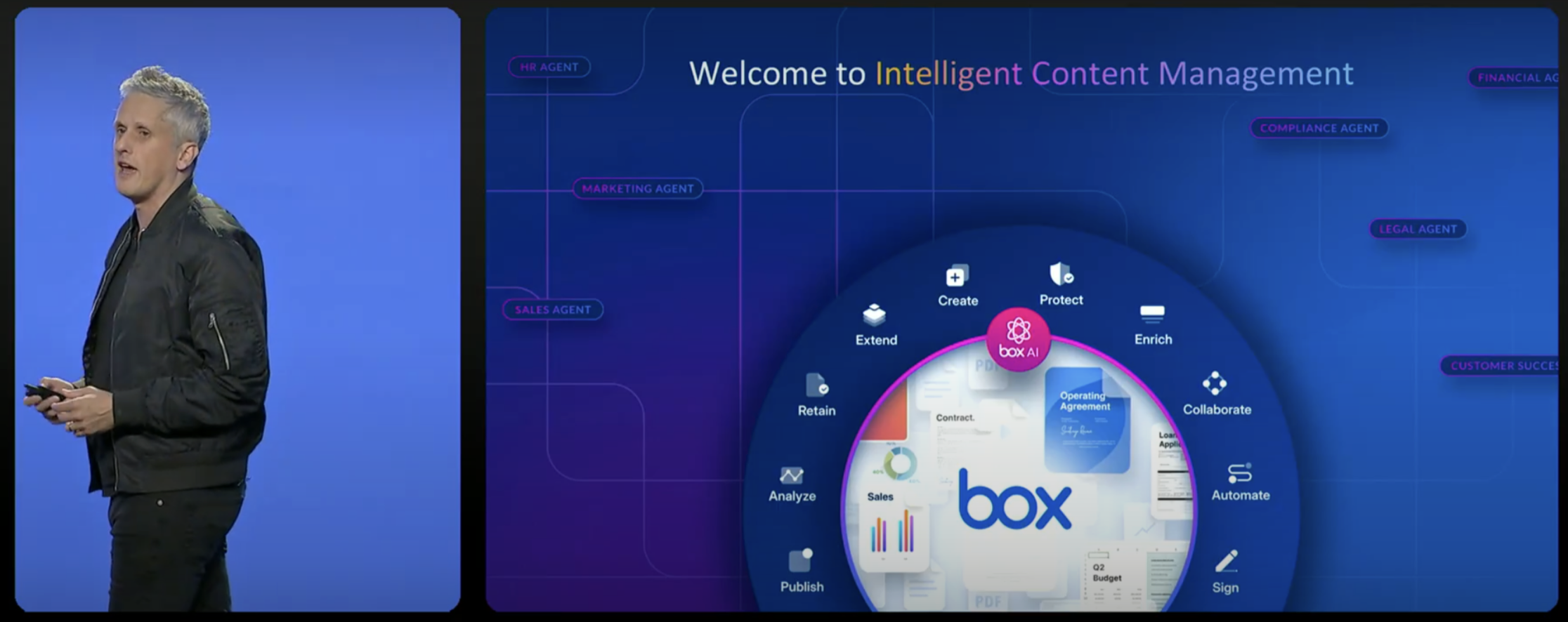
The Intelligent Content Future
Levie’s BoxWorks vision reveals an inflection point: AI finally unlocks the vast majority of organizational work that involves unstructured data.
Success requires more than deploying agents on existing workflows. It demands rebuilding how organizations work, learn & evolve.
The organizational training gap extends beyond features to transformation:
-
Capability identification: Helping teams see automation opportunities in unstructured work
-
Agent-first design: Teaching workflow redesign principles for AI effectiveness
-
Context engineering: Developing systematic approaches for agent instruction & validation
-
Platform literacy: Building understanding of composed capabilities & security inheritance
-
Multi-agent coordination: Preparing teams for validation patterns that ensure quality at scale
The competitive advantage belongs to organizations that change how they work to make agents effective, not those waiting for agents to adapt to existing processes.
Educational infrastructure must enable this transformation. Learning systems that operate at innovation velocity while building systematic organizational capability. Content that teaches discovery frameworks, design principles, & validation methodologies rather than feature adoption strategies.
Box’s intelligent content platform provides the technical foundation. Educational content must provide the organizational transformation framework.
The future belongs to organizations that don’t wait for agents to learn them, but redesign themselves to learn with agents.
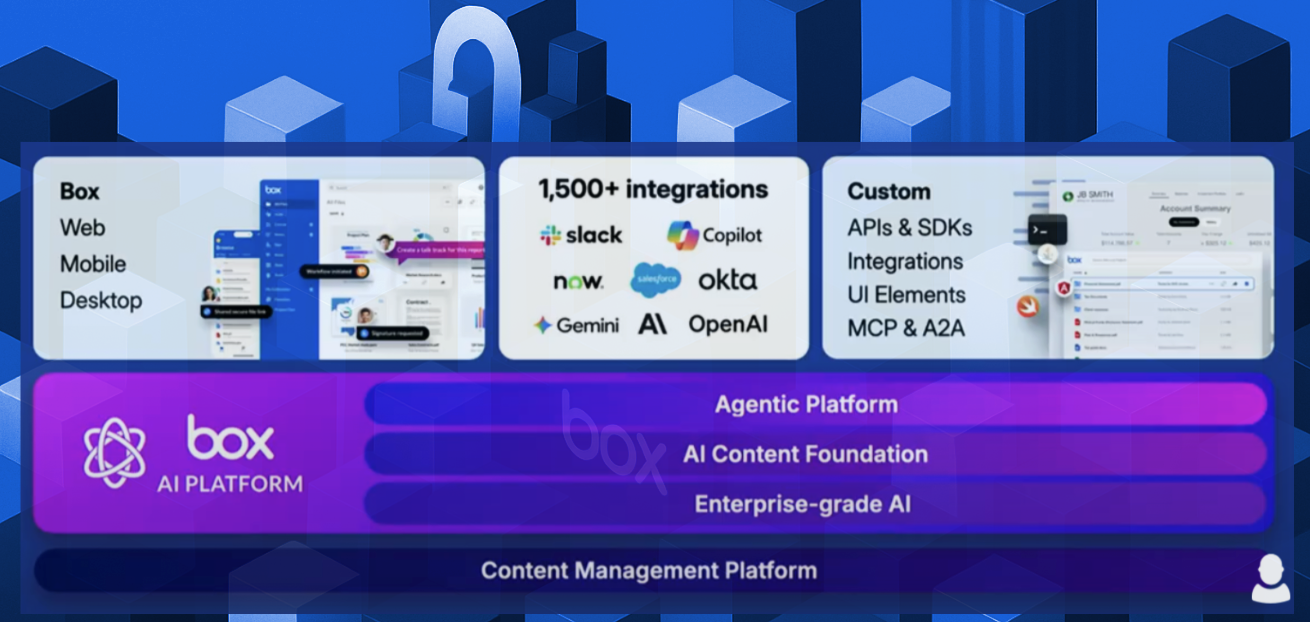
Final article in the BoxWorks 2025 series. The complete journey: technical protocols enabling agent coordination, practitioner reality checks on implementation challenges, executive insights on managing AI velocity, & strategic vision for organizational transformation.
Sources
-
BoxWorks 2025 keynote: The AI-first enterprise: Powered by content, built for action https://www.youtube.com/watch?v=rxJ3FJVjY8M&t=1028s
-
Live @ Boxworks | 9/11/25 Matthew Berman https://www.youtube.com/watch?v=blyNiugX7TI&t=5577s