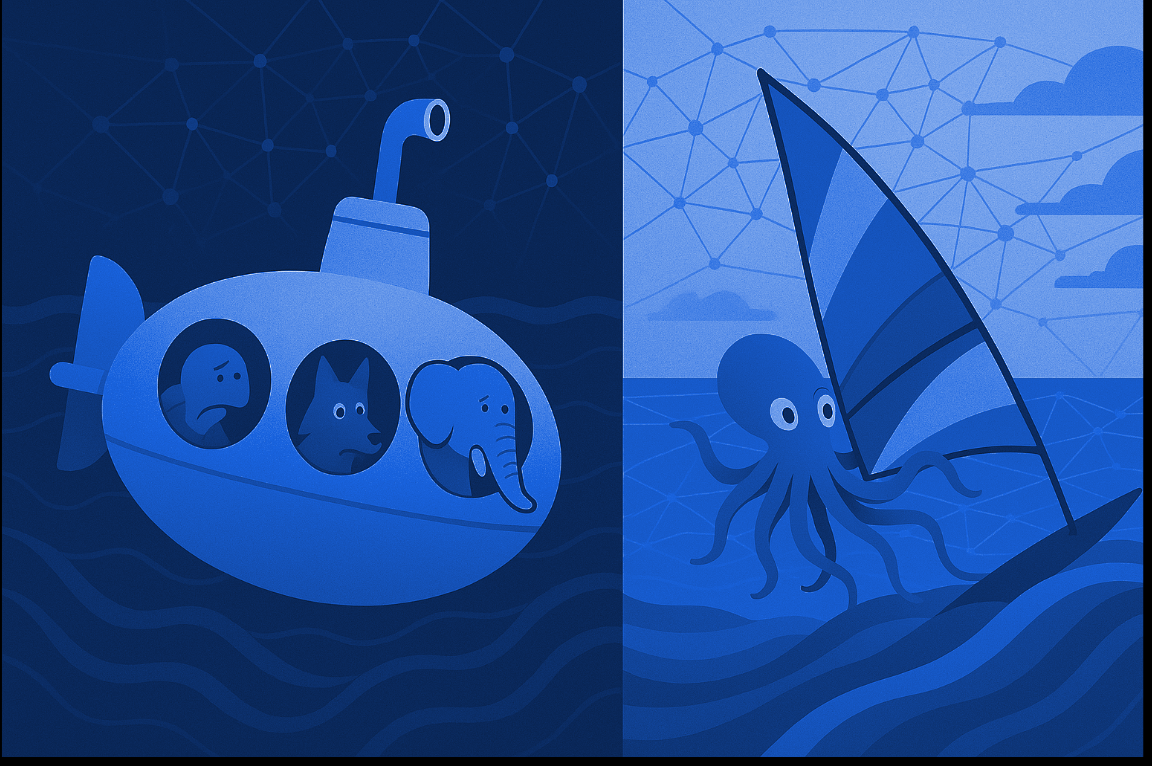
Three weeks. That’s how long it took Cognition to transform an acquisition into an ultimatum.
After bringing Windsurf’s ~230 staff into the fold, Cognition presented a stark choice: accept 80-hour weeks across six days, or take a nine-month buyout and leave. The speed suggests this wasn’t integration; it was sorting.
From Vibeathon to Ultimatum
The irony cuts deeper when traced back to July’s pivotal weekend. Thursday night’s build session showcased something rare in Silicon Valley: authentic community energy. “This isn’t a hackathon,” Matt Bergland had said to the 200 developers gathered in that San Francisco venue. “It’s about giving people a chance to find their own pace to build at their speed.”
Less than 18 hours later, Google paid $2.4 billion for Windsurf’s leadership team. The atomic shifts that followed saw Cognition acquiring what remained: 230 people who had just demonstrated the power of building “at their own pace.”
Three weeks later, that pace became 80 hours across six days.
Architecture of Extraction
What Windsurf knew about mapping consciousness between code and creativity becomes particularly haunting now. The team that understood nuanced relationships between human intention and AI capability found themselves reduced to a binary: conform or exit.
“We’re here to help people become 10x, 100x engineers even if they’ve never written a line of code,” Bergland had explained that Thursday night. But when Varun Mohan told his Y Combinator audience that “startups are basically like getting slapped in the face probably over and over again,” he couldn’t have predicted his team would experience those slaps from their acquirer.
This mirrors a broader pattern emerging across AI consolidation. Where companies like Replit navigated platform plays by building ecosystems that amplified rather than absorbed talent, Cognition appears to be optimizing for different variables entirely.
Strategic Collision
The mathematics reveal the disconnect: 230 people with deep AI tooling expertise, who had just demonstrated Planning Mode’s hallucination reduction and DOM-aware browser integration to a room full of impressed developers, acquired then immediately filtered through conditions designed to encourage departure.
“Planning mode is our attempt to make sure you don’t run into those hallucination problems. It gives you an accurate, effective, and efficient solution,” Abhay Agrawal had explained during that final build night. The technical sophistication he demonstrated (Windsurf capturing screenshots, analyzing DOM trees, auto-selecting context-aware components) emerged from teams with space to think deeply about human-AI interaction.
Either Cognition fundamentally misunderstood what they were buying, or the acquisition was never about integration. When Chris Messina live-coded a Raycast extension in real-time while the Thursday crowd watched in awe, he wasn’t just demonstrating technical capability; he was embodying the creative conditions that produced it.
For strategic leaders and talent navigating this landscape, the collision reveals something critical about acquisition intent. When a company moves from celebrating “find your own pace” to mandating 80-hour weeks in three weeks, they’re signaling their view of human capital as extractable resource rather than collaborative architecture.
Mapping the Consolidation Paradox
The AI sector’s consolidation creates a curious dynamic: companies racing to acquire specialized knowledge while simultaneously restructuring away the conditions that created that knowledge. Windsurf’s consciousness-mapping capabilities emerged from specific cultural and operational contexts… contexts that 80-hour weeks and ultimatums actively dissolve.
“What’s wild is how much people can do in just three hours now,” Bergland had observed, watching spontaneous projects emerge during that July evening. “Not months. Not weeks. Hours.” But that velocity came from people building “at their own pace,” not from institutional pressure.
The night and day shift from Thursday’s vibeathon to Monday’s corporate maneuvering already hinted at the tension. As one participant noted: “Every week there’s five to ten people launching new tools. But what Windsurf showed tonight? That’s a leap.”
Three weeks later, Cognition appears to be systematically dismantling the conditions that produced that leap.
This raises architectural questions about sustainable growth in AI. If the most sophisticated capabilities emerge from teams with space to think deeply about human-AI interaction, what happens when those teams are systematically compressed into high-velocity execution engines?
The paradox deepens: In an industry built on understanding intelligence, how do we recognize the intelligence embedded in the very cultures we acquire… before we accidentally optimize it away?