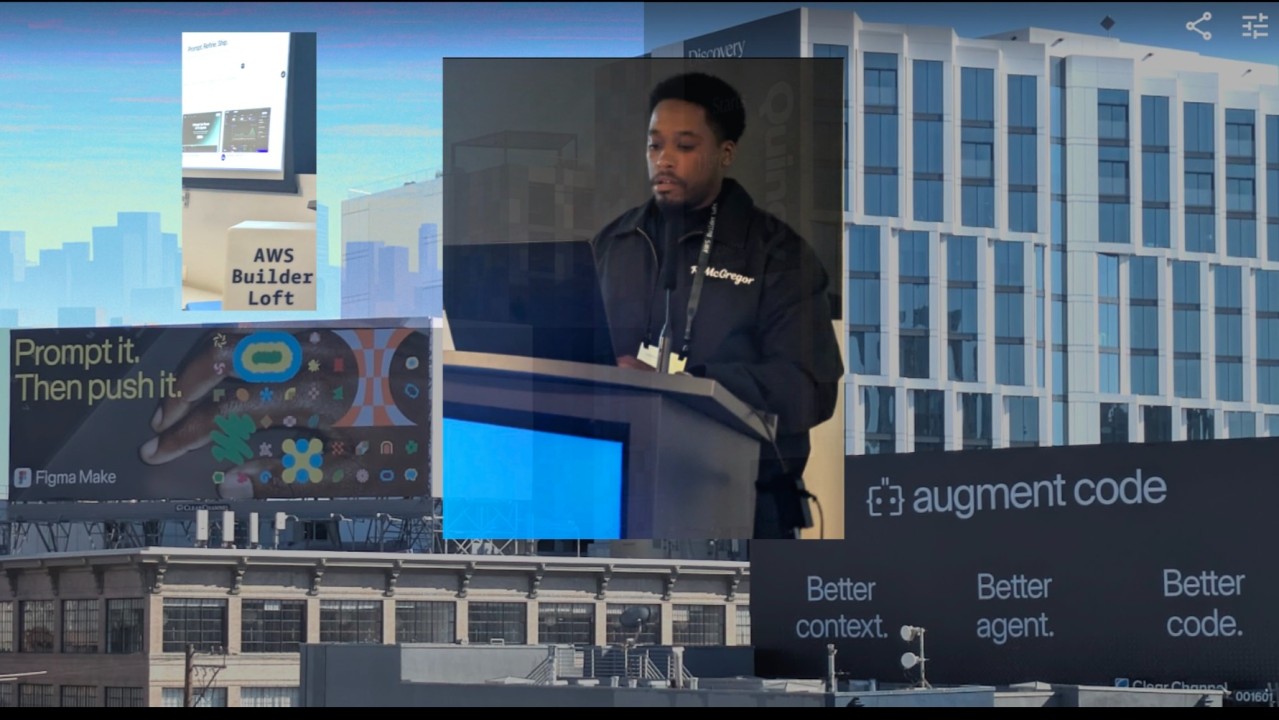
The development mental model just shifted. Mark-Daniel S. VC from AWS opened by highlighting “the zero to scale journey that startups take” - but what we witnessed was time itself being compressed. When Rickey McGregor III from Vercel v0 demonstrated agent mode, the cognitive load fundamentally changed: “we no longer need to change, like which model or a smaller one or larger one because the agent will based off like your apps can automatically determine what it needs to do.”
This isn’t optimization - it’s architectural DNA change. Rickey captured the founder constraint perfectly: “A lot of times, your time is limited in terms of what you’re able to do… do I want to spend time or take away my team’s ability from working on this core product. Or do I want to find another solution, and so with v0 you can very easily prototype your different ideas.”
Pattern recognition across the stack:
-
Rickey McGregor III v0’s agent mode: context-aware model selection removes decision fatigue
-
Konstantin Wohlwend from StackAuth: “Less than 10 lines of code in order to implement awesome payments”
-
Andre Landgraf from Neon: database branches that auto-delete w/ PR merges - “fully isolated and the second I delete this Branch because the PRS merged. The database gets deleted”
-
Bill Tarr’s AWS reality check captures the paradox: “Go build this app. Stop listening to everything else I say from right now… Go build something customers want and all of the SAAS stuff will start to flow after that” but…
-
Mark-Daniel S. VC @ AWS opening insight reveals why stack choices matter from day one: “as you begin selling to Enterprises or to customers more broadly, the first thing many of them say is, can I buy this product through AWS?”
Architectural decisions you make @ prototype stage echo through every scaling decision.
Velocity multiplier is real. As Rickey showed: “You can deploy it and you can send it out. You can add a custom domain so that it’s immediately available for you. So, you kind of cut down, like the development time, and you cut down a product at any time a lot.”
Current advantage window: AI-assisted development meets production-grade infrastructure. The gap between weekend prototype & enterprise-ready SAAS compresses when the stack handles complexity gradients automatically.
Architecture as acceleration. Time arbitrage as competitive moat.
Questions for tech leaders & dev advocates:
-
How does agent mode fundamentally shift the developer’s cognitive relationship with AI coding tools? The transition moves from explicit tool management (selecting models, configuring parameters, crafting prompts) to outcome specification where the system makes contextual decisions about implementation details. This represents a shift from developer as AI orchestrator to developer as product visionary - but what new skills and mental models does this require?
-
Here’s the paradox: if development cycles compress 10x through AI assistance, do we actually ship better products faster, or do we just iterate through bad ideas more quickly? When validation cycles accelerate beyond traditional planning rhythms and technical debt accumulates in AI-generated code that teams don’t fully understand, does velocity become a competitive advantage or a technical liability?
-
Which architectural decisions made in 2025 will determine whether startups can scale to enterprise customers by 2026 without complete rebuilds? Consider the tension between AI-native platform lock-in versus flexibility, the complexity of authentication federation as teams go global, and whether database branching workflows become as fundamental as git for collaborative development.
Sources:
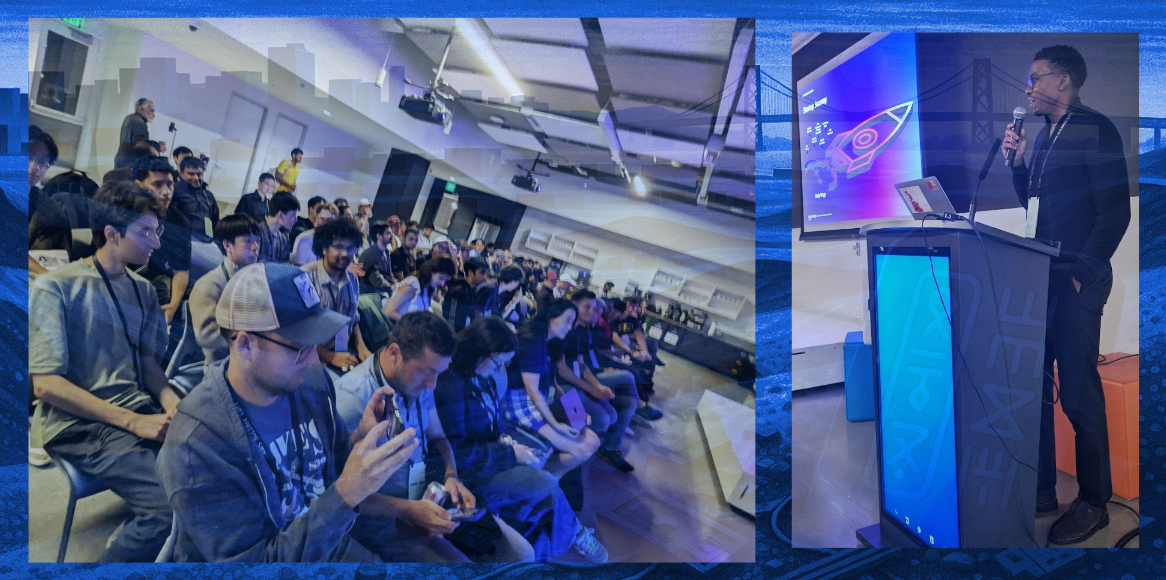
SaaS Summit at AWS Builders Loft - San Francisco
27 August 2025