How a Thursday night 🌃 vibeathon became the farewell no one saw coming, just hours before Windsurf’s founders joined Google DeepMind.
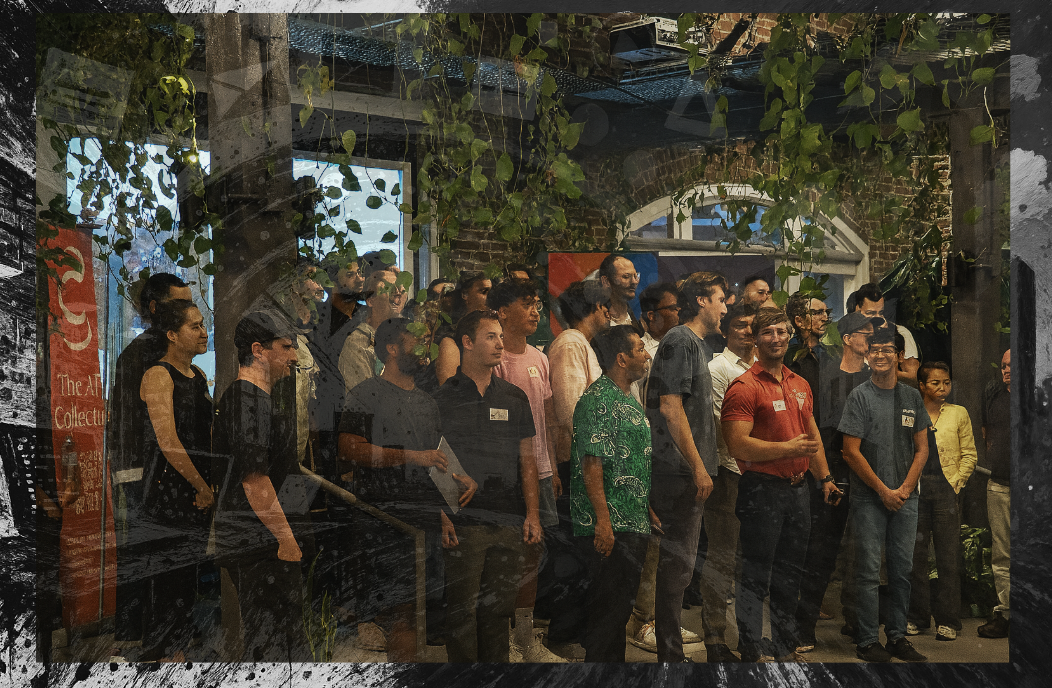
On a warm July evening in San Francisco, 200 developers, startup founders, and AI enthusiasts poured into a cozy industrial venue, not knowing they were witnessing the end of an era.
The occasion? Windsurf’s first-ever community “build night” – a high-energy gathering designed not as a pitch or product launch, but as an invitation to build, explore, and vibe. The irony? Less than a day later, Windsurf’s founding team would depart for Google DeepMind. And the OpenAI acquisition that many had assumed was a done deal? Quietly canceled.
This is a story about pace. About people. And about how, in Silicon Valley, history can be written overnight.
The Evening Begins: Code, Community 🌙 & Cascades
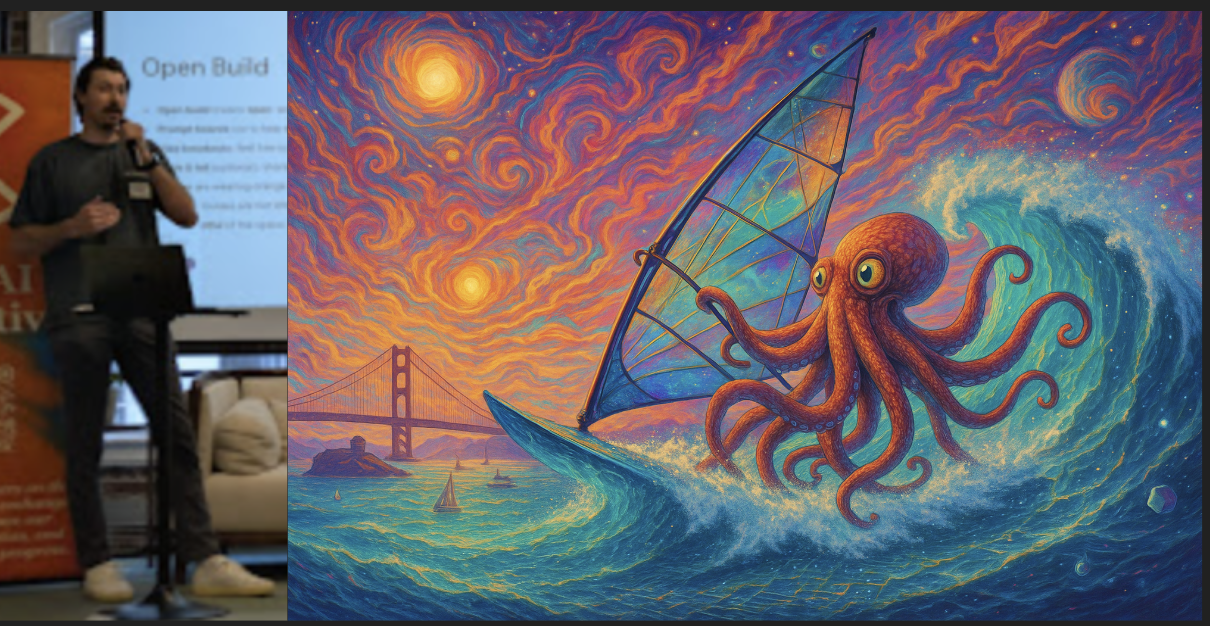
“We’re here to help people become 10x, 100x engineers—even if they’ve never written a line of code.” — Matt Bergland_, Community Lead at Windsurf_
From the moment Matt Bergland stepped up to welcome the crowd, it was clear: this wasn’t a typical tech demo. The space was buzzing. Laptops open, team members roaming the floor, and a seating system organized not by hierarchy, but by comfort zone:
-
Tables 1–4: beginners
-
Tables 5–8: intermediates
-
Tables 9–12: self-proclaimed “Vibe Gods”
“This isn’t a hackathon,” Bergland said. “It’s about giving people a chance to find their own pace—to build at their speed.”
Technical Centerpiece: Planning Mode + DOM-Aware Browser
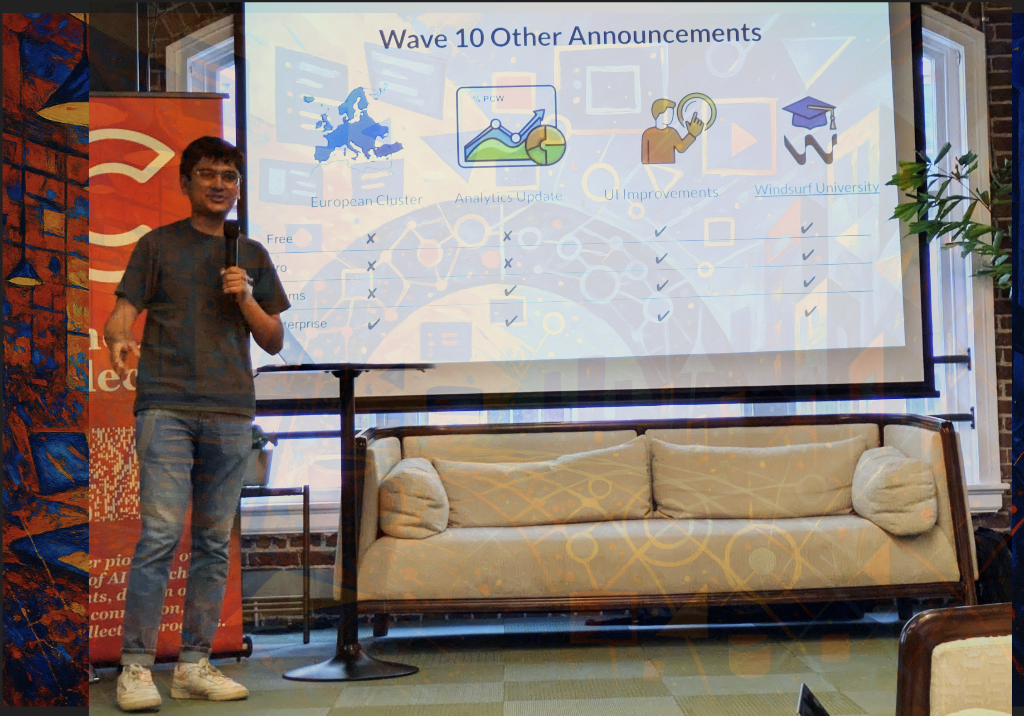
Abhay A., a Deployed Engineer who works directly with enterprise clients, stepped up next. His live demo of Wave 10’s new features drew cheers and questions in equal measure.
“Planning mode is our attempt to make sure you don’t run into those hallucination problems. It gives you an accurate, effective, and efficient solution.” — Abhay Agrawal
Agrawal clicked through a live web page, showed Windsurf capturing screenshots, analyzing the DOM tree, and auto-selecting context-aware components. Developers watched in awe as Windsurf’s IDE interpreted the intent behind clicks in real time.
This wasn’t just autocomplete on steroids. It was a new kind of browser-agent integration—one that kept developers in the flow, without needing to switch tabs, explain context, or debug AI hallucinations.
“You just click, and it knows where you are in the page tree,” Agrawal noted casually. For a room full of builders, that casual tone hit hard.
MCP🧩: The Protocol Behind the Power
Quietly powering much of the evening’s magic was the Model Context Protocol (MCP)—Windsurf’s not-so-secret infrastructure advantage.
The MCP architecture allows AI agents to access external services as plug-and-play tools:
-
GitHub
-
Slack
-
Figma
-
Stripe
-
Postgres
“We’re building our own plugin store for agents,” one team member explained. “This isn’t just an editor. It’s an operating system for agentic development.”
These plugins could be invoked automatically by Windsurf’s Cascade agent, without hand-holding, prompting, or copy-paste acrobatics. The vibe in the room shifted. This wasn’t speculative AI. This was usable, deployable infrastructure.
The Security Layer: Zero-Click & Admin Control
Meanwhile, in quieter corners of the room, cybersecurity 🔐 professionals discussed something else: trust.
One attendee shared details of a zero-click prompt injection that compromised a production assistant—without malware, links, or clicks.
“It was a silent attack. No user interaction. That’s the kind of thing AI workflows now have to anticipate.”
Against this backdrop, Windsurf’s team-level admin controls for MCP felt like more than a checkbox. Admins could whitelist only approved plugins, limit agent behavior, and ensure auditability—features deeply aligned with enterprise risk postures.
Real-Time Use Cases, Real-Time Results
As the night progressed, spontaneous projects 🛠️ began to form. By 10 PM, four were ready to demo:
-
An agent dashboard for engineering managers
-
A Notion-to-Slack agent bridge
-
A customer success copilot
-
A project-planning flow using Planning Mode + GitHub integration
But the evening’s most electrifying moment came when Silicon Valley legend Chris Messina took the stage for an impromptu live-coding session. In real-time, he vibe-coded a custom Raycast extension to pull App Store data—turning a complex idea into working reality in mere minutes while the crowd watched in awe.
“What’s wild is how much people can do in just three hours now,” Bergland said, watching the demos unfold. “Not months. Not weeks. Hours.”
The room nodded. This wasn’t vaporware. This was productivity, redefined—and we’d just witnessed it happen live.
The Shift No One Saw 🪚 Coming
As attendees filtered out into the San Francisco night, the energy was still rising. But less than 18 hours later, reality caught up:
-
The OpenAI acquisition? Dead.
-
Windsurf’s co-founders and R&D leads? Headed to Google DeepMind.
-
The startup’s leadership torch? Passed to interim CEO Jeff Wang and President Graham Moreno
-
None of it was announced that night. But looking back, there were hints. A certain calm from the founders. A sense of conclusion beneath the momentum.
“Every week there’s five to ten people launching new tools,” one participant observed. “But what Windsurf showed tonight? That’s a leap.”
Vibeathon 🌀 as Philosophy
The event’s design was part of the magic. It wasn’t polished or overstructured. It was fast, messy, generous. A deliberate format that balanced technical ambition with human spontaneity.
“If you don’t talk to people and hear the stories… if you just sit on Twitter all day… how are you going to keep up?” — Developer attendee
In a world of isolated prompt engineers, this night created something rare: a space for collective velocity.
🌅 The Legacy: Innovation at Speed
Windsurf’s build night now stands as a time capsule. Not just of a product or team—but of a moment.
A moment when:
-
Devs clicked into DOMs and watched code write itself
-
Agents found context across systems
-
Community shaped architecture
-
The future of software felt… fun again
And beneath it all, the very human desire to build something together—before the next 🌊wave hits.
Silicon Valley moves at the speed of light. But some nights… it moves faster.