
I. The Unseen Thesis: When Search Becomes Orchestration
Perplexity AI has emerged as a notable player in the evolving landscape of AI-driven search. Unlike traditional search engines that provide a list of links, Perplexity offers direct answers, streamlining users quests for information. This approach reflects a broader shift in user expectations, where immediacy & relevance are paramount.
The company’s design philosophy emphasizes user-centricity, challenging the notion that users must adapt to AI systems. This perspective stands in contrast to some enterprise models that prioritize system optimization over user experience. By focusing on delivering precise answers without requiring complex prompts, Perplexity positions itself as a more intuitive alternative in the AI search domain.
II. UX as Infrastructure: Perplexity’s Strategic Patience
Perplexity’s growth trajectory underscores the importance of user experience in AI adoption. By prioritizing features like footnoted answers and seamless follow-up capabilities, the platform has cultivated a user base that values clarity and efficiency. This emphasis on design and functionality has allowed Perplexity to differentiate itself in a market dominated by larger players.
The company’s approach suggests that in the realm of AI, success is not solely determined by the scale of models but also by the quality of user interaction. By refining the interface and ensuring that the AI responds in a manner aligned with user expectations, Perplexity demonstrates the potential of thoughtful design in driving adoption.
What fundamental shift occurs when AI interfaces become not just information mediators but transaction agents, and how might this redefine the consumer journey we’ve known for decades? This question lies at the heart of Perplexity’s patient, design-led approach.
III. The Quiet Browser Wars: Comet, Chromium, and Intent OS
Perplexity’s recently announced browser “Comet” signifies a strategic move to embed AI directly into users’ browsing experiences. This integration aims to transform the browser from a passive tool into an active participant in information retrieval and task completion.
By positioning itself within the browser ecosystem, Perplexity challenges the traditional dynamics of web navigation. According to founder Aravind Srinivas, Comet will allow users to perform tasks during their regular day-to-day work, with AI assistance helping accomplish specific goals like “applying to all the jobs on LinkedIn that I would be eligible for.” This move reflects a broader trend where AI becomes an integral part of daily digital interactions, offering a more streamlined and context-aware experience.
If AI increasingly serves as both recommendation engine and purchasing proxy, what new metrics of trust must emerge beyond traditional conversion rate optimization? The browser becomes not just a portal to the web, but an intelligence layer mediating user intent and fulfillment.
IV. Commerce, Rewritten: The PayPal Partnership as Wedge
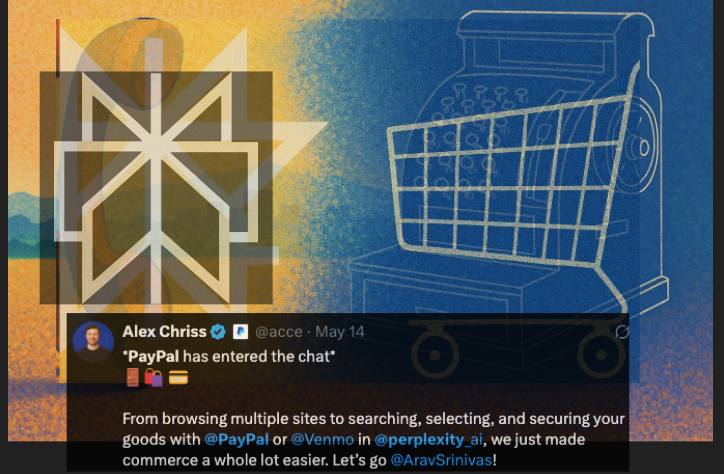
The recent partnership between Perplexity and PayPal marks a significant development in the integration of AI and commerce. This collaboration enables users to make purchases directly within the Perplexity interface, leveraging PayPal’s payment infrastructure. Such integration simplifies the transaction process, allowing users to act on their queries without navigating away from the platform.
This development aligns with the concept of “agentic commerce,” where AI not only assists in information retrieval but also facilitates transactions. By embedding commerce capabilities into the AI interface, Perplexity and PayPal are pioneering a model where the line between inquiry and action is increasingly blurred.
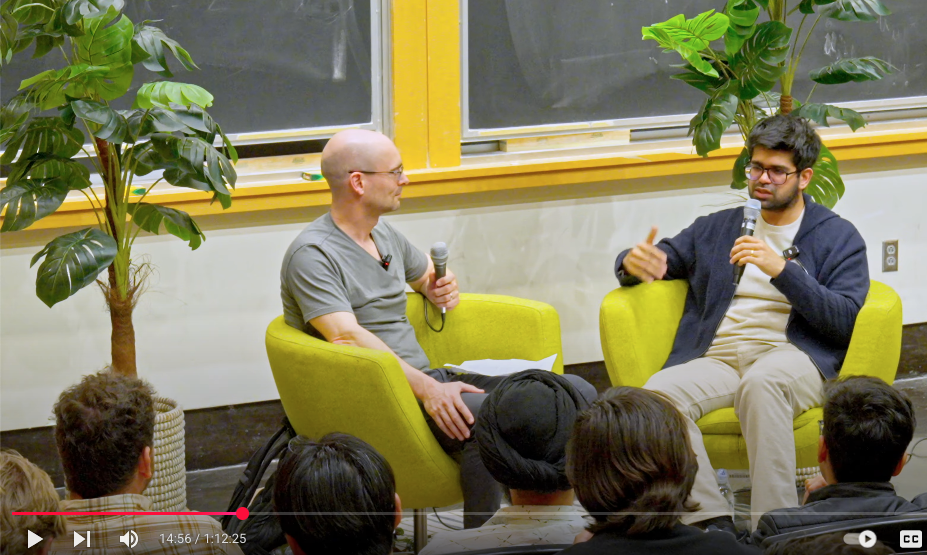
This integration represents a fundamental shift in how users interact with search technology. Rather than just providing information, Perplexity is evolving to become an assistant that can help users complete transactions and take actions based on their queries. Aravind Srinivas has emphasized the importance of creating an “end-to-end experience” where users start with a problem in mind, get answers, and then can fulfill actions all in one place.
When search intent meets immediate fulfillment capability, how will this alter the leverage dynamics between content publishers, merchants, and platforms that have defined digital commerce since the 1990s? The PayPal integration suggests a future where the distance between question & purchase collapses to nearly zer0.
V. Systems vs. Portals: A Blueprint for Fintech, AI, and Interfaces
The convergence of AI & commerce, as exemplified by the Perplexity-PayPal partnership, presents a blueprint for future digital interactions. This model emphasizes the importance of integrating services to create seamless user experiences. For fintech & AI developers, this approach underscores the potential of collaborative ecosystems in enhancing functionality & user engagement.
By focusing on system integration rather than isolated portals, companies can offer more holistic solutions that cater to the evolving needs of users. This strategy not only improves user satisfaction but also opens avenues for innovation in service delivery & monetization.
Perplexity’s founder has outlined a vision where their AI can function across various domains, from health & medical research to shopping & travel. The challenge lies in determining which merchants to partner with & how to handle bookings and customer service issues. As Srinivas notes, these are problems that Google has also had to solve beyond just developing advanced search algorithms—they’ve had to build practical services like Google Finance, Google Shopping, and Google Flights.
As intermediaries like Perplexity position themselves between discovery & transaction, what strategic recalibrations must traditional search engines, marketplaces, and payment processors make to remain relevant? This question becomes increasingly urgent as the walls between information systems and transaction portals continue to crumble.
VI. The Final Layer: From Answers to Actions to Economies
The integration of AI and commerce signifies a shift from passive info consumption to active engagement. As AI systems like Perplexity evolve to facilitate transactions, they become pivotal players in the digital economy. This transition reflects a broader trend where AI is not just a tool for information retrieval but a catalyst for economic activity.
In this new paradigm, the interface becomes the agent, guiding users from inquiry to action seamlessly. This evolution challenges traditional business models and calls for a reevaluation of how services are delivered and monetized in the digital age.

Looking Forward: The Race to Redefine Search
Perplexity is positioning itself against competitors by focusing obsessively on user experience and product taste. When asked about competing against giants like Google, OpenAI, and Anthropic, Srinivas emphasized that Perplexity’s advantage comes from its “DNA to care about the user and the product,” rather than just focusing on AI models and reasoning capabilities.
The company is rapidly expanding its reach through strategic partnerships. Recent developments include integration with Deutsche Telekom in Germany, making Perplexity accessible from the lock screen of phones, and a partnership with Motorola Solutions Motorola that will see Perplexity pre-installed on approximately 40 million phones annually. These moves represent Perplexity’s ambition to become more natively embedded in users’ daily lives.

As AI continues to evolve from providing information to enabling transactions, companies that can successfully integrate these capabilities while maintaining user trust will likely lead the next generation of digital experiences. The Perplexity-PayPal partnership represents just the beginning of what promises to be a transformative era in how we interact with technology and commerce.
What happens to comparative shopping behavior when AI systems like Perplexity can evaluate products across price points, reviews, and specifications while simultaneously offering frictionless checkout? The companies that successfully navigate this question may define the next decade of digital commerce.
Sources:
How To Build The Future * YC General Partner David Lieb sits down with Aravind Srinivas * Feb 21, 2025 - 116,754 views youtube.com/watch?v=SP7Ua8FKZN4
Pieter Abbeel: Prof UC Berkeley in convo with Aravind Srinivas Perplexity founder + CEO * May 15, 2025 44 views youtube.com/watch?v=5vdYvviszfk
newsroom.paypal-corp.com/2025-05-14-Perplexity-Selects-PayPal-to-Power-Agentic-Commerce
telekom.com/en/media/media-information/archive/from-the-vision-to-our-ai-phone-1088630
perplexity.ai/hub/blog/announcing-our-global-partnership-with-motorola