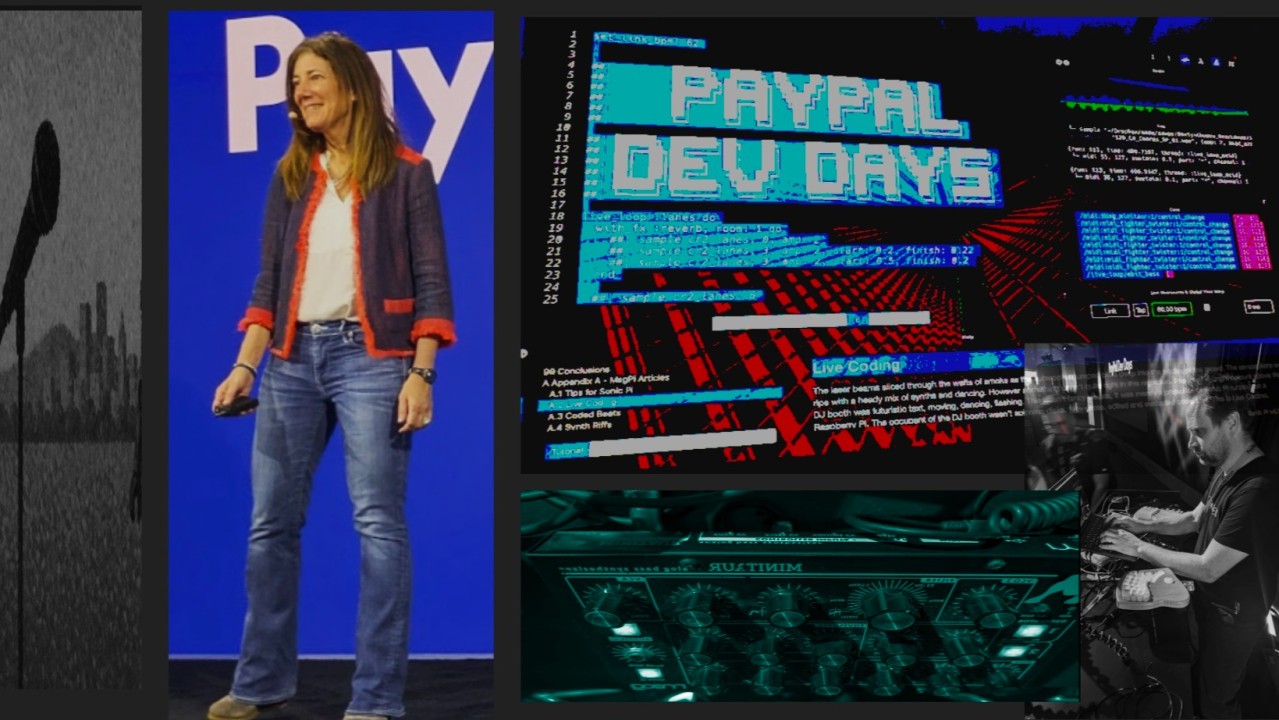
From PayPal HQ in San Jose, where the future of commerce is being rewritten through natural language
The Cultural Shift: From Checkout Flows to Conversational Commerce
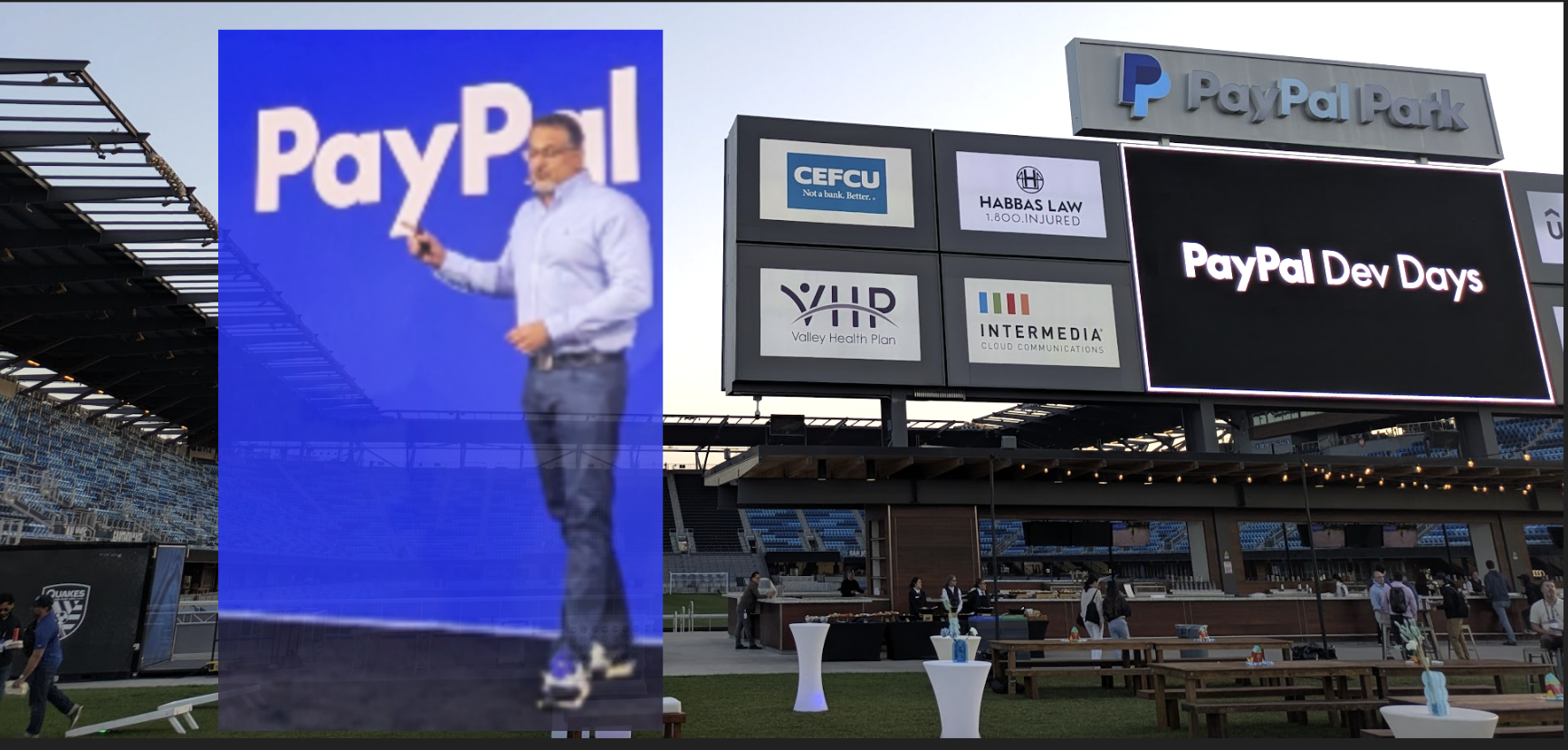
On a warm April afternoon in Silicon Valley, over 1,000 developers, engineers, and commerce innovators gathered at PayPal’s headquarters for what would prove to be much more than a typical tech conference. PayPal Dev Days 2025 marked not just the company’s 25th anniversary, but what Executive Vice President Michelle Gill described as an inflection point in how we think about online transactions and the very nature of digital commerce itself.
“You’re all at the center of that,” Gill told the packed auditorium in her opening address. “Modern commerce requires you to be real-time, personalized, borderless, and frictionless. This creates an incredible opportunity, but at the same time poses unique risks faced by many of us.”
What became immediately apparent throughout the beginning of the three-day event was that PayPal isn’t simply expanding its API ecosystem—it’s fundamentally reconceptualizing the relationship between developers, merchants, and consumers through what the company repeatedly referred to as “agentic commerce.” In this new paradigm, AI agents don’t just assist in discovery but complete entire transaction flows on behalf of users, from product selection to payment finalization.
This strategic vision is further explored at paypal.ai, a hub for the company’s AI-driven initiatives across developer tooling, agent systems & agentic commerce.
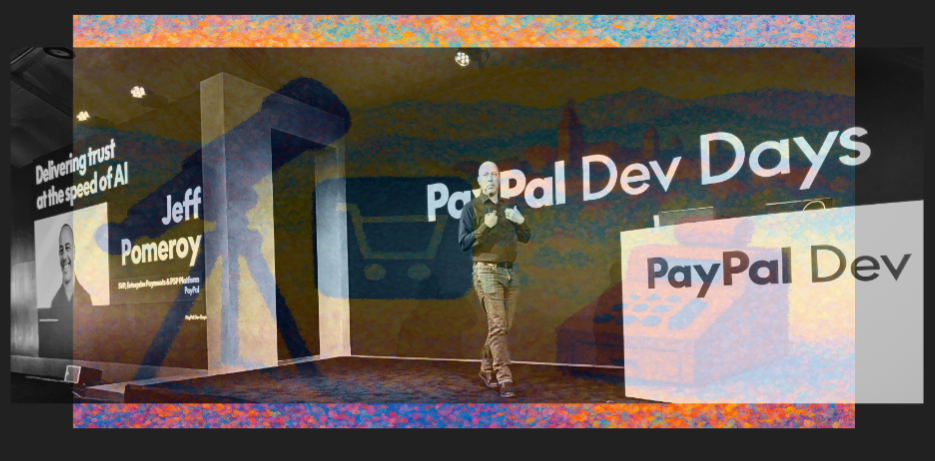
As Jeff Pomeroy, SVP of Enterprise Payments & PSP Platform, put it during his keynote: “This next phase of agentic commerce will change in three and six and twelve month increments like we’ve never seen before. I’m guessing if we had this conference in six months, we’ll be talking about a whole new set of tools.”
What Is Agentic Commerce?
For the uninitiated, agentic commerce represents a fundamental shift in how online transactions are conducted. Unlike traditional e-commerce where consumers manually navigate through discovery, selection & checkout, agentic commerce empowers AI agents to complete these tasks autonomously on behalf of users.
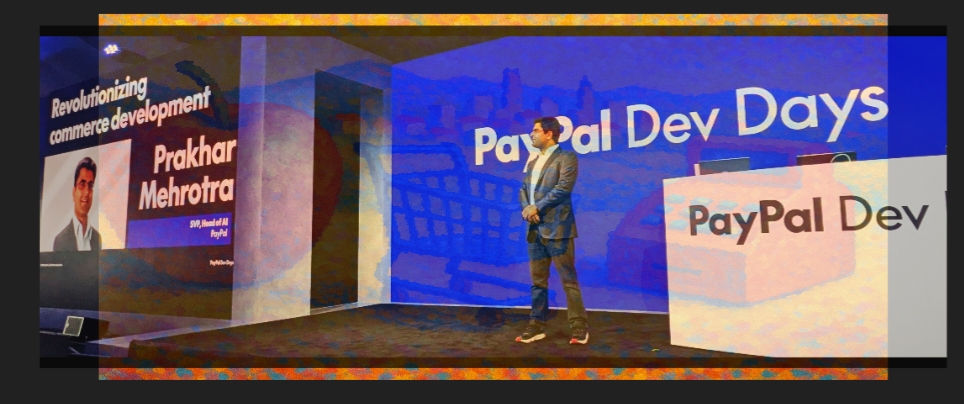
Prakhar Mehrotra, SVP and Head of Artificial Intelligence at PayPal, offered perhaps the clearest definition during the keynotes: “In a non-agentic world, you as a developer are spending all your time thinking through all everything about APIs, orchestration, workflow. In an agentic world, you delegate. Your desired principles are fundamentally different.”
This shift mirrors the broader transformation in consumer behavior. Microsoft’s representative highlighted this evolution most succinctly: “We’re going to move from scroll-based to goal-based shopping. We’re all shopping with a problem in mind.”
For PayPal, enabling this transition means creating infrastructure that allows developers to build agent-native experiences while maintaining the trust that has been the cornerstone of payment processing since e-commerce’s earliest days.
The MCP Revolution: From API Nightmares to Conversational Intent
A central theme throughout the conference agenda is the importance of the Model Context Protocol (MCP) as the standardization layer enabling agentic commerce. As Mehrotra explained, “If I had to talk to any services, if I had to write my LLM prompt to access services before November 2024, it was a nice way of saying it would fall into workflows that were generally a nightmare.”
The advent of MCP—which standardizes how language models and services communicate—represents for PayPal what HTTP was for the early internet: a foundational protocol enabling an entirely new ecosystem of applications.
“MCP allows for robustness. It allows for a very forward-looking design pattern,” Mehrotra continued. “The rule book is being written right now as we speak on what could be.”
For developers in attendance, this announcement represented a significant accelerant. One audience member from a midsize e-commerce platform asked during Q&A: “How does MCP integration affect my existing API implementations? Do I need to rebuild everything?”
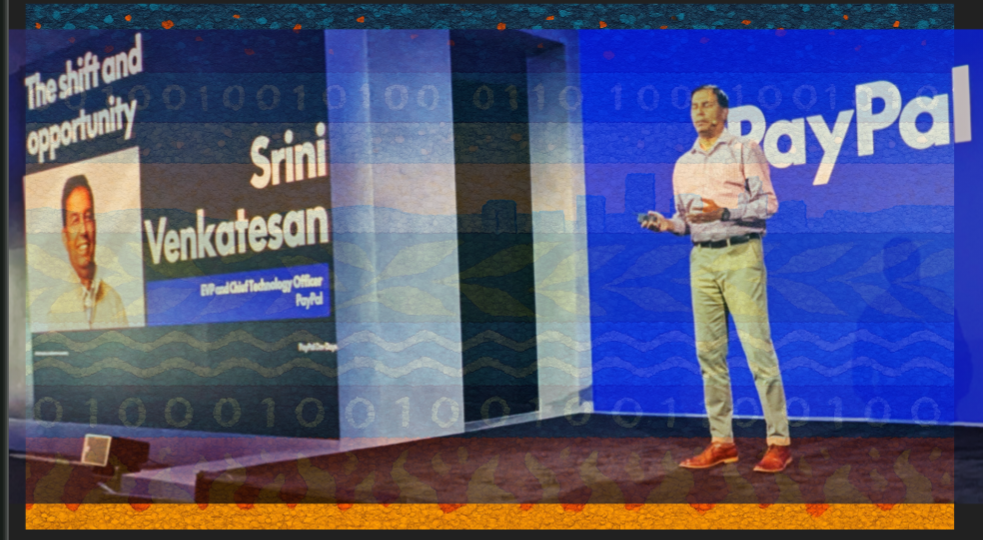
Srini Venkatesan, EVP and Chief Technology Officer, addressed this concern directly: “We’ve designed this as an additive layer. Your existing integrations continue to work, but now you have the option to expose these same capabilities to agent frameworks through our MCP server. It’s evolution, not replacement.”
From Command Line to Copilot: The Developer Experience Transformation
Perhaps the most striking contrast at the conference was how PayPal framed the developer experience transformation. Sam Alfares, Senior Director of the Merchant Services Platform, walked attendees through the evolution of developer tools from search-based programming to AI-powered assistance, culminating in autonomous agent environments.
“In the past, we used to spend a lot of time trying to make someone else’s code work in our applications,” Alfares noted. “That’s not the case anymore. You just have to focus on building your awesome application.”
This was vividly demonstrated in a live coding session where Alfares asked an agent to analyze the last 10 days of transaction data and build visualization charts—all without writing a single line of code manually. The agent autonomously generated a complete application with transaction analytics and visual representations.
“I have not written a single line of code,” Alfares emphasized as the application materialized on screen. “And here you have it—the application ready for you in seconds.”
This transition from command-line interfaces to AI copilots fundamentally alters the developer’s role. As one developer from Savannah, Georgia remarked during an interactive session: “It feels like we’re shifting from building the pipes to orchestrating the water flow.”
The Demos: Natural Language as Commerce API
The conference showcased several demonstrations highlighting the practical applications of agentic commerce, each illustrating how natural language is becoming the new API for commerce interactions.
The most compelling demonstration featured “Sarah,” an artist looking to open an online storefront for her pottery. Using Amazon Bedrock agents integrated with PayPal’s agent toolkit, Sarah simply uploaded images of her physical products along with a creative brief describing her artistic vision. The agent autonomously generated a complete digital storefront with product descriptions, pricing & marketing campaigns—all optimized for her target audience.
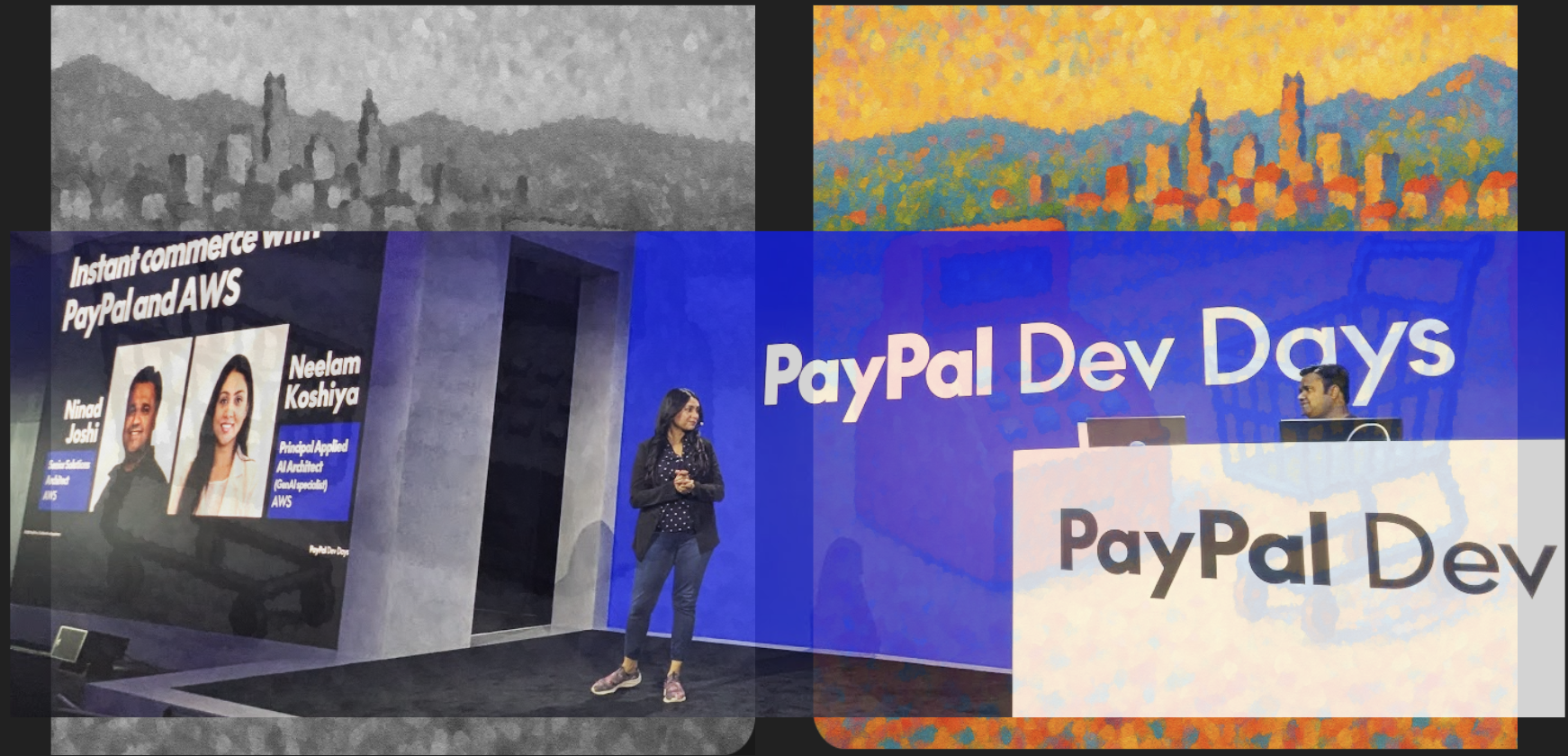
“The merchant assistant tries to understand the creative brief and generates a campaign key,” explained the AWS Neelam Koshiya & Ninad Joshi during the demo. “The merchant assistant by itself is autonomous but looks for user validation and information.”
This was followed by a demonstration of how a Japanese shopper could interact with Sarah’s store in their preferred language, with the product page automatically customized based on regional preferences pulled from PayPal Shopper insights.
Google’s demonstration showcased a multi-agent architecture where distinct specialized agents collaborate to handle different aspects of a shopping journey. When a user inquired about wedding guest dresses, the recommendation engine analyzed not just the immediate request but also the user’s style preferences based on previous purchases across multiple merchants to deliver hyper-personalized suggestions.
Microsoft’s presentation emphasized the move toward goal-based shopping, demonstrating how a consumer could simply show an image of hiking sandals to an agent and ask if they were appropriate for cold mountain conditions. The agent not only advised against the choice but recommended a more suitable alternative and facilitated the purchase—all through natural conversation.
“The user engages through either voice, text, or image upload,” the Microsoft representative explained. “Their input is sent to Azure OpenAI agent service as well as PayPal API toolkit, which in turn invokes and drives a multi-agent system for managing the full end-to-end transaction.”
Trust as Infrastructure: The Two-Sided Network
Throughout the presentations, speakers repeatedly emphasized the importance of trust in enabling agentic commerce. Jeff Pomeranz drew parallels to the early days of e-commerce: “It’s going to have to have two things to make this work—can you guess what they are? Consumers. And trust.”
This focus on trust is particularly relevant as agents begin to make purchasing decisions autonomously on behalf of users. PayPal’s positioning centers on their established two-sided network connecting 400 million active wallets with 20 million merchants globally.
“How do we bring them together with an agentic set of services that you can depend on to securely enable our wallet holders to interact with AI to securely complete transactions?” Pomeranz asked rhetorically. “In my mind’s eye, I’m going to go ahead, I don’t even need to be present. I can have it search and say ‘Find a gift for my sister. I want to purchase it for less than $100 when it’s on sale and have it shipped here.’ I don’t think there’s a service that does that today.”
This trust infrastructure extends to merchants as well. Michelle Gill emphasized how the agent toolkit would accelerate innovation cycles: “We’ve taken all this momentum, probably after taking all of the questions that you all have over the course of the last year and tried to organize it into a day where we brought together over 600 attendees.”
The Partner Ecosystem: Co-Architects of the Commerce Stack
A notable aspect of the conference was the prominent role played by major cloud providers—AWS, Google, and Microsoft—as co-architects of the next-generation commerce developer stack.
Each partner brought unique capabilities to complement PayPal’s commerce expertise:
- AWS highlighted how Amazon Bedrock agents could be integrated with PayPal’s toolkit to transform physical products into digital storefronts with minimal developer effort.
- Google demonstrated its agent development kit’s compatibility with PayPal’s MCP server, showcasing a multi-agent architecture for complex shopping scenarios.
- Microsoft presented a vision for goal-based shopping powered by Azure OpenAI service and PayPal’s checkout capabilities.
This collaborative approach signals PayPal’s recognition that agentic commerce requires an ecosystem rather than a walled garden. As Prakhar Mehrotra noted: “PayPal has embraced pretty much every protocol out there—A2A, high-level API, MCP protocols for function calls. We are targeted to provide all our APIs, all our services in an agentic world.”
The Developer’s New Role: From Function Writers to Behavior Authors
As the technical sessions progressed, a central question emerged: What is the developer’s role in an agentic commerce world?
Mehrotra offered perhaps the most profound insight: “Your job is no longer to figure out various API calls and how to orchestrate them. Think about MCP servers. Think about A2A protocols. Think about the fact that your goals as developers are fundamentally changing.”
This transition from writing functions to authoring behaviors represents a profound shift in the developer mindset. It’s no longer about coding the “how” but defining the “what”—specifying desired outcomes and letting agents determine implementation details.
“You are now able to use the same workforce across all other services you are offering,” Mehrotra continued. “You are offering a much, much better enrichment to your end customer, which is what you care for.”
Sam Alfares reinforced this perspective when demonstrating how easily developers could integrate with services beyond PayPal: “You can integrate with other services, whether it’s Amazon or AWS or any other service that you want to bring, as long as they have the MCP server.”
Architecture of an Agentic Purchase
Perhaps the most illuminating moments came when speakers dissected the architecture behind agentic transactions. Microsoft’s presentation included a detailed breakdown of the components involved:
1. A planner agent that analyzes input, builds a dynamic plan & assigns tasks to specialized agents
2. A product agent that searches product catalogs using both text and images
3. A reflection agent that validates outputs before proceeding to the next action
4. A payment agent that handles checkout through PayPal APIs
This architectural approach represents agent orchestration as product infrastructure rather than experimental technology. “This process follows a cyclical pattern to improve decision-making by running these processes over and over again and fine-tuning the agents to get the most accurate response back to the consumer,” explained the Microsoft representative.
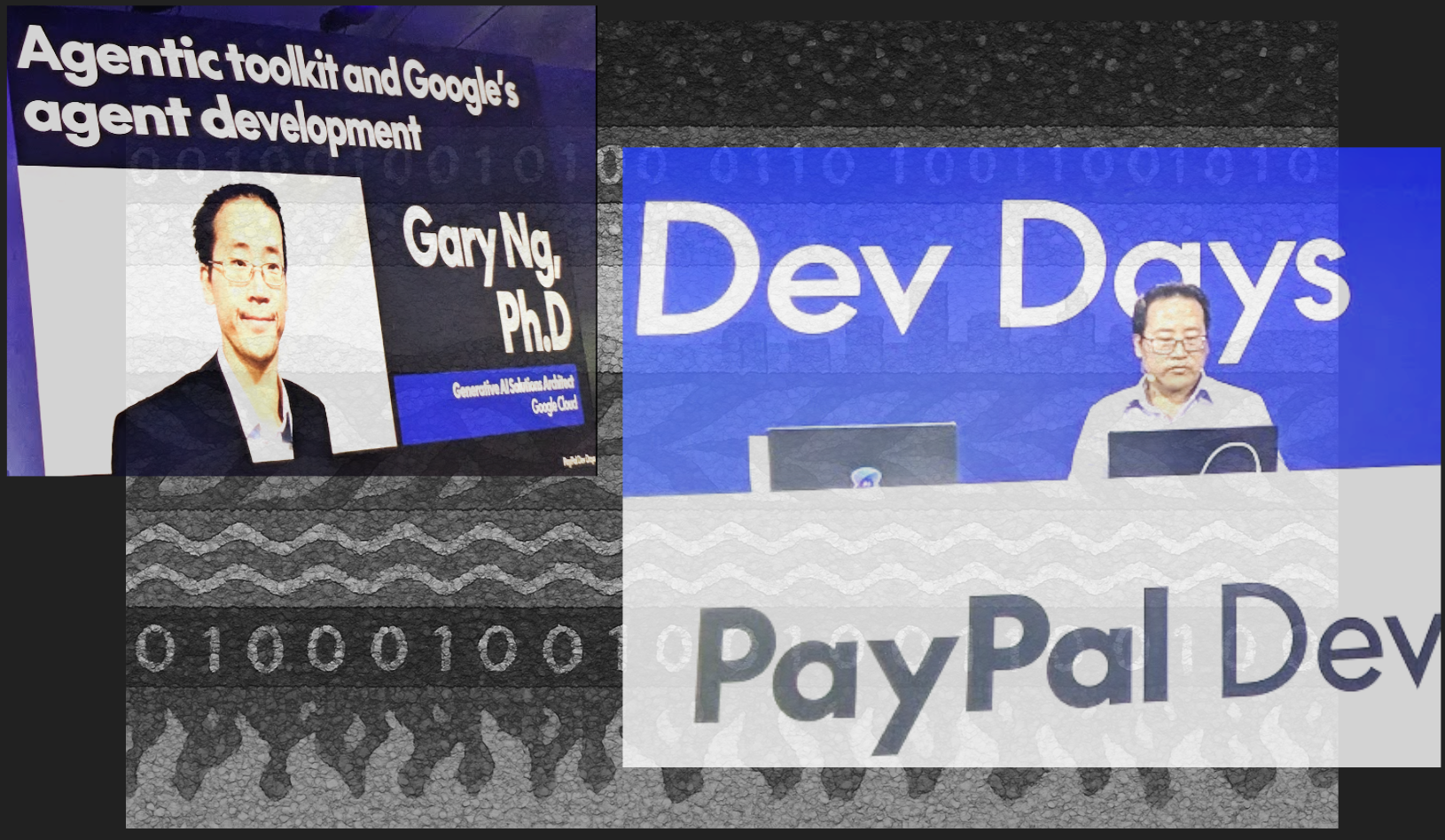
Google Gary Ng, PhD’s demonstration similarly emphasized the importance of multi-agent systems: “When you click here, you see this is the multi-agent graph. What you see scrolling through is the construction: the regional agent, the group agent, unlimited agents, recommendation agent, order and subscription & all the way to the right here, all subscription handlers are actually pulling all the PayPal [data].”
The Velocity of Change: From 30 Years to 3 Months
A recurring theme throughout the conference was the unprecedented pace of innovation in agentic commerce. Jeff Pomeranz, drawing on his three decades in the payments industry, emphasized this acceleration: “It took us 30 years to go from the beginning of e-commerce to where we are today. This next phase of agentic commerce will change in three and six and twelve month increments like we’ve never seen before.”
This rapid evolution raises important questions for developers and businesses alike. How do you plan product roadmaps when the underlying technologies are evolving so quickly? How do you ensure that systems remain secure and trustworthy amid such rapid change?
Srini Venkatesan addressed these concerns in a technical breakout session: “We’re building for resilience and adaptability. The APIs you integrate today will continue to work, but we’re also creating pathways for your systems to evolve alongside these technologies. That’s why we’ve architected everything around standards like MCP rather than proprietary solutions.”
From Scroll-Based to Goal-Based: The Consumer Perspective
While much of the conference focused on developer experience, speakers repeatedly emphasized the consumer benefits of agentic commerce. Microsoft’s presentation highlighted this shift most explicitly: “We scroll a lot. We click on buttons, and we scroll through pages. We use the search bar and we scroll some more. But what we really want to become is goal-based when we shop.”
This transition to goal-based shopping promises to fundamentally transform how consumers interact with e-commerce platforms. Rather than navigating through complex interfaces, consumers can simply express their objectives in natural language:
“I need a television for my living room that gets sun through the west window in the afternoon. What’s the best one?”
“I need a dress for an outdoor wedding in Greece in June. What should I wear?”
As Microsoft’s representative noted, “Try typing that into your favorite retailer’s search bar today and see what happens.”
The Hackathon: From Vision to Implementation
The conference culminated with the announcement of what was billed as “one of the first, if not the first, big tech agentic commerce hackathon.” This three-day coding challenge invited attendees to apply the concepts and tools presented throughout the conference to create innovative agentic commerce solutions.
“We’re really excited to see all of your innovations by the end of day three,” Michelle Gill enthused during her opening remarks.
This practical implementation component underscored PayPal’s commitment to moving beyond theoretical discussions to actual deployment of agentic commerce solutions. As the marketing representative emphasized during the closing session: “The reason we’re all here is because we want you to play around with this stuff. We want you to develop with all the things that you’ve learned today.”
Socratic Questions: The Broader Implications
As the event progressed, several deeper questions emerged about the implications of agentic commerce beyond the technical implementation details:
1. Economics of Automation: If agents can autonomously handle both sides of a transaction, how does this change the economic dynamics of commerce platforms? Do we need to rethink revenue models and value extraction?
2. Trust Architecture: What psychological barriers need to be overcome for consumers to trust AI agents with autonomous purchasing decisions? Is PayPal’s established trust sufficient, or does this paradigm require new trust mechanisms?
3. Regulatory Considerations: As agents make decisions on behalf of users, how do concepts like consent, liability & consumer protection evolve? Are existing regulatory frameworks equipped to handle agentic commerce?
4. Digital Divide Implications: Does the shift to natural language interfaces democratize access to commerce technology, or create new forms of exclusion based on linguistic capabilities and AI literacy?
5. Market Concentration Effects: Will agentic commerce accelerate consolidation around platforms with the most data and largest user bases, or create new opportunities for specialized providers?
The Road Ahead: Confidence & Curiosity
As the conference drew to a close, the prevailing mood combined confidence in the tools finally catching up to the vision with curiosity about exploring this new frontier of agentic commerce.
Jeff Pomeranz captured this sentiment in his closing remarks: “Have fun. Engage with us, get onto this new frontier. And we are here for this entire community over the next couple days and beyond. We’re just getting started. So hop on, let’s go for a ride and have some fun.”
This balanced approach—acknowledging both the significant progress made and the vast unexplored territory ahead—seemed to resonate with attendees. As one developer remarked during the final Q&A session: “It feels like we’re witnessing the same magnitude of shift as when mobile transformed commerce, but compressed into a much shorter timeframe.”
Conclusion: The Inflection Point
PayPal Dev Days 2025 will likely be remembered as a marker of the inflection point when commerce began its transition from API-driven interactions to agent-orchestrated experiences. By bringing together their commerce expertise with the agent capabilities of major cloud providers, PayPal has positioned itself at the center of this transformation.
For developers, the message was clear: the future of commerce development lies not in mastering complex API integrations but in orchestrating intelligent agents to deliver goal-oriented shopping experiences. As Prakhar Mehrotra emphasized, “Think about the fact that your goals as developers are fundamentally changing.”
Whether this vision of agentic commerce fully materializes in the timeframe predicted by PayPal executives remains to be seen. But what’s undeniable is that the tools, protocols & frameworks presented at the conference represent a significant step toward making conversational, goal-based commerce a reality for millions of merchants and consumers worldwide.
As we navigate this transition, the questions for developers, merchants & platforms are no longer primarily technical but strategic: How do we reimagine commerce experiences when the constraints of traditional interfaces are removed? How do we build trust in systems where machines increasingly act on behalf of humans? And perhaps most importantly, how do we ensure that this technology truly enhances rather than complicates the human experience of commerce?
The coming months will provide early answers as developers begin implementing the tools unveiled at PayPal Dev Days 2025. But one thing is certain—the commerce landscape three years from now will look dramatically different from today’s scroll-and-click paradigm. And that might be the most exciting prospect of all.
https://bsky.app/profile/schwentker.bsky.social/post/3lo3mlnfeks2i