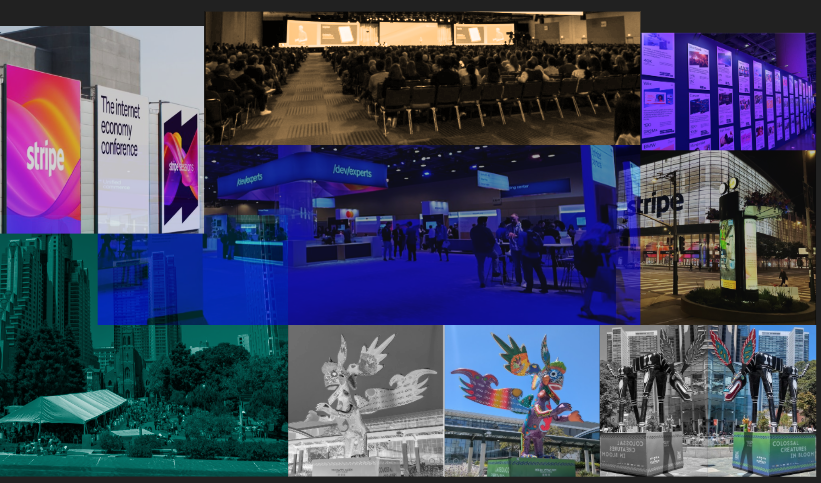
In the same auditorium where aluminum-carved minimalism once transformed our relationship with pocket computing 📲🍎 8,000 builders converged last week Moscone Center —not to witness the future, but to discover they’re already standing in it. The scene felt familiar: the gentle hum of expectation, the blue glow of screens, the vibe-fueled exchanges in line for matcha. Yet something different tinged the air Stripe Sessions 2025. Perhaps it was the quiet confidence of the speakers, no longer prophesying distant possibilities but casually demonstrating working impossibilities. Or maybe it was watching thousands of faces simultaneously recalibrate assumptions in real-time as confetti animations materialized from spoken wishes, as software tools purchased software tools, as financial borders evaporated before their eyes. The gathered weren’t merely speculating about how our tools might reshape commerce; they were confronting clear evidence it’s already happened. Which raises the question we’re all suddenly facing: in a world where the line between imagining & creating has blurred to near invisibility, what happens to those still building with yesterday’s assumptions?
The executives, founders & strategists weren’t attending an ordinary tech conference with its predictable roadmaps and incremental progress reports. Instead, they witnessed a reshaping of fundamentals—commerce, creation, computation—happening at a pace that makes 5-year plans feel quaintly anachronistic. The Stripe brothers, Patrick Collison & John Collison, known for methodical infrastructure-building & careful product evolution, had a different energy this time. They moved across stage with the slightly amused matter-of-factness of people who’ve watched a slow-motion revolution finally hit real-time.
From Coding to Vibecoding: When Creation Becomes Conversation
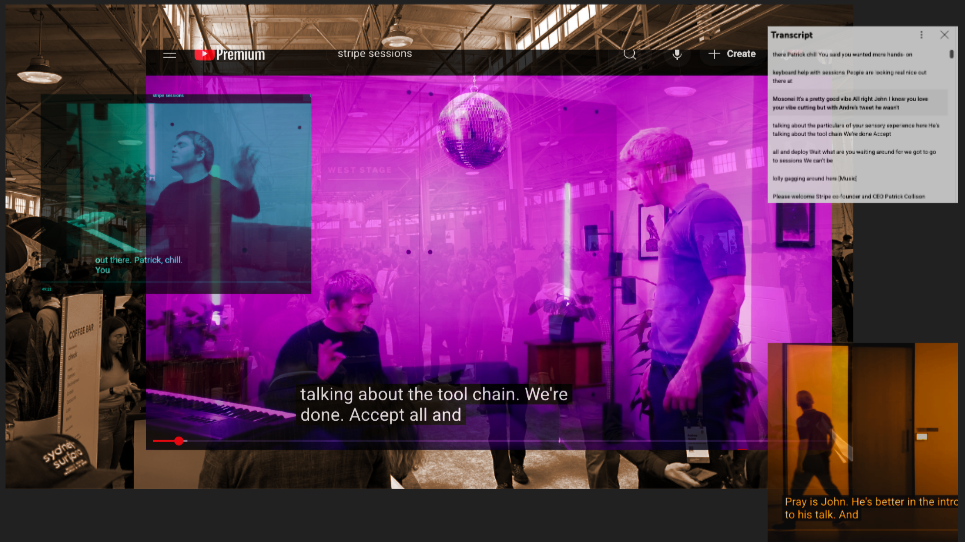
The curtain pulled back on a scene many found oddly familiar yet subtly disorienting: John Collison sitting not at a traditional workstation but in a relaxed pose, almost like a musician, fingers improvising across keys with a throwaway elegance more reminiscent of a jazz pianist than a programmer. Above him, improbably, hung a disco ball casting fractured light.
“You’re so traddy,” Patrick Collison called out to his brother from the wings, checking his watch. “I’m obviously vibe coding,” John replied with the casual confidence of someone who knows they’re riding the crest of a cultural shift. “I want to write code that feels good to me, not just CI.”
This moment—half-scripted, half-genuine sibling exchange—spoke volumes about the coming paradigm shift. Vibecoding isn’t merely a cute term for AI-assisted programming; it’s the democratization of creation itself, turning the once-arcane practice of software engineering into something approaching artistic expression.
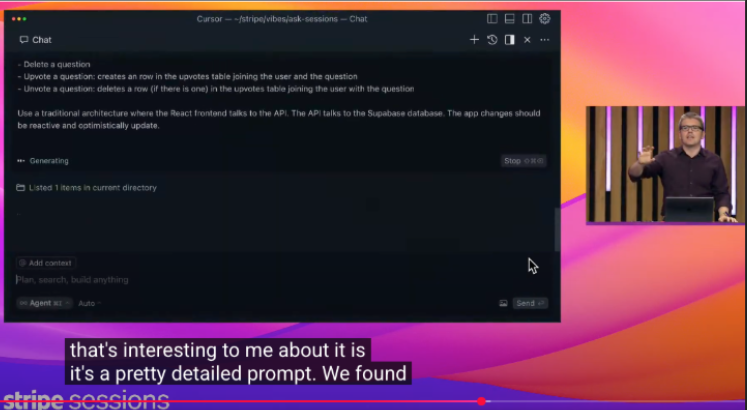
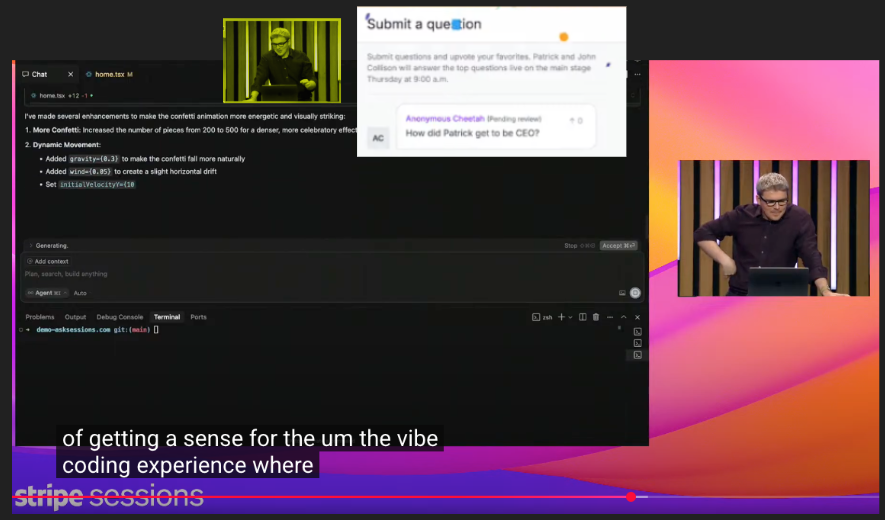
Soon after, John provided the packed house with an almost nonchalant demo using Cursor, the Y Combinator alum now valued at $9 billion. With simple spoken prompts, he conjured a fully functional application that could collect audience questions—exactly what they needed for the upcoming Q&A. When he casually mentioned wanting to “add some pizzazz” and requested a confetti animation, the room watched as Cursor, like any capable engineer, searched for and implemented the appropriate package. The system wasn’t perfect—the confetti unpredictably fell only on the right side of the screen—but it worked.
“You’re probably not vibe coding your lunar lander just yet,” he quipped, generating knowing laughter from the developers in the room. But the subtext was clear: the distance between imagination & implementation is shrinking to a conversational gap.
Michael Truell & his co-founders at Anysphere built Cursor as a tool that reshapes not just what gets built, but how building feels. What’s remarkable isn’t that engineers are 2x more productive (though they often report exactly that); it’s that the creative flow state—that elusive zone of pure creation—is becoming the default experience rather than the exception. The code editor becomes an instrument, the programmer becomes a performer, and the output becomes a jam session between human & machine intelligence.
Growth Curves That Defy Financial Physics
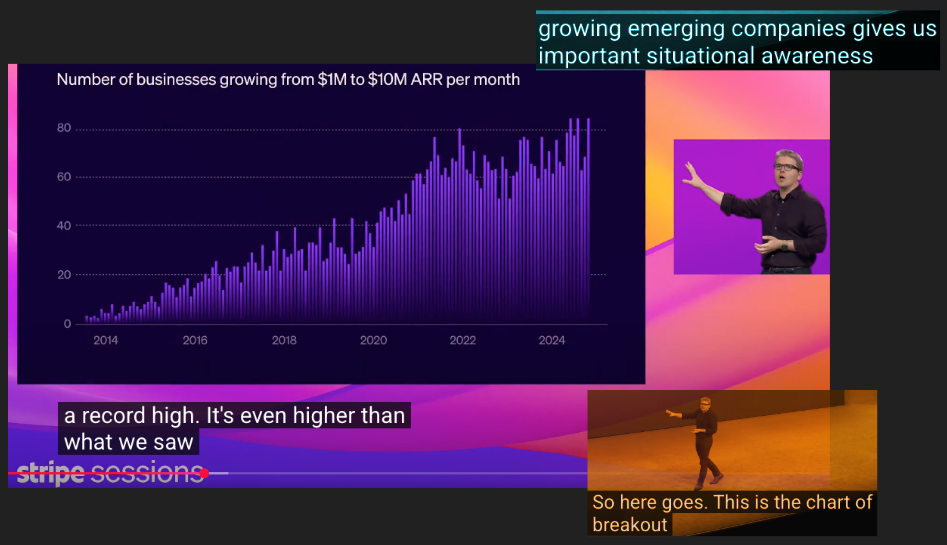
When business historians look back at this moment, they’ll recognize it as an inflection point in how businesses scale. The evidence isn’t speculative or anecdotal—it’s etched in growth curves that defy everything we thought we understood about company expansion.
Collison didn’t need to editorialize the data he presented on AI companies’ growth trajectories. He simply showed the charts, allowed a moment for the audience to process them & then stated what everyone was thinking: “These growth dynamics are literally like nothing we’ve ever seen before.”
The fastest-growing AI startups featured at Sessions are reaching $5 million in ARR in just nine months on average, displaying what Collison described as a “square-wave dynamic” that makes traditional SaaS growth—previously considered impressive—look like flat lines by comparison.
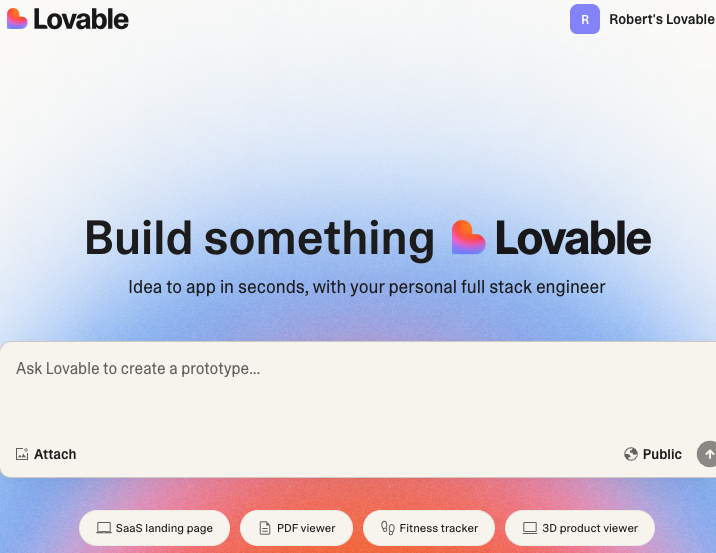
Take Lovable founded by Anton Osika & Fabian Hedin in Stockholm. Their AI-driven application builder—which lets non-coders create functional software through simple text prompts—reached $50 million ARR in just four months, making it Europe’s fastest-growing startup ever. By comparison, it took Shopify years to hit similar numbers.
Or consider Cursor itself, which reached $300 million in ARR with just 60 employees—a staggering $5 million per employee ratio that makes even the most efficient big tech companies look bloated. The crowd’s reaction to these numbers wasn’t mere impressed applause—it was the nervous laughter of people realizing their own metrics suddenly look outdated.
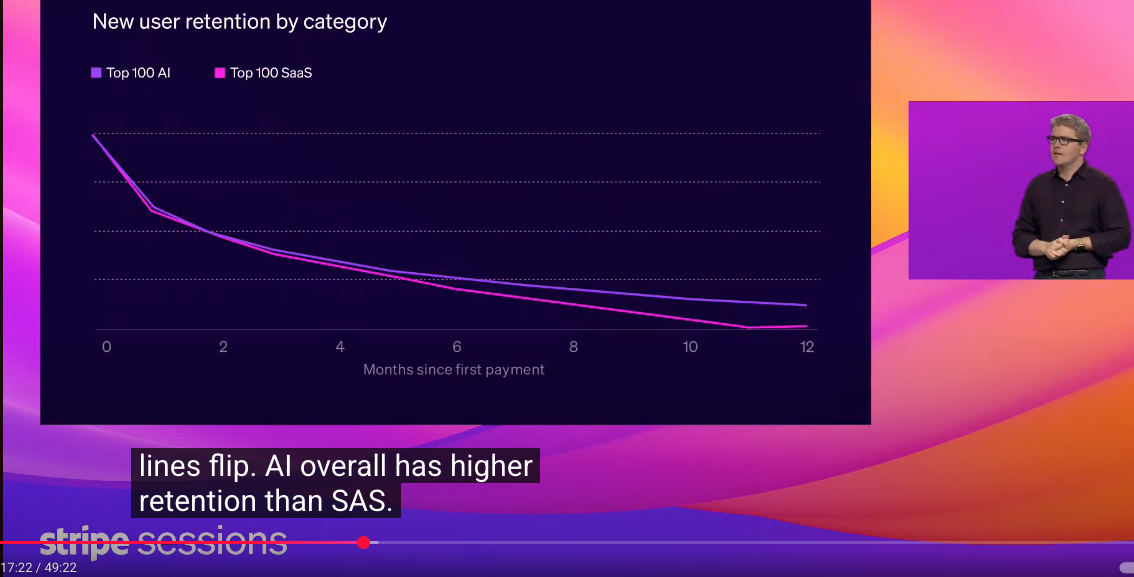
Perhaps most telling was Collison’s revelation about retention patterns. While individual AI tools might see users drift to competitors, the sector as a whole shows remarkably sticky usage compared to traditional SaaS offerings. “Individual AI companies see a lower retention rate than their SaaS counterparts, but customers are typically turning to other AI tools. At the industry level, the lines flip—AI overall has higher retention than SaaS,” he explained, displaying comparative charts that showed the divergence. “People are eagerly switching between AI tools, but nobody’s going back to thinking by themselves,” he observed, drawing another knowing laugh. The era of AI-optionality is ending; the era of AI-assumption is beginning.
The GDP Question: When Billions of New Minds Join the Economy
In a conference moment that likely has economists still doing back-of-napkin calculations, Dwarkesh Patel—whose podcast interviews with AI luminaries have been compiled into the newly-released “The Scaling Era”—challenged what may be the most consequential underestimation of our time.
After Collison mentioned Anthropic co-founder Jack Clark’s conservative 0.5% projected GDP boost from AI, Patel offered a thought experiment that silenced the room:
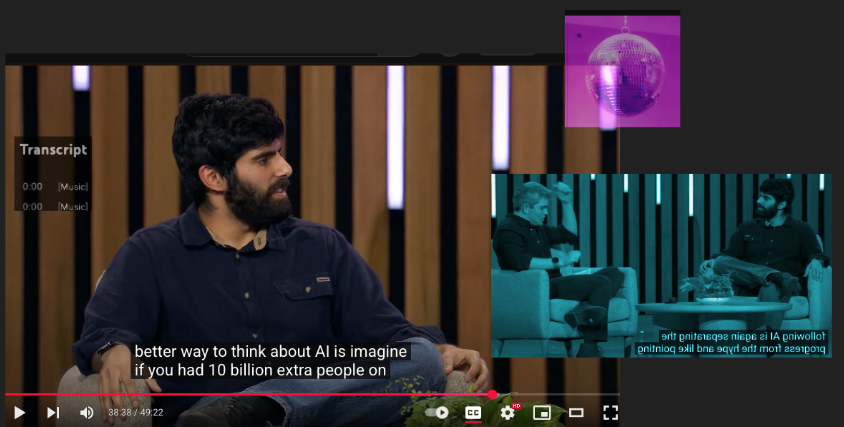
“Imagine if you had 10 billion extra people on Earth, all super smart, conscientious, and widely educated in every single domain. Would it be reasonable to expect just a 5% economic growth from that? Absolutely not. We’d be looking at something closer to 30%, perhaps even 100% or more.”
The stunned silence that followed wasn’t just attendees absorbing a bold prediction—it was the collective recognition that our economic forecasting tools might be as outdated as slide rules in the age of quantum computing. AI isn’t just augmenting human productivity; it’s creating a parallel workforce of digital minds with capabilities that scale differently than those of humans.
When asked about regulatory constraints, particularly in credentialed fields like ⚖️ law & ⚕️medicine, Patel remained remarkably unfazed. “Whenever I had to do legal work, very little of it involves the lawyer actually having to be legally involved,” he noted with the pragmatism of someone who’s built companies. “If you trust the LLM enough, they could write all the contracts, give you the diagnosis… you’ll just defer to them more even if it’s called a chatbot.”
The implication? The gap between formal credentials & practical capabilities is about to widen dramatically & markets tend to flow toward practical capabilities over time.
Stable Magic: Financial Infrastructure That Approaches Physics-Breaking
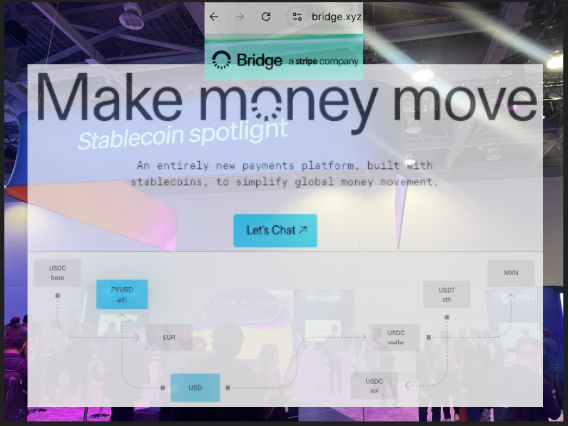
Watching Patrick Collison describe stablecoins as “room-temperature superconductors” carried a special resonance for anyone familiar with the decades-long quest for frictionless energy transmission. It wasn’t just a clever metaphor—it was a precisely chosen analogy that captured something fundamental about what’s happening in financial infrastructure.
“Just like actual superconductors,” he explained, “stablecoins massively reduce the friction and energy loss associated with storage & movement.” After years of crypto skepticism, Stripe’s $1.1 billion acquisition of Bridge last February signaled that stablecoins had crossed from speculative technology to practical infrastructure.
The data presentation that followed produced one of the conference’s most memorable moments. John Collison displayed Stripe’s payment volume in its first two years—a growth curve the brothers were once immensely proud of—and then overlaid Bridge’s volumes for the same period.
“So now Stripe is this little embarrassing flat line right next to zero point on the Y-axis,” he admitted, generating genuine laughter with his self-deprecation. “People have been waiting since 2010 to see if crypto is for real. What you’re seeing in stablecoins is real utility for real businesses at a growth rate which eclipses anything we’ve seen before at Stripe, including Stripe itself.”
The numbers tell a clear story: Bridge has already expanded Stripe’s global reach from approximately 50 countries to more than 100, with “Stablecoin Financial Accounts” now supporting corporate users in 101 countries. For companies operating globally, the implications are immediate & profound.
“Every large company has hundreds of bank accounts, trapped liquidity in every country, and labor and time-intensive intracompany settlement,” Collison explained. Even successful fintechs like Cash App remain limited to a handful of markets a decade after launching. With stablecoins, financial services can now activate globally from day one, leapfrogging years of country-by-country expansion.
Companies like leading space ventures are already using stablecoins for treasury operations, while Remote.com & Scale AI leverage them for global payouts. What once required hundreds of people on payments teams can now be accomplished with a fraction of the resources and none of the geographic limitations.
The New Commerce Loop: When Tools Shop for Themselves
The most provocative demonstration came during what might otherwise have been a standard product enhancement scenario. Collison returned to Cursor, this time with a different challenge: adding bot protection from Vercel to their demo application.
“Cursor knows how to do everything in the coding realm,” he explained, “but now we need to go do something in the real world. We’re going to buy a service.”
What followed was a genuinely surprising sequence: Cursor, prompted through natural language, identified the appropriate Vercel service, navigated to a pre-populated Stripe checkout page & completed the subscription—all without requiring the developer to leave their environment.
“This is a totally new modality for commerce,” Collison emphasized with the careful precision of someone who’s spent fifteen years thinking about payment flows. “In 30 years when your grandkids ask where you were when agent commerce took off, you can tell them you were right here at Stripe Sessions.”
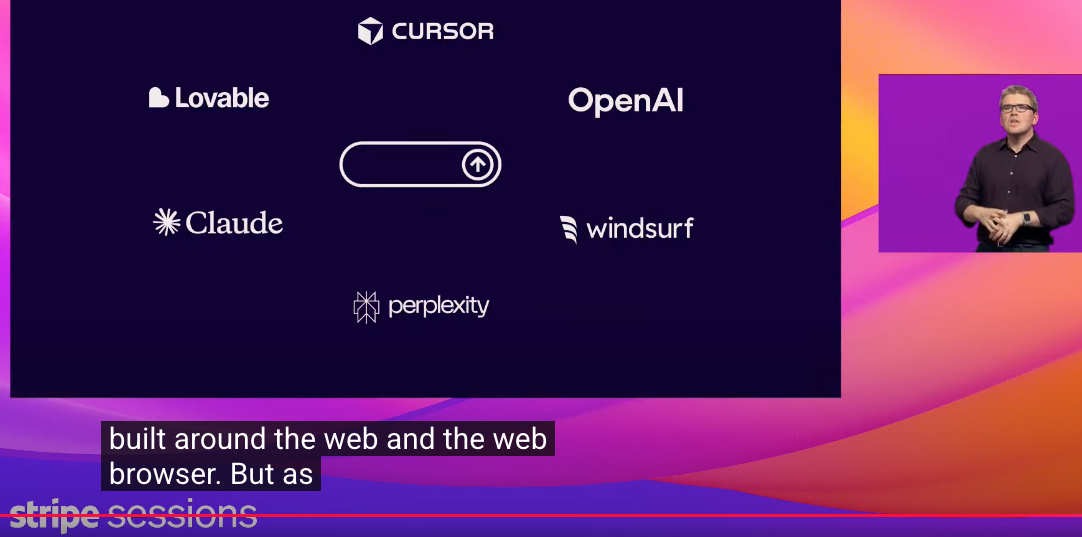
The audience watched a commercial transaction occur not between humans, or between human & computer, but between two software systems—with human intent as the initiating spark rather than the executing force. This Model Context Protocol (MCP) enables AI systems to interact directly with digital services & financial systems, creating transaction patterns that were literally impossible just months ago.
“Soon every AI tool may become a sales channel,” Collison predicted. “Previous internet commerce experiences were built around the web browser. But as we spend more time in AI tools, commerce gets rewired to natively work with this new modality.”
The Questions That Linger
As sessions adjourned & attendees dispersed into San Francisco’s characteristic fog, conversations continued in hotel lobbies & ramen shops throughout SoMa. The questions floating through these discussions weren’t theoretical musings but practical reckonings:
-
Talent Recalibration: If junior developers with AI assistance can now match the output of mid-level engineers, how do career ladders & compensation models adapt?
-
Growth Benchmarks: When startups can reach $50M ARR in four months, do VCs need entirely new metrics for what constitutes promising traction?
-
Financial Architecture: If stablecoins enable day-one global financial operations, does the traditional country-by-country expansion model become obsolete?
-
Autonomous Commerce: As software begins purchasing software without human intervention, how do procurement, compliance & spend management fundamentally change?
-
Value Generation: In a world where creation nears the speed of imagination, does competitive advantage shift entirely from execution to conceptualization & taste?
“There’s a clippy for every co-pilot. There’s a juicer for every electric car,” John Collison observed. But beneath this cautionary note about tech’s inevitable hits & misses lay an optimistic undercurrent. Stripe Sessions 2025 wasn’t just showcasing new tools—it was documenting an economy-wide phase change happening in real time.
The technologies demonstrated aren’t merely faster versions of what came before. They’re different in kind, not degree—creating new possibilities through combination effects that even their creators are still discovering. The participants departed not with a roadmap of incremental improvements but with the dawning recognition that they’re building with fundamentally different materials than they were just a year ago.
For leaders across industries, the implications couldn’t be clearer: listen differently, build differently, move faster. The rules aren’t just changing—they’ve already changed. And the cursor has already hit return.
Resources:
stripe.com/newsroom/news/stripe-completes-bridge-acquisition
anthropic.com/news/model-context-protocol
github.com/modelcontextprotocol
https://bsky.app/profile/schwentker.bsky.social/post/3lou7ejarwc2c