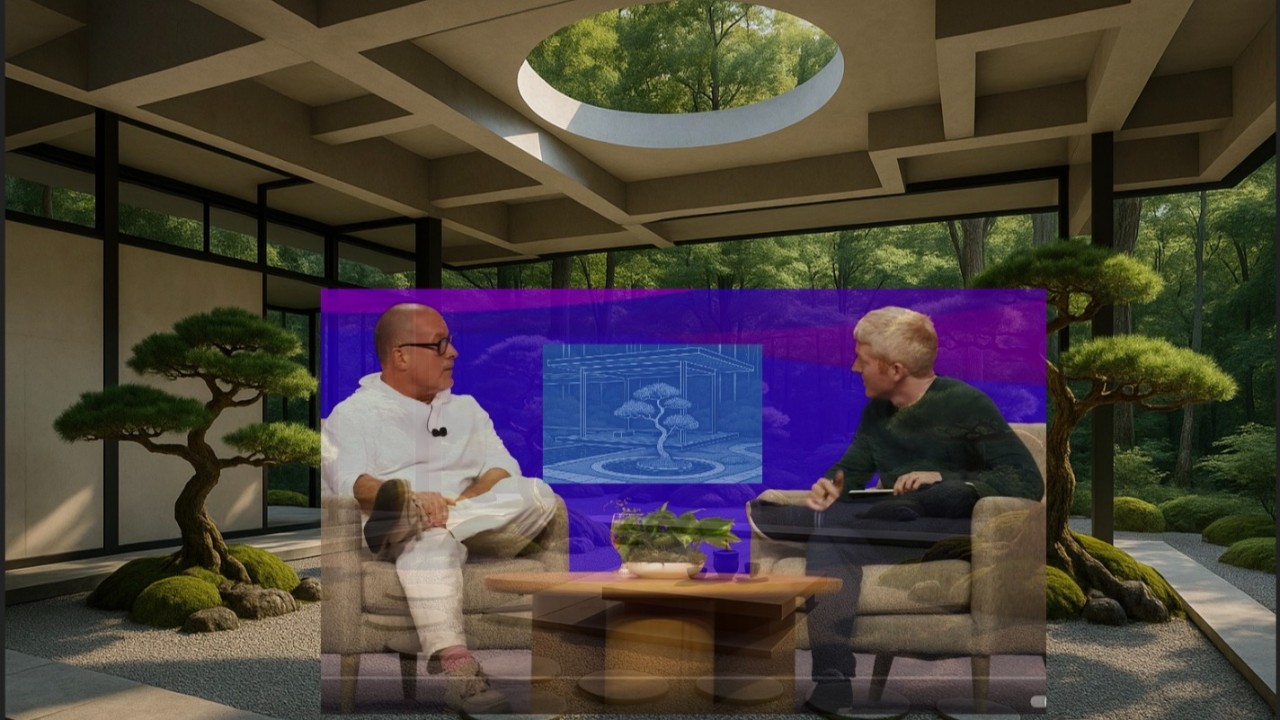
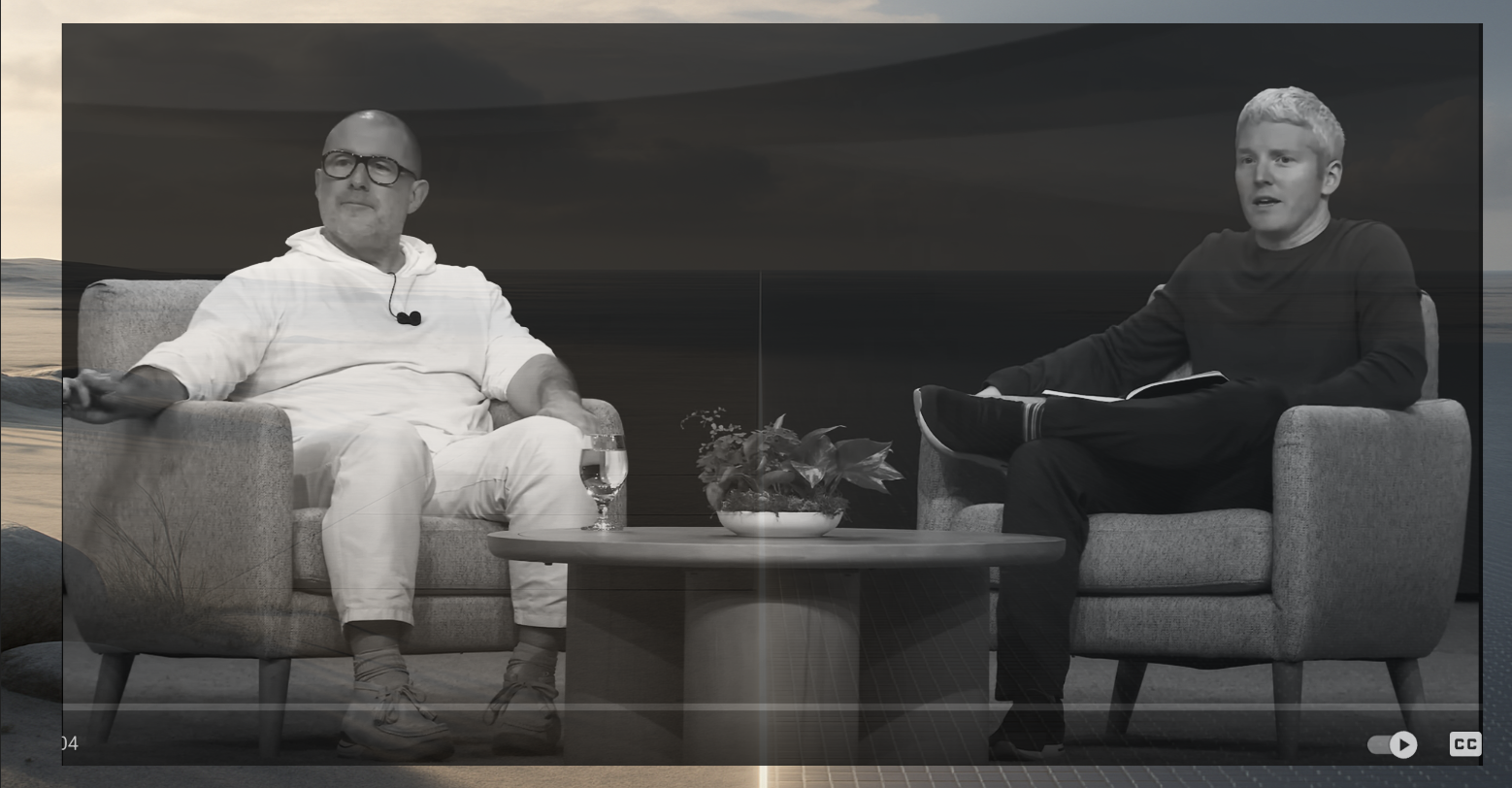
At Stripe Sessions Moscone Center, legendary designer Sir Jony Ive sat down with Patrick Collison for one of the most intimate and revealing conversations that transcended design aesthetics to explore the fundamental values that should guide our work in technology. While ostensibly about design, their exchange offers vital insights for all leaders navigating the complexities of building meaningful products and organizations in in the age of AI and programmable finance.
This was not a conversation about minimalism for its own sake. Nor was it nostalgia for Apple’s golden era. Instead, it was an exploration of what it means to create with love—and what happens when we forget.
From the Mac to the Mission
Ive began by recounting his first exposure to the Macintosh while studying industrial design in the UK. “What we make stands testament to who we are,” he said. The Mac was more than a tool—it was a signal. It embodied care, cultural values, and a sense of possibility. He recognized a group of “original thinkers” behind it, a community “driven by values,” and he felt drawn toward them.
It sparked a lifelong pursuit of purposeful design: not to satisfy metrics, but to elevate humanity. As he told Collison, the products we create reveal our preoccupations, our motivations, and our sincerity.
Then and Now: What Silicon Valley Lost
Reflecting on his early years in the Bay Area, Ive recalled a culture of principled service, innocent euphoria, and shared purpose. But today? “There are corporate agendas… driven by money and power.” A candid acknowledgment of a shift many feel but few articulate.
Patrick Collison gently pressed: What changed?
Ive answered with both clarity and conviction. “We assume progress is inevitable. It’s not. It takes resolve, vision, and foundational values.”
For product builders, especially those shaping tools for billions, this raises an important consideration: are we still grounded in the why? Or merely rushing toward the what?
Joy Is Not Trivial
In an era of frictionless interfaces and data-driven UX, Ive reminded the audience that design isn’t only about elegance or functionality. It’s also about emotional resonance.
“People confuse innovation with being different or breaking stuff,” he warned. “I’m not interested in breaking things unless it leads to something better.”
True innovation, in his view, must be human-centered. Simplicity isn’t subtraction. It is essence. It is clarity. And yes, it is joy.
“Otherwise,” he said, “you end up with a desiccated, soulless product.”
For infrastructure companies especially—those building systems that are meant to be invisible—this distinction matters. Is the experience quietly humane? Or just quietly forgettable?
The Spirituality of the Cable Tab
One of the most resonant moments came from what many would overlook: the unboxing of a cable.
“When somebody unwraps that box and thinks, ‘Somebody gave a sh*t about me’ — I think that’s a spiritual thing,” Ive said.
It wasn’t about seconds saved. It was about human dignity. An unseen act of care that transforms a mundane interaction into something that lingers.
For teams making infrastructure, payments, or developer tools, the challenge it seems to me is subtle but real: can a product make someone feel seen, even if they never see the creator?
Against the Insidious Lie
As organizations scale, so too does the temptation to prioritize what can be measured: speed, cost, latency, ARR.
“We talk about attributes because we can measure them,” Ive explained. “Then we assume that’s all that matters. That’s the lie.”
And yet, the most meaningful parts of a product—its emotional tone, the subtle frictionless joy, the dignity it affords the user—can’t be graphed in a dashboard. So how do product leaders protect what doesn’t fit into a spreadsheet?
As one Stripe executive quietly noted afterward: perhaps that’s the role of culture.
Making Things for Each Other
Team culture isn’t an HR initiative; it’s a design decision. Ive shared rituals he used to cultivate trust within his teams—from taking turns making breakfast to hosting design sessions in one another’s homes.
“Make things for each other,” he said. “It puts you in a lovely place. It makes you vulnerable. It makes others grateful.”
What begins as breakfast becomes a blueprint. When trust and care are embedded into team rituals, they eventually find their way into product design. A user may never know the origin story, but they’ll feel the result.
Within rapidly growing organizations, the question isn’t only how to scale teams, but how to scale intimacy. How does one preserve attention to detail when they can no longer see all the details?
Beauty, Humanity & Responsibility
“If something doesn’t work, it’s ugly,” Ive declared. Function and aesthetics aren’t at odds; they are entangled.
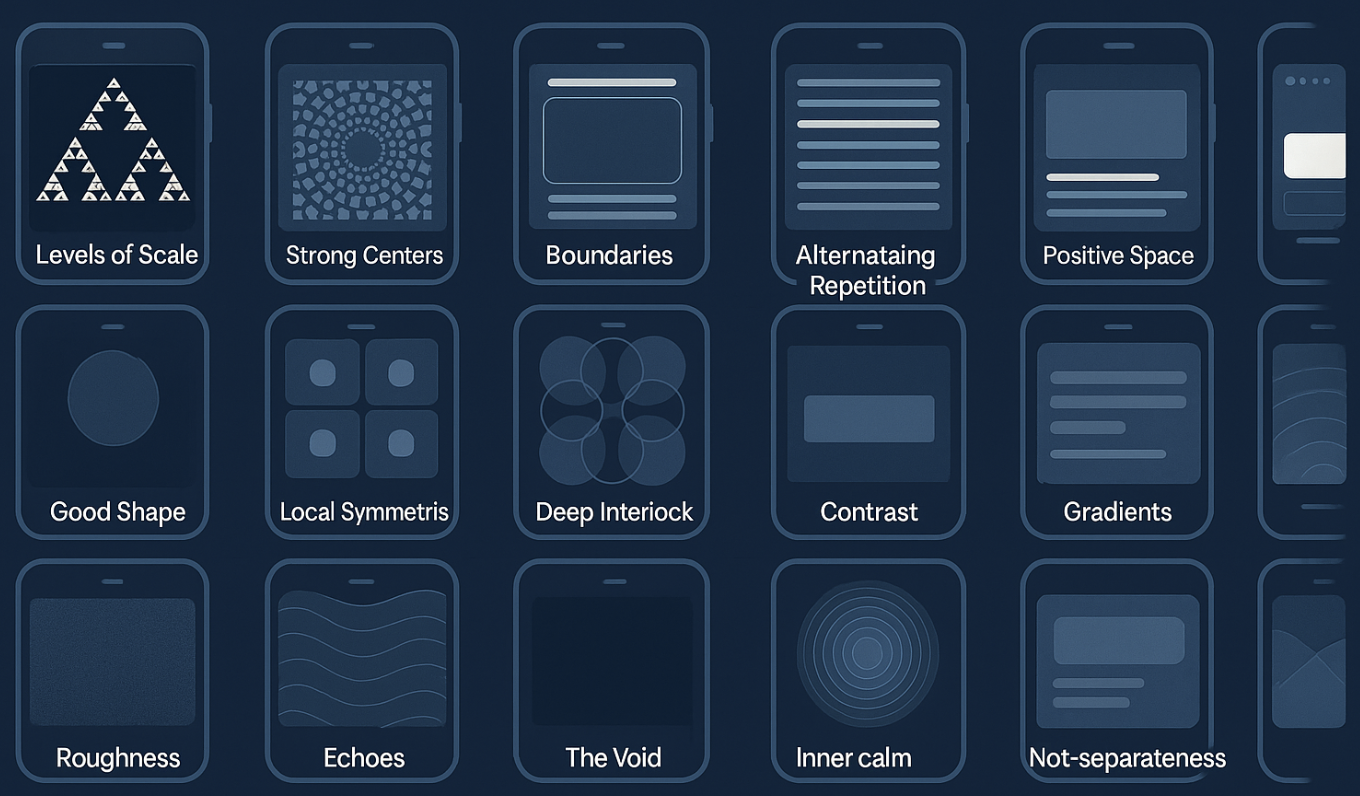
He invoked the architect Christopher Alexander, noting that “between two paths, the one that feels more humane is usually the better design.”
Ive believes that people can sense care—and its absence. Whether in software or a service interaction, we register more than we realize. And when careless design scales, the damage does too.
This leads to the heart of his message: responsibility. “Even if you’re innocent in your intention, if you’re involved in something with poor consequences, you need to own it.”
For boards and executives overseeing infrastructure at global scale, that reflection hits close. It isn’t enough to optimize. It must also be ethical.
When Innovation Harms
Ive did not shy away from his own regrets. Certain products he helped shape had unforeseen effects. And while those outcomes weren’t intended, the impact remains.
“The rate of change is dangerous,” he said. With social media, critical conversations came too late. With AI, he sees more promising signals. The safety discussions are happening early—perhaps just in time.
But speed alone doesn’t determine responsibility. Intentional leadership does.
“Ownership of poor consequences,” he shared, “has driven much of what I’m working on now.”
From Bauhaus to LoveFrom
Ive spoke about the early days of modernism—where Bauhaus designers focused on material and process, sometimes at the expense of beauty. His current studio, LoveFrom, embraces a broader palette.
“Beauty takes time,” he said. And when designing coronation identities or civic projects, ornament may serve clarity, not distract from it.
Whether building software for developers or systems for sovereign institutions, the principle remains: the problem defines the palette. A human problem demands a human response.
Stripe and the Value of Care
So why does design matter at an infrastructure company like Stripe?
“If Stripe didn’t care,” Ive said, “Stripe wouldn’t be Stripe.”
He concluded with a simple invocation from Freud: “All there is… is love and work. Work and love. That’s all there is.”
For those shaping the next decade of programmable finance, that is perhaps the truest North Star. Care isn’t ancillary. It is foundational.
And when care is absent, the user knows.
Designing with care is not a luxury. It’s the root of all durable value.
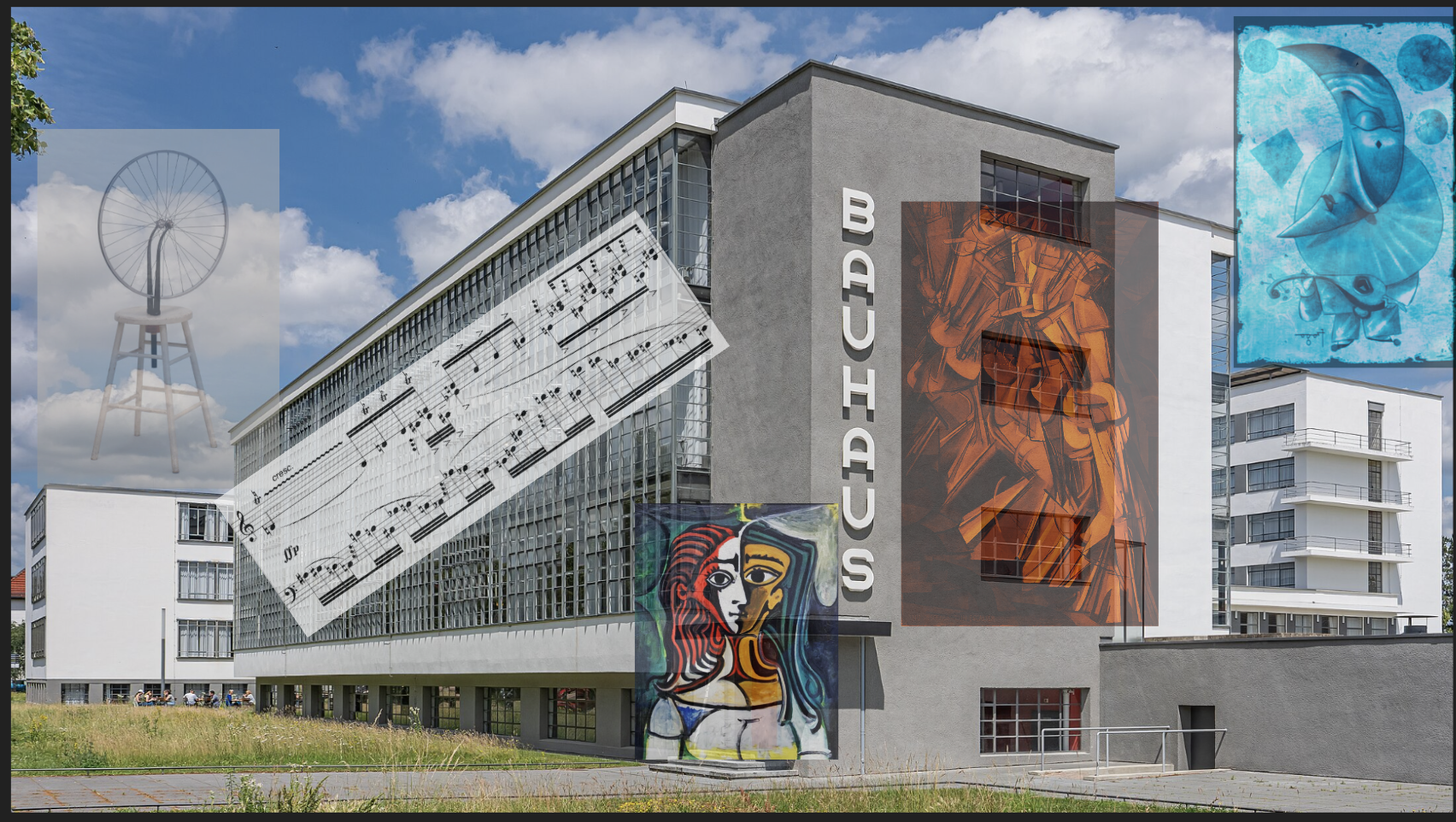
From Duchamp’s ready-mades to Schoenberg’s atonal scores, from Picasso’s fractured portraits to the Bauhaus’s radical simplicity—this mashup image attempts to trace the arc of modernism as a unified experiment in form, freedom & interdisciplinary design.
Each of these influences surfaced in the convo as they reflected on creativity, clarity & the quiet architecture of meaningful innovation.