Based on the NVIDIA GTC 2025 keynote “Reshaping the Future of AI Filmmaking” by Haohong Wang, General Manager, TCL Research America
In 1927, filmmaker Fritz Lang imagined a future powered by advanced machines in Metropolis. Today, nearly a century later, artificial intelligence is transforming such futuristic visions into everyday filmmaking realities—not as science fiction but as practical tools reshaping an entire industry.
Wang’s presentation at NVIDIA GTC charted a journey through filmmaking history—from the Silent Film Era through Hollywood’s Golden Age, the Digital Revolution, and today’s streaming platforms—culminating in what he envisions as the next evolution: “FREE Premium Originals” beginning in 2025.
The Economics of AI Transformation
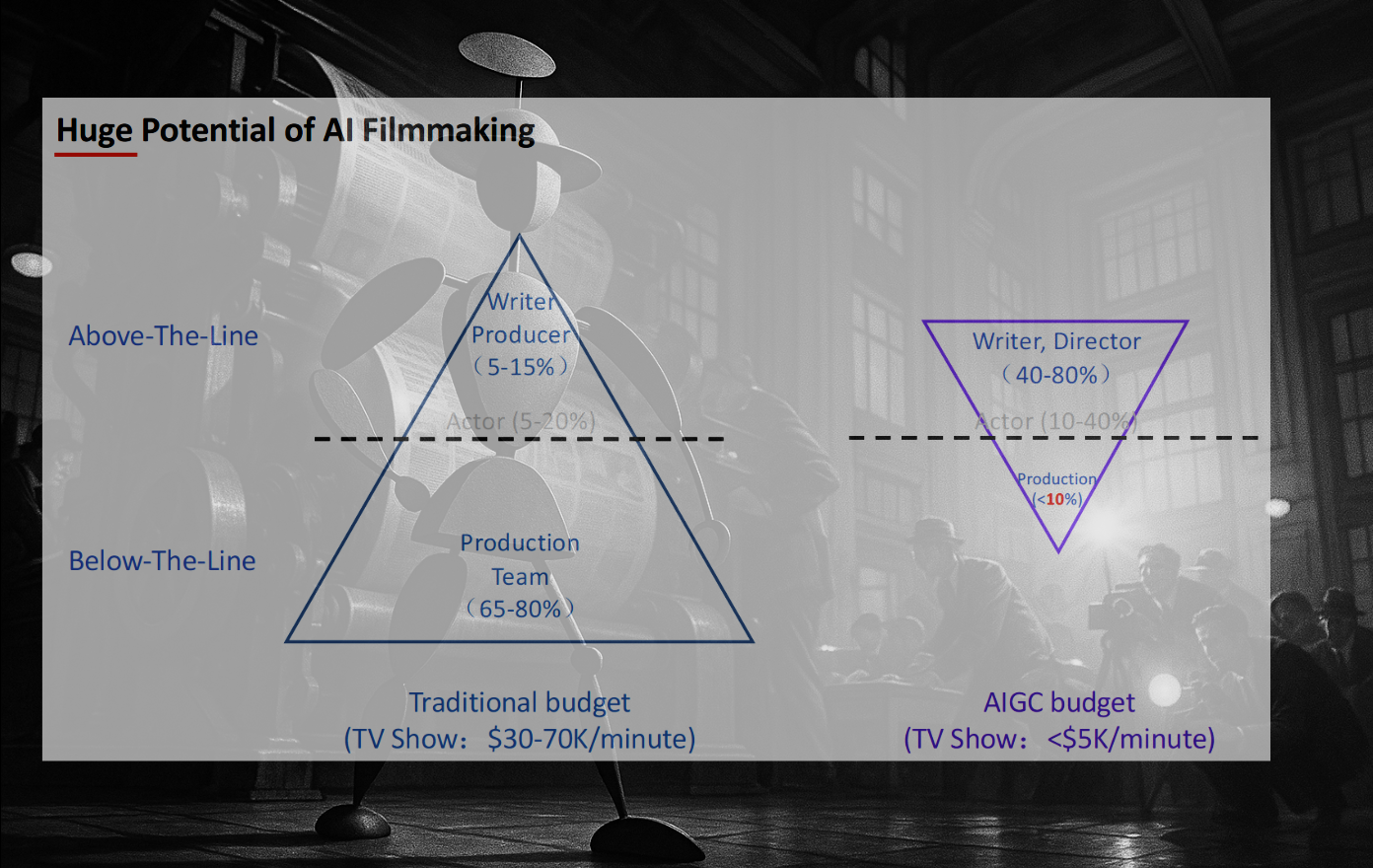
“In traditional filmmaking, hundreds of people gather to shoot scenes, creating astronomical budgets,” explained Haohong Wang during his illuminating GTC keynote. “AI transforms this model into an inverse triangle, drastically reducing costs while expanding creative potential.”
This shift isn’t merely incremental—it’s revolutionary. As Wang’s slides revealed, traditional TV production costs between $30,000-$70,000 per minute, requiring massive crews, equipment, and infrastructure. AI-generated content (AIGC) brings this down to under $5,000 per minute, with projections suggesting even greater efficiencies within two years as the technology matures and workflows standardize.
The budget comparison slide exposed the stark difference in resource allocation. In traditional production, the below-the-line production team consumes 65-80% of the budget, while AI can reduce this to less than 10% of traditional costs.
Wang emphasized, “In the near future, the cost of AI filmmaking budgets will be even less than 10 percent of today’s budget. That’s why AI saves a lot of money.”
The implications extend far beyond simple cost-cutting. When production budgets shrink by 90%, entirely new categories of content become financially viable. Stories deemed too niche or experimental for traditional budgets suddenly become possible. Creators previously locked out of production opportunities by financial barriers can enter the arena with compelling visions.
As streaming platforms collectively spend billions annually on original content, this economic transformation threatens to upend existing power structures while creating new opportunities for creators and audiences alike.
Real-World Experimentation: The TCL Film Machine
Personal experiences from pioneering filmmakers provide our most compelling evidence. TCL’s experimental “Film Machine” program invited established artists, writers, directors, and producers to create 5-10 minute films across different genres in just eight weeks using AI tools.
Wang showcased the impressive lineup of five distinct film projects from the program: “The Slug,” “Sunday,” “The Audition,” “Project Nexus,” and “The Best Day of My Life” — each representing different genres and filmmaking approaches. The slide revealed a diverse creative team including Dave Clark, Chen Tang, Kurt Yaeger, Paul Johansson, George Huang, and Keilita Smith.
“We screened them last November at TCL TCL Chinese Center in Hollywood,” Wang shared. “Hollywood media reported this work as one of the top transformative strides in filmmaking.”
Yet Wang cautiously adds perspective: “We are still just in the middle, even at the beginning of this long journey.”
The films—spanning comedy, sci-fi, romance, and more—demonstrated both the remarkable capabilities and current limitations of AI filmmaking. Audiences saw glimpses of what’s possible: imaginative worlds rendered with surprising detail, emotional moments captured with unexpected nuance, and creative possibilities that would be prohibitively expensive in traditional production.
One particularly striking example Wang shared involved an intimate scene between digital humans in a realistic environment—a notoriously challenging sequence for AI to generate convincingly. The results, while not perfect, showed remarkable progress in an area many experts believed would remain beyond AI’s capabilities for years to come.
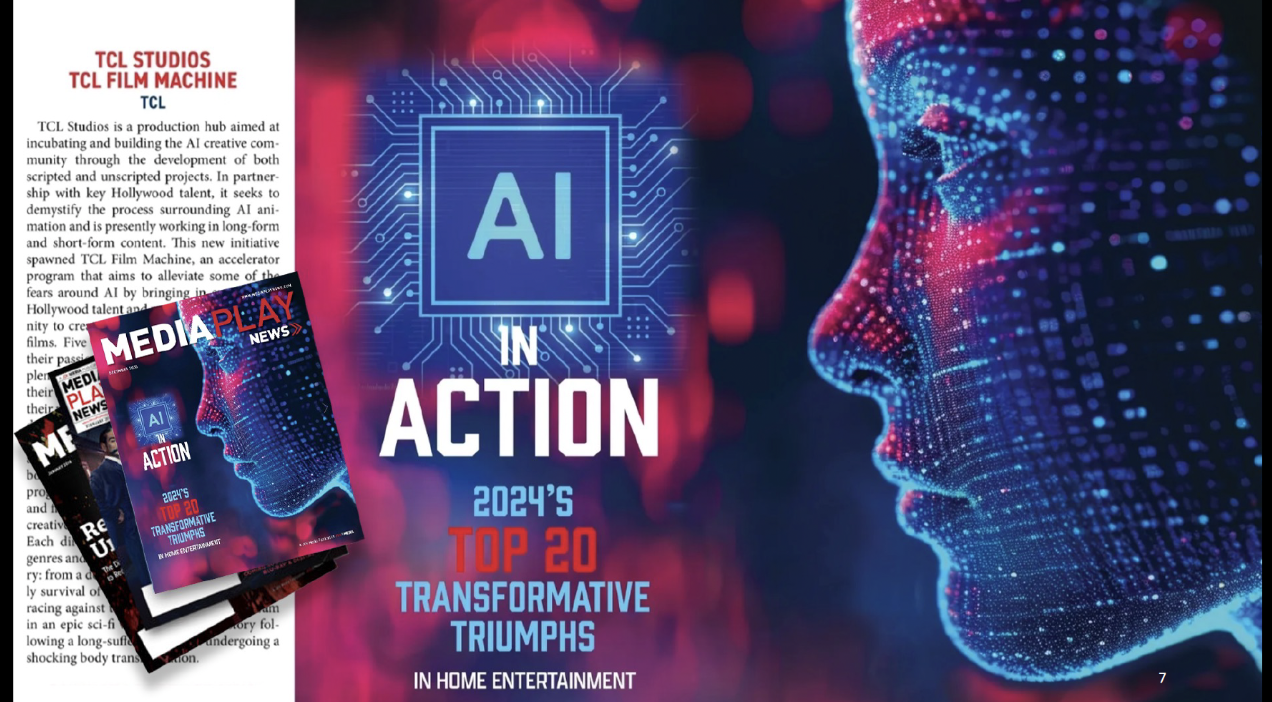
These achievements garnered significant industry attention, with Media Play News featuring TCL’s work in its “2024’s Top 20 Transformative Triumphs in Home Entertainment.” The slide showed the publication highlighting TCL Studios’ role in “incubating and building the AI creative community through the development of both scripted and unscripted projects.”
“What impressed me most wasn’t just what the technology could do,” noted one filmmaker participant in the program, “but how quickly we adapted our creative process to work with rather than against the AI’s strengths and limitations.”
The Business Model Revolution
Wang outlines an emerging ecosystem that could transform how content is funded and distributed:
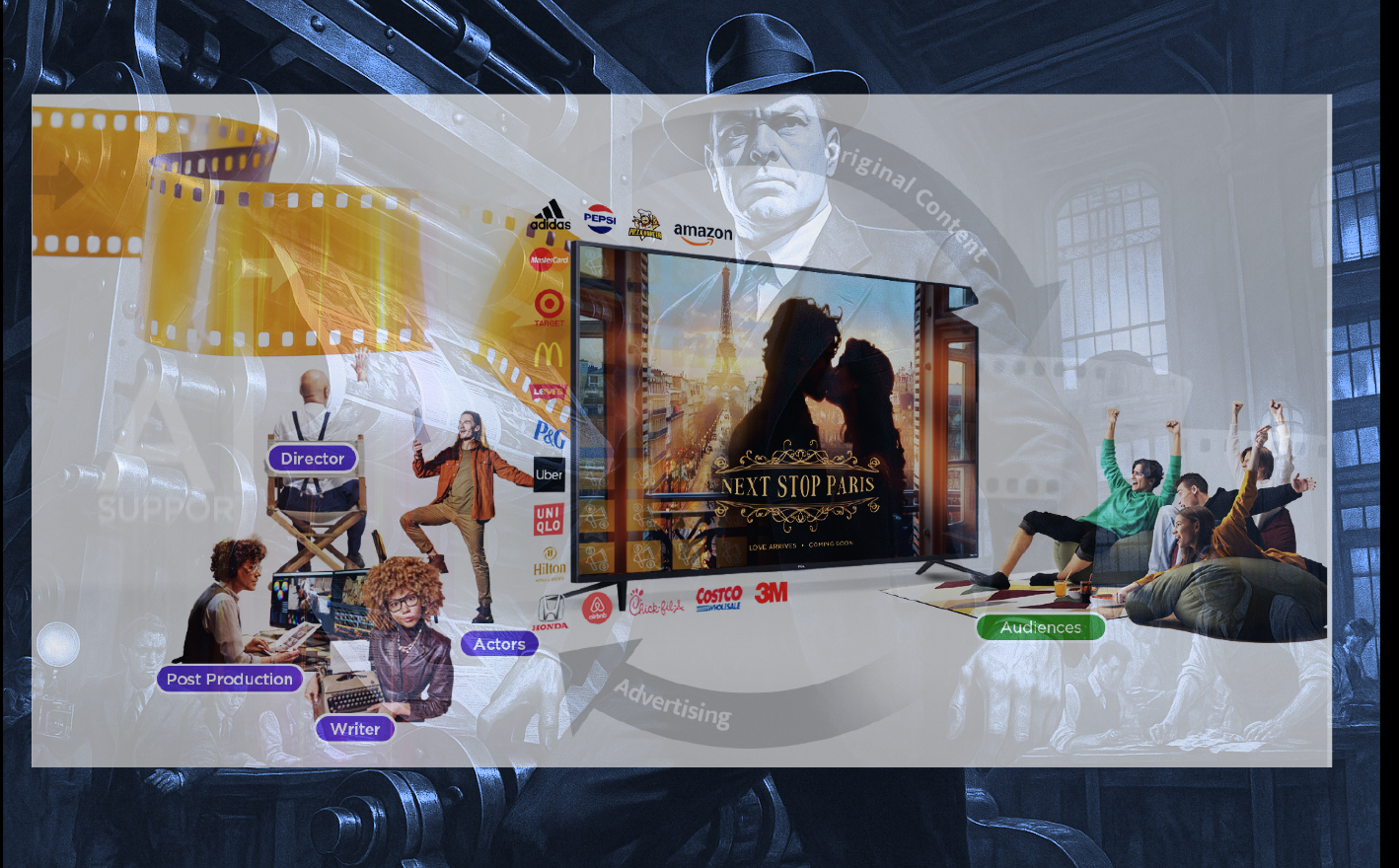
“If you can see in this diagram, this is a prediction—a vision for the future of the industry. On the left-hand side, you can see that we have a lot of creatives, a creative community using AI tools to efficiently produce more digital content. On the right side are audiences seeking good quality content.”
The critical third element in this vision is advertisers. “Brands and advertisers follow where audiences go. If they see many people watching this content, they’ll spend money to advertise. There’s a loop where advertising money eventually goes back to the creative community to cover production costs.”
The end result? “That’s the moment when most originals will be free. That’s how the story looks.”
This model represents a fundamental disruption to the current premium subscription model dominating streaming platforms. The diagram showed major brands like Amazon, Pepsi, MasterCard, Target, McDonald’s, and many others surrounding a television displaying “Next Stop Paris,” with arrows indicating the flow from creative content to audience engagement to advertising revenue and back to content creation.
When production costs drop dramatically and advertising becomes more precisely targeted through AI-powered analytics, the economic incentives shift toward ad-supported models over subscription barriers.
The Technical Challenge: Achieving Directability
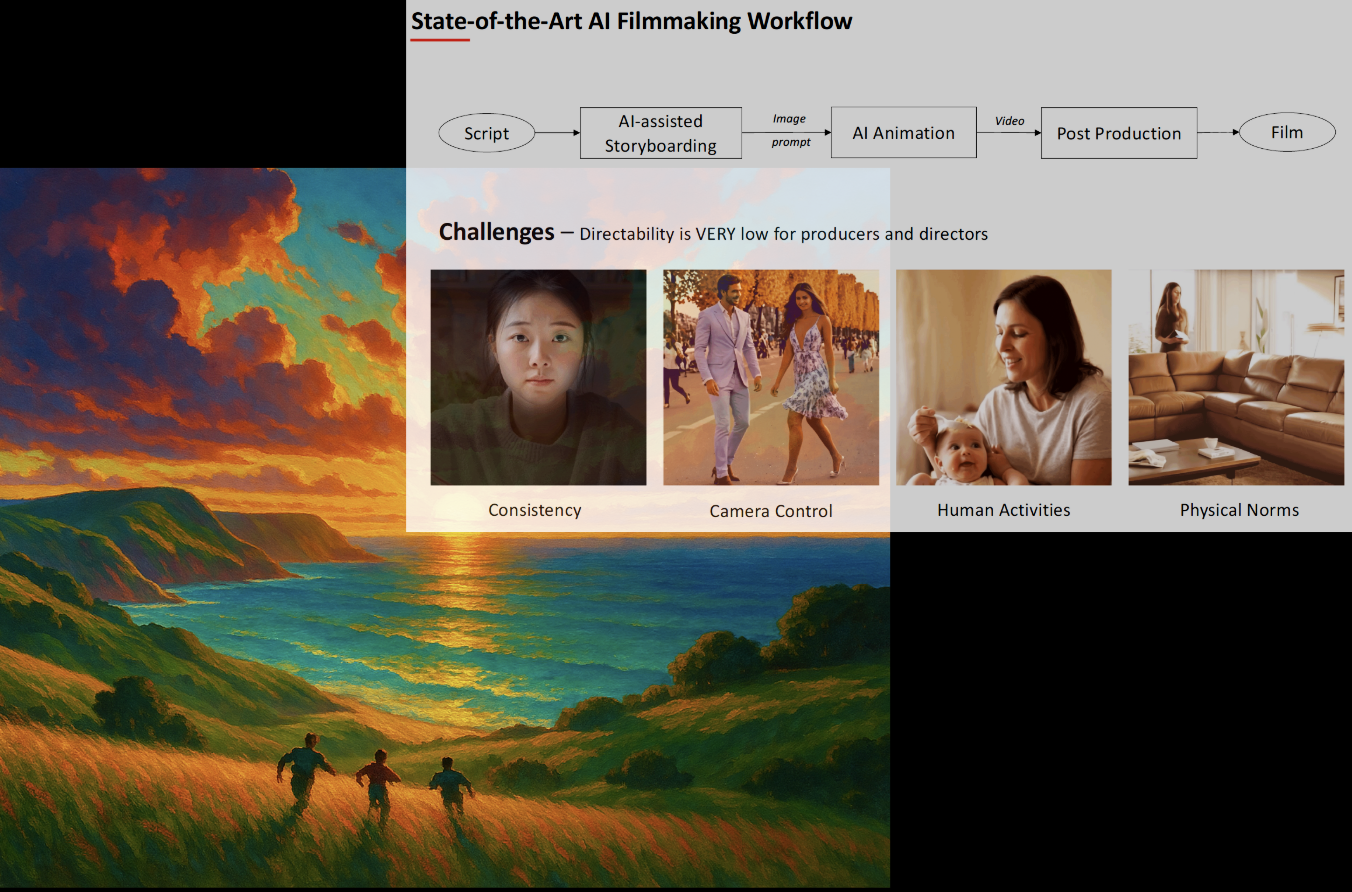
For directors accustomed to controlling every aspect of production, AI initially disrupted their sense of certainty. As Wang noted: “We talked to many producers and directors. They like the control they had in traditional filmmaking. They want to direct this way, but AI sometimes goes another way.”
Wang’s slide illustrated the current AI filmmaking workflow: Script → AI-assisted Storyboarding → AI Animation → Post Production → Film. Below this workflow, he highlighted four major challenges with visual examples:
-
Consistency issues - Characters and backgrounds changing between shots, creating jarring discontinuities that break audience immersion. “Imagine every little shot generated automatically, independently. How do you control this face going to another shot? Maybe it’s already changed. The background objects—there are so many things in the scene. Anything changing may cause human eyes discomfort.”
-
Camera control limitations - Movement not matching directorial vision, creating unpredictable and sometimes disorienting visual sequences. “Camera control has seen significant improvements, but it’s still not ideal as what we want. Sometimes they even make the foreground and background change.”
-
Human activity simulation problems - Awkward movements and unnatural interactions between characters. “Human activity simulation is very, very difficult. You see this lady feeding the kid, but there’s another hand just coming from nowhere. This is very normal in today’s AI animation tools.”
-
Physical norm violations - Actions that defy physical laws, immediately breaking audience suspension of disbelief. “Physical norms are also problematic. I’ve just seen a lady crossing through another person—this shouldn’t happen.”
Rather than waiting for AI to mature naturally, Wang proposes a solution: digitization—transforming the entire workflow into a fully controllable 3D environment.
“In traditional filmmaking, directors deal with tangible objects. They film in Paris, use physical cameras with settings they can control,” Wang explained. “Our approach brings everything into the digital world where directors regain that sense of control.”
The Technical Framework: Digitization, Decomposition, Composition
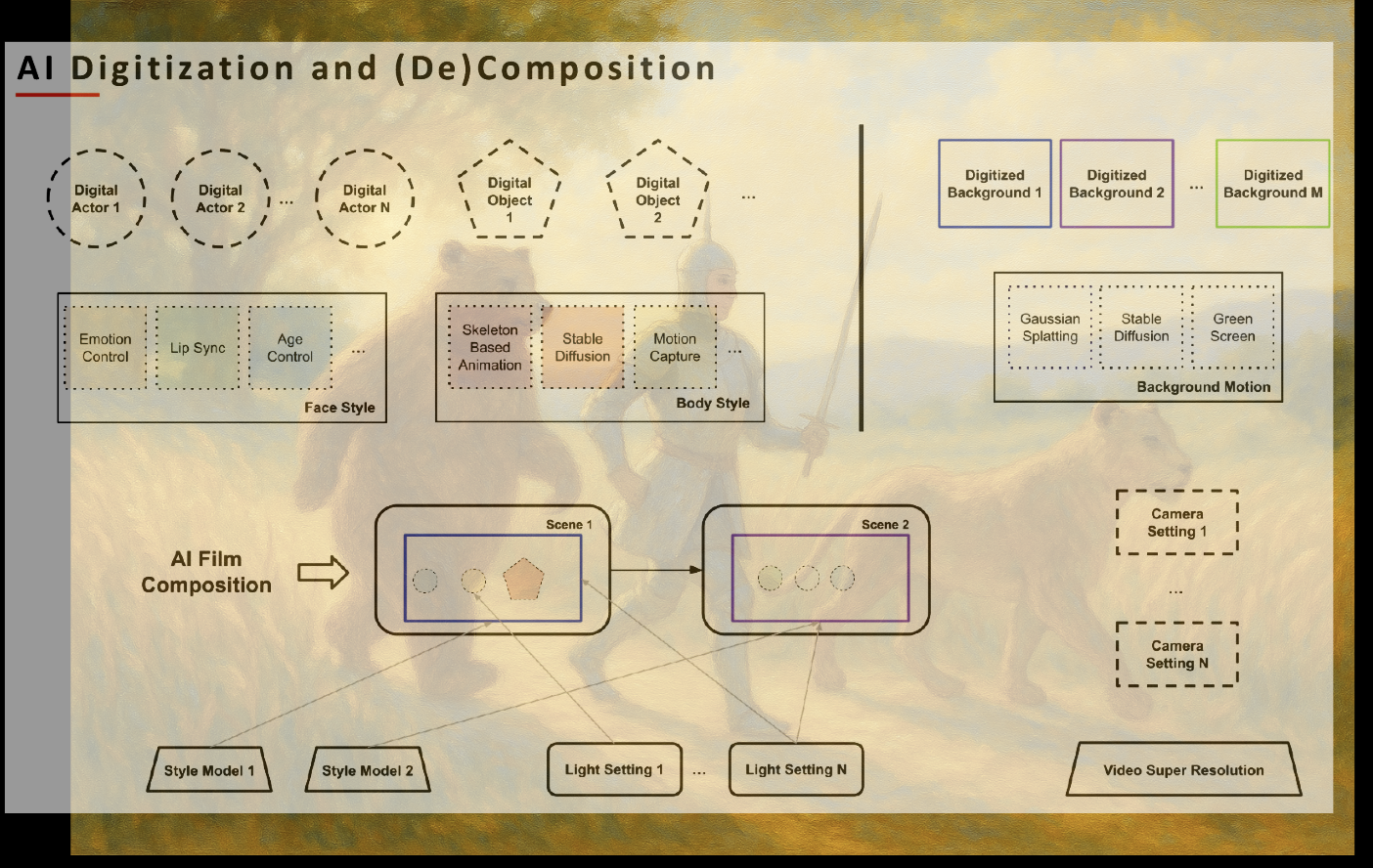
Wang outlined a three-component technological approach that forms the foundation of the MineStudio filmmaking pipeline:
-
Digitalization - Creating comprehensive digital actors, objects, and backgrounds that serve as the building blocks for AI-generated scenes. The slide showed digital actors, objects, and backgrounds as the primary elements, with detailed attributes for each. “Everything is digitized—from the character to the background.”
-
Decomposition - Breaking elements into manipulable attributes that can be individually controlled and modified. The framework showed face styles (emotion control, lip sync, age control) and body styles (skeleton-based animation, stable diffusion, motion capture) as decomposed elements. “We want to say this object has attributes—in his face, facial expression, movement capability, age. We can change these attributes, manipulate that part.”
-
Composition - Recombining elements with consistent, director-controlled outcomes that maintain continuity and creative intent. The diagram illustrated how these elements flow into AI Film Composition with scene arrangements, camera settings, style models, and lighting settings. “You do the compositing and put things all together back again.”
This approach represents a fundamental shift in how AI generates visual content. “The key message is thinking everything in 3D, not 2D,” Wang emphasized. “That’s the major difference between traditional frame-by-frame filmmaking and our approach.”
By providing structural information about scene composition, character positioning, and environmental context, the system helps the AI understand what should remain consistent between shots and what can be creatively interpreted.
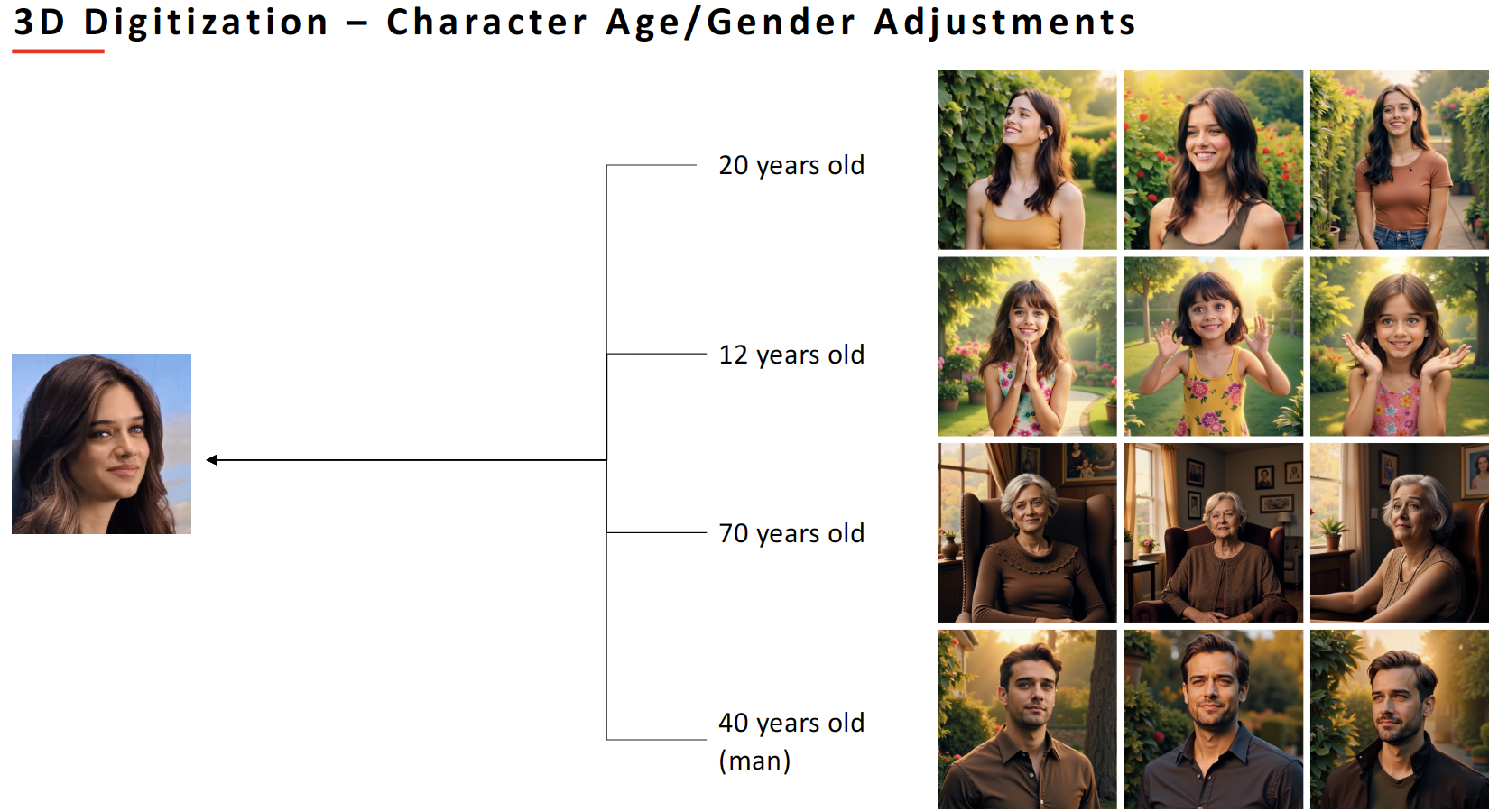
The results are compelling. Wang demonstrated how digitized actors can be aged up or down, gender-swapped, or placed in entirely new environments while maintaining their essential performance characteristics. His slide showed a remarkable example of a single female character transformed into four distinct variations: as a 20-year-old, a 12-year-old child, a 70-year-old senior, and even a 40-year-old man—all while maintaining recognizable traits from the original subject. Backgrounds can transform from realistic to stylized without disrupting character consistency. Lighting can be recalculated for different times of day while preserving the underlying scene composition.
Advanced Technologies Powering the Pipeline
Wang briefly mentioned several advanced AI technologies integrated into the MineStudio pipeline:
-
Gaussian splatting - A rendering technique that enhances visual quality and processing efficiency, demonstrated by showing the same characters in different environmental contexts while maintaining consistent appearances
-
Stable diffusion - Enabling consistent image generation across multiple frames
-
Style transfer - Allowing seamless visual transformations while maintaining content integrity, where real actors were integrated into a Monet-style water lily environment
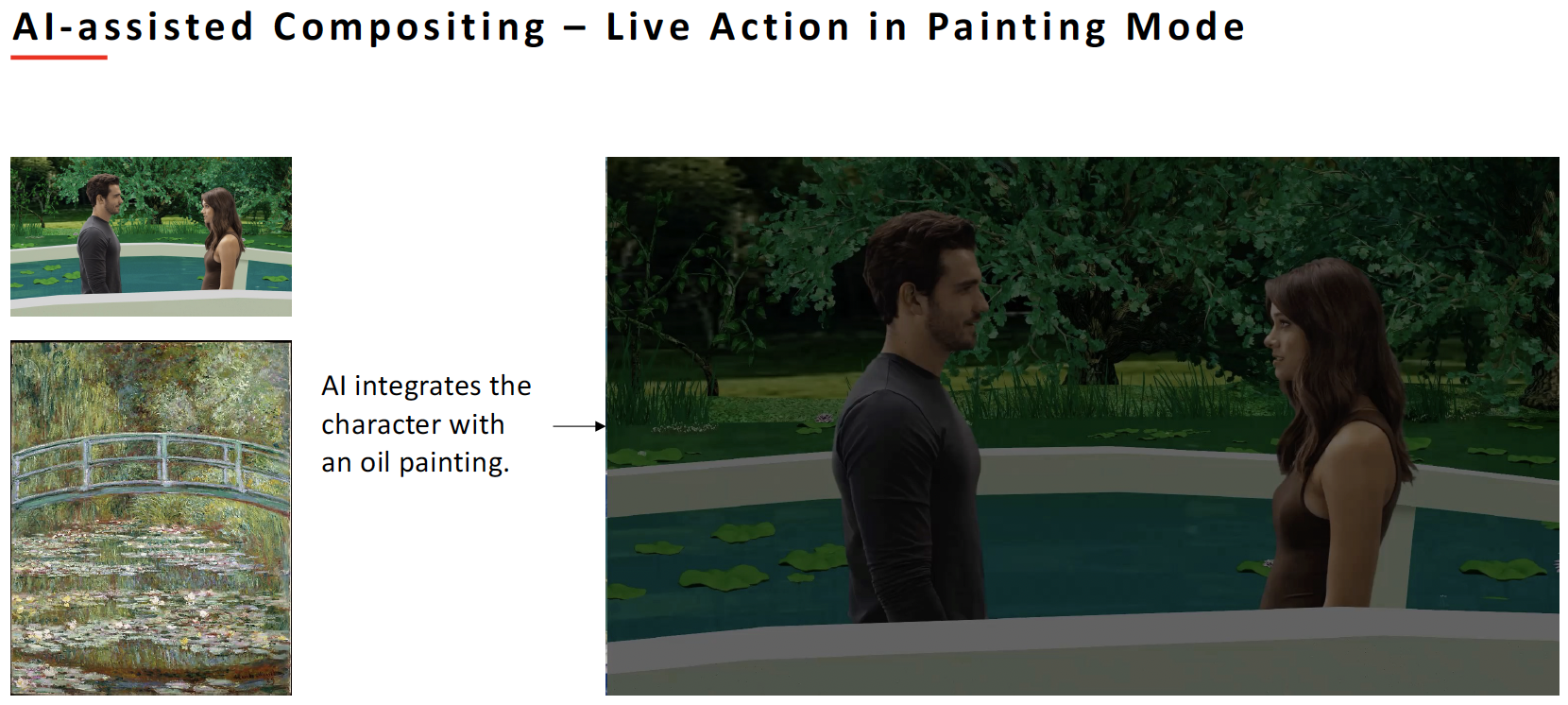
One of the most striking demonstrations showed AI integrating real characters within a stylized oil painting environment based on Monet’s famous water lilies. The characters maintained realistic proportions and details while seamlessly blending with the painterly surroundings—illustrating how different artistic styles can be applied while preserving performance integrity.
These tools, when combined with the digitization framework, create a comprehensive system that bridges the gap between traditional directorial control and AI’s generative capabilities.
The Genre Challenge: From Sci-Fi to Drama
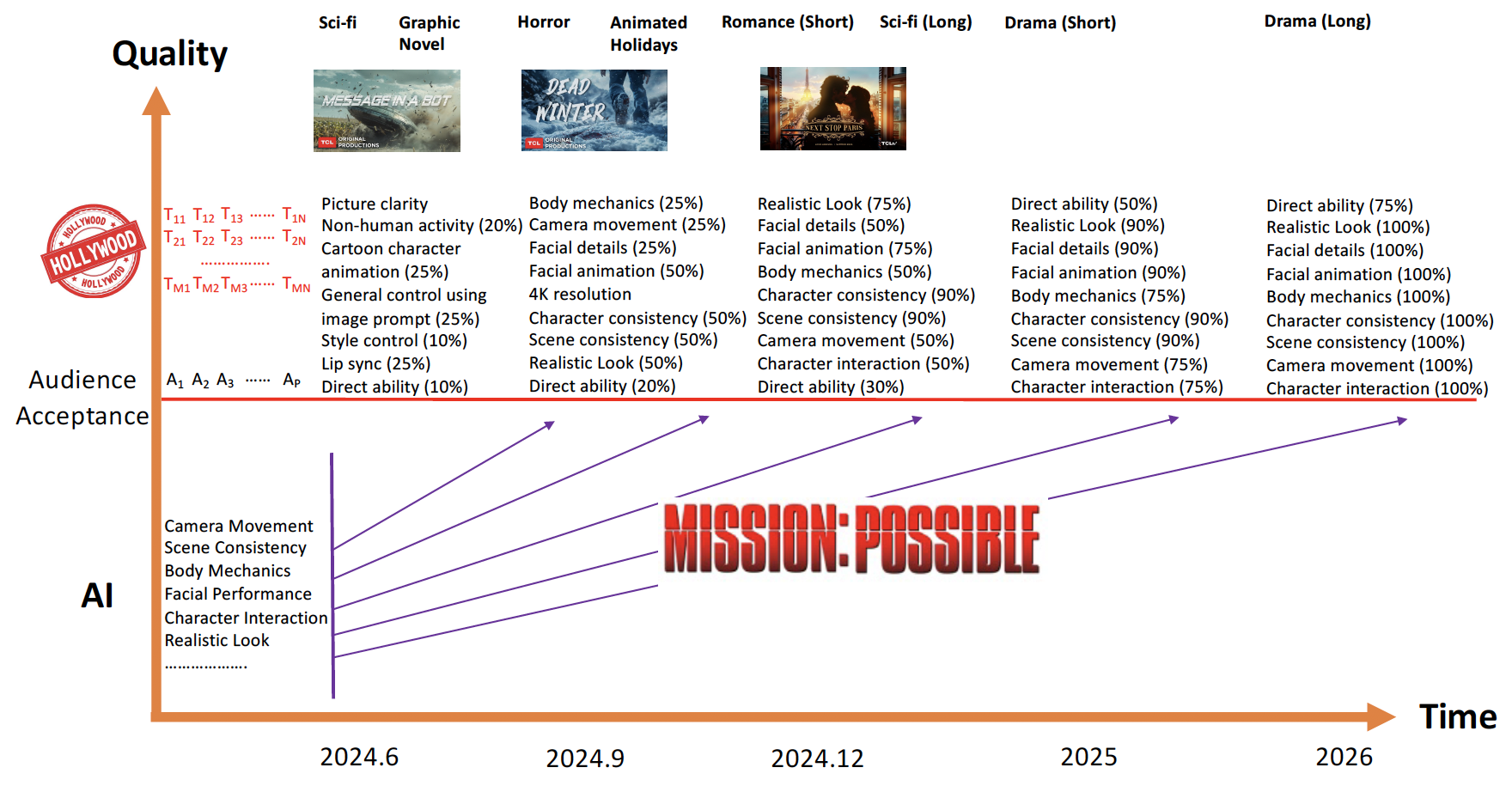
Wang presented a detailed quality roadmap showing the progression of AI filmmaking capabilities across different genres. He displayed a matrix with genres on the horizontal axis (Sci-Fi, Graphic Novel, Horror, Animated Holidays, Romance, Sci-Fi Long Form, Drama Short Form, and Drama Long Form) and time progression on the vertical axis (from 2024 through 2026).
While AI filmmaking has already conquered genres like sci-fi and romance, more emotionally nuanced content remains challenging. “Drama is very difficult because there’s human direction involved. Our human eyes are very sensitive to any abnormalities based on everyday experience,” Wang noted.
Each genre column showed specific quality metrics with percentage completeness—for example, sci-fi already achieves high marks in picture clarity (100%) and non-human activity (90%), while drama requires higher percentages across all categories, particularly in facial animation and character interaction.
Nevertheless, he expressed optimism: “We believe that given another 12 to 24 months, even drama will be conquered. You will be able to see long-form films of drama.”
The roadmap focuses on six key technical goals for the next two years:
-
Camera Movement - Ensuring smooth, intentional camera work that follows cinematic conventions
-
Scene Consistency - Maintaining visual continuity across shots and sequences
-
Body Mechanics - Creating natural human movement without awkward poses or impossible physics
-
Facial Performance - Capturing the subtle nuances of emotional expression
-
Character Interaction - Enabling convincing physical and emotional exchanges between characters
-
Realistic Look - Achieving visual fidelity that meets audience expectations
“I’m very optimistic,” Wang concluded. “After 12 to 24 months, a lot of things will be there. You will be able to see long-form films of drama.”
The MineStudio Initiative
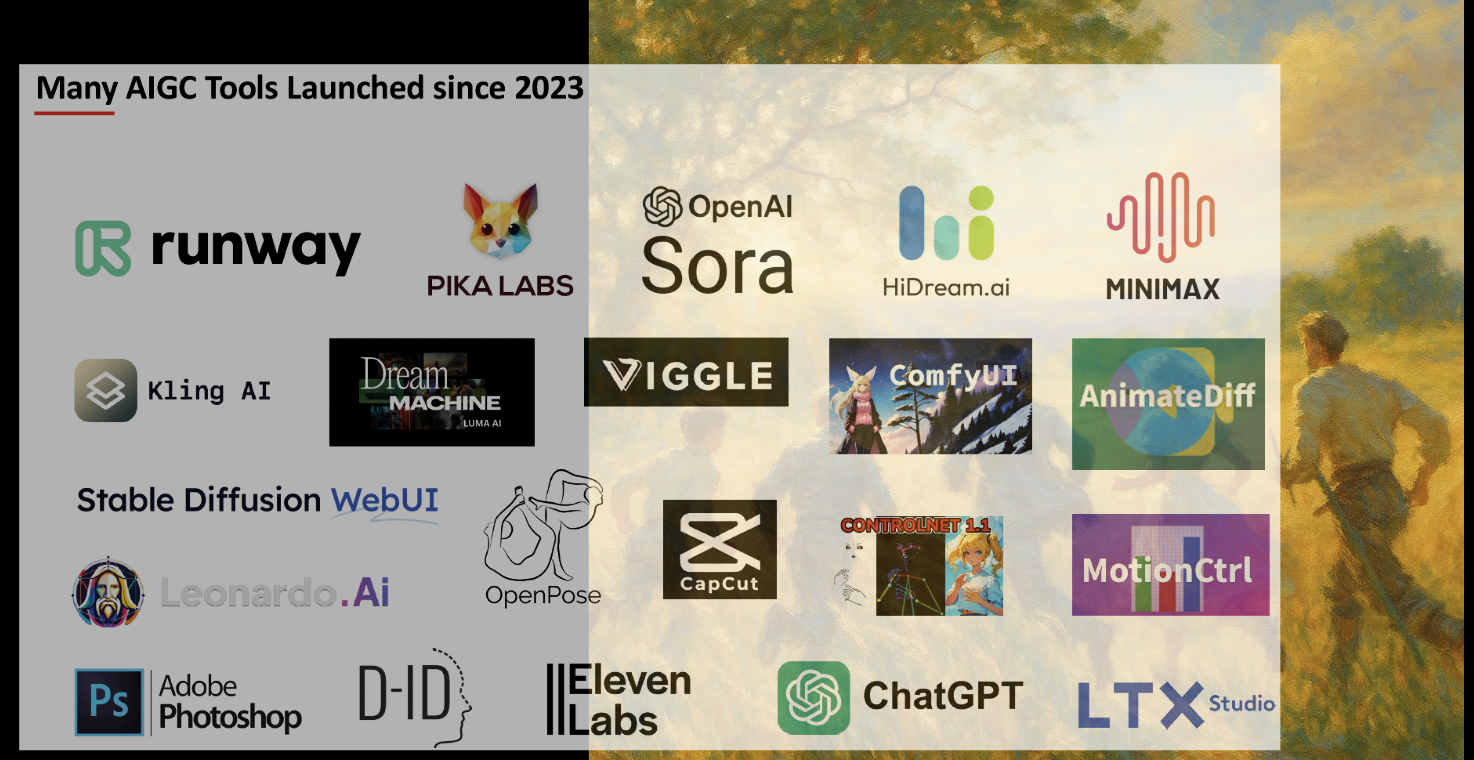
Wang’s presentation contextualized MineStudio within the rapidly expanding ecosystem of AI generative tools. He displayed logos of numerous companies and products that have emerged since 2023, including Runway, Pika Labs, OpenAI’s Sora, HiDream.ai, Minimax, Kling AI, Luma Dream Machine, Viggle, ComfyUI, AnimateDiff, Stable Diffusion WebUI, Leonardo.AI, OpenPose, CapCut, ControlNet, MotionCtrl, Adobe Photoshop, D-ID, Eleven Labs, ChatGPT, and LTX Studio.
Within this competitive landscape, Wang highlighted MineStudio as a pioneering AI-based filmmaking pipeline that integrates these various technologies and approaches. While specific technical details were limited, the demonstrations showed an impressive integration of various AI capabilities into a cohesive workflow.
The initiative appears to focus on creating a comprehensive ecosystem that gives directors the tools they need to maintain creative control while leveraging AI’s generative capabilities. By approaching AI filmmaking from a 3D perspective rather than a frame-by-frame 2D approach, MineStudio addresses many of the consistency and control issues plaguing current AI video generation.
Wang welcomed developers to engage with and contribute to the MineStudio initiative, suggesting an open collaborative approach to solving the remaining technical challenges.
Breaking Down Barriers to Entry
Perhaps most promising is how AI could democratize premium content creation. Where streaming platforms currently spend billions on exclusive originals, Wang envisions a different future where the economics of content creation and distribution fundamentally change.
This transformation would affect not just major studios but independent creators, small production companies, marketers, educators, and countless others who previously couldn’t access high-quality production capabilities due to budget constraints.
As one example, Wang suggested educational content could benefit significantly: “AI can bring efficiency up significantly. This is not the cost for today, but in the near future, you will see dramatic changes.”
Questions for Industry Stakeholders
For film schools and educational institutions: How will your curriculum evolve to prepare students for an industry where technical AI knowledge and creative vision merge in unprecedented ways? When the technical barriers to high-quality production disappear, what core competencies become most valuable?
For actors and on-set professionals: As digitization enables perfect consistency across takes and performances become increasingly modifiable in post-production, how might your craft evolve beyond traditional performance? Will the next generation of performers need different skills than their predecessors?
For content marketers: When the financial barriers to producing cinema-quality narratives drop by 90%, what stories might you tell that were previously impossible due to budgetary constraints? How might this change your approach to connecting with audiences?
For streaming platforms: In a world where AI-generated content becomes increasingly accessible and production costs plummet, how will you differentiate your offerings beyond exclusivity? What happens when quality content production becomes democratized?
The AI filmmaking revolution isn’t simply about cost reduction—it’s about reimagining what’s creatively possible when technology and human vision collaborate in entirely new ways. It challenges us to reconsider fundamental assumptions about how stories are told, who gets to tell them, and how they reach audiences.

As a final demonstration of what’s already possible, Wang showcased “Next Stop Paris,” a romantic AI-generated film with remarkably natural-looking characters against a beautifully rendered Parisian backdrop with the illuminated Eiffel Tower. This example illustrated how AI filmmaking has already reached impressive capabilities in certain genres like romance.
“I’m very optimistic,” Wang concluded. After watching examples of AI-generated romance, sci-fi, and comedy shorts, one can’t help but wonder—what stories will emerge when these tools reach full maturity and creative accessibility? The answer may reshape not just filmmaking but our entire relationship with visual storytelling.