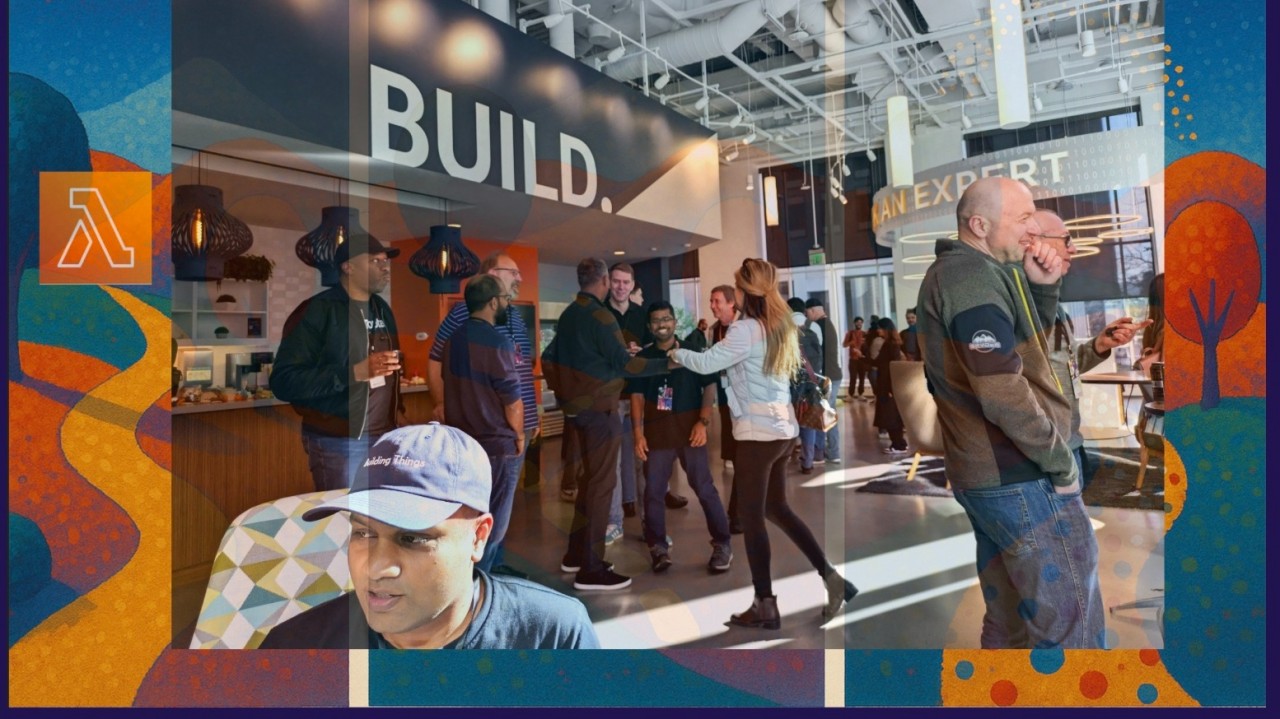
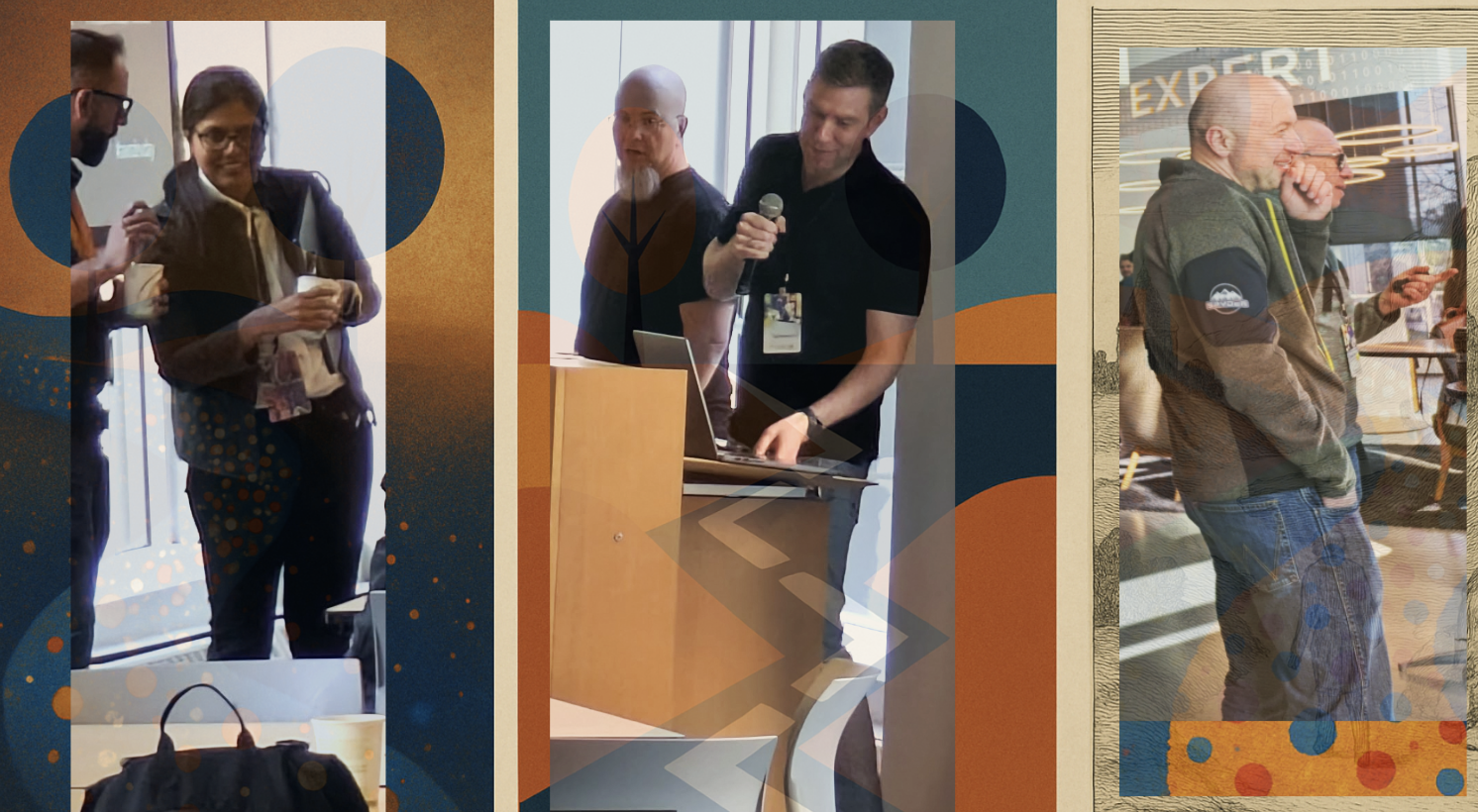
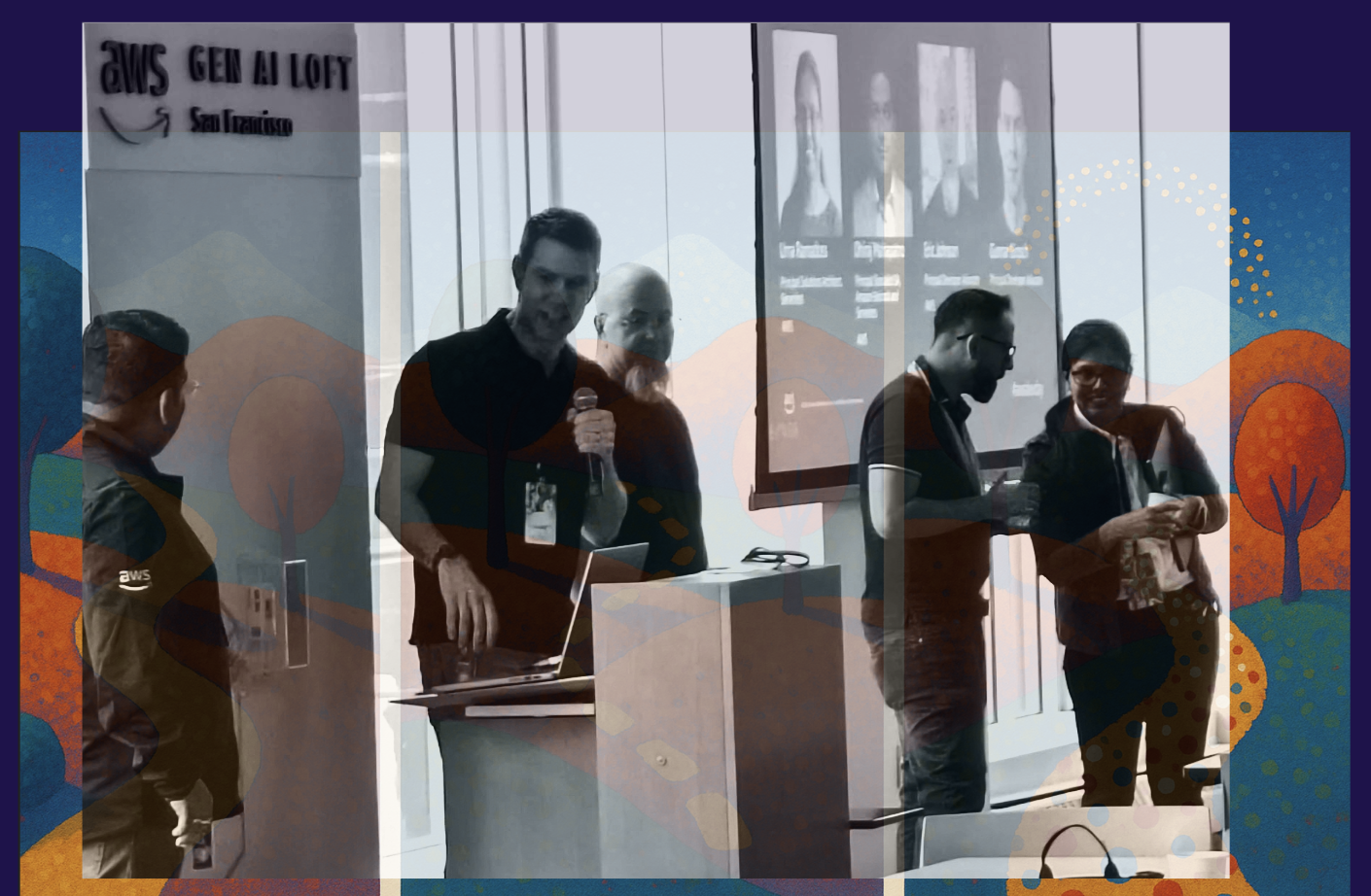
At AWS Dev Day on “Building Generative AI Applications with Serverless” in San Francisco, AWS Principal Developer Advocates and Solutions Architects Eric Johnson, Uma Ramadoss, Gunnar Grosch, and Dhiraj Mahapatro delivered practical insights on implementing production-grade GenAI solutions. The sessions focused on concrete architectural patterns, deployment strategies, and cost optimization approaches that startups and enterprises need to move GenAI projects from proof-of-concept to production. Attendees gained hands-on experience with the AWS serverless ecosystem that’s rapidly becoming the backbone of scalable AI implementation strategies.
The Genesis of Innovation: Where Ideas 🍃 Meet AI 🔭
“It all starts with an idea,” began Johnson, as a disaster response assistant served as the guiding prototype. Imagine an application interfacing with real-time geospatial patterns, response team availability, financial pledges, and terrain logistics. No longer bound to rigid pipelines or manual cross-referencing, such a system flows from prompt to deployment with elegance. Agentic components synthesize documents, trigger APIs, summarize reports, and visualize data from multiple vectors. This isn’t fantasy—it’s feedback loops choreographed in JSON, powered by generative attention. Possibilities arise when imagination is treated not as a risk, but as a resource.
🔍 Reflection
Could latent visions from fields like climate modeling, education, or emergency systems be transformed when modular agents dependably interpret real-world data live?
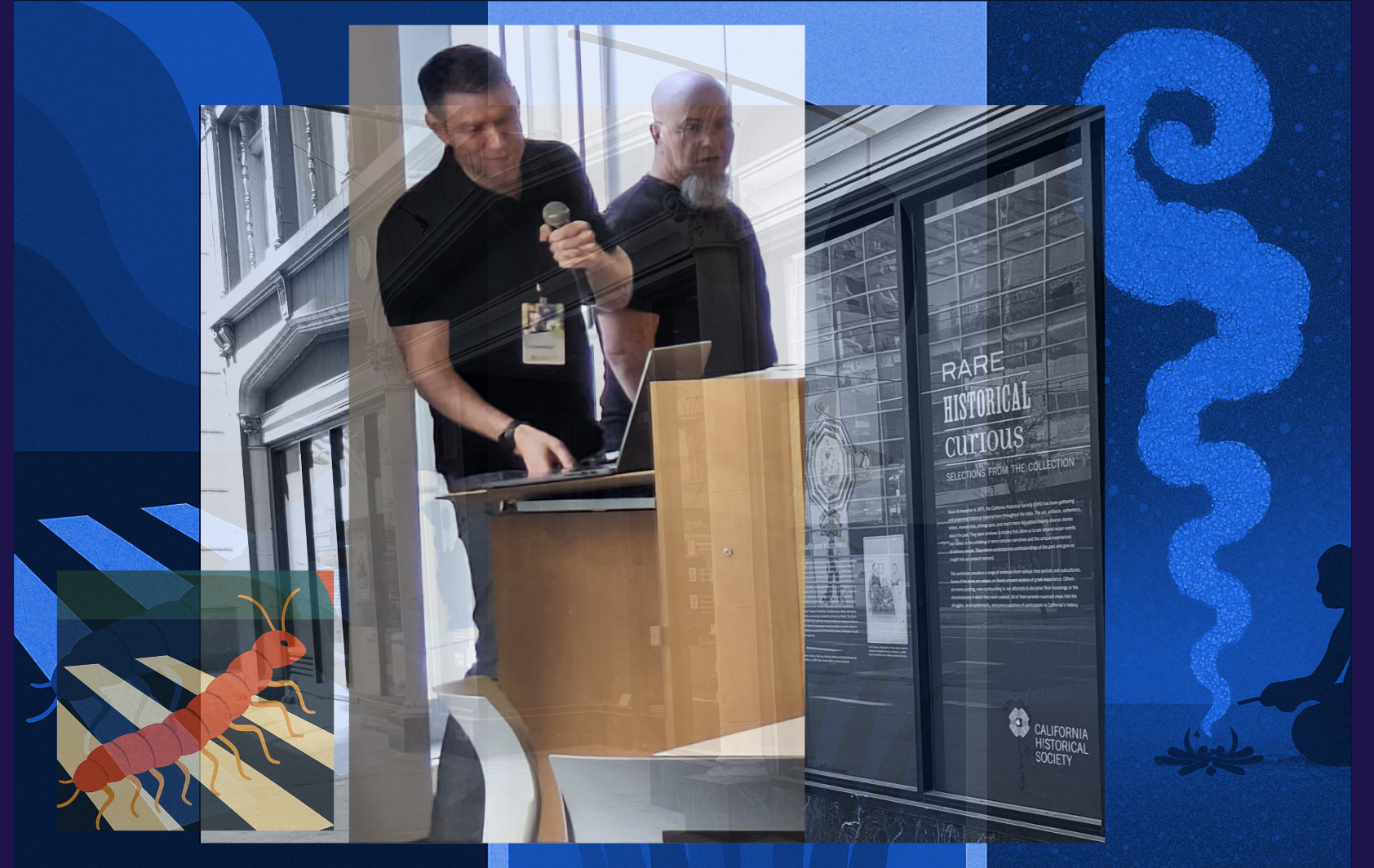
The Architectural Shift: From Serverful 🏰 to 🧰 Serviceful
Classical infrastructure often favored permanence: servers, containers, clusters with names and lifespans. In contrast, serviceful thinking favors flow. It’s not merely serverless—it’s ambient, event-aware, and elastic by nature. Uma Ramadoss described modern agents as “models using tools in a loop,” where each function call or API query acts as a spoke in an ever-turning wheel. With Step Functions, Bedrock, and ephemeral compute like Lambda and Fargate, systems now emerge as ensembles. Logic no longer resides in codebases alone—it lives in orchestration, in timing, in graceful delegation between invisible services.
Reflection🌐
Could a future of transient logic enable systems to prioritize outcomes over uptime, and responsiveness over rigidity?
Core Tech🤺 Behind the Curtain
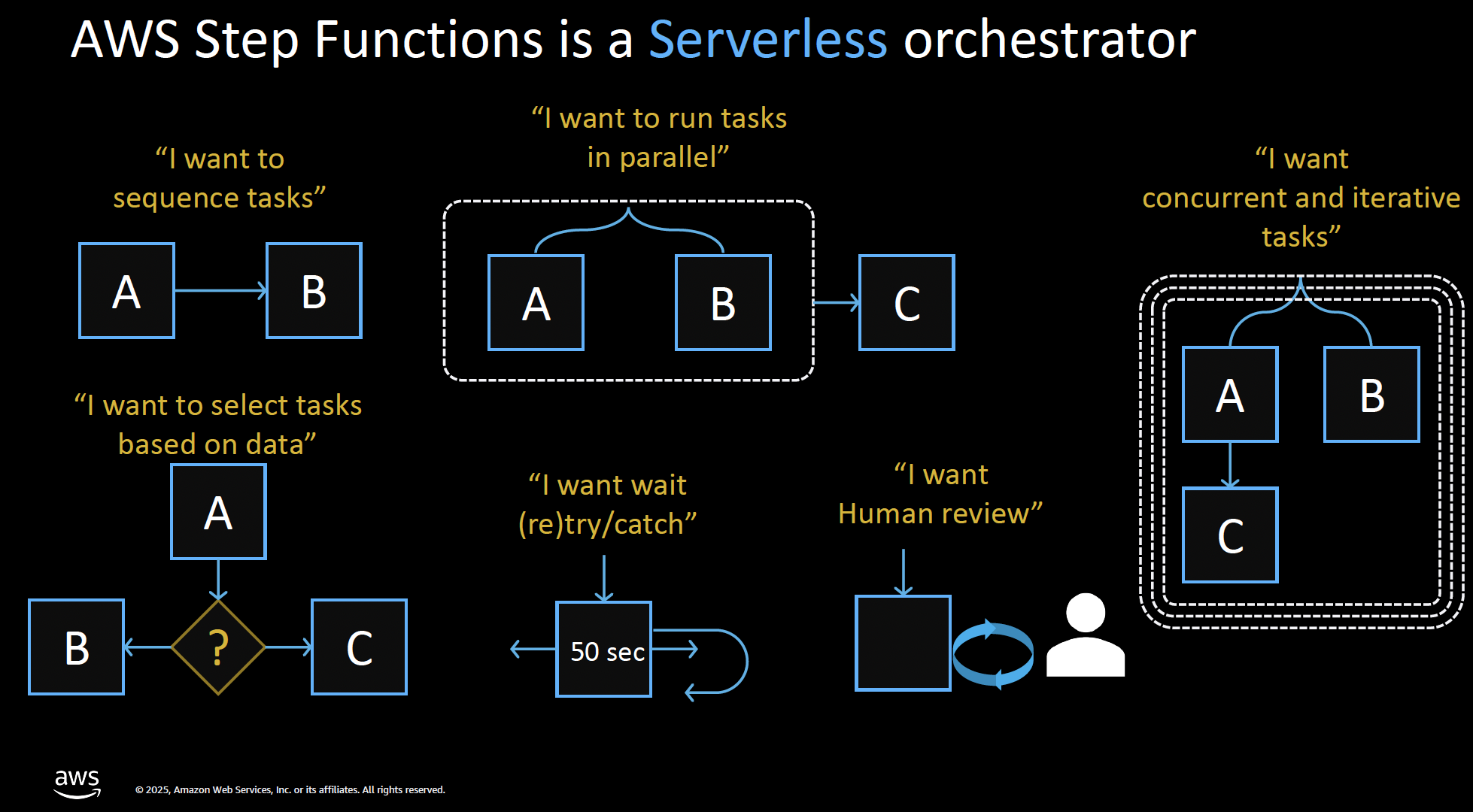
The backbone of this transformation draws from a rich palette of modular capabilities. Amazon Bedrock provides the foundational model hub—housing over 200 offerings from providers including Mistral, Meta, and Cohere. Agents for Bedrock structure decision trees using embedded toolsets, while Step Functions orchestrate these flows in a declarative sequence. Lambda executes business logic with precision; Fargate extends containerized logic without persistent overhead. Knowledge bases span from vector search in Pinecone to event-captured memory in DynamoDB. A new kind of architecture emerges—not fixed, but federated, interoperable, and observably dynamic.
Real-World Hero’s Journey: The Disaster 🗺️ Response Assistant
The workshop prototype didn’t just describe potential—it lived it. A document drop into S3 triggered summary generation through Bedrock; titles and headers were sculpted by prompt refinement; an API interface surfaced dynamic insights. A static frontend updated live from Lambda calls. Q Developer acted as a conversational build partner—accepting natural language and returning working infrastructure. The assistant parsed emergency logistics and historical data, adapting its response flow to match changing input. Each module composed part of a responsive intelligence—not declarative, but conditional, time-aware, and narratively rich.
🧩 Reflection
What might emerge if future-facing systems were constructed more like living organisms—responsive, interconnected, and made of ephemeral thought patterns?
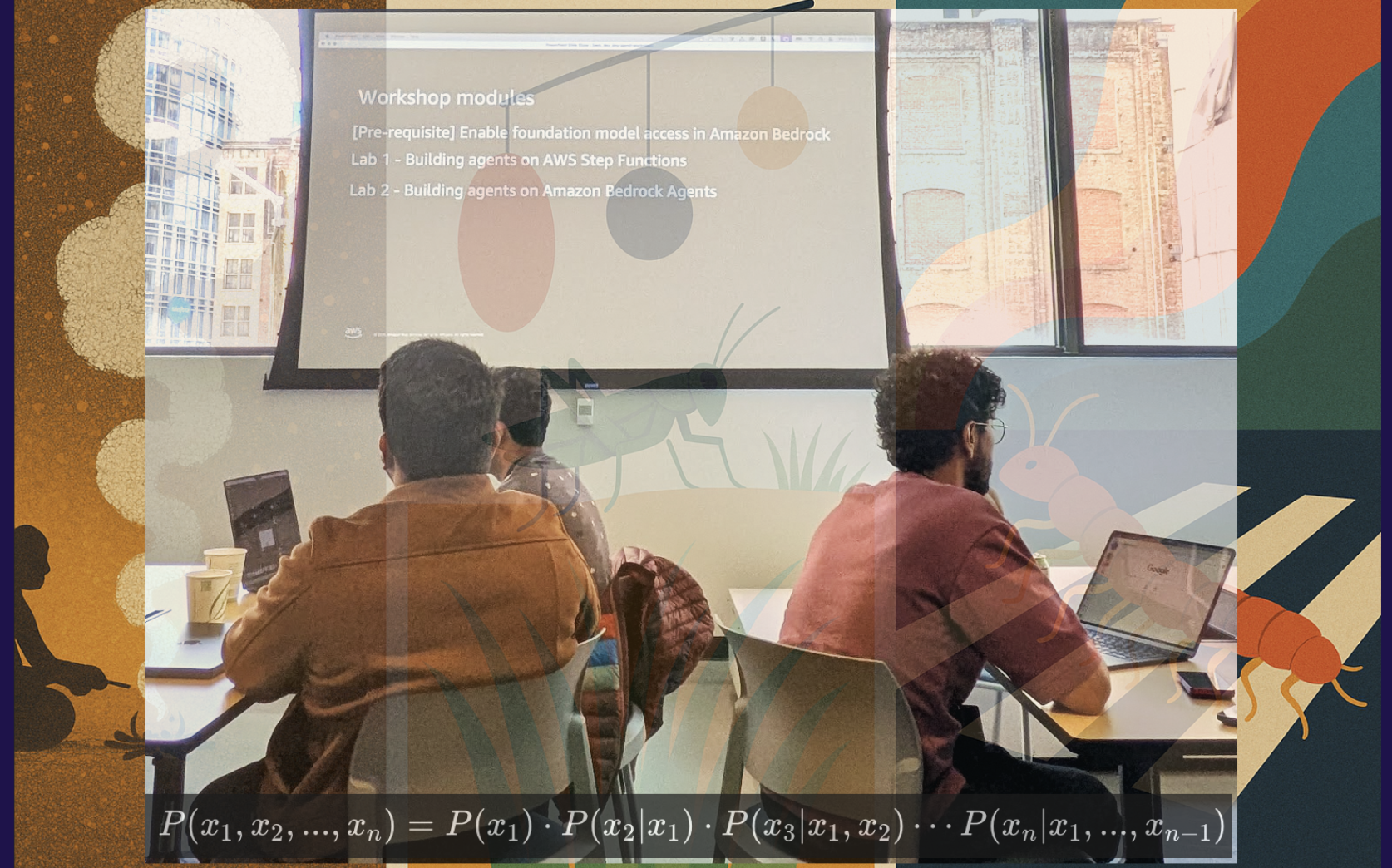
The Business💼 Case for Changing the Equation
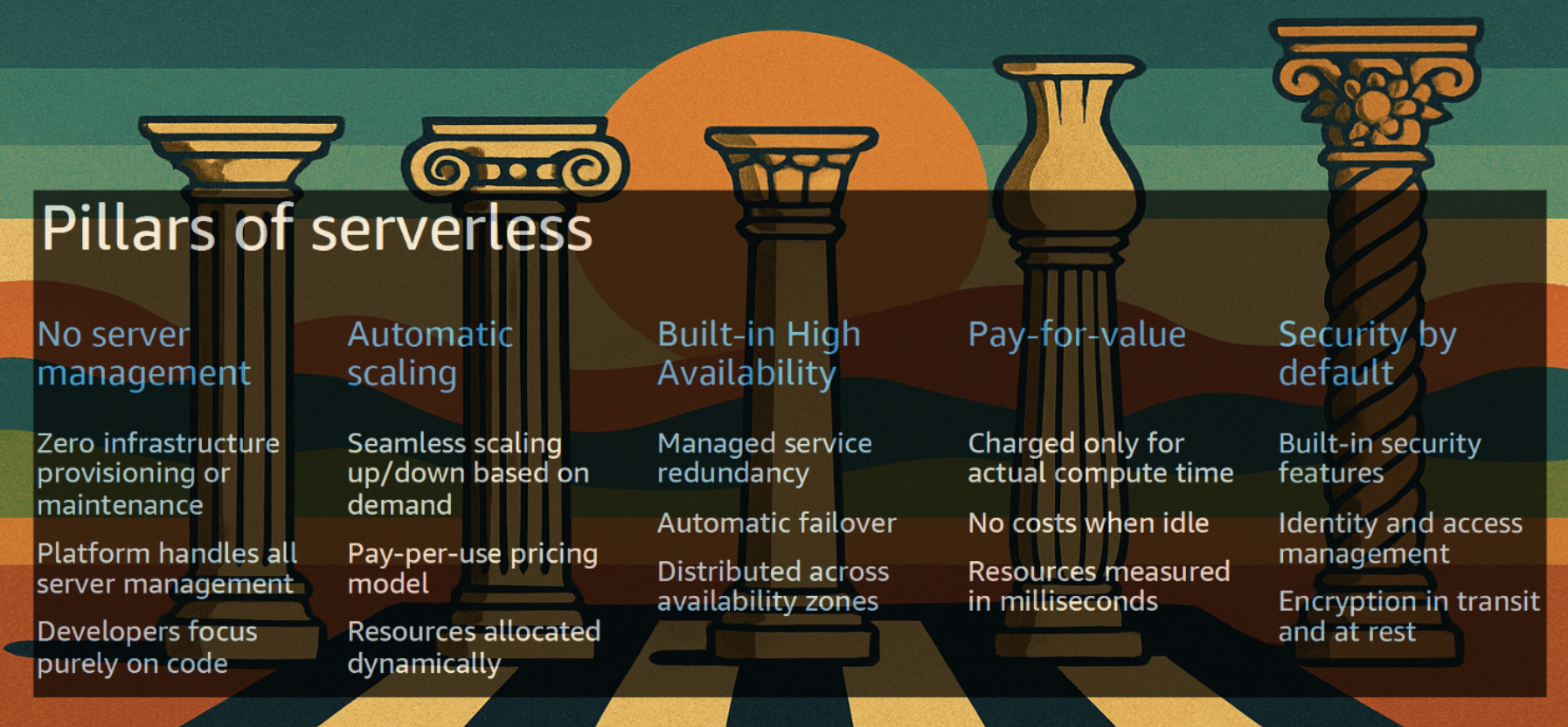
Rather than being driven solely by function or cost, this shift highlights another dimension: liberated attention. Athene Holdings, for example, converted an 80-hour document review pipeline into minutes using agents. But the benefit wasn’t just in time—it was in redirection. When infrastructure becomes reactive, cognition can become creative. Serverless systems bring cost efficiency, yes—but also availability by design, security through IAM, and pay-per-use elasticity. A modeling exercise showed that 1M monthly invocations dropped from ~$690 in a traditional setup to ~$195 in serverless—while gaining control over scale, error handling, and throughput routing.
From Scribe to 🐑 Shepherd: The Future of Developer Work
A quiet inversion is underway in the AWS ecosystem. Developers once authored every line of code with meticulous precision. Now, they’re evolving into AI conductors who prompt systems, evaluate outputs, and refine generative workflows. The artifact isn’t just code anymore—it’s orchestration logic, prompt engineering, policy chains, and step functions that create the “vibe” of the application.
This shift doesn’t diminish developer creativity; it amplifies it. Much like master artists guided brushes 🎨 across canvas, modern AWS technologists choreograph synthetic intelligence—composing services rather than implementing them from scratch. At the Dev Day workshop, participants witnessed how a single prompt in Q Developer could trigger complete application workflows—policy validation, cost modeling, frontend deployment—all generated, verified, and iterated automatically.
Engineering 🪡 the Mind of the Agent
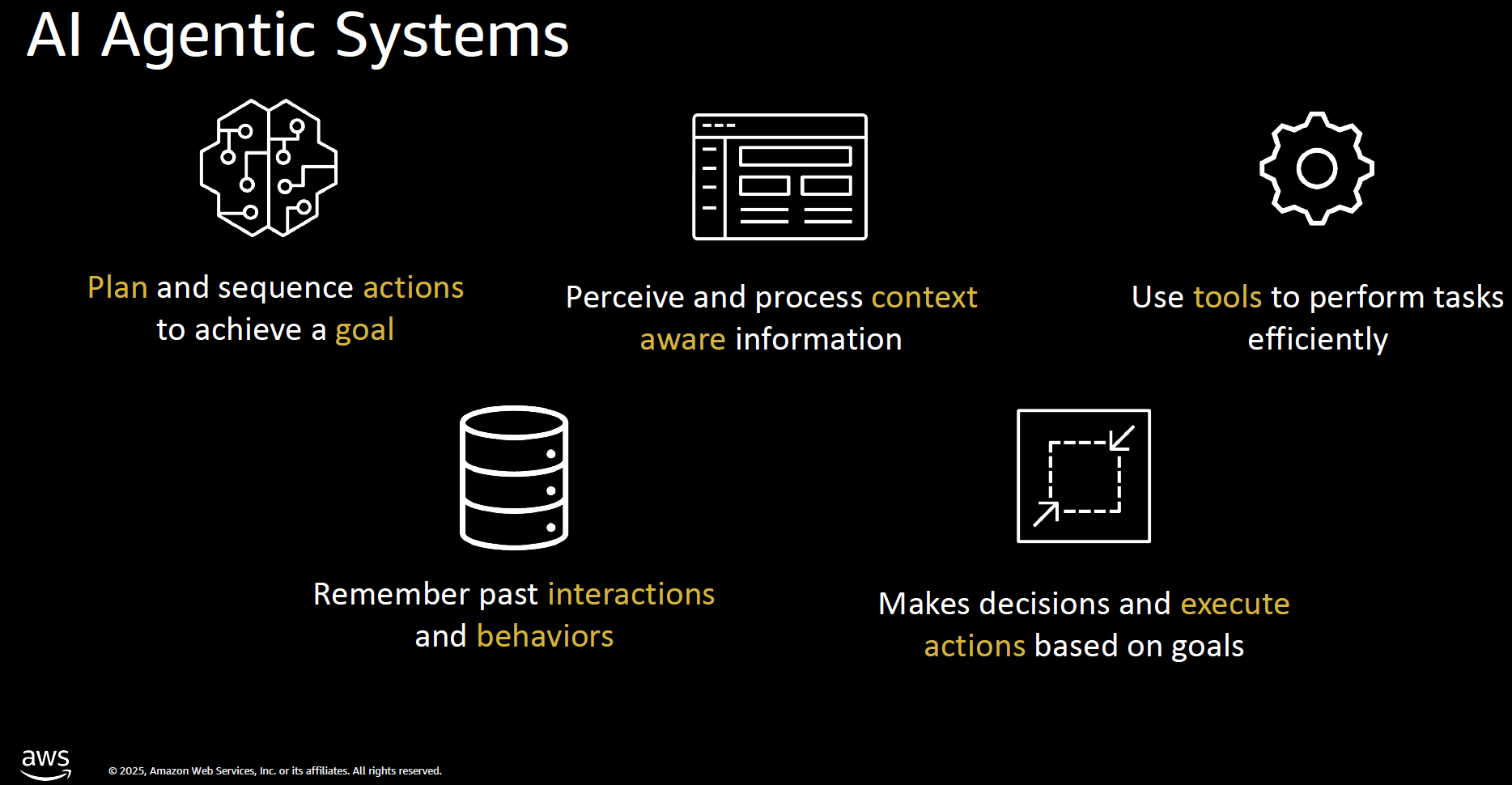
What defines an agent in the AWS serverless landscape? Not just output, but awareness. As Dhiraj Mahapatro demonstrated in the workshop, a well-designed agent tracks conversation context, parses user intent, accesses knowledge bases, and decomposes complex tasks into manageable chains using AWS Step Functions.
Tool use in this framework isn’t random—it’s purposefully selected, logically sequenced, and state-aware through DynamoDB persistence. The most compelling demonstration showed an agent responding to a disaster management query by gathering geographic data, accessing historical records, and coordinating response resources—all without manual intervention between steps.
Function calling, once a backend necessity, has transformed into the agent’s native tongue on AWS Bedrock—structured, traceable through CloudWatch, and anchored in conversational 🦜 goals. This is vibe coding at its finest: creating the conditions and connections where intelligence can flow naturally rather than being explicitly programmed.
Three Roads Toward 🛡️Agentic Architecture
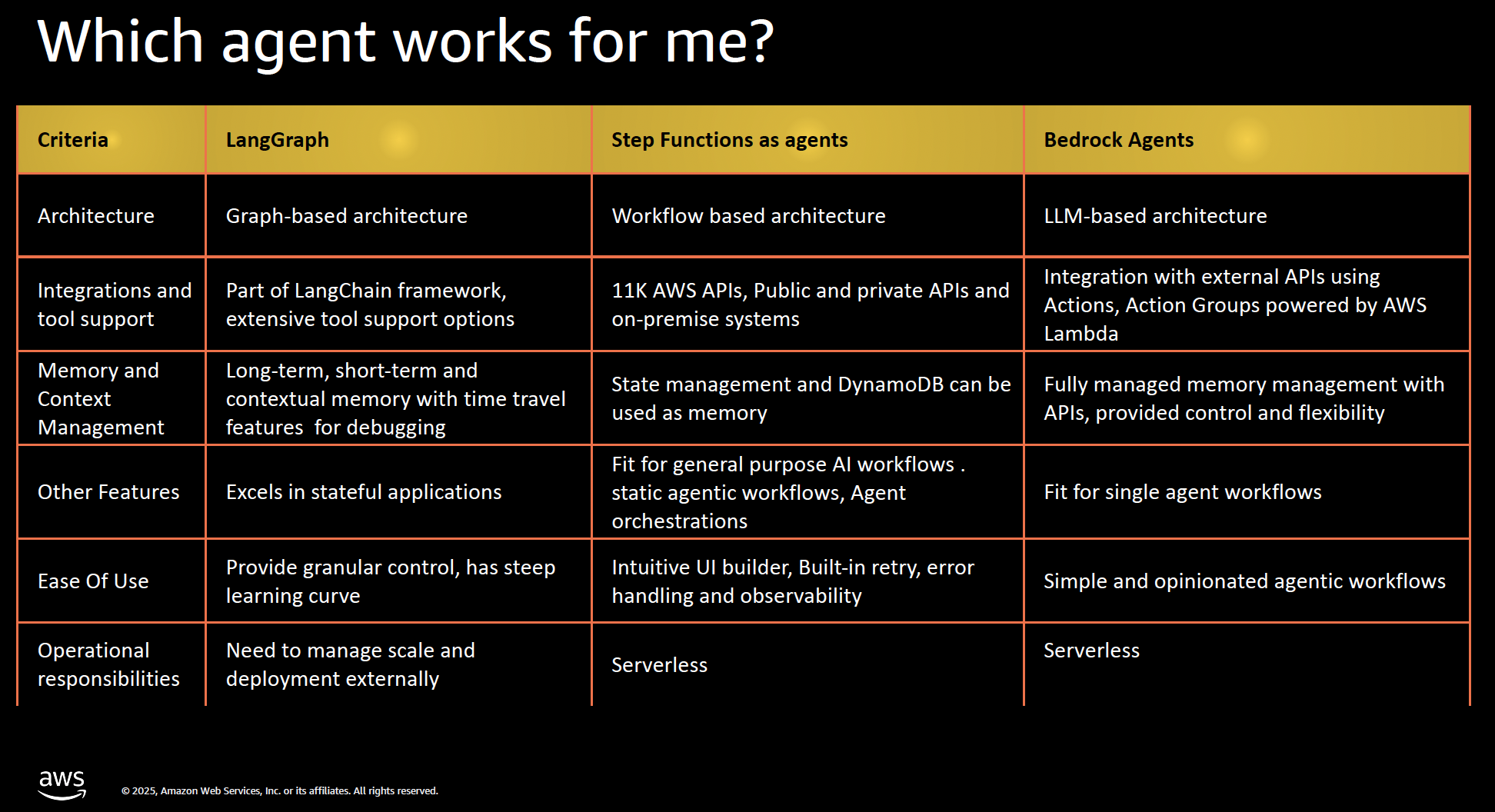
Participants were encouraged to consider different implementation paths:
-
Amazon Bedrock Agents for quick 🏁starts & scalable, managed agents.
-
Open Source Frameworks like LangChain & CrewAI, deployed via container 🥫orchestration for those seeking fine-grained control.
-
Step Functions + Lambda follow a design philosophy more like musical composition—modular, layered, and tuned for both improvisation & 🪗 structure.
No route is final. Some blend them. Some begin with one and evolve toward another. The guiding theme remains orchestration over prescription—enabling architectures to grow in capability as they grow in context.
Prompt Chaining as Design⚙️ Pattern
Prompt chaining emerged as one of the most quietly profound ideas of the workshop. Rather than rely on a singular prompt to drive output, developers created sequences: summarize → classify → generate visualization → write abstract. Each step feeds the next with clarity and intent. Benefits ripple outward: explainability improves, debugging becomes more surgical, and smaller models can be leveraged in tandem for performance gains. The model isn’t overloaded—it’s guided with poetic rhythm, task by task, stanza by stanza.
Workshop Lab Recap:💭 Cloud by Conversation
Participants deployed full-stack systems using natural language, document uploads, and a CLI. The hands-on portion featured document summarization, API creation, site deployment, and versioning—all performed in under 90 minutes. Q Developer generated YAML files, optimized prompts, and scaffolded entire workflows. One developer remarked, “This isn’t just code generation—it’s rapid concept realization.” With each step, layers of traditional development dissolved—revealing a studio where infrastructure answers, not interrupts.
Responsible ⚠️ Intelligence by Default
Every capability demonstrated was framed with an ethical footnote. IAM policies, EventBridge logs, system prompts, and guardrails—none were optional. Bedrock features like prompt routing, hallucination filters, and logging exist to ensure systems act not just quickly, but with traceability. Fine-tuned models stay private by design. Context and history are scoped with intention. These guardrails aren’t fences—they’re frameworks. And in the age of increasingly autonomous orchestration, governance becomes more than compliance—it becomes conversation between architecture and ethics.
Open Reflections for a Shifting 🔁 Terrain
-
Might ephemeral compute and orchestration enable broader participation across design, business, and creative disciplines?
-
Could intelligence systems one day be trained like orchestras 🐚—each service playing a role in a generative composition?
-
What happens when workflows become curatorial, when systems remember🐘, and when prompts are prototypes of action?
-
Could agentic architecture offer blueprints for cross-domain collaboration—where models, memory, and governance meet?
Final Takeaway: 🎼 Compose the Future
The real message of AWS Dev Day wasn’t hidden in the slides or the demos. It pulsed through the architecture diagrams, the step-by-step labs, and the moments when someone whispered, “Wait—did it just build that for me?” This isn’t just a shift in tooling. It’s a shift in how intelligence is expressed in systems. The future might not be built line by line, but composed—intuitively, responsively, and above all, collaboratively.
Based on sessions from Amazon Web Services (AWS) Dev Day San Francisco, featuring Uma Ramadoss, Eric Johnson, Gunnar Grosch, and Dhiraj Mahapatro. Explore resources @ s12d.com/devday-sfo.
https://bsky.app/profile/schwentker.bsky.social/post/3ln6svyi7hc2r