
📸🌄
🌍🌠Main source: The AI Forecast podcast “The Path to Safe AI – Education” - Host Paul Muller explores with Peter Norvig how education forms the cornerstone of both AI innovation and safety, unpacking concepts like “AI literacy” and the necessity of continuous learning.
Beyond the 24-Hour Promise: Norvig’s Decade of Learning
In the rapidly evolving landscape of artificial intelligence, few voices carry the weight of experience & practical wisdom like Peter Norvig’s. As a distinguished education fellow at Stanford University and author of seminal texts including “Artificial Intelligence: A Modern Approach,” Norvig has watched the field transform from an academic curiosity to what he describes as “possibly the most important technology of all time.”
Yet amid the frenetic pace of AI advancement, Norvig remains grounded in a philosophy of patient mastery. His famous essay “Teach Yourself Programming in 10 Years” stands as a deliberate counterpoint to the quick-fix learning culture that promises expertise in mere hours.

“Anything that says, ‘I’m going to teach you how to do this in 24 hours’ is not going to give you any understanding,” Norvig explains. “It’s the deep understanding that really matters.”
This perspective feels particularly relevant today, when everyone from executives to educators rushes to master generative AI. Norvig draws on Anders Ericsson’s research showing that many skills require approximately 10 years to develop properly. “I think you shouldn’t take that exact number too seriously,” he clarifies, “some skills are easier than others, but it takes a long time to understand all this, and it takes deliberate practice of going through problems and working it out.”

Q&A: The Education Paradox
Q: How would you characterize the state of AI education today compared to when you first entered the field?
“When I was a student, you could keep up with everything that was happening,” Norvig recalls. “I remember going to the library at my university and the call letters that I was most interested in…there’s a shelf box that’s about three feet long. You can read all those books and that’s all the books. There’s nothing else available.”
Today’s landscape couldn’t be more different: “Now, it’s every week. There’s a dozen new papers of exciting breakthroughs, and so you can’t keep up with everything.”
This velocity of innovation has rendered traditional educational approaches obsolete. “We tried to say we’re building what we think is this shared knowledge… Here’s our field, how it’s evolved, here’s what everybody should know. I feel like that can’t really be done anymore, because one, there’s just too much of it. It goes in too many different directions, and two, it changes so quickly.”
What Norvig envisions instead is a more dynamic approach to knowledge acquisition: “We need something that’s more interactive, more focused on what you’re interested in, more continuous learning, rather than saying you’ll learn this specifically, and then you’re done.”
The Hidden Engine: Data Over Models
While much of the public discourse around AI focuses on algorithms and model capabilities, Norvig emphasizes a less glamorous but crucial aspect: data quality and management.
“I think the biggest thing is to understand the whole pipeline is important,” he says. “There’s a famous paper that says everybody wants to do the model work, come up with the fancy algorithm, the fancy new model, and nobody wants to do the data work – figure out what data is necessary, how to clean it, how to get a nice pipeline to update it and update it, how to make sure it really represents what you wanted to represent, and that’s not being gamed or a little bit of misinformation, and so on.”
This reflects a fundamental shift in the field that Norvig has witnessed throughout his career: “We’re moving from logic to probability… from saying algorithms are the most important things to saying, well, maybe data is just as important, or maybe more important.”

The Architect’s Perspective: Building with Purpose
For Norvig, the distinction between AI and traditional software isn’t primarily about technical implementation but about the nature of the problems being addressed.
“What is AI? We said AI means making better decisions to accomplish your goals, but of course, what other fields have that as a goal, too, right? So, economics, it’s the same idea, maximizing effective utility.”
The key difference, he explains, lies in the kinds of challenges each tackles: “In regular software, the main enemy is complexity… If I get it right, there is a correct answer down to the penny, and I can see if it’s right or wrong, whereas in AI, we’re also grappling with complexity, but the main enemy is uncertainty.”
This uncertainty creates a fundamentally different relationship with outputs. In software, if there’s an error, “it would be front page news in the industry journals because we’ve come to trust so much in the result.” But AI systems necessarily operate within probabilistic frameworks, requiring us to develop new frameworks for trust and verification.

The Trust Problem: Navigating Uncertainty
The transition to increasingly capable, yet probabilistic AI systems presents significant challenges for society. As Norvig notes, humans have long used technology as a shield for responsibility: “When they say it’s because the computer can’t handle it, we just say, ‘Oh, okay. I guess that’s it. I can’t fight against the computer.’”
This pattern becomes particularly concerning with systems that seem increasingly human-like in their capabilities.
Addressing these challenges requires multi-faceted approaches beyond regulatory frameworks alone. “I think the trustworthiness and safety is a really important issue. And I think regulation plays a role, but we shouldn’t rely on regulation to be the only tool,” Norvig argues.
He points to several parallel mechanisms:
-
Self-regulation by companies developing AI systems
-
Third-party certification bodies (similar to Underwriters Laboratories for electrical safety a century ago)
-
Professional standards and certification for practitioners

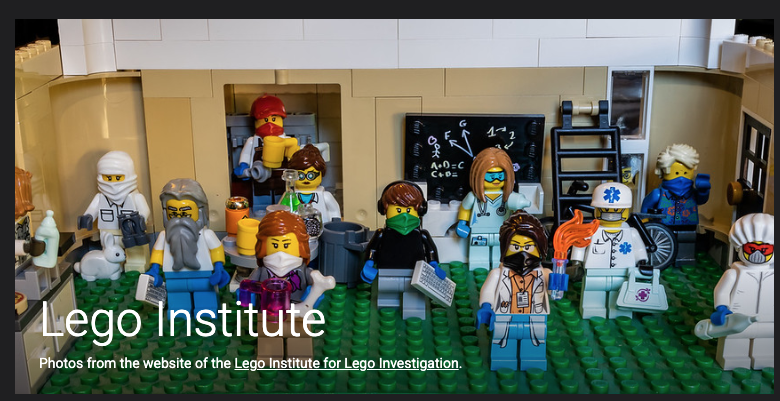
The LEGO Institute: Playful Innovation as Methodology
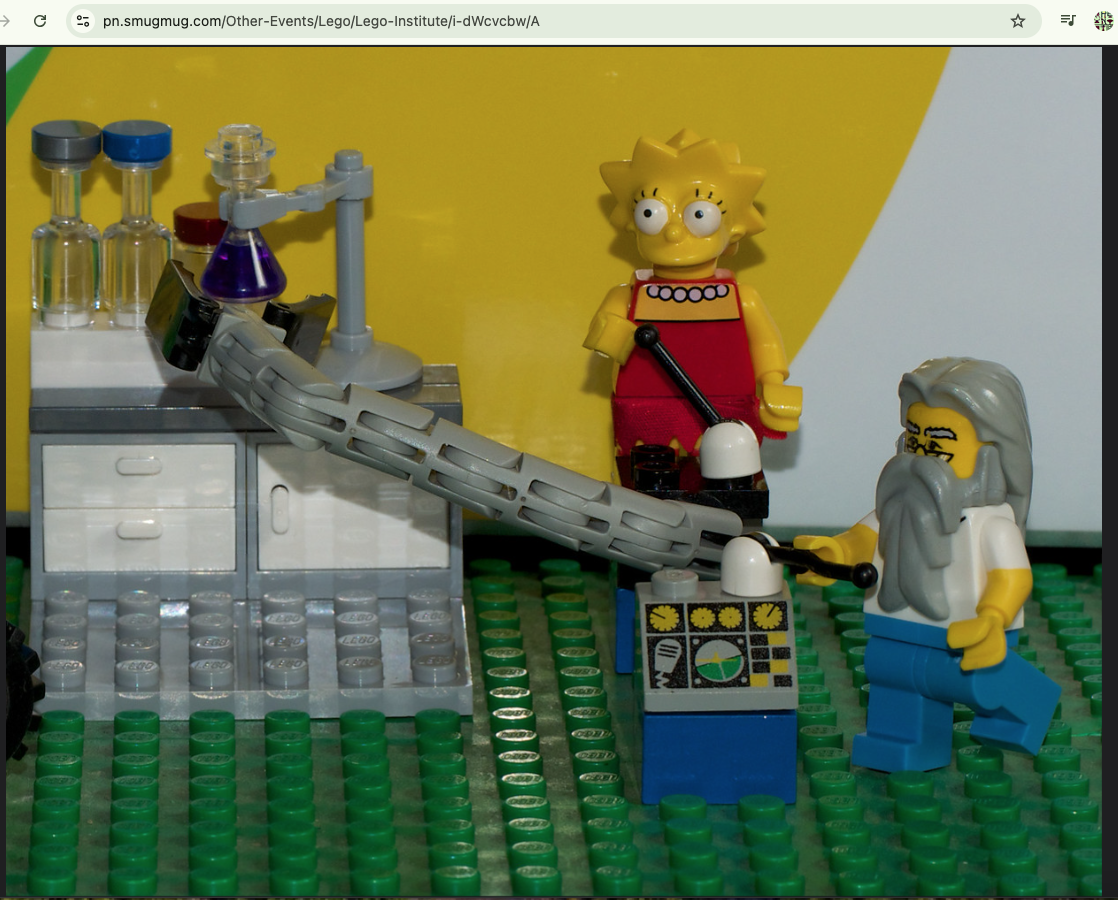
Despite the weighty implications of his work, Norvig maintains a sense of playfulness and creativity that manifests in unexpected ways – including his whimsical “LEGO Institute.”
“My father’s Danish, so I’m part Danish, and enjoyed [LEGO] and, likewise, my kids enjoyed them. And then we kind of play with them every now and then,” he explains. The institute began when his daughter gifted him a LEGO set featuring three famous female scientists.
“I said, ‘Oh, okay. Now I have a research lab.’ So if I have a research lab, I should have a website for it.”
The LEGO Institute perfectly encapsulates Norvig’s approach to innovation: structured but playful, methodical yet open to unexpected connections. It reminds us that even the most technical fields benefit from creative thinking and a willingness to approach problems from unconventional angles.
Beyond Power Consumption: The Future Benefits Equation
Addressing concerns about AI’s energy and resource requirements, Norvig offers a nuanced historical perspective.
“I think these energy needs and this carbon footprint have been exaggerated. I’m pretty confident that we’ll see AI as being a net positive because of the things that we will invent through it will end up with a net savings.”
He draws parallels to the early days of computing: “Go back to 1945. ENIAC computer fills a whole room. Let’s say I time travel there, and I say, ‘You know, in my time, everyone on the planet is going to have a computer.’ They say, ‘Well, let me figure out the electricity budget for that. No, that’s impossible. We couldn’t possibly do that.’ And yet, we did, right? Because we figured out how to make the computers more efficient.”
This optimism extends to AI’s potential contributions: “We’re probably seeing like these protein folding-type results, AI advancing science, and I think some of the science will be in energy conservation.”
The Educator’s Vision: Reimagining Learning
Perhaps the most exciting applications Norvig sees on the horizon relate to his role as an educator. He envisions AI systems that can revolutionize personalized learning by simulating student-teacher interactions.
“I’m really interested in…can we apply [AI simulation] to the teacher-student relationship? For teachers, well, if you did this move, how would the student respond?”
These capabilities could accelerate educational research dramatically: “The question is, how can we get the student to be interested and successful in this field two years from now? It takes us two years to gather that data in real simulation. Maybe we could get that data and data rather than two years, and that would be a huge advantage.”
The Norvig Principles: A Framework for AI Leadership
Drawing from Norvig’s insights across his career, we can distill several key principles for organizational and educational leaders navigating the AI landscape:
-
Prioritize the entire data pipeline, not just modeling techniques Focus equal attention on data quality, cleaning, and maintenance as on algorithm development.
-
Embrace uncertainty while building safeguards Acknowledge that AI systems operate within probabilistic frameworks and design appropriate guardrails.
-
Invest in deep understanding over quick fixes Recognize that meaningful mastery requires sustained engagement and deliberate practice.
-
Balance technical education with ethical considerations Integrate discussions of safety, trustworthiness, and social impact alongside technical instruction.
-
Maintain playfulness and creativity Like Norvig’s LEGO Institute, remember that innovation often emerges from unexpected combinations and perspectives.

Education for an AI-Native Future
Looking ahead, Norvig sees a fundamental shift in how we approach education in the age of AI. “Every computer science student and in many ways, everyone who lives in the modern world should be educated on how to use AI and how it needs to be updated with something that’s more interactive and more personalized.”
This vision rejects the traditional credential-based approach where “you go to college for four years, and they give you a piece of paper that says you never have to learn anything again the rest of your life, you’re certified.”
Instead, Norvig advocates for “a model that’s where continuing education for your individual changing evolving needs and for the evolving knowledge that’s coming out every week” becomes the norm.

Conclusion: The Architect’s Perspective
What makes Peter Norvig’s perspective on AI particularly valuable is his simultaneous engagement with both technical implementation and broader societal implications. Like a master architect who understands both structural engineering and human habitation needs, i may ponder if he sees AI not merely as a tech challenge but as system that must be continuously designed for human flourishing.
As he puts it, the true challenge isn’t developing more powerful systems, but ensuring they serve human needs: “What’s important is you learn this process of how do I find a problem? How do I go about what’s important? How do I go towards the solution? How do I recover from errors?”
In a field often dominated by discussions of capability benchmarks & tech achievements, Norvig reminds us that the ultimate measure of AI’s success isn’t what it can do, but how it shapes the human experience. His LEGO Institute may be whimsical, but it embodies a profound truth: that our most powerful technologies should ultimately be tools for creativity, learning & joy.
📸🌄
🌍🌠