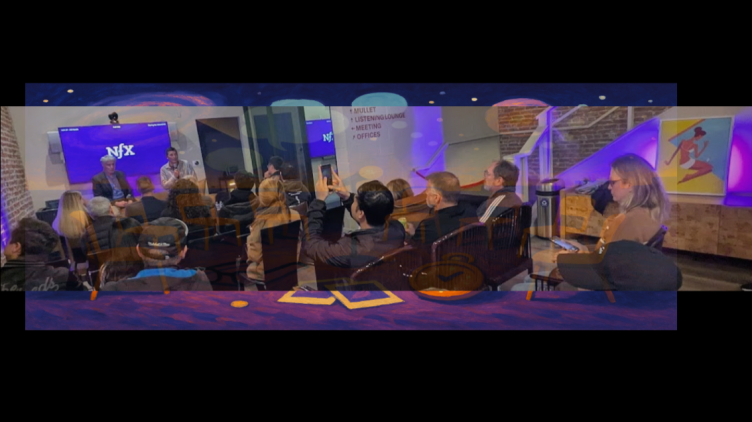
A conversation between NFX’s James Currier and Gary Rivlin, author of “AI VALLEY”
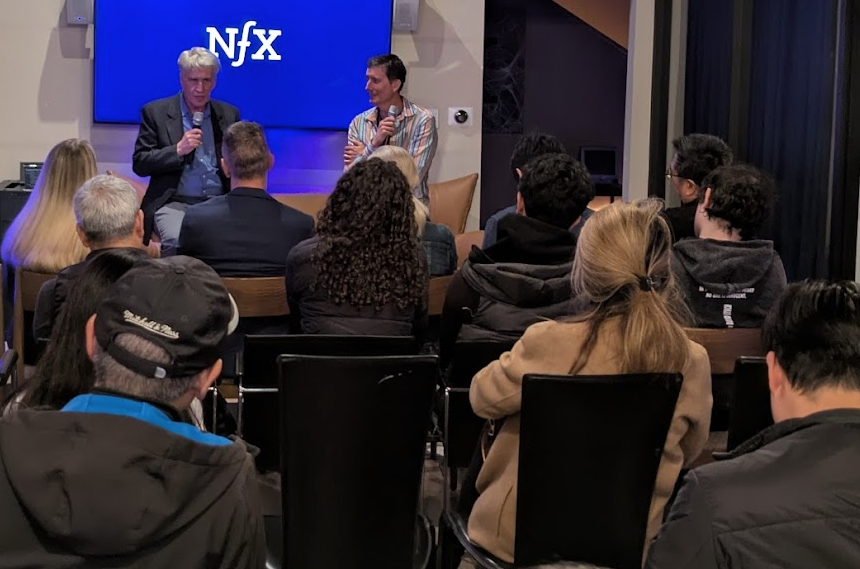
In a packed venue at NFX’s San Francisco headquarters, two industry veterans took the stage to discuss what might be the most 🧠 transformative technology of our lifetimes. James Currier of NFX, himself a fixture in Silicon Valley for over 25 years, sat down with Gary Rivlin, author of the newly released “AI VALLEY”, to unpack the current AI boom⚡, its key players, and what it means for our future.
The evening’s discussion wasn’t merely about artificial intelligence as a technology—it was about power⚔️, competition, fear, optimism, and the delicate balance between innovation✨ and responsibility. As Rivlin put it plainly during the conversation, “AI is here. We should be having this dialogue.” And indeed, the dialogue is well overdue.
From Hype to Reality: AI’s Long Journey
“AI has been hyped for a long time, and it took us a while to get here,” Currier noted at the beginning of the conversation. This sentiment captures the decades-long pursuit of artificial intelligence that dates back to the 1950s with figures like Alan Turing.
Rivlin’s historical perspective provides crucial context: “AI dates back at least to the 1950s, the famous Alan Turing… he was writing about it in the late 40s.” What’s fascinating is how long the optimism🌞 has persisted despite repeated setbacks. “AI has been just around the corner for about 70 years,” Rivlin observed with a hint of irony.
This cycle of hype and disappointment has created what AI researchers call “AI winters❄️”—periods when funding and interest dried up after promises failed to materialize. The current AI boom🔥 feels different, primarily because the underlying technology finally caught up with the vision.
“It really wasn’t until the middle of the 2010s that machine learning⚙️ became accepted wisdom that this is going to get us there,” Rivlin explained. Previous approaches focused on “rule-based” systems—teaching computers line by line how to solve problems. Machine learning, with its ability to find patterns in data📊 without explicit programming, changed everything.
But even if researchers had embraced machine learning earlier, Rivlin questions whether it would have mattered: “Machine learning requires a lot of computer power⚡… and digital data. Well, there wasn’t enough digital data then to train it.”
The Players: Silicon Valley’s AI Chess Match
The story of AI’s development isn’t just about technology—it’s about the people and companies competing for dominance👑. Rivlin’s book tells this story through key figures like Reid Hoffman, whose email announcement about co-founding his first company since LinkedIn provided the initial spark for Rivlin’s reporting.
“As a journalist, I always try to tell my story through characters,” Rivlin explained. “Following someone’s journey is just a more entertaining🎭 way of doing it, as a story, as a narrative.”
Hoffman proved to be the perfect character to follow. “In 2015, he was one of the original investors in OpenAI. In 2017, he was investing heavily in autonomous vehicles… He sits on the Microsoft board… And then in 2022, he co-founded Inflection.”
This approach allowed Rivlin to cover multiple angles of the AI revolution through one central figure who had connections to many of the key developments.
The discussion revealed a fascinating competitive landscape⚔️ among tech giants:
Google: The Pioneer That Stumbled
Perhaps the most surprising aspect of the current AI landscape is Google’s position. Despite pioneering much of the technology🧪 that powers today’s AI systems, Google has repeatedly stumbled in bringing products to market.
“Google had a huge head start,” Rivlin explained. “They bought DeepMind… they were aggressively hiring people doing some of the foundational work, the famous Transformer paper in 2017.” This paper laid the groundwork for models like ChatGPT.
“At least two years before ChatGPT was released, they had it,” Rivlin noted, highlighting how Google developed similar technology but hesitated to release it. When they were finally forced to respond to OpenAI, “every time they step on stage, they fall flat on their face.”
Specific examples included Google’s Bard chatbot (later renamed Gemini) recommending adding “a little bit of gasoline” to spaghetti sauce and suggesting putting glue on pizzas to keep cheese from falling off.
The reason for Google’s cautious approach? Rivlin points to the infamous Tay incident. In 2016, Microsoft released a Twitter bot that was quickly manipulated to spout offensive content, forcing its removal within 24 hours. “I feel like that has hung over Silicon Valley… Every PR person, every marketing person at these big companies remembers Tay👻.”
With over $150 billion in annual revenue, Google faces enormous reputational risk from any AI misstep.
Microsoft: The Unexpected Comeback
While Google faltered, Microsoft has emerged as an AI leader—a surprising development given its history. “In the late 1990s, I came out with a book called ‘The Plot to Get Bill Gates.’ When the book came out in 1999, they were the boogeyman.”
Microsoft then entered a prolonged period of stagnation🛑. “From the 2000s to 2014, Microsoft was the new IBM… a big fat company that makes a lot of money but is no longer as relevant.”
The turnaround began in 2014 with Satya Nadella becoming CEO. “Nadella would be a superstar. He’s arguably the best CEO of any public company out there,” Rivlin asserted. Under Nadella’s leadership, “Microsoft went 10x in value” between 2014 and 2024.
Microsoft’s AI strategy has been brilliant, especially regarding OpenAI. Rather than attempting to acquire the company outright, Microsoft invested strategically: $1 billion in 2019, followed by another $10 billion. This partnership🤝 has positioned Microsoft as an AI leader despite its late start.
Meta (Facebook): The Open Source Gambit
Meta took a different approach entirely. Despite having substantial AI research capabilities, they chose not to compete directly with proprietary chatbots like ChatGPT or Claude.
“Let’s give Meta credit,” Rivlin said. “They could have been the fifth or tenth chatbot out there, but I thought it was brilliant for them to go open source💡.” By releasing their models freely, Meta is trying to “create the platform” rather than just another product.
Mark Zuckerberg’s strategy stems from his experience being dependent on Apple’s App Store and Google’s Android platform. “He hated that he had to go through Tim Cook at Apple or through the Android store for his product. I want to own the platform,” Rivlin explained, quoting Zuckerberg’s perspective.
Amazon: The Cloud Giant
Amazon represents yet another approach. Despite being “way ahead of everyone” with Alexa, they seemed to fall behind in the large language model race. However, their position as “the number one cloud host☁️ on the planet” means they still profit significantly from AI development.
“Even though they’re a huge giant, they’re still winning,” Rivlin noted.
A Day in the Life: How AI Development Actually Works
Beyond the business competition, the conversation offered glimpses into the day-to-day reality of developing cutting-edge AI🔬. Contrary to popular imagination, it’s not all about lone geniuses having eureka moments.
The development of these models requires massive computational resources⚙️ and data. “Microsoft’s made a ton of money hosting the various models—OpenAI, etc. Ditto Google and Amazon,” Rivlin explained.
The scale is staggering. “Microsoft has leased the Three Mile Island nuclear reactor because they need the energy⚡ to run their data centers,” Rivlin noted. Other companies are pursuing “their own little private nuclear reactors” to power AI infrastructure.
The actual creation process is far more iterative and collaborative than many realize. When discussing creative applications like text-to-video platforms, Rivlin emphasized: “That’s not the way it works. Humans have to come in. Here’s the premise, here are the characters, here’s the offense that will cause the drama. And it’s probably months and months of iterating.”
This reality counters the narrative that AI will simply replace human creativity overnight. Instead, “humans who use AI are getting more efficient⚡.”
The Cultural Impact: Fear vs. Optimism
One of the most striking contrasts between the current AI boom and the early internet era is public perception. “Another similarity is sometimes over-optimism. The internet was gonna make the world smaller, we’re all going to get along better… World peace,” Rivlin recalled.
However, unlike the generally positive reception of the internet, “2022–2023 was bad timing for AI. Mistrust😒 for Big Tech was at a high.”
“By the end of 2024, research organizations in DC found that the majority of Americans fear AI.” Rivlin noted. “This is palpable. There’s excitement in this part of the country, in this town, but anyway…”
This fear represents a strategic challenge for AI companies. “Read the room, folks. There’s a lot of hostility in the general population toward these things, and you’re saying ‘full speed ahead’… eventually you need these people to pay for the product.”
📰 The Media’s Role: Getting It Wrong Again?
The conversation turned critical when discussing media coverage of AI. “How would you rate people’s coverage of AI so far? How’s the media doing?” Currier asked.
Rivlin, himself a veteran journalist, didn’t mince words: “I think the media has done a really lousy job📰 covering AI.” He noted a pendulum swing from excessive tech optimism in the ’90s and 2000s to today’s overly negative coverage.
“There might have even been two or three days where they talked about how amazing this stuff was,” Rivlin joked. “Right away, I was reading… every day in the New York Times, every day in the Washington Post, every day online, you’d see negative stories📰: it’s gonna ruin the college essay, it’s gonna ruin K-12 because it’s just gonna be a tool for cheating.”
This negative framing misses the nuance that characterizes any technological revolution. “Every technology ever has pros and cons… good things come from technology, bad things come from technology,” Rivlin observed. “The TV. Or the knife: it can be used to feed ourselves or to kill someone.”
Regulation: Finding the Middle Path
The question of AI regulation emerged as a central theme of the conversation. While some in Silicon Valley advocate for complete freedom from government oversight (what Rivlin called the “accelerationist” view), others warn of existential risks requiring strict controls.
Rivlin positions himself with what he calls “the Bloomers"—those who lean optimistic but recognize the need for safeguards. He contrasted this with both “Doomers” (pessimists) and “Zoomers” (Reid Hoffman’s term for accelerationists who believe “governments should do nothing to slow us down”).
“I feel like it’s a bad strategy,” Rivlin said of the hands-off approach. “These tools are asking people to trust them. They’re going to be our personal agents, which means they’re going to get to know us, which means they’re going to know our personal information. If we don’t trust it, people aren’t going to use it.”
He drew a historical parallel to the regulation of railroads in the 19th century: “Railroads were really dangerous… The government stepped in, created rules, and people embraced it.” Rivlin sees a similar path forward for AI: “Let’s embrace it. It’s amazing… but I really think we need to bring the public along, and that requires modest regulations, modest rules.”
The Biden administration had begun implementing what Rivlin characterized as “pretty gentle policies,” including requirements that companies developing cutting-edge AI models allow external testing for vulnerabilities and share results with the government. However, these initiatives were quickly rolled back under the Trump administration, with AI oversight now led by figures like David Sacks who favor minimal regulation.
Looking Ahead: What Will AI Transform?
Despite the challenges and uncertainties, both Currier and Rivlin expressed genuine optimism🌞 about AI’s potential to transform various aspects of life and work.
Currier offered four specific areas where he anticipates positive AI impact:
-
Healthcare administration♀️: “AI is going to reduce the chaos of the medical system—the bills, who I need to talk to, all that stuff.”
-
Personalized coaching: “I’m looking forward to having a programming coach, a fitness coach, an AI coach, all with different voices, different attitudes, different knowledge bases.”
-
Education: “I just want to be able to learn anything, and I want my kids to be able to learn anything… We’ve had this dream since the early ’90s of having edutainment. It’s actually going to come to fruition.”
-
Digital intermediation: “Our experience on our phones and on our computers is really crap. I feel like you’re always being scammed… AI can be placed in between us and all these grasping hands.”
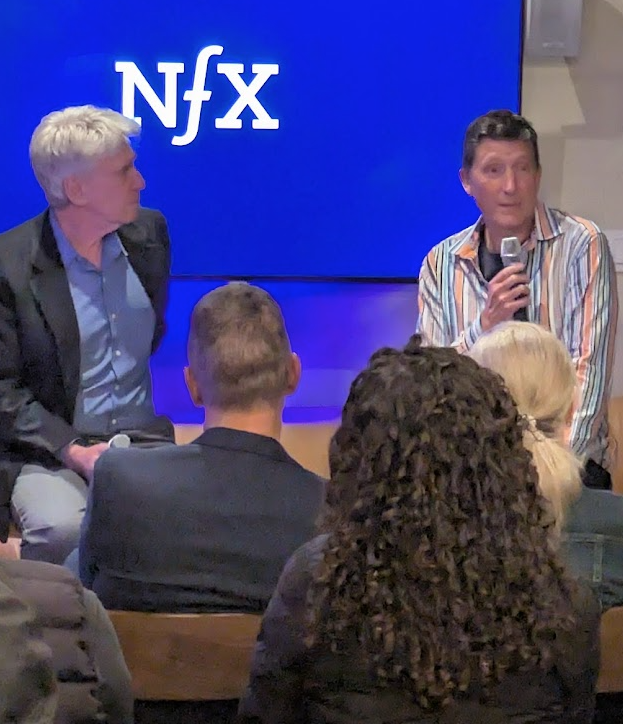
Rivlin agreed about AI’s transformative potential while emphasizing it should be viewed as an enhancing tool, not a replacement for human capability: “These models know everything and understand nothing. They don’t have common sense… My fear is that if we put these things in charge of essential systems, they don’t quite understand.”
He likened the current moment to the early days of automobiles: “OpenAI all meant was, let’s put these things out there when they’re not as strong so we all could get used to it—policymakers, organizations, institutions… The airplane, the automobile used to be kind of a buggy, and eventually we put down rules and created things like airbags and anti-lock brakes.”
The Startup Landscape: David vs. Goliath
One of the most surprising revelations from Rivlin’s research concerned the startup ecosystem around AI. Initially, he had planned to follow three AI startups for his book: Inflection (Reid Hoffman and Mustafa Suleyman’s company), Runway (text-to-video company founded by artists), and a third “underdog” company.
“When I started this book, I thought I’m gonna follow three startups… I thought this was going to be the Silicon Valley startup story, that it was going to be the dorm room garage startup,” Rivlin explained. Instead, he discovered that “this stuff is so expensive, it really is to the advantage of the incumbents🏢.”
This realization shifted his perspective dramatically: “I was looking for who’s going to be the next Google, who’s going to be the next Facebook. I fear the next Google is going to be Google, the next Facebook is Meta or Facebook.”
The cost structure of developing competitive AI models creates enormous barriers to entry🚧. OpenAI, despite generating $3.5 billion in revenue in 2023, still lost $5 billion due to the massive computational expenses involved in training and running large language models.
This dynamic has led to consolidation, exemplified by Inflection’s fate. Despite raising $1.5 billion and developing a unique product focused on emotional intelligence, the company ultimately sold its technology to Microsoft. “They just decided like this stuff is going to be so expensive, it’s gonna be a long time before we make any money,” Rivlin explained.
Copyright Concerns: The Shaky Foundation
The conversation touched on a critical issue that could potentially upend the entire AI industry: copyright📚. Current AI models are trained on vast amounts of text, images, and other content—much of it copyrighted.
“All of what we’re talking about, all these tens of billions of dollars that are being invested… it’s on a pretty shaky foundation,” Rivlin noted. “What happens if a court rules you can’t do that?”
Rivlin shared his personal experience discovering that all ten of his books had been used to train Meta’s Llama model. His reaction was mixed: “Two things: hey, well, I don’t remember any money from that, and you guys made billions of dollars last year—hoping for my little sliver of a cup. But the other thing is, if my books weren’t on that list, I would have been really pissed off.”
As both a creator✍️ and an AI enthusiast, Rivlin’s perspective is nuanced: “I would rather have a million people read my book by taking it out of the library than 50,000 people buy it because I like the idea that I’m helping inform and entertain whatever, a million people.”
He hopes for “some kind of model” where creators get “our fractions of a penny” for their works being used in AI training.
Currier was more definitive about the likely outcome: “What they do is they just pull out the offending material, and then as you run it, it’s just very expensive, but they can rerun the weights without that involved.” He predicted that within two years, AI companies will establish systems to track content origins and compensate rights holders—effectively “a tax on the entire network system” that will ultimately benefit content creators.
The Uncertain Road Ahead
As the evening drew to a close, the conversation turned to the future—not with confident predictions, but with thoughtful uncertainty.
“I’m a journalist, not a pundit,” Rivlin emphasized when asked about the next 5–10 years of AI development. He cited a principle familiar in technology forecasting: “We very often overestimate the short run and underestimate the long run.”
Drawing a parallel to the internet boom, Rivlin noted that “in the second half of the ’90s, all the claims about the internet came true, and in fact, I think they underestimated the internet. The mistake was, you’re not going to get rich overnight.”
Rather than making specific predictions, Rivlin offered practical advice:
Play ▶️. Learn :owl:. Engage :shovel:.
The winners of the AI revolution will be “the people who put the internet at a distance, or is it people who embrace it?” He believes the same principle applies to AI: “I’m sure it’s going to be an essential skill that you know how to prompt these things, how to really enlist and engage them as a powerful tool.”
The conversation concluded with reflections from a Thai investor asking about opportunities for players outside the AI hotbed of Silicon Valley, and concerns about automation displacing workers. Currier reassured that many traditional jobs—from farming🌾 to plumbing—would likely remain stable for the foreseeable future: “Thai farmers and people, plumbers, and other folks will have the most calm next 20 years [while] the rest of the world figure out what’s going on with these technologies.”
The Dialogue We Need to Have
Throughout the evening, one theme remained constant: the necessity of thoughtful dialogue about AI’s development and impact. “We have this chance right now,” Rivlin emphasized. “AI is here… Let’s do everything we can to make sure it’s a net positive.”
This isn’t just a conversation for tech executives or AI researchers—it needs to include everyone. “I really think that schools need to be talking about this. I think businesses, organizations, institutions, parents—I really think we have this chance.”
As attendees filtered out of the venue, many lingered to continue discussions, purchase signed copies of “AI VALLEY”, or exchange contact information. The conversation that began on stage continued throughout the room—exactly the kind of dialogue Rivlin believes is essential as we navigate this transformative technology⚡.
In the coming years, we’ll discover whether AI fulfills its promise to enhance human capability across healthcare, education, creativity, and more—or whether the fears of job displacement, privacy invasion, and autonomous systems run amok prove justified. The only certainty is that the technology is here, developing rapidly, and we all have a stake in how it unfolds.
The time for that dialogue isn’t coming—it’s now. ⏳
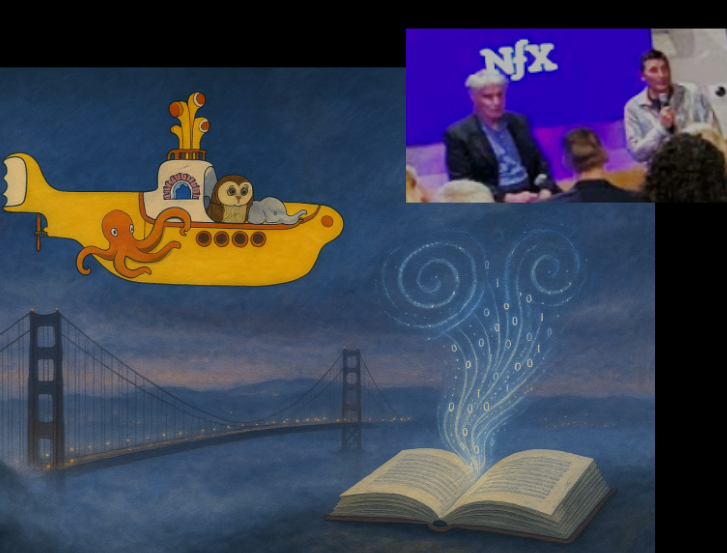
This article reflects a conversation that took place on Thursday, April 3, 2025, between NFX’s James Currier and Gary Rivlin, author of “AI VALLEY”, at NFX’s San Francisco headquarters.
Audience included Hannah Dopico Meliana R Setiawan Kacha (Shogun) Mahadumrongkul Vishesh Pagarani