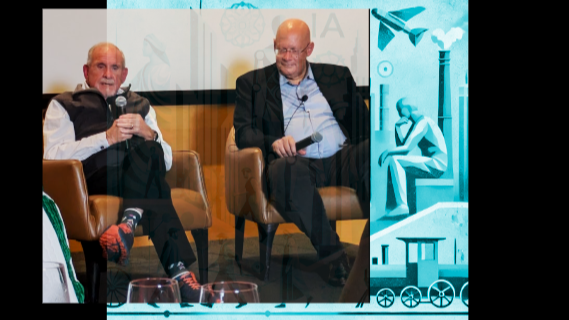
An extraordinary meeting of minds unfolded at Northeastern University - Oakland Responsible AI Conference during a special session featuring Dr. Larry Brilliant and Dr. Usama Fayyad. The conversation between these two visionaries transcended typical conference dialogue, delivering a masterclass in how technological advancement and human compassion must evolve together at the intersection of artificial intelligence and healthcare.
From Ashrams to Smallpox: The Unlikely Journey of a Medical Revolutionary
For those unfamiliar with Dr. Brilliant’s remarkable story, it defies conventional career paths. After graduating from medical school, his journey took him from marching with Martin Luther King Jr. to living in a Himalayan ashram. It was there that his guru made an improbable prediction: Larry would help eradicate smallpox with the World Health Organization.
As Larry recounted, “I was wearing ashram clothes, and [WHO] kept kicking me out. I made 15 trips, each about 17 hours long.” Eventually, he was hired—initially as a typist who spoke Hindi and English. Six months passed before they remembered he was a doctor.
What followed was one of humanity’s greatest public health achievements. Brilliant became part of the team that developed the “ring vaccination” strategy that ultimately eradicated smallpox—a disease that had killed half a billion people in the 20th century alone.
It was during this period at WHO that another serendipitous encounter occurred—one that would connect two revolutionary forces. As Brilliant recounted, one day the receptionist called him saying, “Larry, there’s somebody here who says he wants to see you. He’s a dirty hippie, he’s barefoot, his head is shaven. He reminds me of you when you first came here.” That barefoot visitor was a 19-year-old Steve Jobs, who had traveled to India seeking spiritual enlightenment and had come to the WHO cafeteria in search of a salad and air conditioning. This chance meeting began a lifelong friendship that bridged the worlds of public health and technology—a connection that foreshadowed Brilliant’s future work at the intersection of these domains.
“We visited every house in India every month for 20 months. We made 2 billion house calls,” he shared. Leading a team of 150,000 health care workers in India, Brilliant and his colleagues searched every house to vaccinate communities and create “immunity rings” when specific smallpox cases were found. This experience shaped his fundamental belief in what determined teams can accomplish: “Why can’t we do that for climate change? Why can’t we finish the job with polio eradication?”
The Health Span Crisis: Our Changing Disease Landscape
One of the most compelling insights from the conversation was the dramatic shift in our global health challenges. As Dr. Brilliant explained, we’ve transitioned from a world dominated by acute, infectious diseases to one where chronic conditions prevail.
“In 1900, everything below heart disease was an infectious disease. At one point, nine out of the ten leading causes of death were infectious diseases in the United States,” he noted.
While we’ve doubled our lifespan over the past century, our “health span”—the period of life lived in good health—hasn’t kept pace. The result is what Brilliant calls “six span”—those years at the end of life spent managing chronic conditions.
This evolution creates not just medical challenges but economic ones as well. As populations age worldwide, the demographic pyramid is becoming a rectangle, with fewer working-age individuals supporting a growing elderly population. Japan exemplifies this trend, but America isn’t far behind.
AI in Medicine: Promise, Peril, and the Path Forward
The central question of the conversation: Can artificial intelligence help address these challenges? Dr. Brilliant’s perspective was balanced and deeply informed by his experience in both healthcare and technology sectors (including his time as the first Executive Director of Google.org and his work on Google Flu Trends).
“Arthur Clarke said any sufficiently advanced technology is indistinguishable from magic. We have two of them right now: AI is indistinguishable from magic, and medical science has advanced so much it’s indistinguishable from magic,” he observed.
But the magic of AI comes with significant limitations in healthcare. Brilliant candidly described testing Claude and ChatGPT, finding they would confidently fabricate medical research papers, complete with nonexistent authors and journals.
“In medicine, we are the most risk-averse profession. We are not allowed to kill one person in order to save a hundred,” he emphasized, highlighting why hallucinating AI presents unique challenges in healthcare contexts.
Evity.AI: Building AI with Experts in the Loop
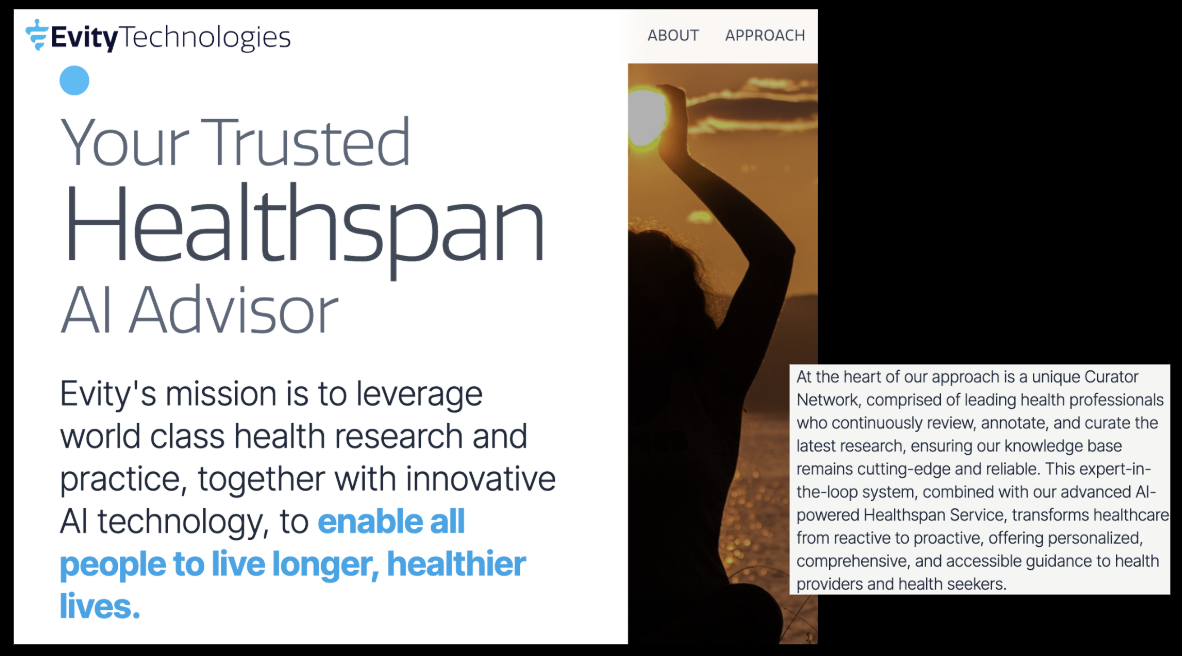
This realization led Brilliant to found Evity.AI (where he now serves as CEO), creating specialized AI systems designed specifically for healthcare. Unlike general-purpose AI that ingests “the entire internet with its 25% misinformation,” Evity focuses exclusively on medical knowledge.
Their approach centers on keeping human experts integrated throughout the entire AI lifecycle. “We build teams of curators in the loop at every stage of the delivery of health information,” he explained, recruiting specialists in cardiology, neurology, and other disciplines.
This “experts in the loop” philosophy stands in contrast to approaches that might view clinicians as obstacles to efficiency. When an audience member—a nurse working in big data—mentioned being told that “clinicians slow us down,” Brilliant responded: “It’s always better to have a human expert, an AI in your pocket, and a health seeker together.”
The Path Forward: Collaboration Across Boundaries
What struck me most was Dr. Brilliant’s optimistic pragmatism. Despite acknowledging the challenges—including what he described as an “arms race” in AI development—he maintains faith in our collective ability to harness technology for good.
“We need to find ways to make people have the availability of the information, the clinical support, the team around them, and the fast-breaking wonderful changes in medical science,” he said.
His vision isn’t about using AI to replace healthcare workers but to augment them: “I don’t want fewer physicians. I want better physicians.”
The conversation ended with a profound question that should guide all technological development: “Will AI help us be better people? Will it help us be kinder? Will it help us be more loving? Will it help us build more community?”
Reflections for a Multi-Stakeholder Future
As I left the conversation, I reflected on what each stakeholder in the healthcare ecosystem might take away:
For clinicians: AI should enhance your expertise and reduce administrative burden, not replace your judgment or human connection with patients.
For technologists: Building AI for healthcare requires specialized approaches, rigorous curation, and continuous human oversight to be truly valuable and trustworthy.
For healthcare administrators: The goal isn’t fewer staff but better-supported staff who can focus on patient care rather than documentation.
For patients: The future of healthcare likely combines human empathy with AI-enhanced precision, potentially making care more accessible and personalized.
For investors and policymakers: The most valuable innovations may be those that narrow the gap between lifespan and healthspan, addressing the economic and human costs of an aging population.
Dr. Brilliant’s remarkable career spans public health triumphs, technological innovation, and spiritual exploration. What unites these seemingly disparate chapters is a consistent focus on reducing human suffering through collaborative effort. As we navigate the integration of AI into healthcare, we would be wise to follow his example—combining technological optimism with ethical vigilance and always keeping the human at the center of the equation.
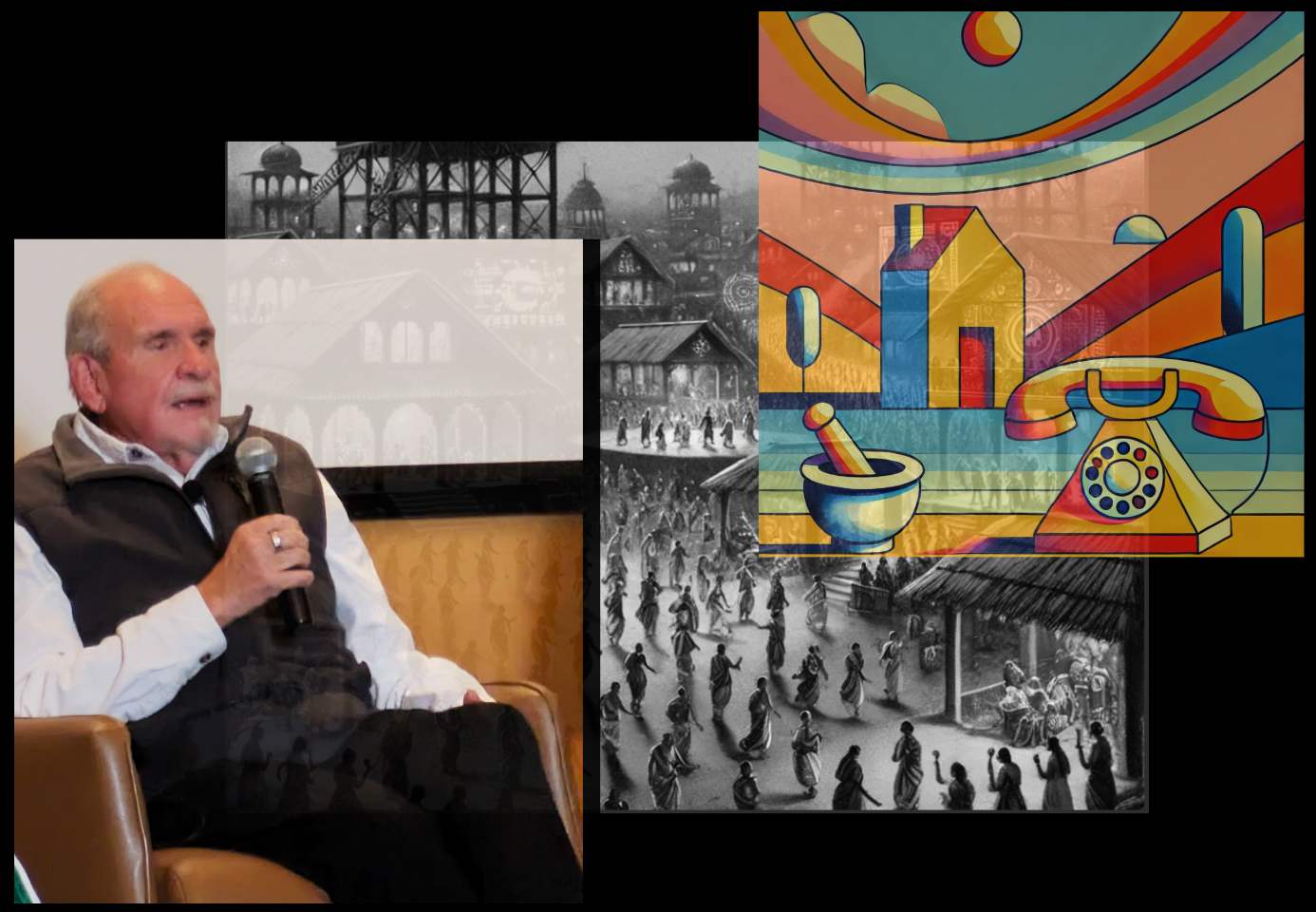
Robert Schwentker is a technology educator specializing in emerging technologies and their responsible implementation. This article reflects his notes from the fireside chat between Dr. Larry Brilliant and Dr. Usama Fayyad at Northeastern University’s Oakland Responsible AI Conference - February 2025.
#ResponsibleAI #MedicalAI #NortheasternUniversity #ExperientialAI