Shifting the AI Conversation: From “Which Algorithm?” to “Whose Interests?”
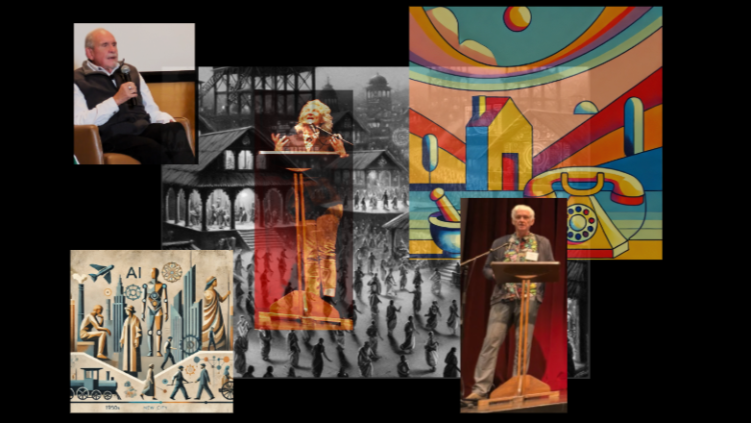
At the Northeastern University - Oakland Responsible AI Conference 2025, thought leaders, engineers, ethicists, policymakers, and entrepreneurs convened to challenge prevailing narratives about AI’s role in society. If there was one theme that resonated throughout the event, it was this: AI isn’t just a technical problem—it’s a societal one.
From Peter Norvig’s keynote on human-centered AI to Larry Brilliant’s reflections on public health and AI, the conversations painted a vivid picture of the opportunities and ethical dilemmas ahead. This article highlights some of the most compelling insights.
1. Complexity vs. Uncertainty: The Core AI Challenge
Peter Norvig set the tone with a key distinction: traditional software engineering is about managing complexity, but AI is about managing uncertainty.
-
In a banking app, every transaction must balance to the penny. The answer is deterministic.
-
In AI, however, uncertainty rules. Is this a husky or a wolf? How do we ensure fairness in AI-driven parole decisions? These aren’t binary problems, and our current AI models often optimize engagement, not fairness.
His personal anecdote—an AI system mistakenly insisting he could return a rental car by bicycle—was a reminder that AI often learns from data but doesn’t truly understand context.
Key Questions AI Must Address:
-
Are we optimizing for what people want (clicks, engagement) or what they need (equity, safety)?
-
Are we designing AI to serve all stakeholders, or just immediate users?
-
How do we account for bias and unintended consequences?
2. “Just Because We Can, Should We?” – Lili Gangas on Purpose-Driven AI
Lili Gangas from the Kapor Foundation emphasized that AI doesn’t exist in isolation—it amplifies existing inequities unless deliberately designed to reduce them.
AI’s Systemic Challenges:
✅ Digital Redlining: The same historical patterns of exclusion in housing and banking are re-emerging in AI-driven credit and hiring decisions. ✅ Bias in AI: From facial recognition to resume screening, marginalized communities face disproportionate errors and exclusions. ✅ AI & Job Displacement: Without ethical foresight, automation could worsen income inequality.
Opportunities for Purpose-Driven AI:
🚀 AI for Healthcare: Early disease detection and personalized medicine are transformative. 🚀 AI for Education: Personalized learning tools can democratize access to STEM education. 🚀 AI for Civic Engagement: Technologies that empower rather than exploit communities are essential.
Her core message: Technology should reflect society’s aspirations, not just profit motives.
3. “Sleeping at the Wheel” – Trust & Oversight in AI Systems
Usama Fayyad (Institute for Experiential AI at Northeastern University) and Vinay Rao ( Anthropic) tackled the paradox of AI reliability: The more we trust AI, the more we stop questioning its decisions.
-
AI systems are most dangerous not when they fail spectacularly, but when they perform just well enough for humans to disengage.
-
Example: Autonomous vehicles work well—until they fail in edge cases the AI didn’t anticipate.
A Safer AI Future Requires:
🔹 Human-in-the-Loop Systems – AI must assist, not replace, decision-makers in high-risk sectors like finance, healthcare, and law enforcement. 🔹 Transparent AI Models – Users must understand why AI recommends certain actions. 🔹 Smaller, Targeted AI Models – Not every application needs a general-purpose AI trained on everything.
4. “AI & Healthcare: From Magic to Misinformation” – Dr. Larry Brilliant’s Warning
Dr. Larry Brilliant, who helped eradicate smallpox, delivered a sobering yet optimistic perspective: Healthcare AI is powerful, but its risks are unlike any other industry.
Where AI Helps Medicine:
✔ AI-driven diagnostics detect diseases earlier and more accurately. ✔ Healthcare automation reduces administrative burden for doctors, allowing them to focus on patients. ✔ AI can bridge the health equity gap, bringing medical expertise to underserved communities.
Where AI Poses Risks:
⚠ AI hallucinations in medicine – Brilliant tested Claude and ChatGPT and found them fabricating medical research papers with non-existent authors and journals. ⚠ AI’s tendency to overpromise – In healthcare, mistakes cost lives. Unlike self-driving cars, a single flawed AI medical decision can be catastrophic. ⚠ Lack of human oversight – The push for AI-driven efficiency can marginalize clinicians who ensure ethical, patient-centered care.
The Solution? “Experts in the Loop”
Brilliant’s new venture, Evity.AI, is building AI that keeps human experts involved at every stage. Rather than replacing doctors, AI should be designed to enhance their abilities.
His parting question: Will AI make us kinder, more compassionate, and more human? Or will it simply accelerate profit-driven decision-making?
5. “Techno-Optimism Meets Reality” – Dr. Caroline Simard on Responsible AI
Silicon Valley thrives on optimism. But Dr. Caroline Simard ( Northeastern University in Silicon Valley) challenged the audience with a simple but profound question: “How do you know?”
-
How do you know your AI model is fair?
-
How do you know your system doesn’t reinforce existing power imbalances?
-
How do you know your AI actually benefits more than it harms?
Breaking the “Move Fast” Mentality:
🔸 AI development can’t rely on check-the-box compliance. True Responsible AI requires ongoing accountability. 🔸 Cross-disciplinary teams (engineers, ethicists, social scientists) must work together from the start—not after an AI system has already been deployed. 🔸 Recognizing AI’s “It Depends” reality – There are no universally good or bad AI applications; everything depends on context.
Simard’s call to action: Shift from “I know” to “What do I need to learn?”
Final Reflections: Building a Multi-Stakeholder AI Future
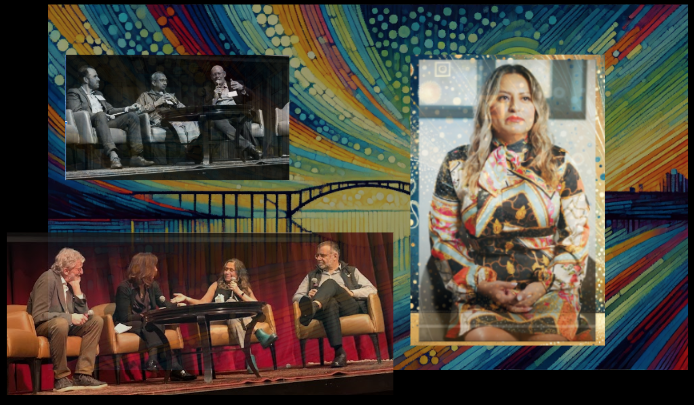
Walking out of NEU Oakland’s Lisser Hall, one thing was clear: Responsible AI isn’t just an ethical ideal—it’s a strategic imperative.
AI’s trajectory isn’t predetermined. It will be shaped by: ✅ The frameworks we establish today. ✅ The tough questions we’re willing to ask. ✅ The diverse voices we bring into AI’s development.
As Peter Norvig noted, “AI isn’t about which algorithm we use—it’s about whose interests we serve.”
This conference wasn’t just about AI. It was about reclaiming AI’s purpose—ensuring it serves humanity, not the other way around.
The real question now isn’t whether AI can transform our world—it’s whether we have the wisdom, foresight, and ethical courage to build AI that serves humanity equitably rather than amplifying existing divides. The conference made clear that this responsibility falls not just on technologists, but on all of us who will shape and be shaped by these powerful tools.