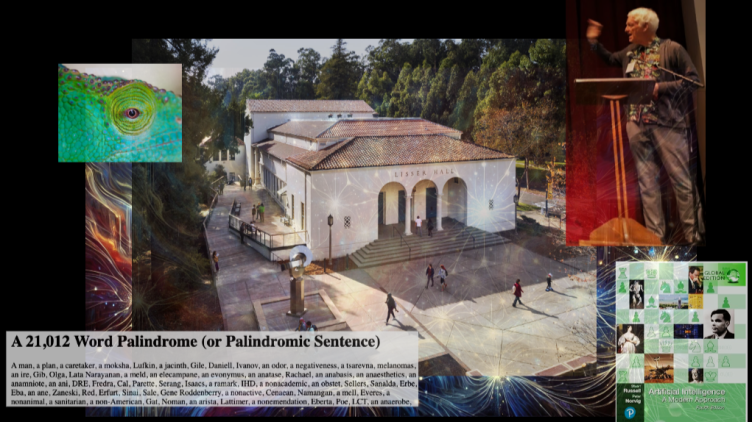
Last week, Northeastern University - Oakland hosted a dynamic Responsible AI conference, marking my first visit to the campus since its transformation from Mills College. The historic Lisser Hall, with its warm ambiance and classic architecture, set the stage for many voices that challenged conventional thinking.
The afternoon began with a lively networking reception, bringing together pioneers, researchers, entrepreneurs, and educators—all passionate about the future of Responsible AI. As the room settled, Peter Norvig—widely regarded as one of the most respected, deeply technical, and inspiring voices in AI, took the podium, offering a keynote that was both deeply technical and profoundly human-centered. His insights were a compelling reminder that while AI’s technical leaps have been extraordinary, the most pressing questions remain rooted in human impact—shifting the conversation from “Which Algorithm?” to “Whose Interests?”
He highlighted that our ability to collect data and scale AI models has matured. We have powerful chips from Nvidia and sophisticated training techniques. Now, the questions have changed:
-
What do we want to optimize?
-
Whose interests are we serving?
-
Is anyone left out of the process?
Norvig emphasized a crucial point: it’s one thing to make an AI system extremely good at something (like predicting clicks on social media). It’s another to ensure it serves society fairly—addressing issues like inclusion, equity, and long-term impact.

Complexity vs. Uncertainty
I loved how Norvig contrasted traditional software engineering—where the main challenge is complexity—with AI, where the main challenge is uncertainty.
-
Complexity in regular software: You can create a banking application with a million rules and regulations. But ultimately, there’s a “correct answer” down to the penny—if you write enough lines of code.
-
Uncertainty in AI: Is that image a husky or a wolf? How do we help a judge evaluate parole decisions in a fair, unbiased manner? Real-world data is messy. People’s needs change. And society’s expectations of “fairness” or “equity” don’t boil down to a neat formula.
His anecdotes made these differences tangible. One that stood out was the phone reminder that insisted he could return a rental car by bicycle—misreading his everyday bike commute as a signal for absolutely everything. While it sounds hilarious, it captured the complexity of AI “learning” from user data but not truly understanding context.
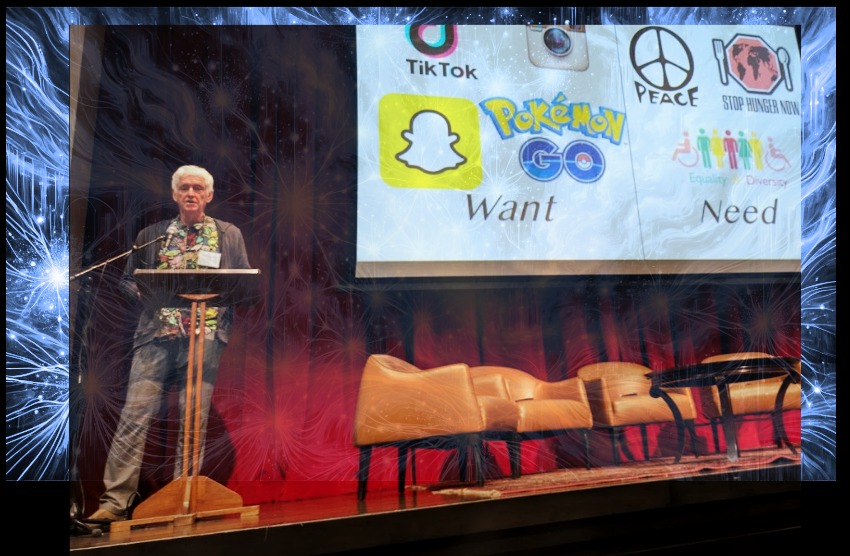
Want vs. Need: Are We Optimizing for the Right Thing?
As Norvig explained, we’ve built an internet that’s great at feeding us what we want—clicks, streams, viral content—but not necessarily what we need: equity, genuine connection, or sustainable solutions. Echo chambers and biased recommendation systems exist partly because they optimize for engagement.
Yet, this is exactly where Norvig sees opportunity. If we’re more deliberate in identifying why we build AI systems and whom they serve, we can design them to uplift rather than exploit. This means asking tough questions:
-
Are we accidentally encouraging short-term gains over long-term wellbeing?
-
Are certain communities being disadvantaged by how data is collected or deployed?
-
Do we have enough collaboration between technologists, ethicists, policymakers, and impacted stakeholders?
Broadening Our View of Stakeholders
One of the highlights from Norvig’s talk was the self-driving car scenario. If you think of the “user” only as the person inside the car, you might design a sleek interface and comfortable ride. But what about pedestrians? Other drivers? Taxi operators who might lose their livelihoods? He argued for a human-centered (or better yet, “stakeholder-centered”) approach—where you consider all parties impacted by the AI system, not just the immediate customer.
Norvig also warned that if systems aren’t seen as transparent, fair, and inclusive, people won’t trust them. This isn’t simply an ethical matter—mistrust can derail entire industries or lead to stricter regulations that hinder innovation. In other words, responsible AI is a strategic imperative.

Why Collaboration Matters
When Norvig talked about bridging silos—bringing in engineers, social scientists, justice advocates, ethicists—it struck a chord. The day’s earlier networking session had already shown me how many different viewpoints came together in Oakland. Through these collaborations, AI developers can anticipate risks, mitigate biases, and create solutions that better reflect the complexities of real life.
The Opportunity Ahead
Norvig concluded that although we’ve mastered many parts of AI engineering, we’re only beginning to figure out how to build reliable, human-centered agents. The irony, he noted, is that even as we deploy AI everywhere—from customer service bots to self-driving systems—our toolbox for ensuring reliability in high-stakes, fast-changing environments remains limited.
Still, this gap represents a tremendous chance for innovation. Students, researchers, and industry professionals can develop new frameworks, ethical guidelines, and even legislative proposals. By doing so, we don’t just fix the problems of AI. We take the technology to a new level—one that accounts for societal needs and fosters genuine trust.
Final Reflections
Walking out of Lisser Hall, I carried with me the weight of Norvig’s words—his humility as striking as his optimism. AI systems will make mistakes—some laughable, others deeply consequential—but the solution isn’t just more rules. It’s a deeper reckoning with which problems we choose to solve and whose interests we serve.
That, to me, -i-s- could be the heart of human-centered AI: a fusion of technical ingenuity & human wisdom, ensuring that progress for humanity aligns with collective values. Judging by the impassioned discussions that lingered long after the keynote, this vision isn’t just theoretical. It seems to be gaining ground. As I stepped into that night, I couldn’t shake the feeling—this wasn’t just a conference. It was the pulse of a movement, one defined not by machines, but by the people shaping their future, synchronously**.**
Stay tuned for more insights from this remarkable day at Northeastern University Oakland. Next, I’ll explore a fireside chat with Larry Brilliant, a panel discussion featuring Usama Fayyad and Anthropic on the Institute for Experiential AI, Dean and a compelling talk with the Kapor Foundation. And many thanks to the many conveners including Carrie Maultsby-Lute (she/her) Karimah Omer, MBA Cansu Canca, Ph.D. Hamit Hamutcu Ricardo Baeza-Yates Julie Chavez Alan Eng