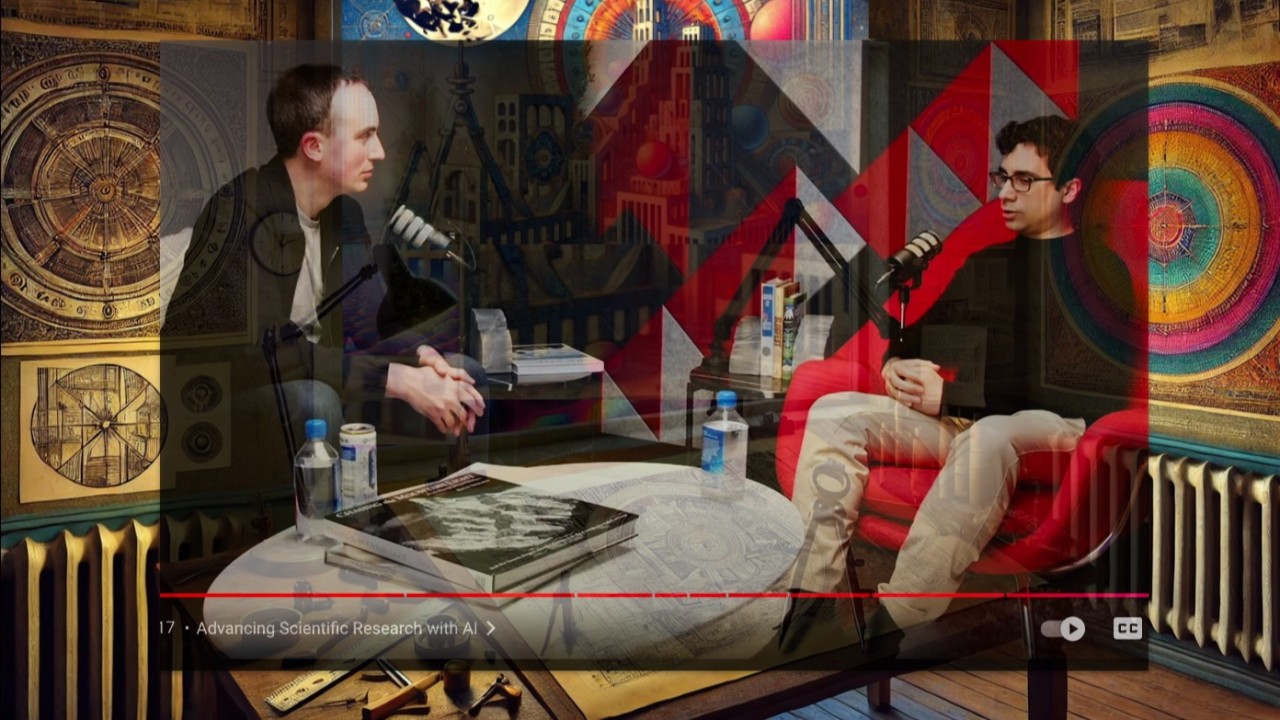
Exploring Noam Brown’s Vision for Collaboration, Generalization, and Academic Disruption in AI
This article draws insights from a December 2024 conversation with Noam Brown, hosted by Redpoint.
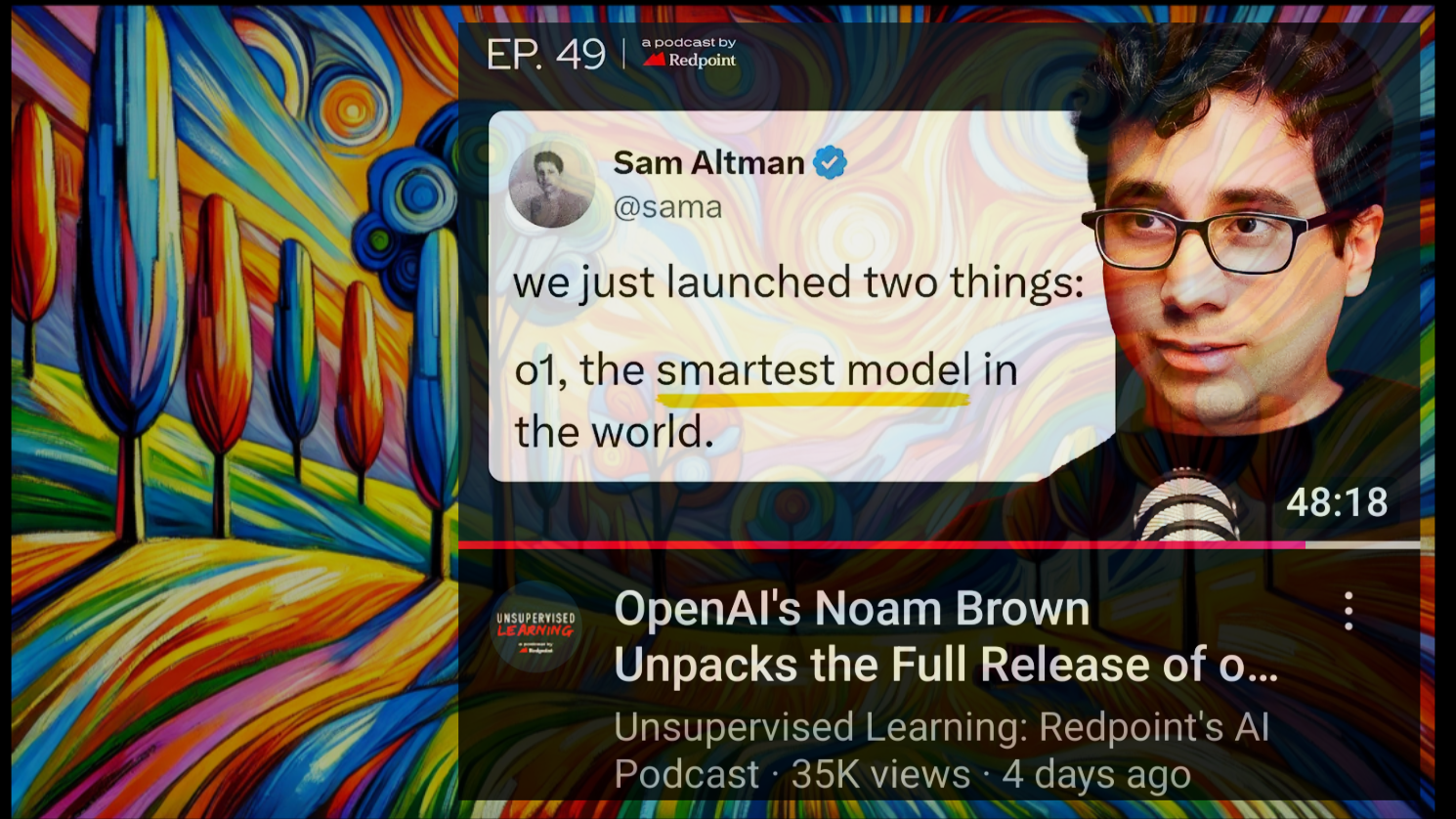
Introduction In a field defined by exponential progress, few innovations have the potential to reshape the trajectory of AI as profoundly as test-time compute. During a fascinating conversation with Noam Brown, a key figure at OpenAI, we explored the debut of o1—a groundbreaking model designed to revolutionize how AI approaches problem-solving at test time. This article delves into the implications of test-time compute for collaborative innovation, its role in advancing general-purpose AI, and its potential to disrupt academic research paradigms.
1. Collaborative Innovation: A New Paradigm for AI Research
Noam Brown underscored how test-time compute creates opportunities for collaboration across disciplines. Unlike pre-training paradigms that rely heavily on vast datasets and compute resources, test-time compute focuses on extending the reasoning capabilities of AI during inference. This innovation opens doors for researchers, businesses, and technologists to address complex problems together.
“The exciting thing about test-time compute is that it feels like we’re back in the GPT-2 days. There’s so much low-hanging fruit for algorithmic improvements and scalability.” – Noam Brown
In academia, constrained access to compute resources has often limited progress. Test-time compute could democratize research by allowing institutions with fewer resources to achieve breakthroughs in fields like coding, game theory, and mathematics. The collaborative potential extends to industry, where specialized AI models can now integrate seamlessly into workflows, enabling researchers and engineers to co-develop solutions that were previously out of reach.
Key Question: How can organizations leverage test-time compute to foster interdisciplinary partnerships and accelerate innovation?
2. Generalization and Multimodal Models: Toward a Unified AI System
One of the most striking features of o1 is its ability to handle multimodal inputs, such as text and images, while exhibiting significantly improved reasoning capabilities. Noam argued that this represents a step toward the long-term goal of a unified, general-purpose AI system.
“Eventually, we want a single model you can ask everything of—it should reason deeply when needed or provide quick answers when appropriate.” – Noam Brown
Unlike domain-specific models, o1 previews a future where AI can seamlessly integrate into diverse applications, from advanced scientific research to creative writing. Noam emphasized the importance of shifting from task-specific algorithms to general-purpose solutions, a lesson he learned during his work on diplomacy and poker AI models.
This generalization also disrupts the “brittle” nature of older models. As Noam explained, models like o1 can independently decompose problems into smaller steps, a capability that has the potential to redefine applications in fields such as education, healthcare, and robotics.
Key Question: What industries stand to benefit most from general-purpose AI, and how can businesses prepare for this shift?
3. Challenges in Academia: Rethinking AI Research Priorities
The rise of models like o1 challenges the traditional role of academia in AI research. Noam highlighted how the dominance of data- and compute-heavy approaches has placed academic researchers at a disadvantage. He advised PhD students and academics to avoid short-term fixes, such as scaffolding techniques, and instead focus on long-term innovations that scale well.
“Don’t try to compete with industry on frontier capabilities. Investigate novel architectures or approaches that show promising scaling trends.” – Noam Brown
Test-time compute offers an opportunity to realign research priorities, enabling academics to contribute meaningfully without the need for massive compute resources. Furthermore, Noam emphasized that scalability should be the north star for researchers, as techniques that thrive under scaling conditions will define the future of AI.
The implications extend beyond technical advancements. By reducing reliance on costly pre-training, test-time compute could help academic labs focus on ethical considerations, such as mitigating bias and ensuring accessibility for underrepresented communities.
Key Question: How can academic institutions adapt their research priorities to thrive in the era of test-time compute?

Call to Action: Engaging with the Future of AI
Noam Brown’s insights highlight a pivotal moment in AI research and application. Test-time compute not only offers a new technical paradigm but also redefines how researchers, businesses, and educators approach collaboration, generalization, and innovation. As organizations and individuals, we must ask ourselves:
-
What partnerships can we forge to unlock the potential of test-time compute?
-
How can we prepare for a future where general-purpose AI dominates?
-
What role will academia play in addressing ethical challenges and advancing scalable solutions?
Standout Insights from the Conversation
Throughout the discussion, Noam Brown and host Jacob Effron shared thought-provoking insights that illuminate the transformative potential of test-time compute. Here are a few highlights to frame the conversation:
-
“The models are progressing faster than I thought possible, and I don’t think we’ve hit any meaningful wall yet.” – Noam Brown
-
“The bitter lesson teaches us that scalable techniques, not short-term scaffolding, drive long-term progress.” – Noam Brown
-
“Test-time compute redefines the economics of AI, shifting the focus from massive pre-training to smarter inference.” – Jacob Effron
-
“With test-time compute, it’s not just about what AI can do—it’s about how we collaborate to push the boundaries further.” – Noam Brown
Conclusion
The debut of o1 marks the beginning of a new era in AI. Whether in academia, industry, or public policy, test-time compute offers unprecedented opportunities to rethink how we innovate and solve complex problems. By embracing this paradigm, we can accelerate the pace of discovery while addressing the pressing ethical and societal questions that define our time.
https://bsky.app/profile/schwentker.bsky.social/post/3lcxugs345c2a