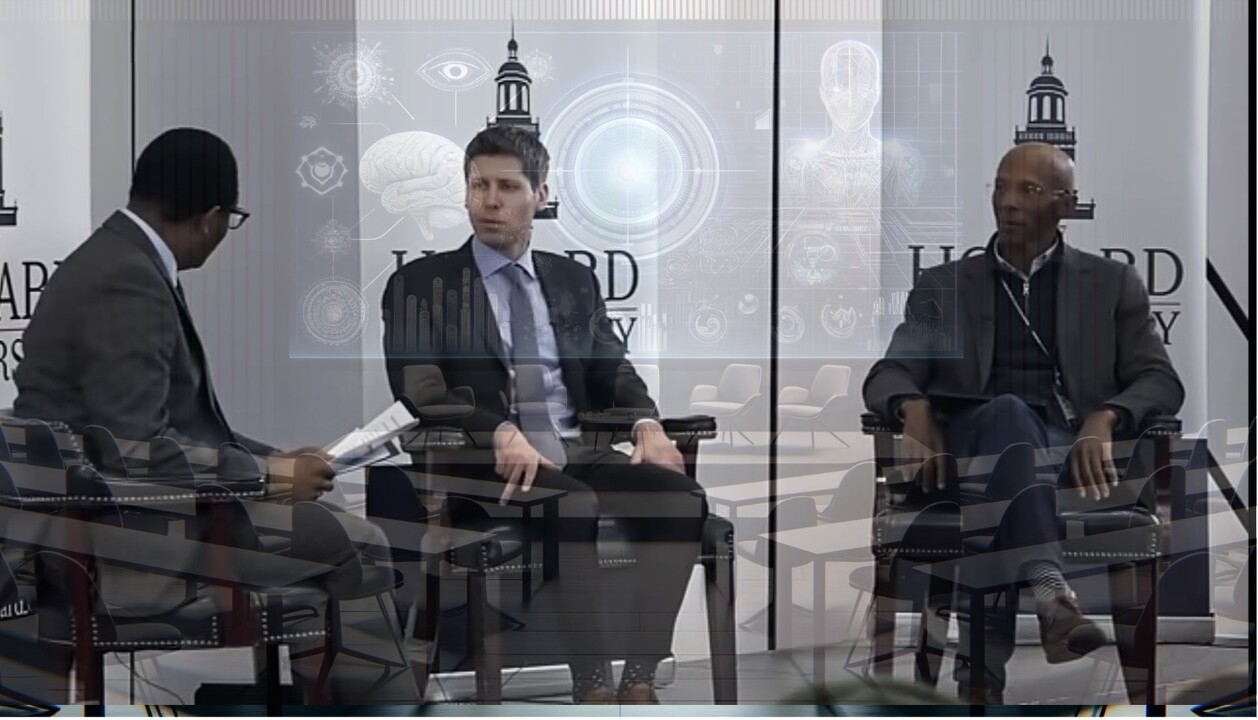
Another great interview with Sam Altman, this one with Howard University students, President Ben Vinson III, and Prof. of Biochemistry Dr. William Sutherland.
Sam discussed the importance of fostering critical thinking and creativity among students as essential skills for the future, particularly in the context of rapid advancements in artificial intelligence and technology. He articulated a vision where, in a world increasingly augmented by AI, the most valuable skills will revolve around human creativity, the ability to generate innovative ideas, and the capability to choose effectively among options presented by AI systems.
Altman emphasized that while AI can generate numerous ideas, the human role in discerning which ideas will resonate with others remains crucial. He suggested that the human element in creation and innovation cannot be fully replaced by AI. For instance, when people consume creative works like books or art, they often seek to connect with the creator’s personal story, an aspect that AI cannot replicate. Therefore, the ability to understand and predict what others will value is a skill that will retain its importance, irrespective of technological changes.
Furthermore, Altman encouraged students to develop these skills as a way of “future-proofing” their careers. He argued that while specific tools and technologies will evolve, the foundational skills of critical thinking and creativity will enable individuals to adapt to and thrive in future technological landscapes. These skills will be essential not only for generating new ideas but also for evaluating and selecting among solutions proposed by AI, ensuring that human values and preferences continue to guide technological development and application.
Other Key Points
AI’s Potential and Ethical Deployment: Altman highlighted the potential of artificial intelligence as a significant engine for economic growth and technological revolution. He emphasized the need for ethical deployment to ensure equitable benefits across society, noting the importance of collaboration beyond Silicon Valley to achieve inclusivity.
Addressing AI Bias: Altman discussed the inherent biases in AI systems, particularly those trained on internet data. He mentioned the use of reinforcement learning from human feedback as a successful method to mitigate these biases, albeit not completely debiasing the systems.
Democratic Input and System Behavior: The conversation also touched on the challenges of determining who decides the behavior of AI systems and ensuring democratic input globally. Altman stressed the importance of including marginalized voices in these discussions to shape the technology responsibly.
Diversity in AI Development: The importance of diversity at all stages of AI development was underscored, from engineering to providing human feedback. Altman encouraged students from Howard University to join OpenAI, emphasizing the value of diverse perspectives in shaping ethical AI.
Impact of Easy-to-Use AI: He noted the transformative impact of AI technologies that are accessible and easy to use for everyone, regardless of technical background. This inclusivity is seen as a critical factor in the widespread adoption and impact of AI.
Transformation of Society: Altman described the current period as a transformative time for society, with AI bringing profound changes to how we interact with technology and each other. He expressed optimism that the benefits of AI would outweigh the potential losses, although acknowledging that some aspects of human experience might change.